Environmental, Social and Governance is no longer niche investor language. It is now central to how boards, regulators and financiers assess resilience, risk and long-term value.
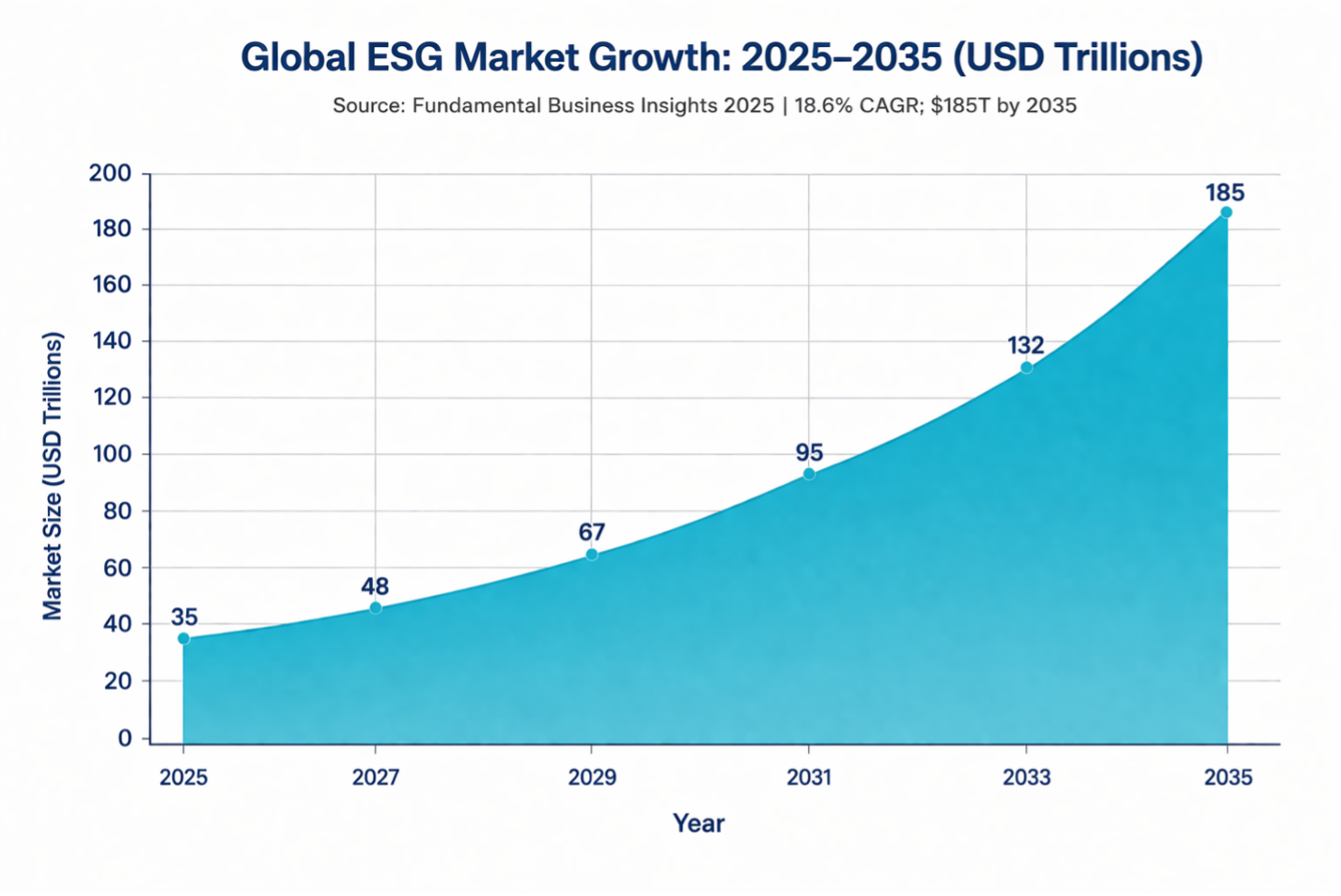
With the global ESG investing market estimated at $33.67 trillion in 2025 and projected to reach $185 trillion by 2035, understanding ESG has become a strategic necessity for African companies, governments and communities.
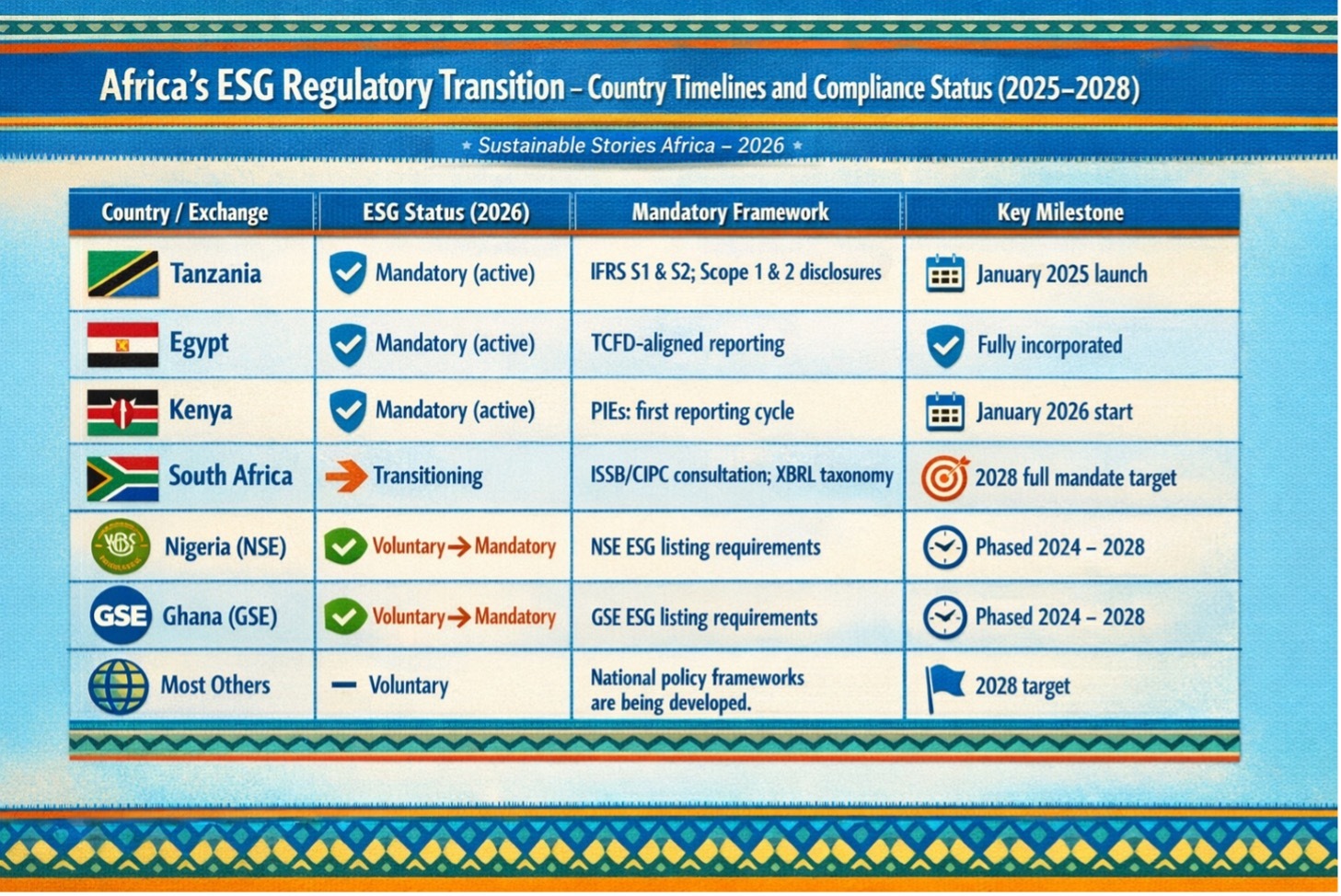
Across Africa, the shift from voluntary disclosure to mandatory obligation is accelerating.
Those that master all three ESG pillars will be better placed to access capital, retain investor confidence and lead their sectors.
ESG – Africa's Defining Corporate Accountability Moment
ESG stands for Environmental, Social, and Governance, a three-pillar framework that measures how a company manages its impact on the planet, its people, and its institutional integrity.
Originally developed for institutional investors as a risk-screening tool, ESG has evolved into the most consequential corporate performance standard of the 21st century.
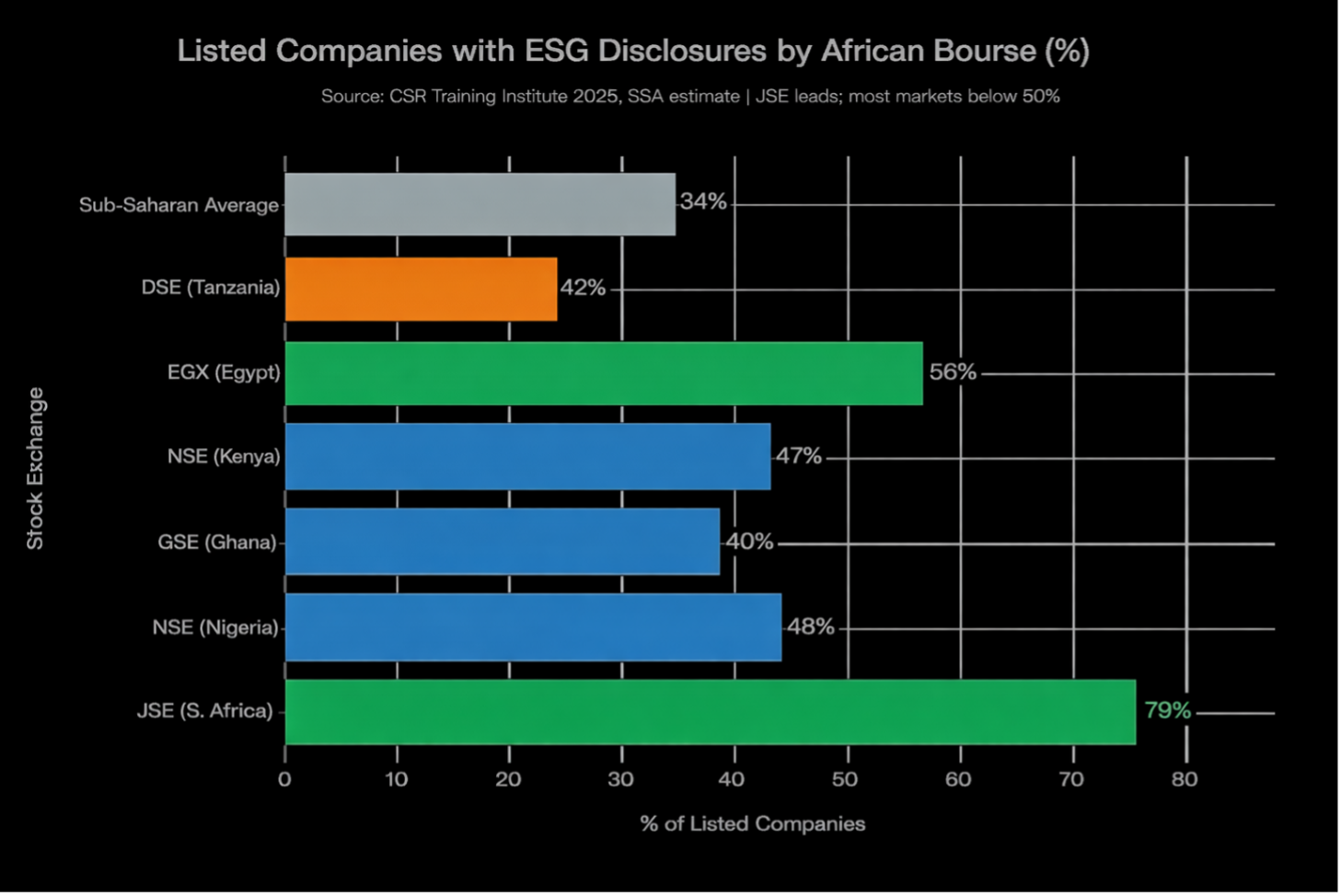
Today, ESG is the language of access to capital. Financial institutions across Africa are incorporating ESG metrics into lending decisions. Stock exchanges in Lagos, Nairobi, Accra, and Johannesburg are embedding ESG listing requirements into their frameworks.
Development Finance Institutions are making ESG performance a precondition for concessional financing. The message is unambiguous: ESG is no longer optional.
For Africa, where environmental degradation, social inequality, and governance fragility intersect with extraordinary economic potential, the ESG framework is both a mirror and a roadmap. It reflects the real costs of unsustainable business practices.
Properly deployed, it provides the structured pathway to the kind of inclusive, resilient growth that the continent urgently needs.
A $33.67 Trillion Market That Africa Cannot Ignore
The global ESG investing market reached $33.67 trillion in 2025 and is projected to rise to $185.39 trillion by 2035, growing at a compound annual rate of 18.6%.
This is no longer a niche trend. It now shapes how capital is allocated, on what terms, and which companies are seen as investable.
For Africa, the implication is immediate and strategic. Global capital is increasingly flowing toward companies, projects and governments that can demonstrate credible environmental, social and governance performance.
That means weak environmental systems, poor governance disclosures or unresolved workplace safety gaps can now directly limit access to international finance, partnerships and export markets.
The window for adaptation is narrowing faster than many African businesses realise.
Breaking Down ESG – What Each Pillar Actually Requires
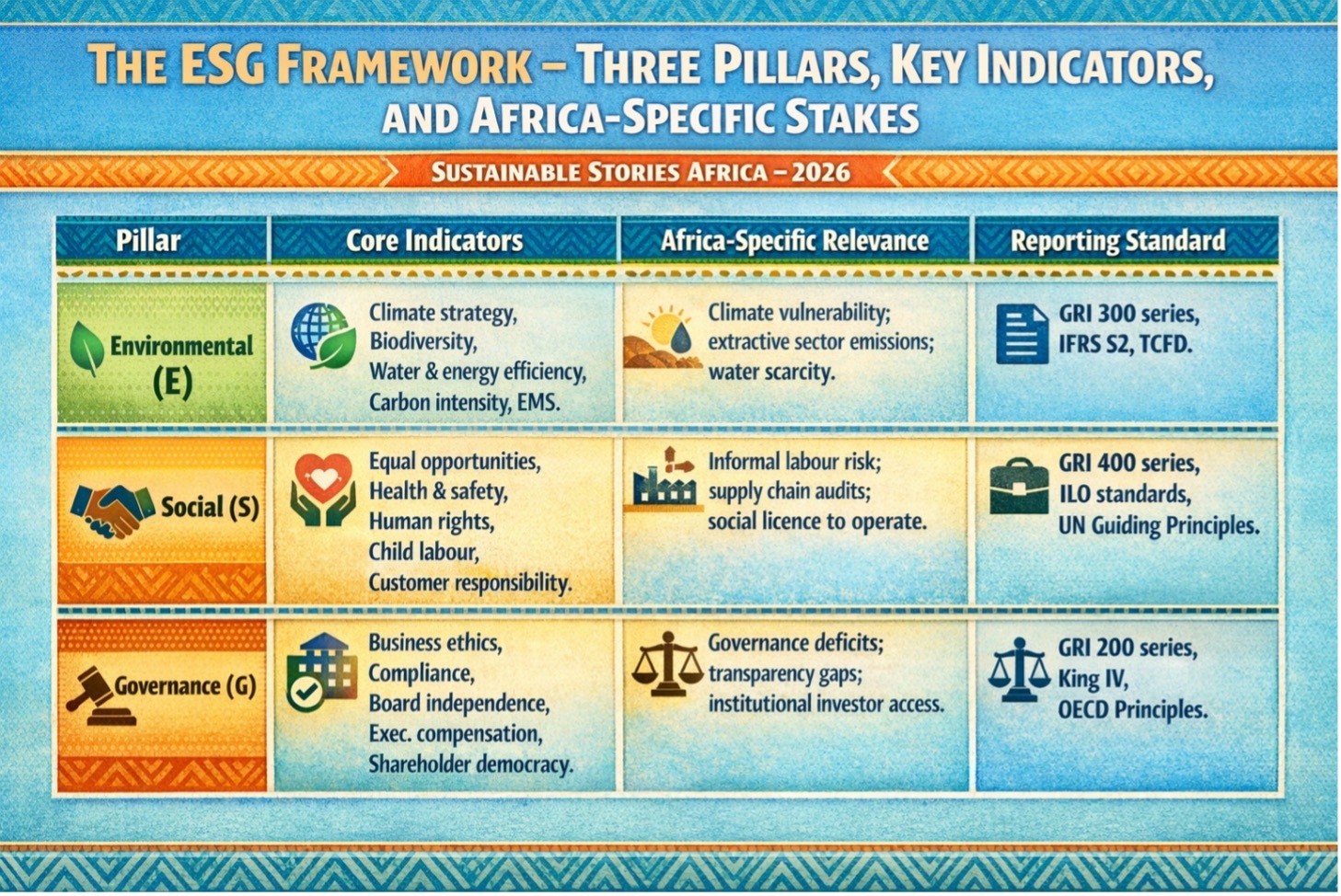
The ESG infographic at the heart of this story presents the full architecture. Each of the three pillars carries specific, measurable indicators that companies must track, disclose, and improve over time.
- E: Environmental: Managing the Planetary Footprint – The Environmental pillar covers six core areas, including climate strategy, biodiversity, water and energy efficiency, carbon intensity, and environmental management systems. Together, they shape how a company manages its relationship with the natural systems that underpin economic activity.
For Africa, this pillar is especially critical. Despite the continent contributing less than 4% of global emissions, it bears a disproportionate share of climate damage.
That makes credible climate strategies and environmental management systems not just compliance tools but also safeguards for risk management by African businesses.
- S: Social: People, Rights, and Shared Value – The Social pillar covers issues such as equal opportunity, freedom of association, health and safety, human rights, customer and product responsibility, and child labour. Together, these measures show how a company treats people across its workforce, communities and wider value chain.
In Africa, this pillar is especially material. High youth unemployment, widespread informal labour and persistent supply-chain risks make strong social performance a clear business imperative.
Companies that improve and disclose these indicators can strengthen their social licence to operate, reduce conflict, retain talent and access markets that increasingly demand ethical sourcing.
- G: Governance: The Institutional Integrity Layer – The Governance pillar measures five dimensions: business ethics, compliance, board independence, executive compensation, and shareholder democracy. Governance is the architecture that determines whether environmental commitments and social obligations are actually met — or merely stated.
Africa's governance challenges are well-documented. Corruption, opaque board structures, inadequate investor protection, and weak compliance cultures have historically suppressed institutional investor confidence in African equities.
The ESG framework directly addresses these structural vulnerabilities: companies with genuinely independent boards, transparent executive pay disclosures, and robust compliance programmes consistently attract a lower cost of capital and higher institutional ownership.
What Getting ESG Right Unlocks for Africa
The benefits of genuine ESG integration, not just disclosure, but operational transformation, are quantifiable and compound across time.
- Access to capital on better terms – ESG-performing companies in Africa's financial sector are increasingly accessing green bonds, sustainability-linked loans, and DFI financing at rates of 50 to 200 basis points below conventional borrowing. As Africa's stock exchanges formalise ESG listing requirements, with the JSE, NSE, and GSE already leading, ESG-compliant companies gain premium listing status and broader eligibility by institutional investors.
- Reduced operational risk – A company with a credible environmental management system reduces its exposure to regulatory fines, community opposition, and resource disruption. A company with robust health and safety frameworks reduces absenteeism, litigation, and productivity loss. A company with strong governance reduces exposure to fraud and audit failures. Each ESG pillar, when implemented properly, directly improves the business’s financial resilience.
- Market access and reputational premium – European and North American import regulations are increasingly incorporating ESG supply chain requirements, the EU's Corporate Sustainability Due Diligence Directive (CSDDD) and the Carbon Border Adjustment Mechanism (CBAM) being the most significant examples. African exporters in agriculture, textiles, and resources that cannot evidence ESG compliance will face tariff penalties and market exclusion.
The alternative is equally clear: companies that treat ESG as a box-ticking exercise face exposure to greenwashing, investor withdrawal, regulatory enforcement, and reputational collapse.
What Every African Stakeholder Must Do in 2026
The regulatory clock is running, and the market is already sorting companies by ESG credibility. Concrete action is required immediately across all stakeholders:
- Boards and executives must treat ESG not as a communications exercise but as a strategic risk and value management framework. Board committees should include explicit ESG oversight mandates, and executive remuneration should be formally linked to ESG KPIs, particularly their governance and environmental targets.
- Sustainability and reporting teams must align disclosures with internationally recognised standards: GRI, IFRS S1 and S2, and the King IV Code for governance. Companies that still report ESG narratively without quantified indicators, verified data, or third-party assurance should prioritise upgrading their reporting architecture immediately.
- Investors and lenders must embed ESG screening systematically into due diligence workflows, not as a reputational filter but as a financial risk assessment. Companies with poor S-pillar scores carry supply chain and social licence risks; companies with poor G-pillar scores carry fraud and governance risks. These are financial, not just ethical, concerns
- Policymakers and regulators must accelerate the development of national ESG frameworks aligned with ISSB standards, with clear timelines, capacity-building support for smaller enterprises, and sector-specific guidance for high-impact industries, particularly extractives, agriculture, and financial services.
- SMEs and informal sector operators must begin the ESG literacy journey now, not waiting for mandatory frameworks to arrive. Baseline environmental and social audits, supply chain mapping, and basic governance documentation will increasingly determine access to formal finance, supply contracts, and export certifications.
Path Forward – ESG Mastery Is Africa's Competitive Advantage
Africa stands at a pivotal moment. Its natural assets, youthful workforce and growing governance reform could become the basis for ESG leadership, but only if the framework is properly understood, operationalised and embedded across institutions.
Environmental, Social, and Governance pillars are not separate obligations. Together, they form the foundation of business models that can attract investment, sustain public trust and deliver long-term value.
The African companies that integrate all three most effectively will help shape the continent’s next development decade.