Africa is making measurable development gains, but not at the pace required for 2030.
The continent is progressing too slowly on 12 Sustainable Development Goals and moving backwards on 5.
The 2026 Africa Sustainable Development Report makes the central challenge plain: water, energy, industry, cities and finance cannot be repaired as separate policy files.
Five Goals Now Share One Deadline
Africa’s development story is no longer mainly about whether governments have plans. It is about whether institutions can deliver several interdependent systems at once, under tightening financial and climate constraints.
The 2026 Africa Sustainable Development Report focus on Goals 6, 7, 9, 11 and 17: clean water and sanitation; affordable and clean energy; industry, innovation and infrastructure; sustainable cities; and partnerships.
These goals are connected in daily life.
- A clinic without reliable electricity cannot protect health.
- A city without water, transport and drainage cannot create inclusive growth.
- A factory without power, logistics or credit cannot employ at scale.
With less than 5 years to the 2030 deadline, the report’s message is not that progress is absent.
It is that incremental progress is being overtaken by population growth, urbanisation, climate shocks, debt stress, and fragmented implementation.
Progress Exists But Fragility Dominates Outcomes
Africa's development trajectory reveals a narrowing margin for progress.
- The continent advances slowly on 12 of the 17 Sustainable Development Goals while regressing on five.
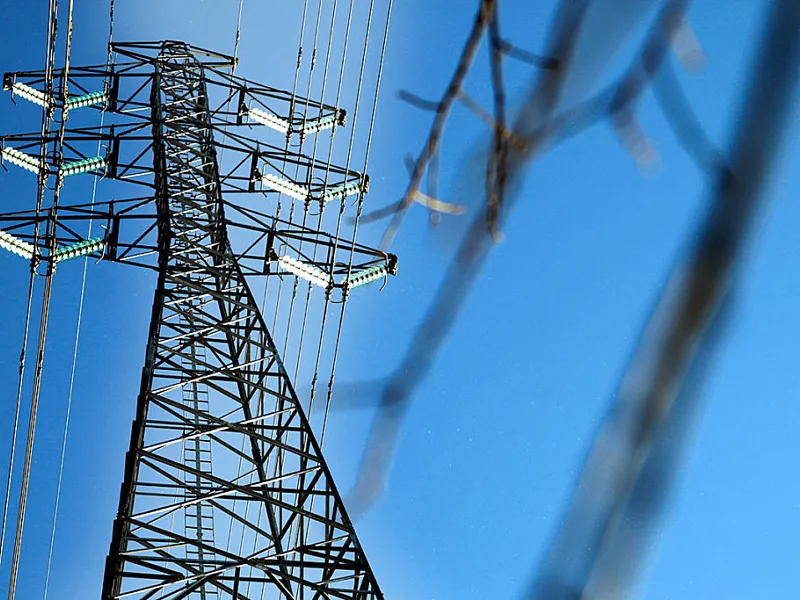
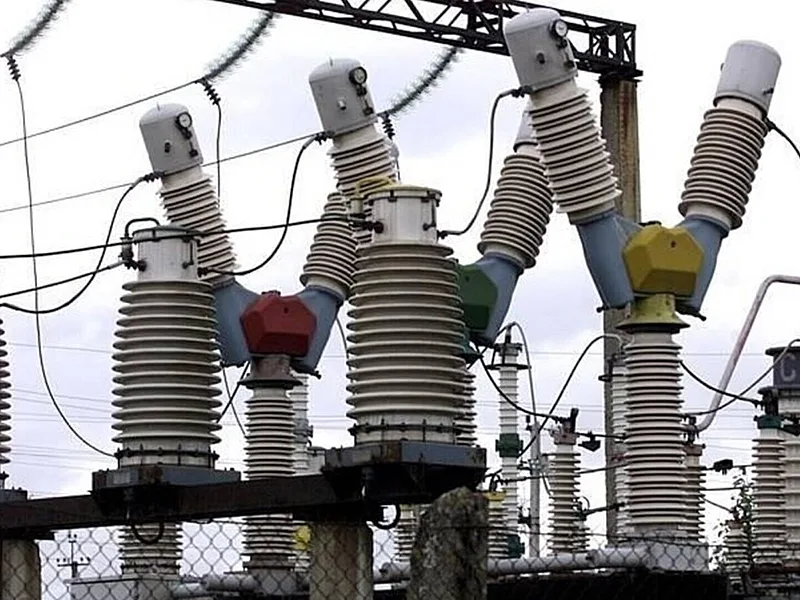
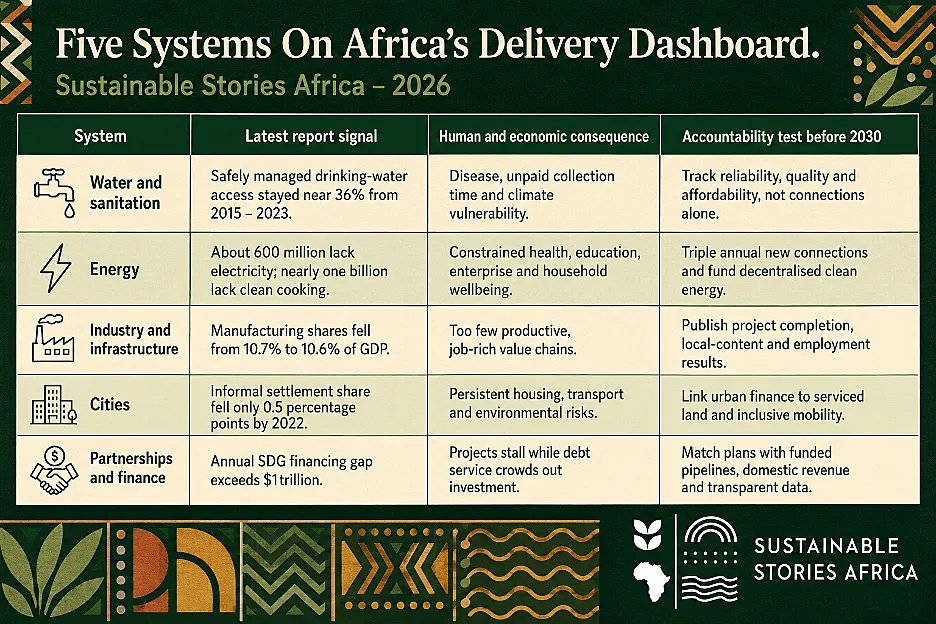
- Roughly 600 million people lack electricity, and nearly one billion lack clean cooking access. The annual SDG financing gap now exceeds $1 trillion.
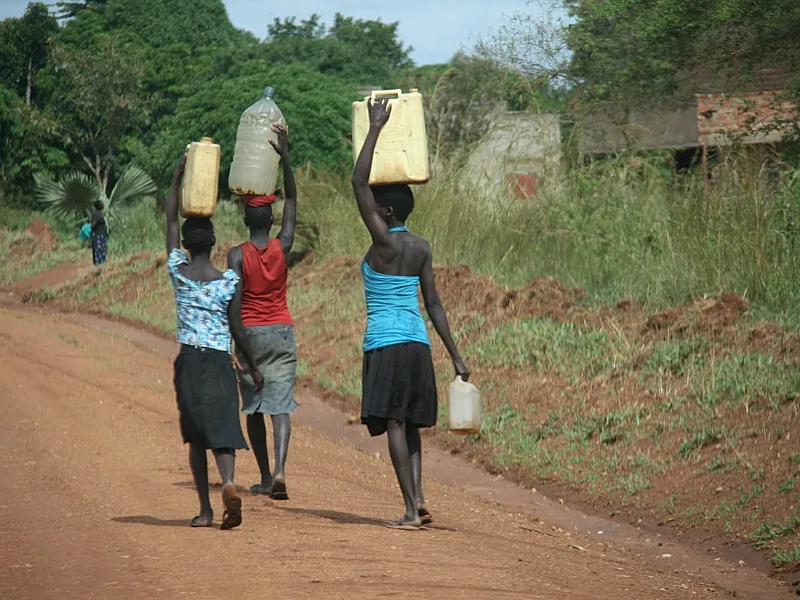
Water access exposes the gap between nominal gains and dependable service.
- Safely managed drinking water access held at about 36% from 2015 to 2023, far below the global average of above 70%.
- Sanitation, water quality, and treatment infrastructure lag further behind, driving public-health deficits, lost learning time, and heightened vulnerability to droughts and floods.
Industrialisation mirrors this stagnation.
- Manufacturing value added slipped from 10.7% to 10.6% of GDP between 2015 and 2024
- Urban slum populations barely declined, from 46.2% to 45.7%.
- Connectivity remains the sole on-track Goal 9 target; however, internet shutdowns doubled from 14 to 28 over the same period, underscoring that access without reliability, rights, and resilience remains incomplete.
The Bottleneck Is Coordinated Delivery Capacity
The report repeatedly points to fragmentation.
Ministries often plan within separate mandates even when outcomes depend on one another:
- Water agencies extend networks without energy for pumping, housing projects proceed without mass transit, and industrial parks rise without reliable logistics, skills, or affordable finance.
- Each intervention can be technically valid yet still fail as a system.
Financing arrangements deepen that fragmentation.
- Short-term projects are easier to announce than long-term maintenance systems, and capital budgets often fund facilities without securing staff, repairs, data collection, or service quality.
- External finance frequently arrives in narrow thematic windows that reward isolated outputs over shared outcomes.
Sequencing matters as much as project selection.
- Universal energy access requires African countries to roughly triple annual new connections, while inaction on clean cooking could cost $2.4 trillion annually.
- These pressures make sequential delivery risky; plans must identify investments that unlock multiple outcomes earliest.
This is why institutional capacity is infrastructure itself.
Governments need delivery units coordinating ministries, cities, utilities, financiers, and communities around shared geography, timetables, and reliable data.
Africa Can Turn Gaps Into Leverage
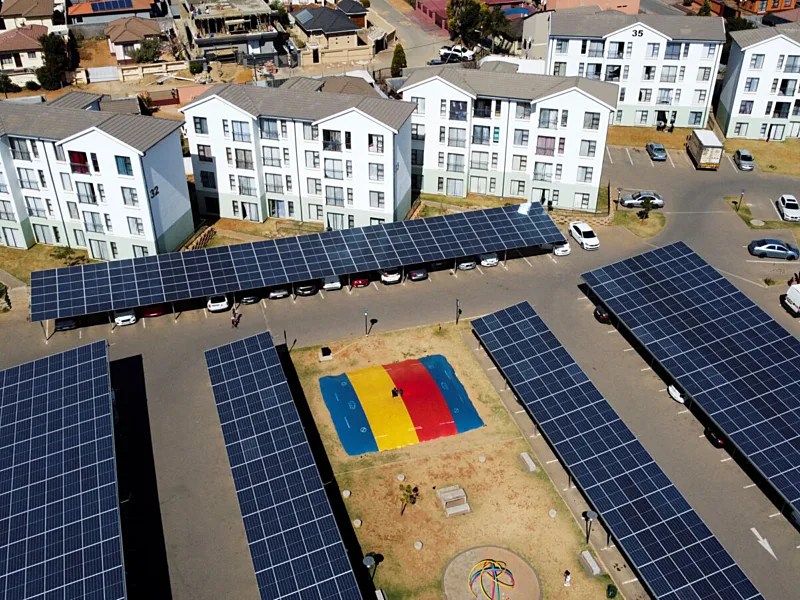
The same interdependence that creates risk can create stronger returns. Electrifying health and education facilities with solar across East and Southern Africa, for example, is estimated to require about $5 billion and roughly 500 megawatts-peak of capacity.
That investment would not simply add electricity; it could improve vaccination, maternity care, digital learning, staff retention and local enterprise.
Regional integration offers another multiplier. Cross-border power pools can reduce costs and balance supply.
The African Continental Free Trade Area can create demand for transport, digital and industrial infrastructure.
However, implementation adds infrastructure requirements of its own.
Estimates in the report put electricity investment needs at $157 billion for 2025 – 2030, rising in later periods, with additional AfCFTA-related needs.
The opportunity is to design projects around bundles of public value. A water programme can include renewable power, local maintenance businesses and flood resilience.
- A transport corridor can connect secondary cities, food markets and manufacturing clusters.
- An urban upgrading programme can combine tenure security, sanitation, drainage, energy and safe mobility.
Build One Delivery System Around People
The immediate action is to convert national strategies into a small number of integrated, costed delivery portfolios.
- Each portfolio should name responsible institutions, financing sources, communities served, maintenance obligations, and outcome indicators.
- Public dashboards should track service reliability and inclusion, not merely disbursement.
Domestic resource mobilisation must anchor that architecture.
- Better tax administration reduced illicit financial flows, and stronger public procurement can widen fiscal space, enabling development banks and private investors to support bankable pipelines rather than one-off projects.
- Concessional capital and guarantees should absorb risks markets cannot reasonably carry, particularly in low-income and climate-vulnerable settings.
Partnerships should be judged by the capabilities they leave behind.
- Technical assistance must strengthen project preparation, procurement, municipal finance, regulation, and statistical systems rather than produce parallel reports.
- Financing agreements should disclose costs, risk allocation, and expected outcomes, giving communities and legislatures grounds to question project selection and lifetime costs.
Governments must also protect last-mile institutions:
- Municipalities, utilities, clinics, schools, and local enterprises whose staffing and maintenance determine whether commitments become dependable services.
Path Forward – The Path Forward Starts With Integration
Africa does not need five disconnected rescue plans.
It needs one implementation discipline that treats water, energy, industry, cities and finance as a shared development system.
The 2030 stretch should be viewed through the lens of a practical question: did investment make essential services more reliable, productive and fair for the people who use them?