Africa’s renewable-energy transition is increasingly confronting its next constraint: the networks required to move clean electricity from projects to people.
At least $4.5 billion of tracked African energy commitments in the first half of 2026 targeted grid infrastructure.
The financing shift comes as IRENA estimates Africa’s electrification will accelerate sharply through 2050, requiring grids, storage, interconnections and distributed systems to expand alongside renewable generation.
Africa’s renewable future runs through grids
Africa’s clean-energy challenge is changing.
Building more solar farms, wind projects and other renewable-generation assets remains essential.
However, evidence from the first half of 2026 suggests investors are increasingly recognising that generation cannot expand sustainably without the networks required to deliver the electricity.
At least $43 billion in renewable-energy financing and commitments was tracked across 34 African countries during the first half of 2026. About $4.5 billion, approximately 10%, was directed towards grid infrastructure.
That shift aligns with a broader warning emerging from the International Renewable Energy Agency.
IRENA’s transition outlook indicates that rapidly rising electrification will require grid investment, energy storage and system flexibility to expand at unprecedented rates.
For Africa, where electricity must support access, industrialisation and economic growth simultaneously, the grid is becoming a central sustainability investment case.
Grid bottlenecks become transition’s investment test
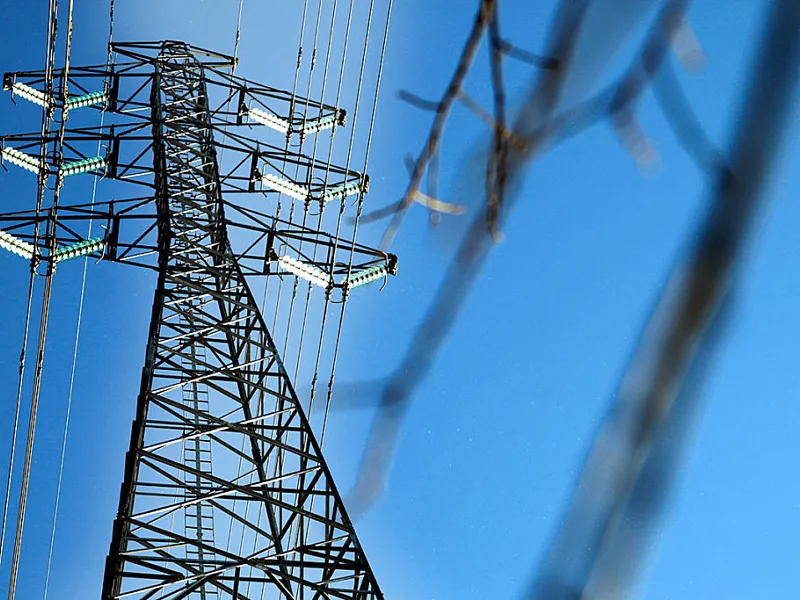
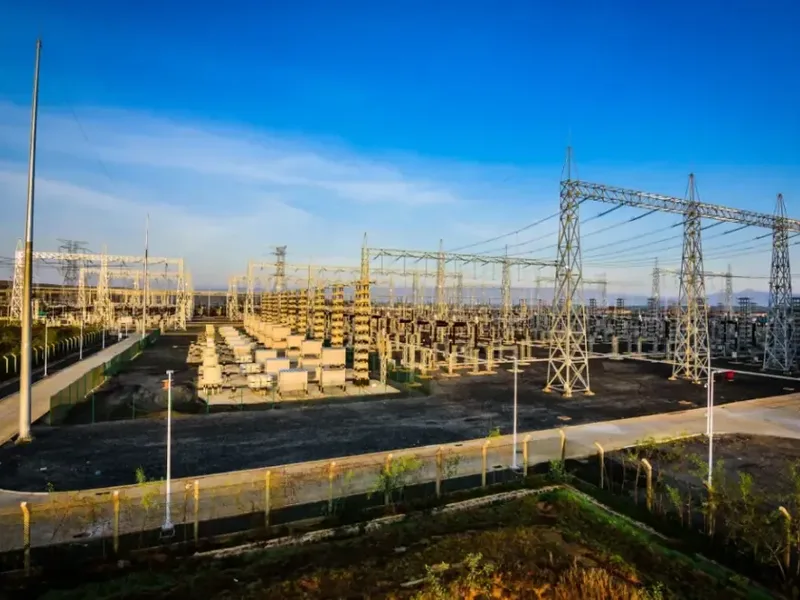
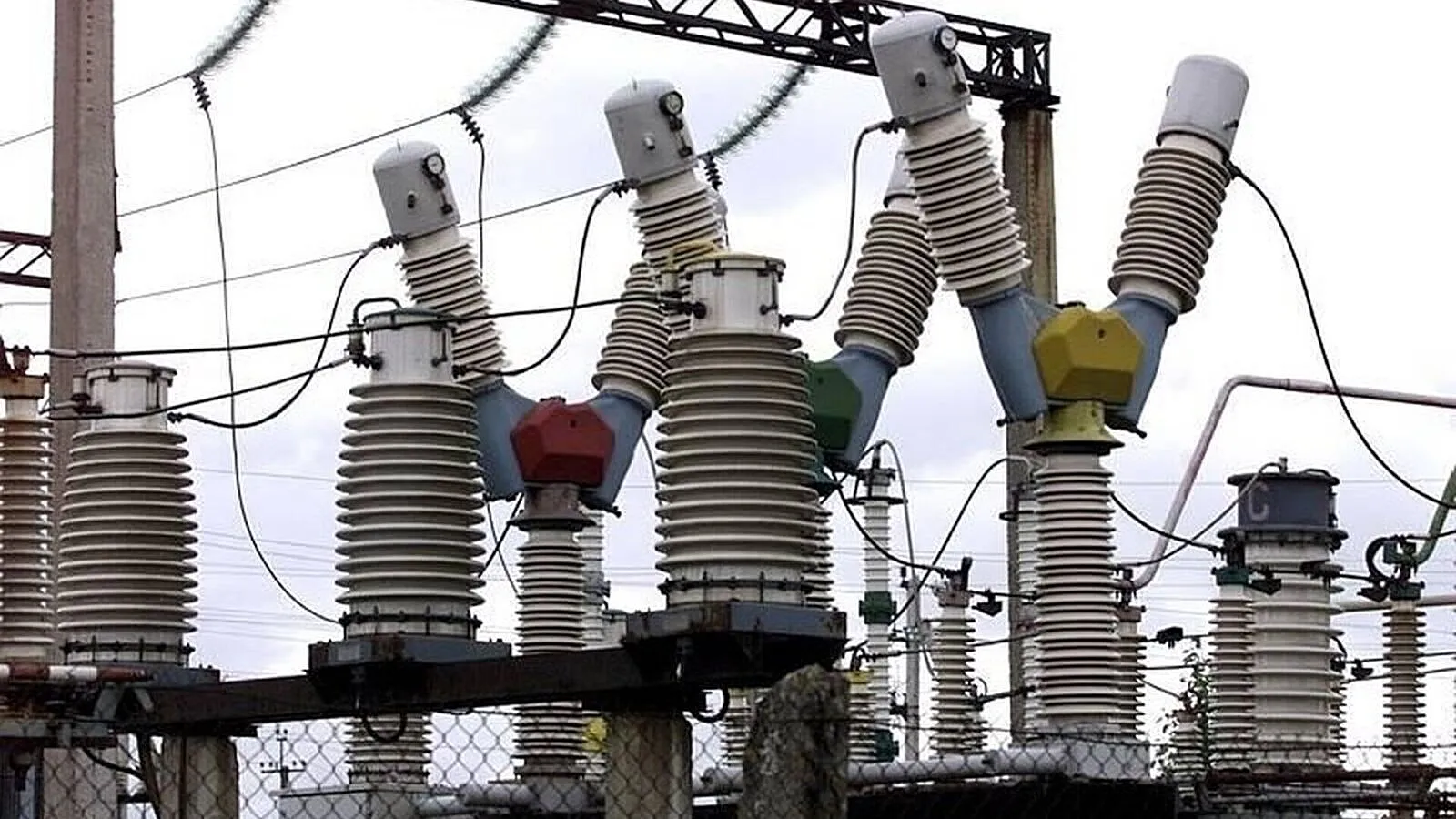
While solar panels and wind turbines capture attention as visible symbols of the energy transition, the less glamorous infrastructure of transmission lines, substations, and control systems ultimately determines whether new generation reaches households and businesses.
Weak grid networks delay project connections, constrain generation, increase technical losses, and expose systems to outages, while also weakening utility finances and making renewable projects harder to fund.
IRENA's data illustrate the scale of the challenge.
- Globally, electricity's share of final energy consumption is projected to rise from nearly 25% in 2023 to 35% by 2035 and over 50% by 2050.
- Africa starts further behind, with electricity accounting for just 12% of final energy demand in 2023, potentially climbing to 26% by 2035 and nearing 50% by 2050, a shift that could transform African economies, provided power systems expand in step.
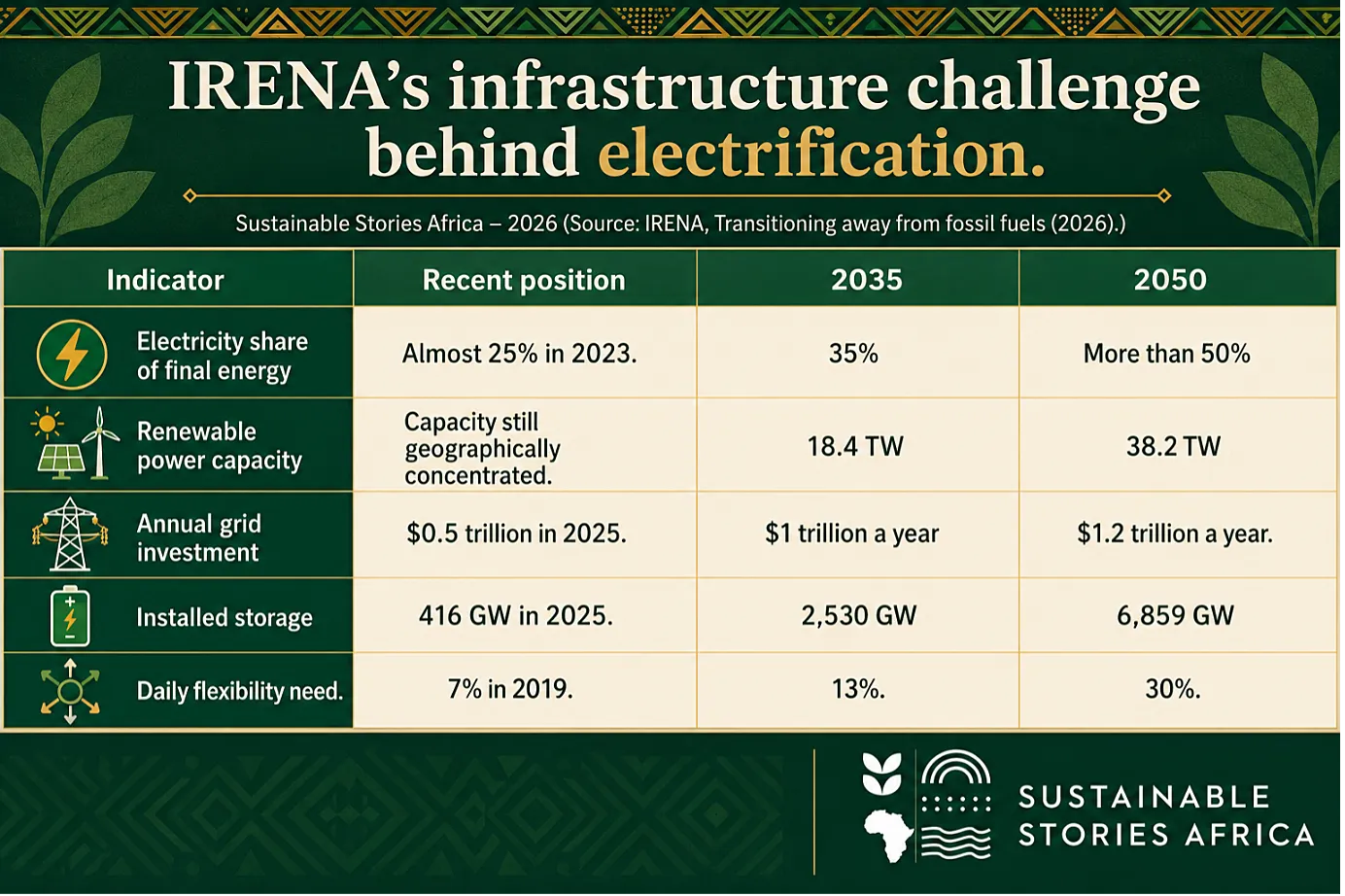
Meeting this trajectory demands more than new capacity.
- Global annual grid investment must double from roughly $500 billion in 2025 to $1 trillion by 2035, then rise to $1.2 trillion by 2050.
- Storage needs are starker still, growing from 416 GW to 2,530 GW by 2035 and 6,859 GW by 2050, underscoring that generation, transmission, storage, and demand flexibility must be planned as one integrated system.
Funding begins following Africa’s network constraints
Capital appears to be responding.
- At least $43 billion in tracked African renewable-energy commitments in the first half of 2026 was spread across 34 countries
- Regional and multi-country initiatives accounted for a significant share of the financing identified.
Grid infrastructure attracted at least $4.5 billion.
- One of the largest signals was a $1.6 billion World Bank commitment for Eastern African electricity networks.
The significance extends beyond the addition of power lines.
- Stronger regional networks can help countries exchange electricity, accommodate variable renewable generation and reduce dependence on isolated domestic systems.
Investment is also beginning to connect renewable deployment with African industrial development.
About $3.5 billion of the tracked commitments targeted wind and solar manufacturing.
- That included a $420 million wind-turbine manufacturing plant in Egypt, strengthening the argument that Africa’s energy transition can create industrial value alongside installed generating capacity.
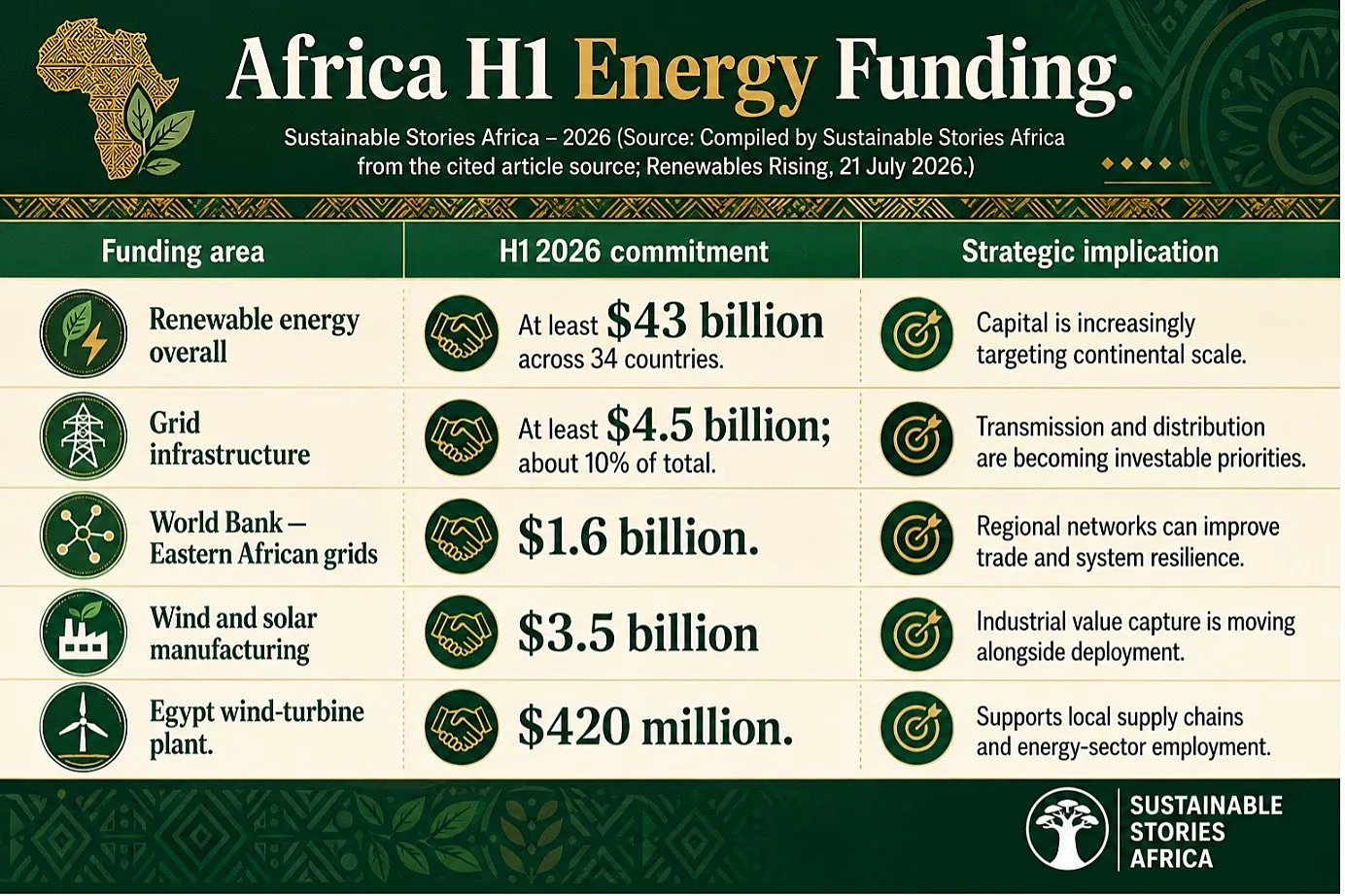
The financing pattern matters because it begins to address a structural weakness in Africa’s renewable investment story.
- Financing generation without adequately funding networks can leave new assets waiting for connections or operating below their potential.
Grid finance, therefore, is not competing with renewable finance. It is increasingly becoming part of renewable finance.
IRENA numbers show infrastructure scale ahead
IRENA’s projections suggest that electricity will play a dramatically larger role across African economies over the coming decades.
Moving from approximately 12% of final energy demand in 2023 to 26% by 2035 would require electricity networks to accommodate not only existing consumers but new sources of demand from transport, buildings, industry and expanding urban economies.
By 2050, when electricity could approach half of Africa’s final energy consumption, the distinction between energy policy and infrastructure policy will become increasingly difficult to sustain.
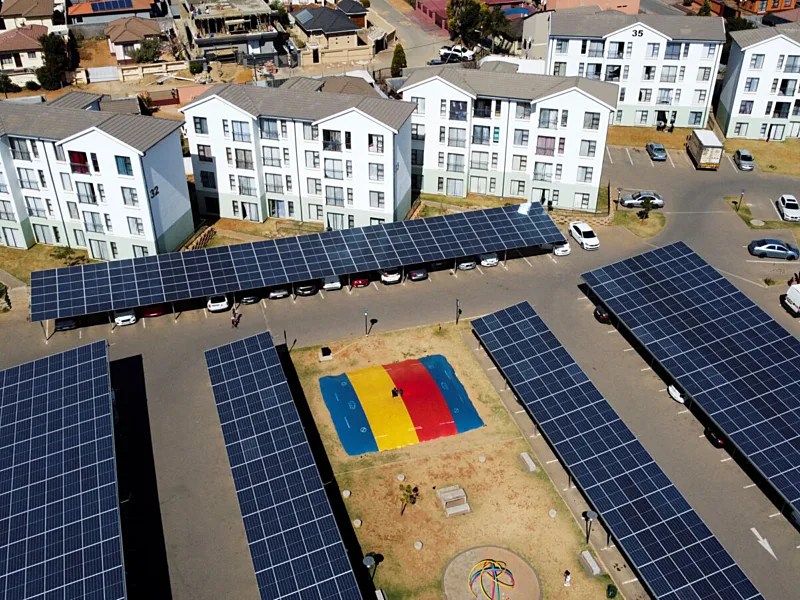
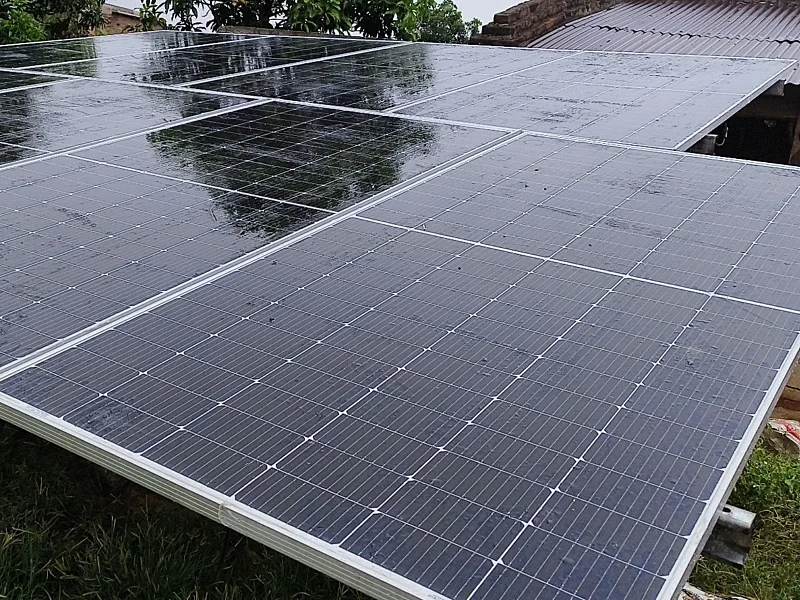
The continent will need large, interconnected grids where population density and industrial demand justify them. It will also require distributed renewable systems in locations where waiting for conventional grid expansion would prolong energy exclusion.
Cross-border interconnections could allow countries with strong renewable resources to supply neighbouring markets, while storage and flexible demand can help manage fluctuations in solar and wind production.
The central lesson from IRENA’s projections is therefore not simply that Africa needs more renewable capacity.
It needs an electricity system capable of using that capacity effectively.
Better grids unlock wider economic value
For African countries, successful grid investment could produce consequences far beyond the electricity industry.
- More reliable power can support factories, digital businesses, irrigation systems, agricultural processing, cold chains, hospitals, schools and small enterprises.
- Regional interconnections can expand electricity markets and improve resilience by allowing power to move across borders when individual systems face shortages.
Stronger networks can also improve the investment case for renewable developers.
- A project connected to a reliable transmission system with credible off-takers and predictable demand is fundamentally different from one facing chronic curtailment or uncertain grid access.
This is where the growing commitments in manufacturing become relevant.
- The $3.5 billion directed towards wind and solar manufacturing indicates an opportunity for African countries to capture more economic value from the transition.
- The $420 million Egyptian wind-turbine investment offers one example of how renewable deployment can be linked to manufacturing capacity, supply chains, skills and employment.
The outcome should not be more renewable equipment installed in Africa, but stronger African capabilities around the infrastructure supporting the transition.
Financing must translate into reliable service
More capital alone will not guarantee a better electricity system.
Governments and development institutions must ensure grid investment delivers measurable results:
- Additional connections, reduced losses, fewer outages, better voltage quality, faster renewable-project connections, and more electricity available for productive economic activity.
Financing structures matter too.
- Since many grid assets generate social and economic returns beyond what tariffs alone capture, concessional capital, guarantees, blended finance, and development-bank participation can help mobilise investment where commercial financing falls short.
- Planning must also guard against a new divide between countries able to attract large-scale infrastructure finance and those left dependent on fragmented projects.
Africa's first-half financing signals are encouraging, with funding beginning to address grids and manufacturing alongside generation.
However, $4.5 billion should be seen as a starting point, not proof the bottleneck is solved.
The question is no longer how many megawatts can be financed, but whether grids can connect them, storage can balance them, and households ultimately receive more reliable power.
Path Forward – Building grids for an inclusive transition
Africa’s renewable transition must integrate generation, transmission, distribution, storage, interconnections and distributed energy from the outset.
The emerging grid-financing commitments provide an important foundation, but investment must now translate from announcements to measurable improvements in electricity reliability and access.
The real sustainability metric will not be infrastructure spending alone.
It will be whether stronger networks translate renewable investment into productive electricity, resilient economies, African industrial capability and dependable energy for communities across the continent.