Africa emits less than four% of global greenhouse gases yet absorbs some of the world's harshest climate shocks, a contradiction that panellists at Lagos's FITC Sustainability | ESG Conference 3.0 say must now become the continent's greatest business opportunity
At the environmental plenary of the FITC Sustainability | ESG Conference 3.0 on 8 July 2026, business leaders, bankers, and policymakers confronted a hard truth: environmental risk is now financial risk, and Africa's infrastructure and cost gaps threaten to leave it behind a global capital shift already worth over $35 trillion.
The session asked whether African businesses can move from climate vulnerability to climate leadership before the next flood, credit downgrade, or carbon border tax forces the issue.
Lagos Confronts the Climate-Finance Divide
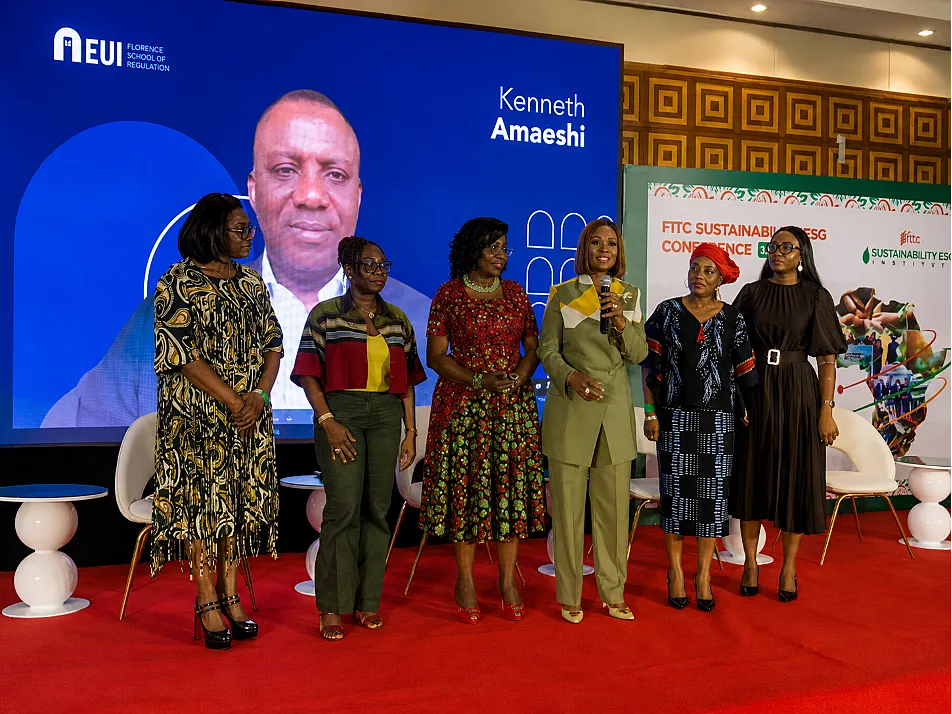
At Lagos's FITC Sustainability | ESG Conference 3.0, held on 8 July 2026, the environmental plenary gathered lead speaker Dr Chinyere Almona of the Lagos Chamber of Commerce and Industry alongside panellists Titi Oshodi of the Lagos State Governor's office, Titilope Oguntuga of IHS Towers, Tonna Ezema of Fidelity Bank, and Professor Kenneth Amaeshi, joining virtually as Chair in Sustainable Finance and Governance, under moderator Ayotola Jagun of Oando Plc
Almona opened with a warning that recent flooding in Lagos had halted businesses citywide, framing climate change as "no longer a distant environmental concern" but a present, tangible force reshaping supply chains and asset values.
Her core message: over $35 trillion in global assets now sit under ESG frameworks, and capital is actively flowing toward transparent, well-governed businesses, leaving African firms exposed if they fail to adapt.
When Floods Become Balance Sheets
The hook was unmistakable: Almona's observation that "environmental risk is equal to financial risk," and that climate exposure has become a boardroom risk demanding executive-level attention rather than a sustainability department afterthought.
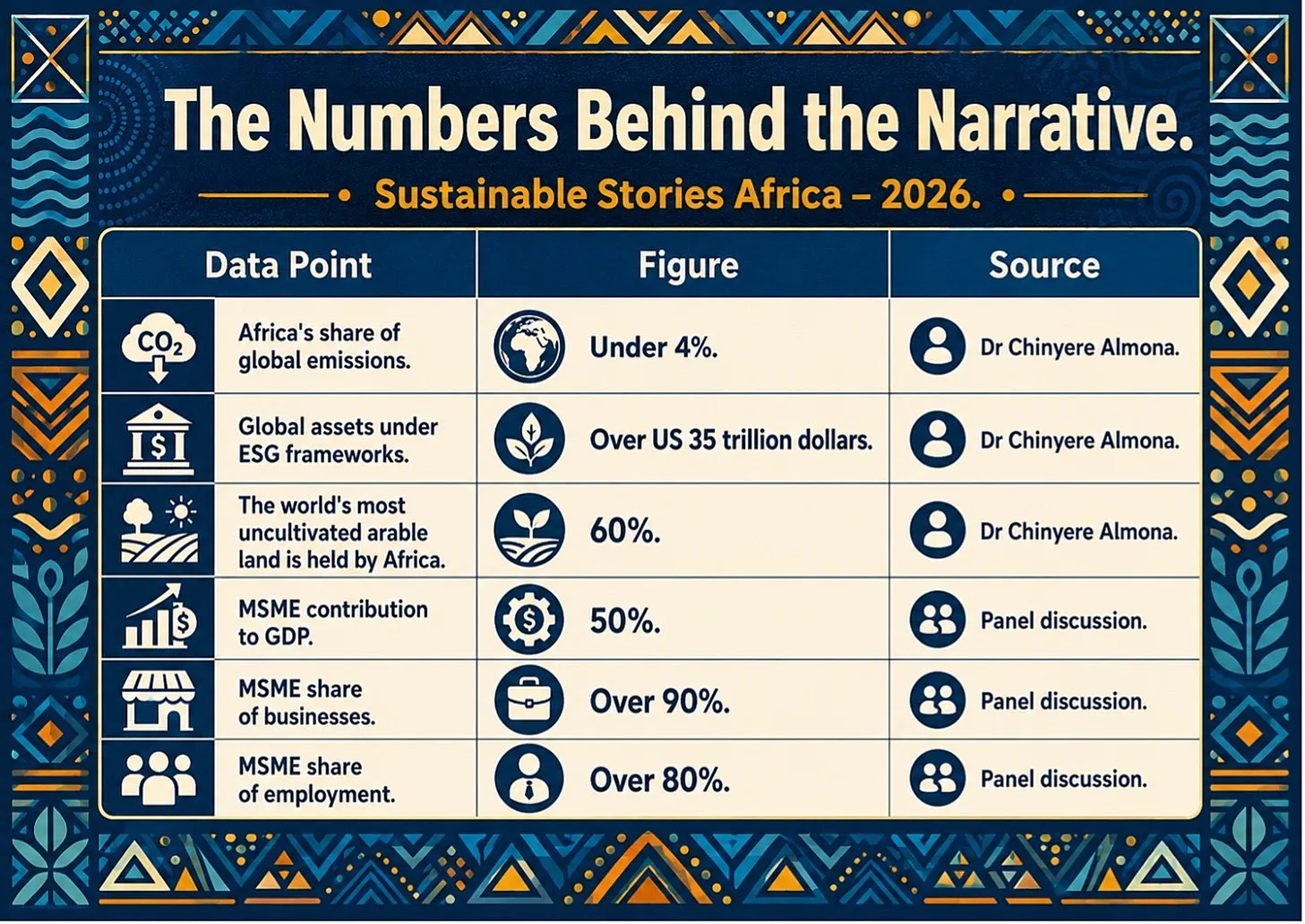
This matters urgently because Africa's paradox, such as minimal emissions, maximum vulnerability, sits alongside genuine assets: 60% of the world's uncultivated arable land, abundant renewable energy potential, critical minerals, and a young population.
The Numbers Behind the Narrative
Panellists layered data onto the narrative, painting a picture of both risk and untapped opportunity across African markets.
Dr Almona identified five global trends reshaping business: tightening carbon pricing and mandatory climate disclosures across trading blocs, the $35 trillion ESG capital shift, supply chain disruption from climate and geopolitical shocks, accelerating movement away from fossil fuels, and biodiversity loss emerging as systemic economic risk.
Tonna Ezema of Fidelity Bank revealed that environmental and social due diligence now begins before a loan appraisal even starts, with quarterly reporting required from borrowers, and mandatory adoption of IFRS S1 and S2 disclosure standards will soon extend beyond listed entities to SMEs.
Titilope Oguntuga of IHS Towers described embedding sustainability KPIs at every employee level and running annual supply chain training. In the same vein, Titi Oshodi highlighted Lagos State's push toward electric buses, waterway transport, and light rail as measurable levers for decarbonisation.
Professor Kenneth Amaeshi, joining virtually, challenged the room's Lagos-centric framing, noting that Africa is largely a consumer rather than a producer of renewable energy technology, and that green initiatives must also generate jobs to address the continent's deeper informality and unemployment challenges.
The Upside of Getting This Right
Almona argued that sustainability delivers tangible returns, including energy efficiency, waste monetisation (citing Nestlé's zero-waste model), preferential green financing, blended capital access, and stronger brand trust among employees, regulators, and communities.
Ezema confirmed this shift is already reshaping credit: businesses demonstrating strong environmental and social governance structures are increasingly securing preferential lending terms. In the same vein, those lacking such frameworks risk being entirely excluded from future capital flows.
The flip side is stark, Chinyere Almona of the Lagos Chamber of Commerce and Industry warned that without addressing infrastructure and cost bottlenecks, businesses reliant on diesel generators cannot realistically cut emissions, regardless of ambition.
What Must Move Now
The panel converged on specific, actionable shifts required across government, finance, and business.
- Governments should create enabling policy through subsidies, rebates, and tax breaks, since Almona noted that African businesses lack the funding support available to Western counterparts.
- Financial institutions should deepen environmental and social due diligence in lending, following Ezema's model of pre-appraisal risk screening and quarterly borrower reporting.
- Corporates should embed sustainability KPIs at every employee level rather than isolating them to one department, per Oguntuga's IHS Towers example.
- Policymakers should invest in digital measuring, reporting, and verification systems that let Lagos benchmark decarbonisation progress against global climate finance standards, as Oshodi described.
- Development actors should bring MSMEs into the sustainability conversation directly, given their outsized share of GDP and employment, a gap Ezema flagged as urgent.
- Sustainability advocates should reframe environmental narratives around jobs and survival rather than abstract climate targets, as Amaeshi urged, to avoid the perception of a "foreign agenda".
Path Forward – Reward, Don't Impose, Sustainability
Closing the session, panellists agreed that the adoption of sustainability accelerates only when it makes clear economic sense, for businesses, government, and communities alike, as Ezema summarised in her final remark.
Jagun's closing charge was personal: environmental responsibility begins with individual choices about energy use, waste disposal, and transport, reinforcing that systemic change ultimately depends on collective, everyday accountability across African markets.