Africa's forests, once responsible for absorbing one-fifth of all CO₂ captured by global vegetation, have crossed a critical threshold, flipping from carbon sinks to net emitters.
This seismic shift arrives precisely as the continent's carbon credit market eyes a $15 billion annual opportunity.
The question now is whether Africa can unlock its forest finance potential before its most powerful climate asset disappears.
When Green Turns Against Us
Africa's forests were long regarded as the continent's most powerful climate contribution. The Congo Basin alone was estimated to absorb around 600 million tonnes of CO₂ annually, a natural buffer quietly offsetting industrial emissions worldwide. That buffer is now failing.
New research published in Scientific Reports, led by scientists from the National Centre for Earth Observation at the Universities of Leicester, Sheffield, and Edinburgh, confirms that African forests reversed course after gaining biomass between 2007 and 2010.
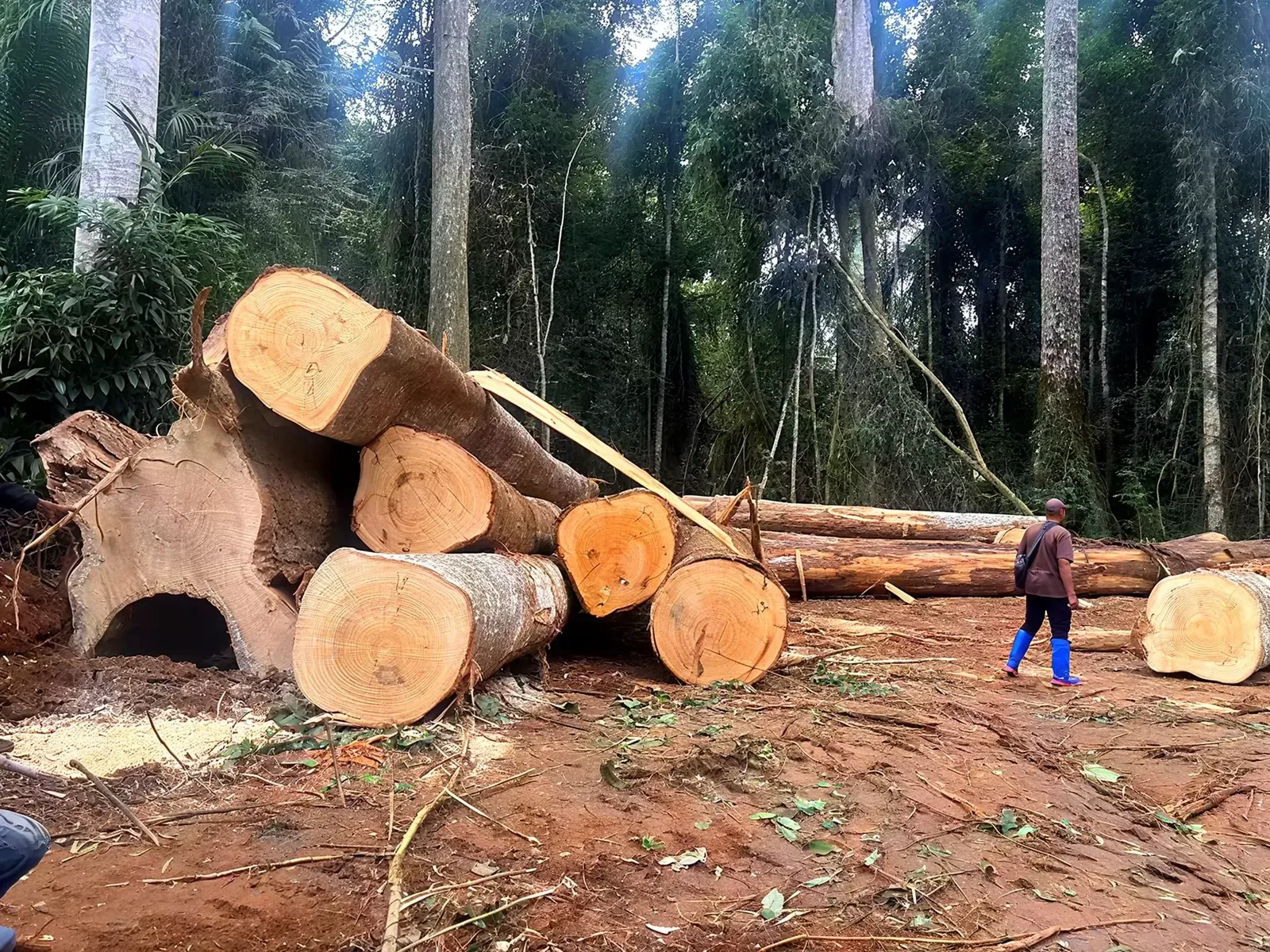
From 2011 to 2017, they lost approximately 106 million tonnes of biomass per year, equivalent to approximately 200 million tonnes of CO₂ emissions annually. Logging, mining, and agricultural expansion are the primary drivers, accelerating despite decades of conservation policy.
The consequences extend beyond Africa. Researchers warn that the reversal forces deeper global emissions cuts to remain within the Paris Agreement's 2°C ceiling.
Africa's forests no longer buy the world time; they now consume it.
The paradox is acute. Simultaneously, Africa stands at the threshold of a projected $15 billion annual carbon credit market, with the Africa Carbon Markets Initiative targeting 300 million credits per year by 2030 and 1.5 billion by 2050.
The continent's most valuable climate asset is collapsing precisely when global demand for it is surging.
A Continent Haemorrhaging Its Carbon Wealth – The Scale of Africa's Forest Emergency
Before 2010, Africa's forests and shrublands absorbed 20% of all CO₂ captured by global vegetation. That contribution is now in reverse.
Tropical forest zones, including the Congo Basin, eastern Africa, and West Africa's coastal belt, are recording the heaviest biomass losses, with the Congo rainforest's annual absorption of 600 million tonnes declining year on year.
Professor Heiko Balzter of the University of Leicester was unambiguous: "This is a critical wake-up call for global climate policy. Climate finance for the Tropical Forests Forever Facility must be scaled up quickly to put an end to global deforestation for good."
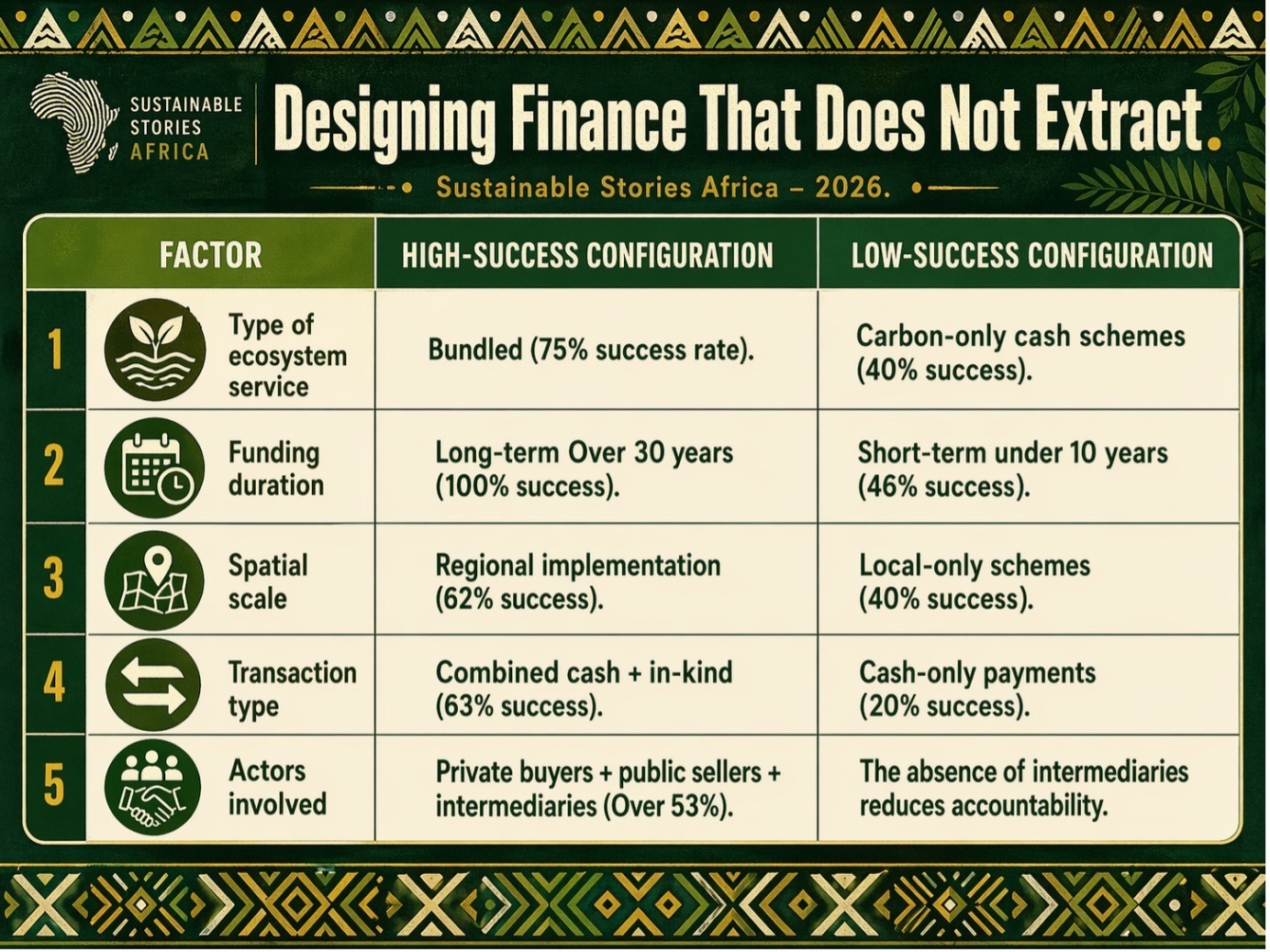
Research across Kenya, Uganda, and Tanzania reinforces the governance dimension. Of 25 Payments for Ecosystem Services case studies examined, only 40% of carbon-specific schemes succeeded, primarily because cash-only transactions fail to sustain conservation behaviour.
Long-term-funded schemes, by contrast, achieved a 100% success rate, confirming that a durable financing architecture is not optional.
The Carbon Credit Opportunity and Its Inequity
Africa accounts for just 2% of global carbon credit trading, despite hosting the world's second-largest rainforest and exceptional biodiversity.
At $50 per tonne, nature-based projects could generate $15 billion annually, enough to fund conservation, community livelihoods, and climate adaptation simultaneously.
However, the distribution of that value remains deeply unequal. Research across Kenya, Uganda, and Tanzania found that bundled ecosystem service schemes, combining carbon, biodiversity, water, and landscape benefits, achieved a 75% success rate and delivered the broadest improvements to livelihoods.
Single-service carbon cash payments, by contrast, recorded a 20% failure rate, consistently underperforming against long-term conservation goals.
The lesson extends beyond payment design. Fair compensation must reflect opportunity costs, implementation costs, and transaction costs, not merely market price.
Without that correction, the $15 billion opportunity risks repeating a familiar pattern: value extracted from African landscapes, communities left behind.
Communities at the Centre – From Fortress Parks to Living Contracts
Across Tanzania, Uganda, and Peru's Huascarán National Park, the evidence converges on a single principle: conservation legitimacy is earned through negotiation, not imposed through exclusion.
Research on Huascarán, a UNESCO World Heritage Site, reveals that the same institution can function simultaneously as a "fortress park" in some zones and a "paper park" in others, depending entirely on whether communities feel their livelihoods, territorial rights, and voices are respected.
In Tanzania, the African Wildlife Foundation supported 37 Village Natural Resource Committees and complementary governance structures across the Kilombero landscape in 2025, reversing habitat encroachment, restoring over 150 hectares of degraded forest and riparian areas, and raising 325,958 seedlings without displacing communities.
AWF's own reflection distilled the model plainly: "Conservation succeeds when people lead."
Uganda reinforced that lesson. Across the Kidepo and Murchison Falls landscapes, rights-based safeguards, grievance mechanisms, and regenerative farming practices built conservation infrastructure from communities outward, connecting forest cover and wildlife corridors directly to water security, agriculture, and tourism income.
What Fair Compensation Truly Demands – Designing Finance That Does Not Extract
East African case study analysis identifies five decisive factors that distinguish thriving Payments for Ecosystem Services schemes from failing ones, and the data are unambiguous.
Africa's carbon market will only deliver on its promise when payment designs move beyond cash-for-carbon to integrated models compensating communities for water security, biodiversity, landscape, and carbon benefits across time horizons that match ecological cycles.
Research on Peru's Huascarán National Park sharpens that lesson. Communities simultaneously accepted conservation objectives while contesting policies that threatened territorial sovereignty and historical resource rights, demonstrating that legitimacy is not fixed but continuously negotiated.
African forest governance must treat community legitimacy as something actively earned through transparent contracts, equitable revenue sharing, and genuine co-management — never assumed, never permanent.
Governments, Investors, and Communities Must Move - Actions That Cannot Wait
Arresting Africa's net emission of 200 million tonnes of CO₂ annually requires coordinated action across three governance levels.
- Governments must ratify enforceable REDD+ frameworks with mandatory community benefit-sharing, establish sovereign carbon market structures targeting 300 million credits annually by 2030, and legislate long-term PES agreements of 10 to 30 years linked to verifiable ecological outcomes.
- Investors and carbon market actors must shift allocations toward bundled ecosystem service schemes, prioritise African forest governance institutions and community-based organisations as accountability infrastructure, and align verification standards with community-validated monitoring.
- Communities and civil society must leverage existing land rights and customary tenure frameworks to negotiate, not merely accept, equitable contracts, build institutional capacity within Village Natural Resource Committees and Wildlife Management Areas, and assert the full tradeable value of water, biodiversity, and landscape services beyond carbon alone.
The window is narrowing. The architecture for response already exists; what remains is the will to deploy it equitably.
Path Forward: Rewarding the Guardians
Africa's forest crisis is simultaneously an ecological emergency and a governance failure.
Research is unambiguous: where communities lead conservation, landscapes recover; where they are excluded, forests decline, and carbon flows backwards.
The $15 billion annual carbon credit opportunity is real; however, capturing it justly requires long-term, bundled, community-embedded payment systems that proportionally reward the actual stewards of Africa's forest wealth.
The continent's forests cannot wait for perfect market conditions. Those conditions must be built around the people already standing guard.
Culled Using Information From: Africa’s forests now emit more carbon than they absorb, New research warns - African Sustainability Matters