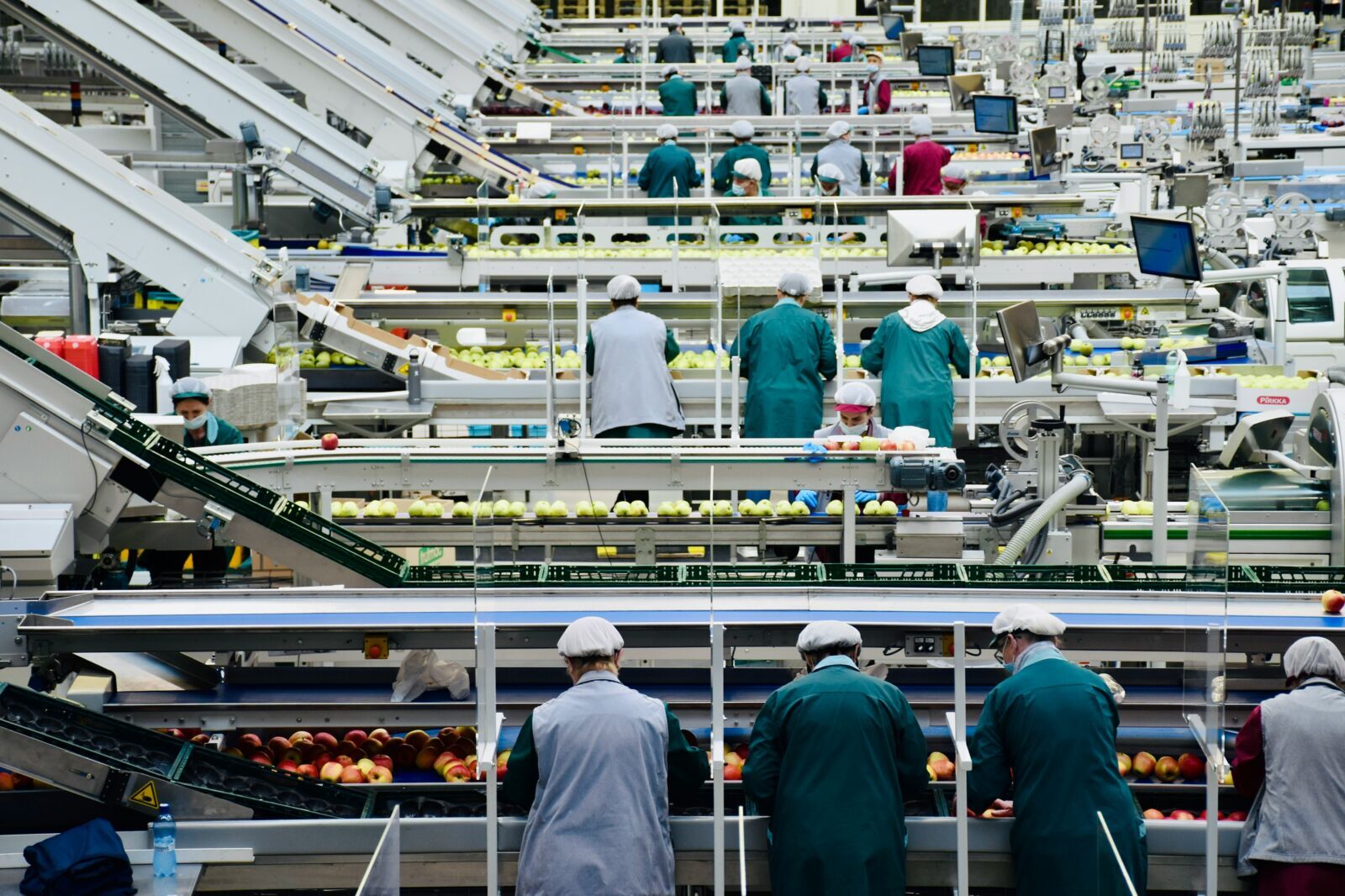
Global food supply chains were built for stability. Climate shocks, price volatility, water stress and nature loss are now testing that model.
A 2026 World Economic Forum white paper argues that procurement must evolve beyond cost, quality and availability to include resilience, sustainability and farmer-backed transition finance.
Procurement Now Shapes Food Resilience
Food procurement is becoming one of the most important climate and business-risk levers in the global economy.
A January 2026 World Economic Forum white paper, First Movers Coalition for Food: CEO Lessons for the Future of Food Procurement, warns that food supply chains designed for stable climate conditions now face overlapping disruption from extreme weather, volatile prices, geopolitical shocks, natural resource depletion and shifting consumer expectations.
The report, produced in collaboration with Bain & Company, says companies must rethink what they buy, how they buy it and how they support farmers and suppliers through transition.
The old procurement model, built around cost, quality and availability, is no longer enough. Food buyers now need to add resilience and sustainability to the procurement equation.
For African markets, this is not abstract. Agriculture remains central to jobs, food security, exports and rural livelihoods.
As global buyers raise expectations around deforestation, emissions, traceability and resilient sourcing,
African producers could either gain stronger market access or face tougher exclusion risks if transition finance, farmer support and credible demand signals do not materialise.
Climate Volatility Is Repricing Food
The report’s most urgent warning is that every 1°C rise in temperature could cut yields of major crops by up to 20%, according to some estimates cited in the paper. Rice yields alone may fall by 20% by 2050, while research cited by the WEF estimates that simultaneous breadbasket failures could rise from about 6% under today’s climate to around 40% at 1.5°C and 54% at 2°C of sustained warming.
That changes the procurement conversation. A company buying cocoa, rice, dairy, soy, wheat or beef can no longer assume that yesterday’s sourcing regions will deliver tomorrow’s volumes, prices and quality.
Droughts, floods, pests, degraded soils and water scarcity are turning food procurement into a resilience discipline.
The food system is also part of the pressure it faces. The WEF paper notes that agrifood systems produce nearly 30% of global emissions, agriculture drives over 90% of tropical deforestation, and farming accounts for around 70% of global freshwater withdrawals.
That dual role, contributor to environmental decline and victim of climate disruption, makes procurement a core ESG issue.
Demand Signals Can Unlock Scale
The First Movers Coalition for Food is mobilising 60 food system organisations, including 26 major buyers with nearly $1 trillion in combined revenues, to reshape procurement and strengthen demand signals for sustainably produced agricultural commodities.
These signals, ranging from procurement commitments to long-term offtake agreements and supply chain investments, provide farmers, suppliers, and financiers with confidence in future demand for lower-emission and nature-positive products.
The challenge is not a lack of solutions but scale. Many sustainable practices remain stuck in pilot phases, while assumptions around permanent “green premiums” or compliance-driven sourcing continue to limit progress in thin-margin markets. Stronger demand signals and co-investment models can reduce these constraints.
While ambition is rising, 80% of members have Scope 3 targets and 75% support deforestation-free supply chains, traceability gaps persist, with only 2% of Brazil’s beef and under 4% of soy in high-risk regions meeting traceability standards.
Better Buying Can Protect Farmers
The opportunity is to make procurement work for both buyers and producers. A resilient food system cannot be built by shifting transition costs onto farmers who already face climate risk, limited finance and thin margins.
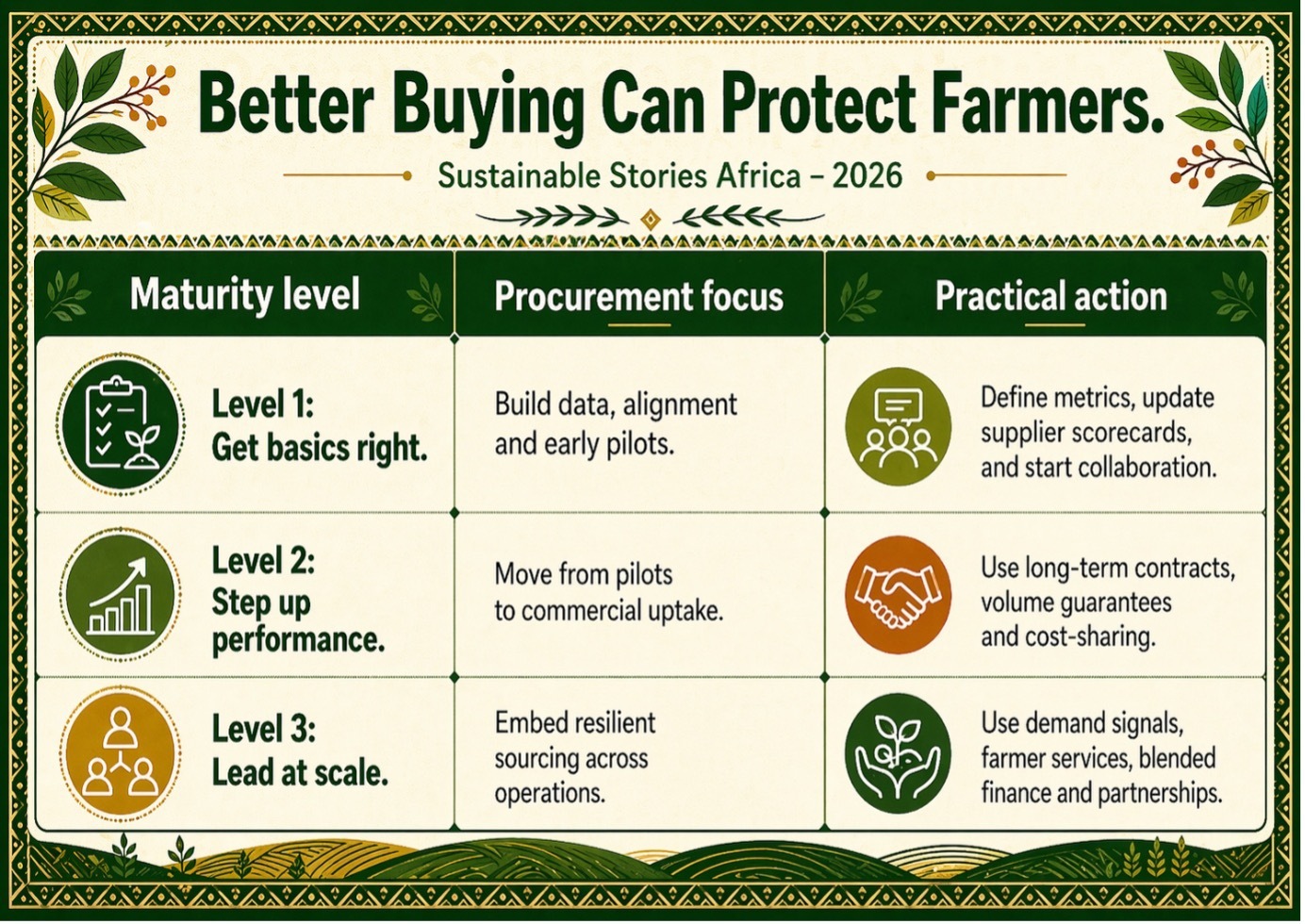
The WEF paper proposes a sourcing maturity ladder. Companies can start by getting the basics right, then step up performance through structured commercial uptake, and eventually lead at scale through integrated procurement and financing models.
The maturity ladder moves from pilot-stage sourcing of less than 5% of total volumes, to more structured sourcing above 10%, and then major sourcing shifts of 30% to 50% or more.
The report offers examples.
- Danone’s three- to five-year dairy contracts provide farmers with more predictable income, covering 38% of milk collected in Europe and 32% in the US in 2024.
- DFI Retail Group and Toumi Foods are scaling low-carbon rice in Hong Kong and Macau to 1,000 tonnes in 2026, five times the 2025 level, while reporting strong customer uptake and no consumer price premium.
- PepsiCo and Yara are working to cut fertiliser-related emissions in potato production, with lower-carbon fertilisers that can reduce fertiliser carbon footprint by up to 50% compared with industry averages.
For African producers, this kind of procurement shift could matter deeply.
Cocoa farmers in West Africa, rice producers in Nigeria and Senegal, dairy producers in East Africa, and horticulture exporters across the continent need more than buyer requirements.
They need finance, technical support, traceability tools, long-term relationships and fair risk-sharing.
Choose The Right Sourcing Pathway
The report outlines two strategic sourcing pathways, spec-anchored and decoupled sourcing, each suited to different commodity realities.
- Spec-anchored sourcing embeds sustainability into product specifications, contracts, and supplier relationships. It is most effective where supply is geographically concentrated or supplier-dependent, such as cocoa, hazelnuts, and fresh milk. With Côte d’Ivoire and Ghana producing nearly two-thirds of global cocoa, and Turkey accounting for about 70% of hazelnuts, buyers have limited flexibility, making supplier investment essential.
- Decoupled sourcing, by contrast, separates sustainability investments from procurement. This approach suits widely traded commodities like soy, wheat, and rice, allowing companies to fund improvements across supply sheds without tying every purchase to a specific source. It enables scale while preserving sourcing flexibility.
Financing is central to both models. Farmers require upfront capital, while companies can pay against verified outcomes, blending commercial, concessional, and catalytic finance.
Delivery depends on internal alignment: procurement executes, sustainability validates impact, and finance structures incentives. Without coordination, scalable solutions risk remaining stuck at the pilot stage.
Path Forward – Make Demand Signals Bankable
African food systems need procurement models that protect farmers, secure supply and reward lower-emission, nature-positive production. The priority is credible demand, not vague ambition.
Companies, governments and financiers should align around long-term offtake, farmer services, traceability, blended finance and fair cost-sharing.
That is how food procurement becomes a climate strategy, and how farmers become partners in resilience, not recipients of risk.