Extreme heat is no longer a seasonal inconvenience for farmers. A new FAO-WMO report warns that rising temperatures now threaten crops, livestock, fisheries, forests and the workers who keep food systems alive.
For African markets, the warning is direct: heat is becoming a food-security, labour-productivity and rural-income risk.
The question is whether governments and investors can move from crisis response to heat-ready agriculture.
Heat Is Rewriting Food Security
Extreme heat has emerged as one of the most acute hazards facing global agriculture, threatening food production, rural livelihoods and the stability of agrifood systems that billions depend on, according to the FAO-WMO joint report, Extreme Heat and Agriculture.
The report frames heat not as an isolated weather problem, but as a risk multiplier.
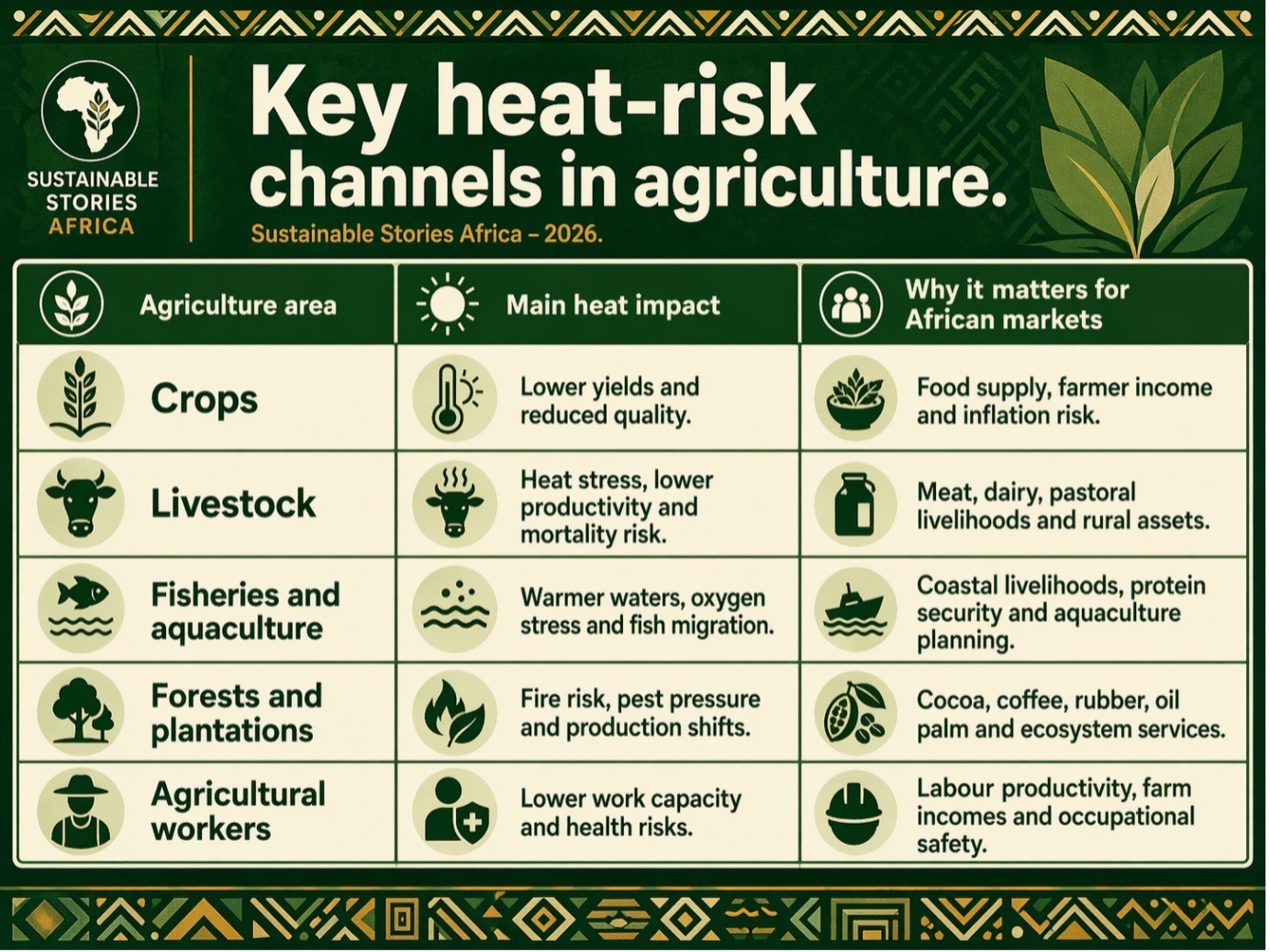
It lowers crop yields, stresses livestock, disrupts fisheries and aquaculture, increases wildfire risks, damages forests and plantations, and reduces the health and productivity of agricultural workers.
For Africa and other climate-vulnerable regions, the findings land with particular urgency.
Food systems already shaped by rainfall volatility, limited irrigation, fragile rural infrastructure and high dependence on manual labour are now facing a hotter operating environment in which the farm gate is becoming a frontline of climate risk.
Heat Becomes A Farm-Gate Shock
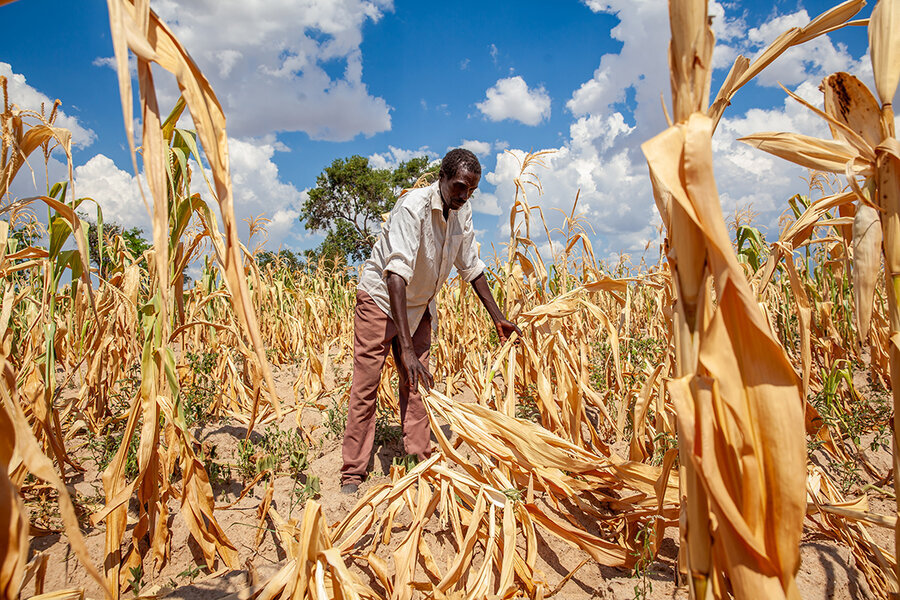
The most striking warning from FAO and WMO is that extreme heat is already reducing agricultural productivity worldwide.
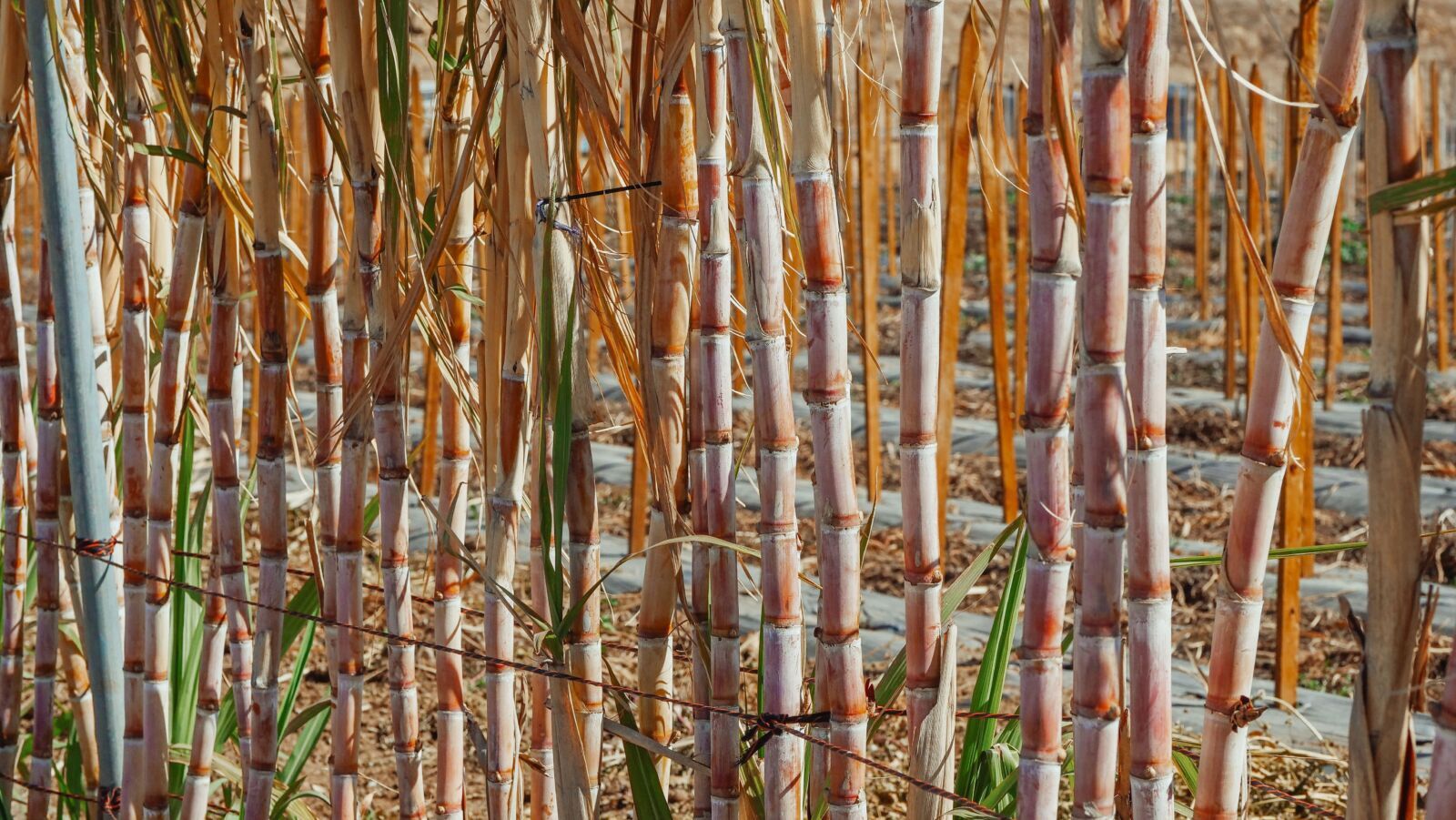
The report says maize and wheat yields have declined by 7.5% and 6.0%, respectively, per 1°C of warming, and future warming could cut staple-crop yields by up to an additional 10% for every 1°C.
That is not just a scientific projection. It is the difference between surplus and shortage for households whose food security depends on rain-fed farms, informal markets and seasonal agricultural income.
The report also warns that nearly half of the world’s cattle could be exposed to dangerous heat by 2100 under high-emission scenarios, with annual losses approaching $40 billion in 2005-dollar terms.
Under a low-emission pathway, the impacts from livestock exposure to extreme heat are reduced by nearly two-thirds.
This is why extreme heat now belongs in agriculture policy, ESG risk registers, food-inflation analysis and development finance. It is becoming a systems risk, not merely a weather event.
Why Does Heat Damage the Food Chain
FAO and WMO describe extreme heat as a contextual, impact-based hazard: it occurs when temperatures exceed thresholds that create physiological stress or direct damage to organisms, including crops, animals, fish, forests and people.
Heatwaves increase that danger, lasting from days to months and often combining with humidity, drought, wind or low rainfall.
The agriculture pathway is clear. Heat can reduce photosynthesis, shorten crop-development cycles, disrupt flowering and seed formation, lower livestock productivity, warm aquatic systems, trigger fish migration, worsen pest and disease pressures, and increase wildfire conditions.
The risk becomes more severe when heat combines with drought. FAO and WMO explain that heatwaves can intensify drought by increasing evaporative demand and removing soil moisture.
Once soils dry out, less energy is used for evaporation, and more is radiated back as sensible heat, intensifying the hot conditions around crops and pasture.
The report’s human dimension is especially important.
Agricultural workers face direct exposure to outdoor heat and, in many cases, work without adequate cooling, hydration, shade or rest.
By the end of the century, some regions, including tropical sub-Saharan Africa, could experience up to 250 days per year of climatically stressful conditions for outdoor workers under a high-emissions pathway.
Under a 3°C warming scenario, agriculture and construction are projected to experience the greatest losses in labour supply and productivity, with Africa facing an estimated 33% decline in the combined measure of labour supply and productivity due to heat stress.
Heat-Ready Agriculture Can Protect Livelihoods
The opportunity is that extreme heat is often predictable. That gives governments, farmers, insurers, cooperatives and meteorological agencies a window to act before losses occur.
FAO and WMO identify climate services, early warning systems and agrometeorological advisories as central tools for reducing damage.
These systems can alert farmers, livestock producers and fisherfolk before dangerous heat arrives, helping them adjust planting dates, watering schedules, grazing plans, feeding times or harvesting decisions.
For African countries, this can turn climate science into practical rural protection. A heat alert that reaches a maize farmer before flowering, a poultry farmer before a lethal heat spell, or a fisher before a marine heatwave is not just information.
It is resilience infrastructure.
There are also equity gains. FAO’s wider work, cited in the report, finds that:
- Poor households lose 5% of total income in an average year due to heat stress compared with better-off households.
- Female-headed households experience average income losses of 8% relative to male-headed households.
- Globally, heat stress reduces the incomes of rural female-headed households in low- and middle-income countries by a combined $53 billion relative to male-headed households.
Building heat resilience, then, is also a gender, poverty and rural finance agenda.
Move From Warnings To Investment
The report’s adaptation framework highlights three layers of response: tactical, strategic and transformational.
- Tactical measures include using crop varieties with shorter or longer maturation periods, planting earlier or later, changing feeding times for livestock, moving animals to cooler areas and using climate advisories during the season.
- Strategic measures include developing stress-tolerant crop varieties and breeds, adding irrigation, shade, fans, windbreaks and fishpond aeration, and diversifying crops and species.
- Transformational measures include shifting production zones, switching to less heat-affected species, investing in large-scale irrigation and, in some cases, abandoning locations that are becoming too risky.
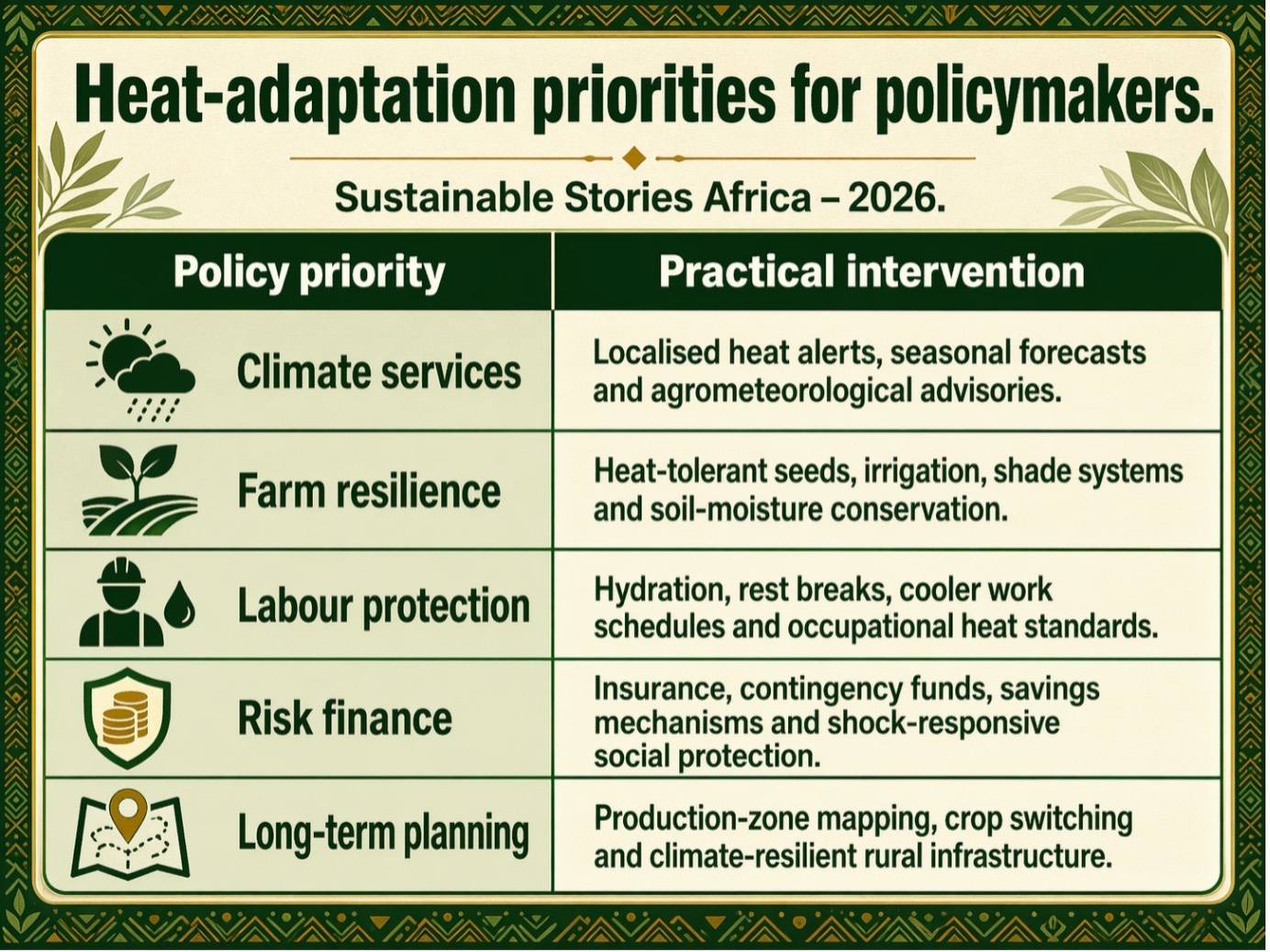
Finance is the hinge. FAO and WMO stress that small-scale producers often lack access to financial services and can become trapped in disaster-poverty cycles.
Risk insurance, contingency funds, savings-and-loan mechanisms, and shock-responsive social protection can protect livelihoods and encourage investment in improved seeds, technologies and climate-smart practices.
African governments should treat extreme heat as a core variable of agricultural planning. That means integrating heat thresholds into national adaptation plans, extension services, food security monitoring, irrigation investment, seed-system reform, livestock policy, aquaculture planning and rural health protection.
Path Forward – Make Farms Heat-Ready Now
Extreme heat is now a food-security risk, a labour-productivity risk and an ESG governance issue.
African markets need heat-ready agriculture built around early warnings, resilient crops, worker protection, irrigation, risk finance and localised climate data.
The priority is prevention before disaster. Governments, financiers and agribusinesses should invest in anticipatory action, not only emergency response, so farmers, herders, fishers and rural workers can keep producing in a hotter climate.