
Nigeria’s graduate unemployment crisis is forcing policymakers and universities to rethink how higher education prepares students for the labour market.
A new academic study suggests that developing an entrepreneurial mindset among students could significantly improve employment outcomes.
The research finds that confidence in entrepreneurial abilities, known as self-efficacy, plays the most decisive role in enabling young graduates to start businesses and generate jobs, offering fresh insights into how education systems might address Nigeria’s widening youth employment gap.
Entrepreneurial Mindsets Redefining Nigeria’s Employment Future
Nigeria’s graduate unemployment crisis is intensifying as universities produce thousands of degree holders each year without corresponding formal-sector opportunities.
Policymakers, educators, and development experts increasingly argue that entrepreneurship, rather than traditional employment pathways, may offer the most viable solution to this structural imbalance.
A recent academic study examining tertiary students in Kwara State highlights the importance of cultivating an entrepreneurial mindset among young graduates.
The research finds that factors such as entrepreneurial skills, self-efficacy, opportunity recognition, and entrepreneurial traits significantly influence students’ ability to create jobs rather than merely seek them.
The findings suggest that transforming higher education from a certification system into a practical innovation ecosystem could play a pivotal role in addressing Nigeria’s youth unemployment challenge and supporting long-term economic resilience.
Graduate Unemployment Pressures Intensifying Across Nigeria
Across Nigeria, youth unemployment remains one of the country’s most persistent socio-economic challenges.
According to national labour data cited in the study, thousands of graduates enter the jobless market every year; however, the formal economy cannot absorb them at the same pace.
This widening gap between education output and labour market demand has forced policymakers to reconsider the role of entrepreneurship in national development strategies.
Entrepreneurship is increasingly viewed as a pathway not only for individual income generation but also for broader economic growth.
By fostering innovation, establishing new ventures, and generating employment opportunities, entrepreneurs contribute directly to national productivity and social mobility.
However, many tertiary institutions still emphasise theoretical entrepreneurship education, rather than hands-on business skills. As a result, graduates often leave university with academic credentials but limited practical capability to launch businesses.
Researchers warn that without a shift in how entrepreneurship is taught and internalised, Nigeria risks perpetuating a cycle of educated unemployment.
Confidence Drives Entrepreneurial Success Among Students
The study, conducted among tertiary institution students in Kwara State, examined how four core factors influence employment creation among young graduates:
- Entrepreneurial skills
- Entrepreneurial traits
- Self-efficacy (confidence in entrepreneurial ability)
- Opportunity recognition
Using Partial Least Squares Structural Equation Modelling (PLS-SEM) to analyse 200 valid survey responses, researchers discovered that these factors collectively explain 74.3% of entrepreneurial competence among students.
Among the variables analysed, self-efficacy emerged as the strongest determinant of job creation potential.
Students who believed in their entrepreneurial capabilities were significantly more likely to transform ideas into viable business ventures.
Researchers argue that this psychological dimension, such as confidence in one’s ability to solve problems, manage risk, and lead ventures, is often underestimated in entrepreneurship education.
The findings align with broader global research suggesting that entrepreneurial behaviour is driven not only by technical skills but also by cognitive and behavioural attitudes toward opportunity and risk.
Key Drivers Influencing Student Employment Creation
Entrepreneurial Factor | Impact on Employment Creation (β coefficient) | Interpretation |
|---|---|---|
Entrepreneurial Skills | 0.251 | Strong influence on venture competence |
Entrepreneurial Training | 0.181 | Positive but moderate impact |
Self-Efficacy | 0.367 | Strongest driver of entrepreneurship |
Opportunity Recognition | 0.151 | Important but weaker influence |
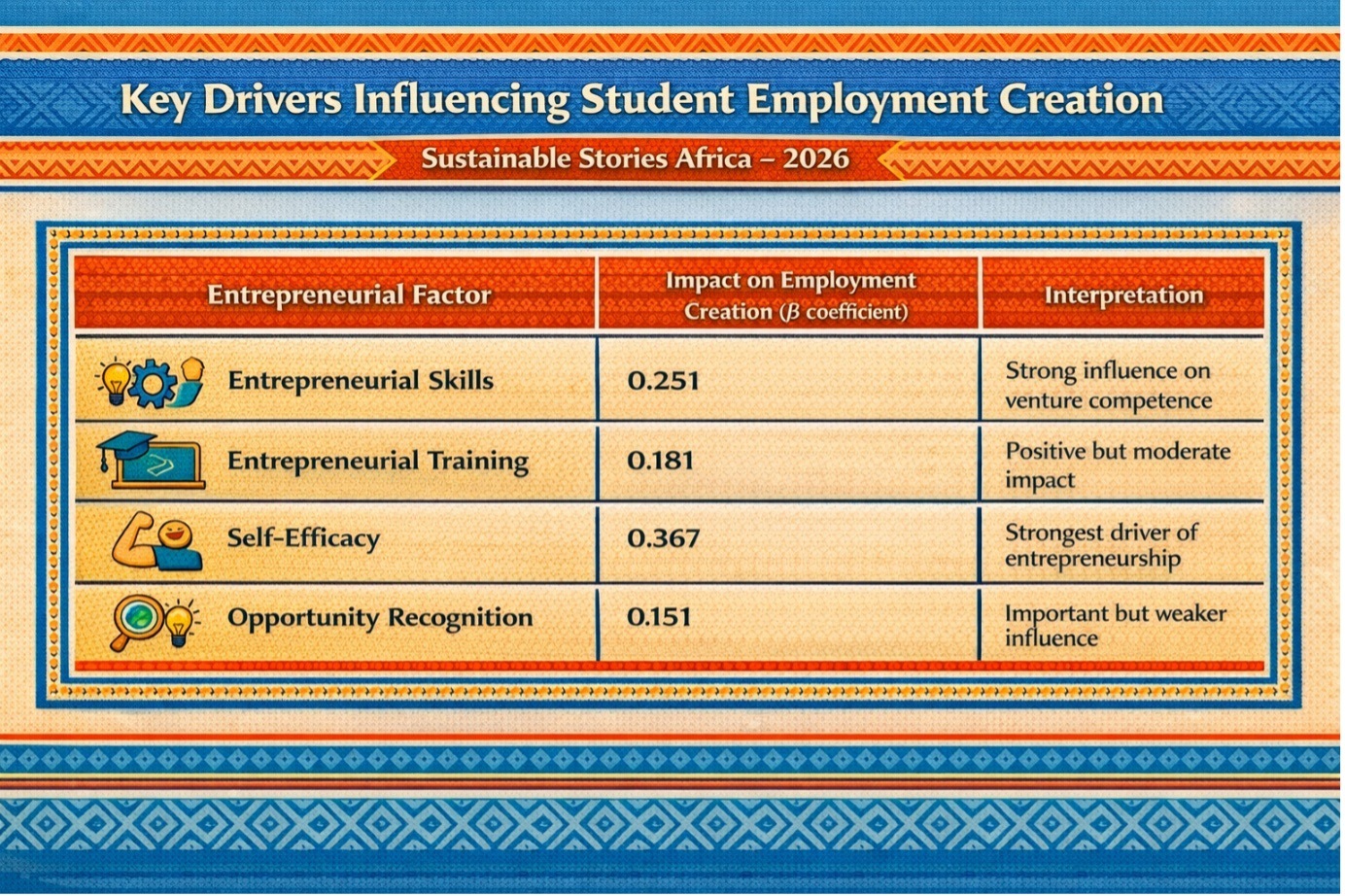
The results show that self-efficacy contributes the largest effect, reinforcing the idea that confidence in entrepreneurial ability significantly shapes venture creation.
Model Strength Explaining Entrepreneurial Competence
Model Indicator | Value | Interpretation |
|---|---|---|
R² Value | 0.743 | The model explains 74.3% of entrepreneurial competence |
Sample Size | 200 respondents | Valid survey responses |
Method | PLS-SEM analysis | Advanced structural modelling |
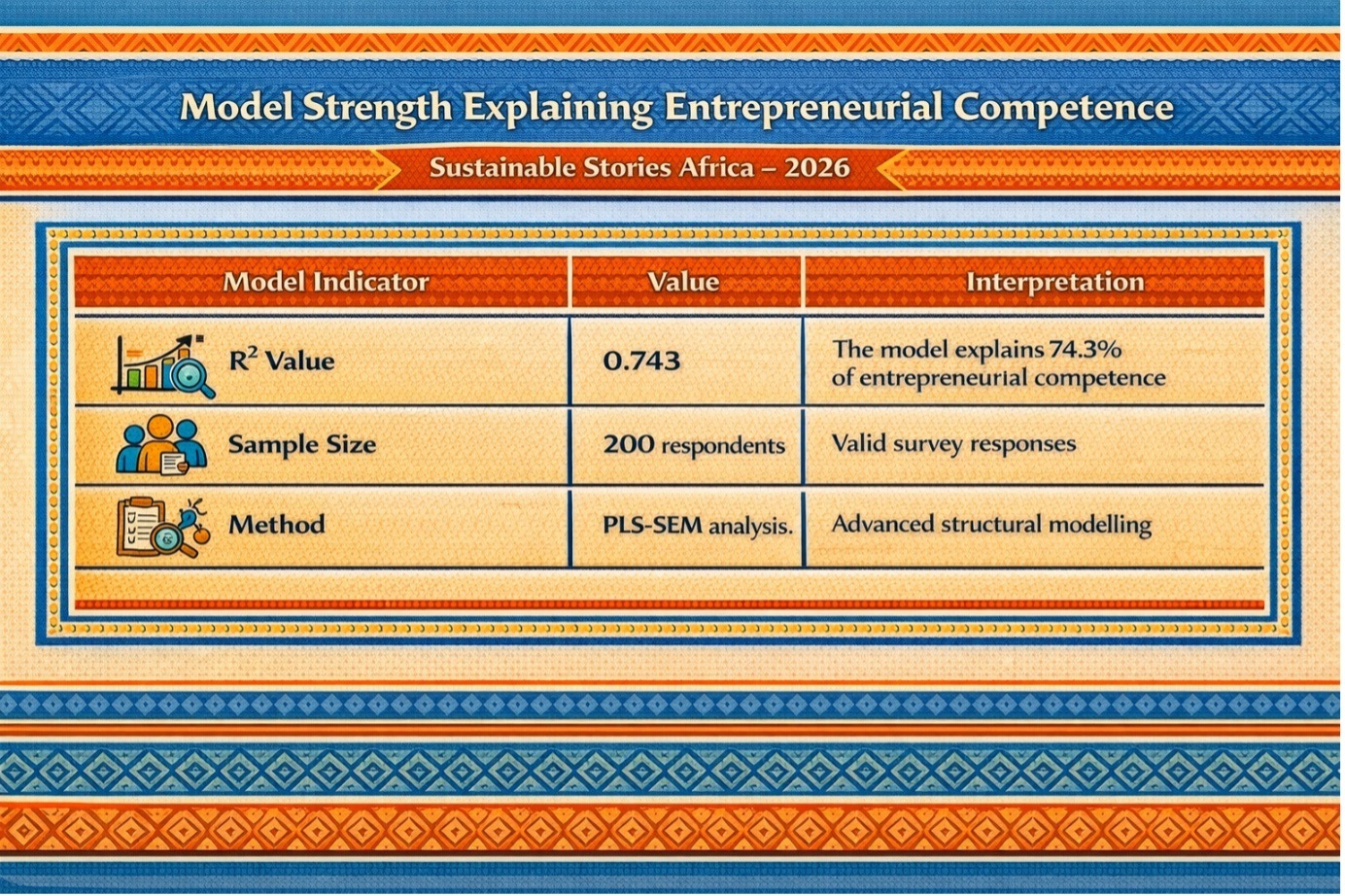
The model’s high explanatory power indicates that psychological and skill-based factors play a decisive role in determining whether students successfully pursue entrepreneurship.
Universities Must Shift Toward Experiential Entrepreneurship Education
Experts say the findings carry significant implications for higher education policy.
Traditional lecture-based entrepreneurship courses may not be sufficient to develop entrepreneurial competence. Instead, universities must adopt experiential learning models that simulate real business environments.
Recommended approaches include:
- Startup incubators within universities
- Business simulation exercises
- Innovation challenges and competitions
- Industry mentorship programmes
- Student-led venture laboratories
Such initiatives could help bridge the gap between theoretical knowledge and practical entrepreneurial capability.
Researchers also emphasise the importance of exposure to real entrepreneurs. Interaction with successful business founders can inspire students and strengthen their belief that launching ventures is achievable.
Mentorship programmes linking students with experienced entrepreneurs could therefore become a crucial component of entrepreneurship education reform.
Path Forward – Building Entrepreneurial Universities For Sustainable Employment
Universities must redesign entrepreneurship education to prioritise experiential learning, mentorship, and creation of real ventures.
Practical exposure to business environments will strengthen students’ confidence, creativity, and entrepreneurial competence.
Government agencies, universities, and industry partners should collaborate to provide startup incubation programmes, access to funding, and entrepreneurial training.
Together, these efforts can transform graduates from job seekers into job creators while supporting Nigeria’s long-term economic development.