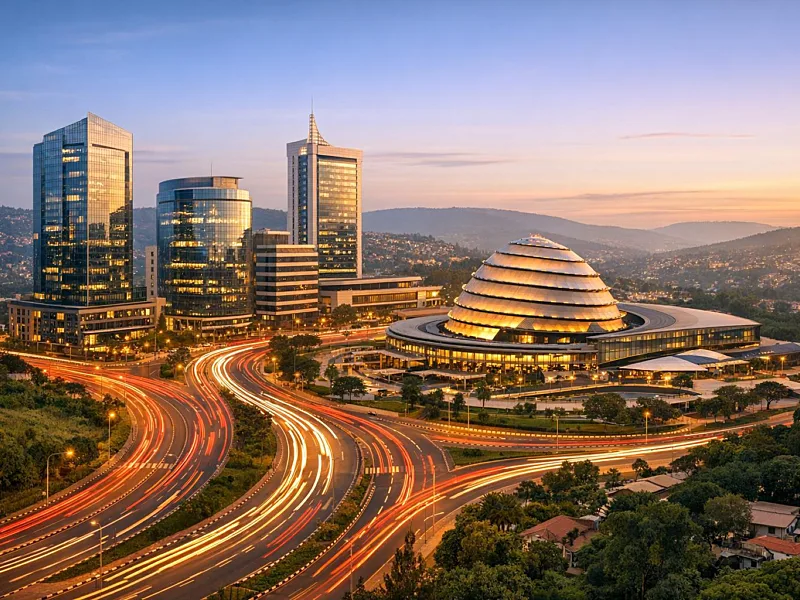
Nigeria’s environmental challenges, from waste pollution to energy deficits, are increasingly shaping the country’s entrepreneurial landscape. A growing wave of green startups is turning climate problems into economic opportunities.
New research highlights how environmental sustainability is driving innovation across sectors such as renewable energy, recycling, and climate-smart agriculture, positioning green entrepreneurship as a potential pillar of Nigeria’s future economy.
Nigeria’s Green Economy Opportunity Emerges
Nigeria’s pursuit of rapid economic growth has often come at the expense of the environment. Rising pollution, deforestation, and unsustainable industrial practices have created ecological pressures that threaten long-term development.
However, these challenges are increasingly generating new opportunities. Environmental sustainability is no longer viewed solely as a regulatory obligation; it is becoming a strategic driver of innovation and entrepreneurship across emerging sectors.
Recent research on environmental sustainability in Nigeria argues that green entrepreneurship, business ventures designed to create economic value while reducing environmental harm, could become a powerful pathway for inclusive growth and climate resilience.
As Nigeria confronts mounting climate risks and urban pressures, the expansion of green enterprises may offer a rare alignment between economic growth, environmental protection, and social development.
Environmental Sustainability Reshaping Nigeria’s Entrepreneurial Landscape
Across developing economies, environmental sustainability is rapidly evolving from a policy objective into an economic opportunity.
Green entrepreneurship refers to businesses that intentionally integrate environmental responsibility into their products, services, and operations. These ventures seek to generate profits while reducing ecological impact or delivering environmental benefits.
In Nigeria, environmental pressures—including waste accumulation, energy shortages, desertification, and air pollution—have created large unmet market needs.
These gaps are increasingly attracting entrepreneurs seeking solutions in sectors such as:
- Renewable energy and solar mini grids
- Waste recycling and circular economy ventures
- Climate-smart agriculture
- Clean cookstove technologies
Such ventures demonstrate how environmental sustainability can drive both innovation and economic diversification.
The study highlights that sustainability-driven entrepreneurship aligns with global development priorities and addresses Nigeria’s domestic environmental risks.
Five Forces Driving Green Entrepreneurship Growth
Environmental sustainability influences green entrepreneurship through a combination of market signals, institutional pressures, and opportunities for innovation.
The research identifies five core mechanisms shaping Nigeria’s emerging green business ecosystem.
Drivers of Green Entrepreneurship
Driver | Description |
|---|---|
Policy and regulatory signals | Environmental regulations and green procurement encourage clean innovation |
Market demand | Growing consumer awareness boosts demand for eco-friendly goods |
Green finance | Sustainability-linked loans and climate funding support startups |
Knowledge and technology diffusion | Innovation hubs and training programs expand green skills |
Institutional and civil society pressure | NGOs and certification systems push environmental compliance |
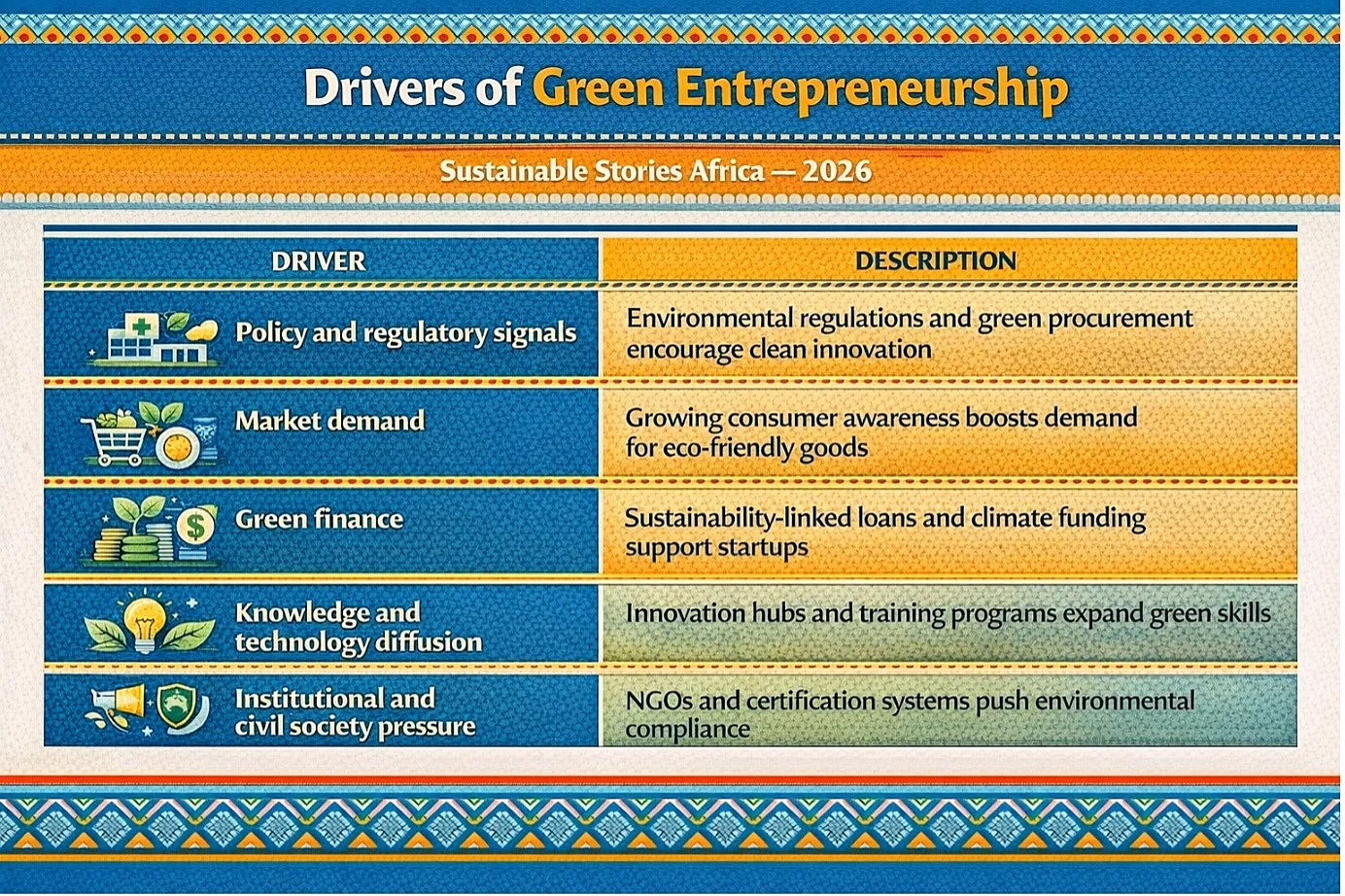
Together, these forces are helping transform environmental sustainability into a business opportunity rather than a constraint.
Entrepreneurs are increasingly recognising that solving environmental problems can unlock new markets, improve competitiveness, and attract international investment.
Nigeria’s Green Economy Potential And Barriers
Despite growing interest, Nigeria’s green entrepreneurship ecosystem still faces structural barriers that slow its expansion.
Enablers and Constraints for Green Startups
Enablers | Constraints |
|---|---|
Rising environmental awareness | Weak regulatory enforcement |
Large unmet market needs | Limited access to affordable finance |
Diaspora entrepreneurship networks | Infrastructure deficits |
Climate policy frameworks | Fragmented markets and supply chains |
Development partner support | Low public awareness of green products |
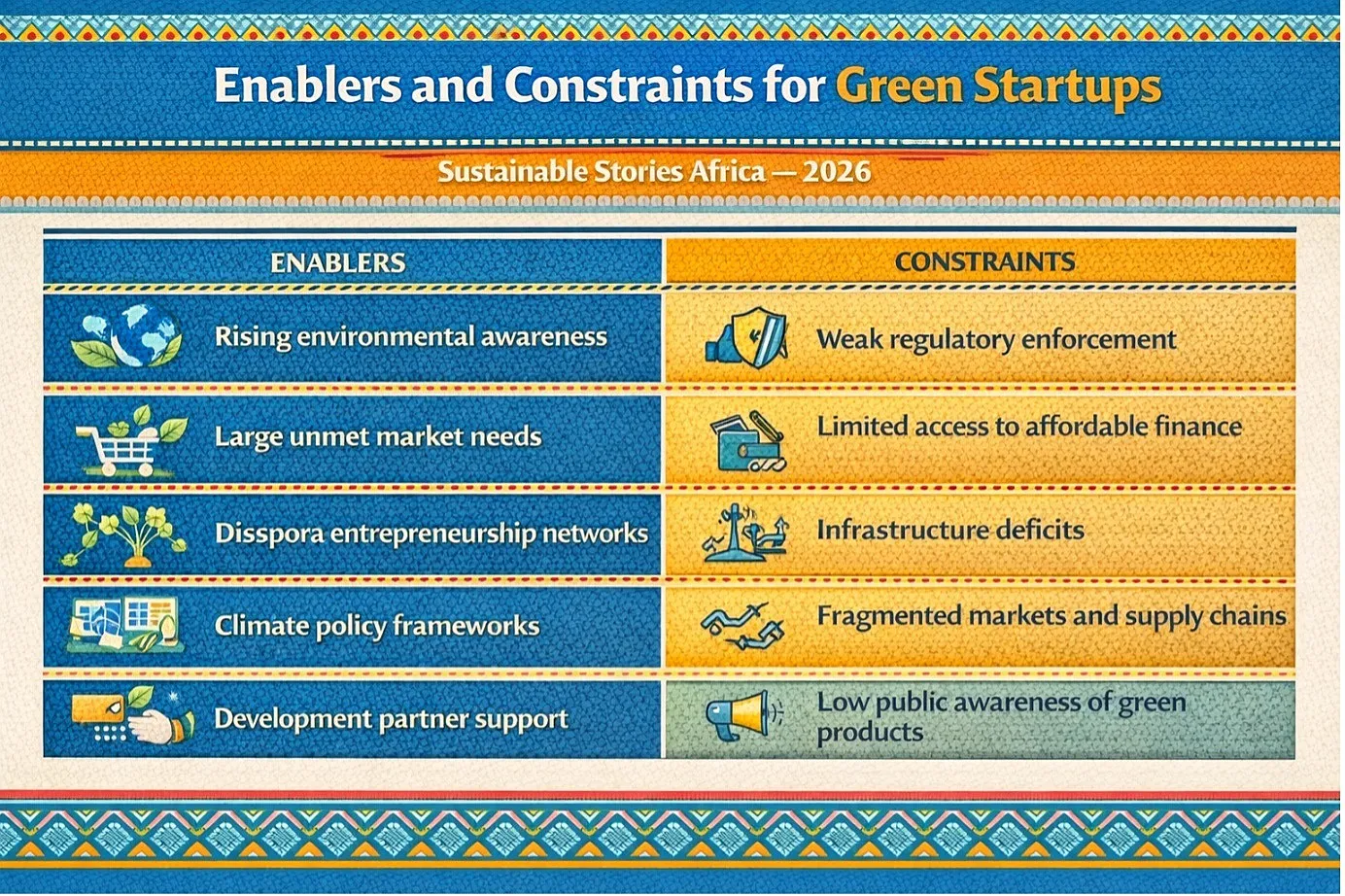
Nigeria’s rapidly growing population and expanding urban economy create significant demand for sustainable solutions.
However, inconsistent policies, inadequate infrastructure, and financing challenges remain major obstacles for green entrepreneurs seeking to scale their ventures.
Policies Needed To Accelerate Green Business Growth
Experts argue that unlocking Nigeria’s green entrepreneurship potential requires coordinated policy reforms and ecosystem support.
Key priorities include:
- Strengthening green finance mechanisms – Blended finance, climate funds, and sustainability-linked loans can expand capital access for green startups.
- Expanding training and innovation hubs – Entrepreneurship accelerators and technical training programs can build green business capabilities.
- Improving regulatory consistency – Stable environmental regulations and streamlined administrative processes can boost investor confidence.
- Promoting green public procurement – Government demand for sustainable products can stimulate domestic markets.
- Integrating informal workers into circular economy systems – Waste collectors and recycling networks play a crucial role in scaling sustainable solutions.
Research suggests that integrated programs, combining finance, skills development, and market access, have proven more effective than isolated policy interventions.
PATH FORWARD – Strengthening Nigeria’s Green Entrepreneurship Ecosystem
Nigeria’s transition to a sustainable economy will depend on expanding support for green businesses across financing, infrastructure, and policy coordination.
Strengthening innovation ecosystems and regulatory consistency can help scale climate-aligned enterprises.
With engaging institutional support, green entrepreneurship could become a powerful driver of job creation, environmental protection, and inclusive economic growth across Nigeria’s emerging green economy.