Africa's most influential sustainability voices converged in Lagos to warn that good intentions alone will not build a resilient continent; only accountable execution will.
At the FITC Sustainability | ESG Conference 3.0 on 8 July 2026, five Titans of African business debated why the continent still struggles to convert ESG commitments into measurable outcomes.
Their answer: trust, data, and courage to act, rather than more declarations, will determine whether Africa's next decade of growth is inclusive or squandered.
Lagos Titans Confront Execution Gap
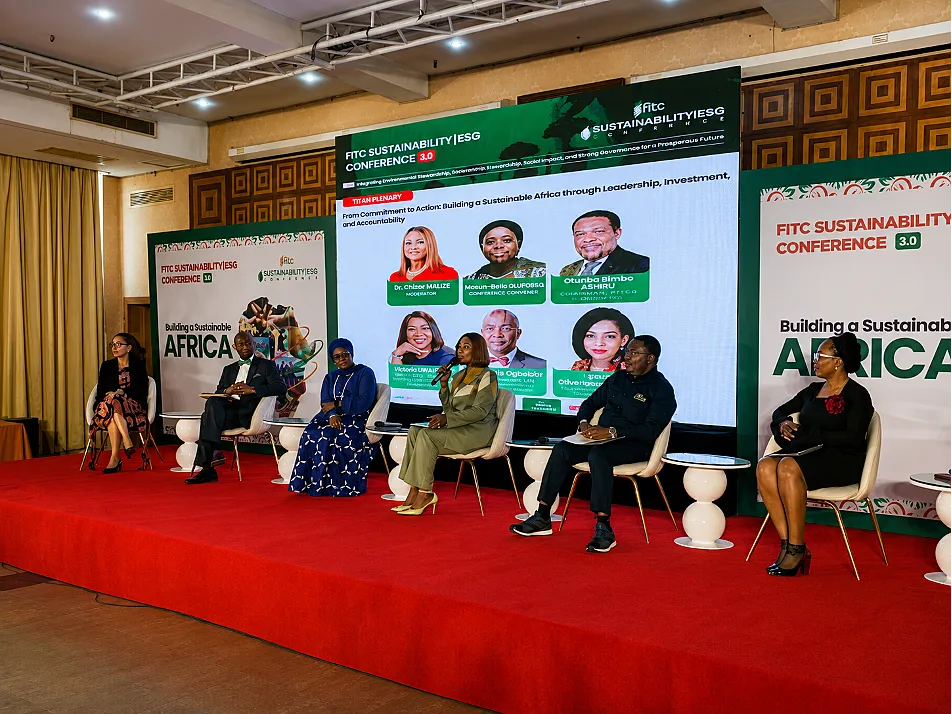
Lagos hosted a rare gathering on 8 July 2026: five of Africa's most senior sustainability practitioners, moderated by Dr Chizor Malize, MD/CEO of FITC, tackled why commitment so often stalls before it becomes action.
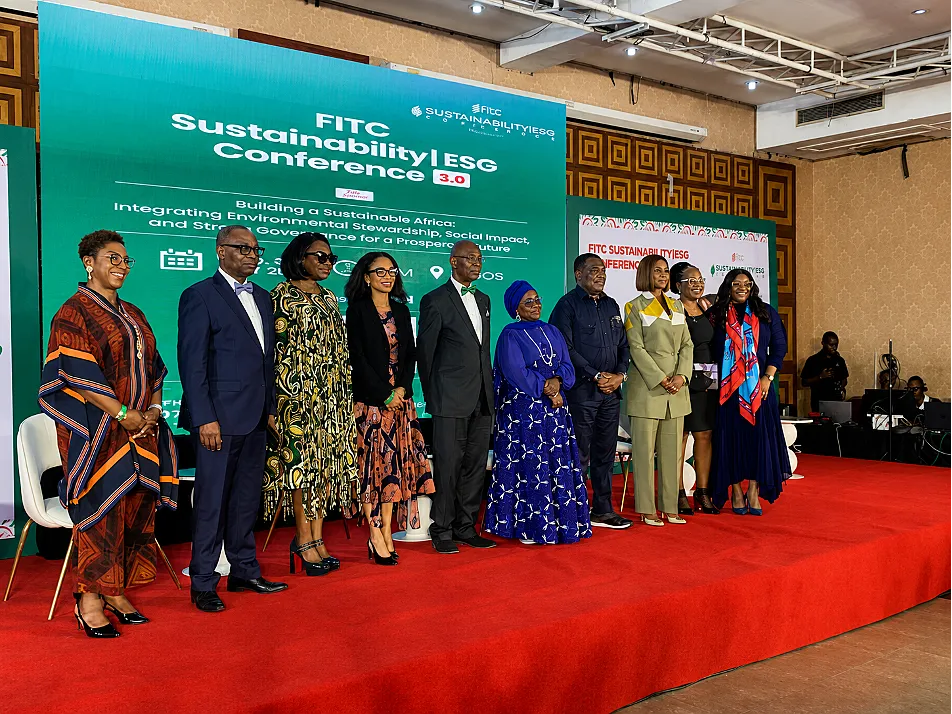
The panel, including Professor Chris Ogbechie of Lagos Business School, Mosun-Belo Olusoga of the MTN Foundation, Otunba Bimbo Ashiru of Odu'a Investment Company, Victoria Uwadoka of Nestlé Nigeria, and Dr Ndidi Okonkwo Nwuneli, incoming global CEO of the ONE Campaign, represented a rare cross-section of academia, corporate philanthropy, banking, FMCG and development finance.
Their message was blunt: Africa does not lack ambition; it lacks the systems, trust, and discipline to execute what it already knows works.
A Continent Still Waiting to Execute
The hook landed early. Professor Ogbechie noted that Lagos Business School's most oversubscribed executive programme in a decade is not about strategy, but "from strategy to results," because poor execution, not poor ideas, is Africa's chronic weakness.
He tied this directly to weak governance, corruption, and infrastructure gaps in power and connectivity, arguing execution "is not about machines… execution is about people".
This framing set the stakes for the entire session: ESG in Africa will not be won with frameworks imported wholesale from Europe or North America, but with institutions disciplined enough to measure and deliver.
Numbers Behind the Rhetoric
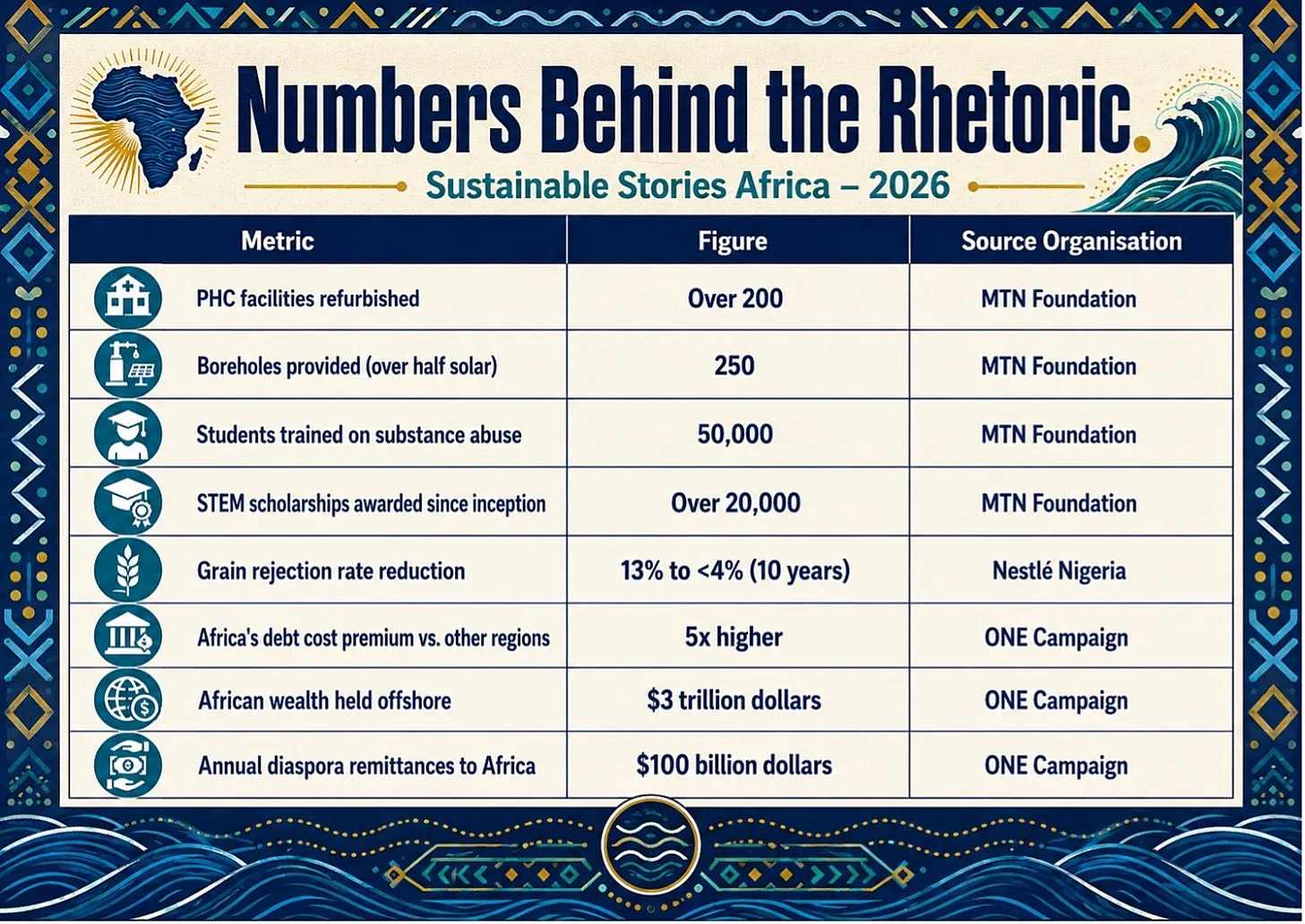
The panel grounded its arguments in concrete figures drawn from years of on-the-ground programming rather than abstract policy talk.
Mosun-Belo Olusoga detailed the MTN Foundation's shift from "temporary fixes" to systemic investment: over 200 primary healthcare centre refurbishments, close to 250 boreholes (more than half solar-powered), nearly 2,000 teachers and 50,000 students trained under its anti-substance abuse programme, and over 20,000 STEM scholarships awarded since inception.
Victoria Uwadoka offered a manufacturing lens through Nestlé's "Creating Shared Value" model, reporting that grain rejection rates at factory gates fell from over 13% to under 4% over ten years, as well as the farmers in Nestlé's supply ecosystem expanded yields from roughly 2kg per hectare to between 10kg and 20kg through improved agronomic practice.
Dr Nwuneli added a macro dimension: African economies pay roughly five times as much as other regions for sovereign debt due to a perceived risk premium, even as an estimated $3 trillion in legitimate African wealth sits offshore, and diaspora remittances contribute around $100 billion annually.
Otunba Bimbo Ashiru used the Stanbic IBTC story, in which South African ownership fell from 100% leadership control to Nigerian-run management even as equity climbed to 70%, as proof that African talent, once trusted, delivers results comparable to any global peer.
What a Trusted Africa Could Look Like
Panellists painted a tangible future: an Africa where credit ratings reflect real risk rather than perception, where SMEs are subsidised across value chains to meet decarbonisation standards, and where cities like Lagos or Abuja become capital-safe havens comparable to Rwanda's ambition to be "the Luxembourg of Africa".
Dr Nwuneli argued that closing the trust deficit could unlock far cheaper capital and repatriate significant diaspora wealth. Uwadoka framed circularity, reusing what would otherwise be industrial waste, as a revenue diversification tool rather than a mere compliance cost.
Ashiru was emphatic that institutional trust, once earned, compounds: businesses that Nigerians run themselves, he said, now recycle profits and expertise back into the local economy rather than exporting them.
The flip side, panellists warned, is stark: continued capital flight, stalled infrastructure investment, and an Africa that keeps subsidising the rest of the world's ESG double standards, as Nwuneli illustrated through a dairy value-chain dispute in which a Nigerian project was challenged over "unfair trading rules" by a European dairy multinational benefiting from home-market subsidies.
What Must Move Now
The panel converged on specific, sector-spanning demands rather than vague appeals.
- Governments and regulators should build predictable, corruption-resistant systems, since Nwuneli argued that unpredictable policy and multiple taxation actively deter long-term capital.
- Boards must shift from approving policy to stewarding institutions, with Ashiru insisting that integrity, energy, and intelligence, in that order, should govern director appointments.
- Corporates should embed ESG as a core strategy, not a single department's project, following Uwadoka's call to treat sustainability as a competitive advantage across sourcing to distribution.
- Philanthropies and financiers should pool resources against shared "wicked problems" such as the Lagos flooding, echoing Nwuneli's example of business-led crime reduction initiatives in South Africa.
- African institutions should demand a level playing field on ESG standards and timelines rather than accepting externally imposed benchmarks.
Path Forward – From Talk to Systems
The panel's closing consensus was that Africa's 2030 ESG agenda hinges on locally defined standards, credible case studies of what works, and positive storytelling that recalibrates investor risk perceptions.
Individual accountability closed the session, with Nwuneli urging attendees to model sustainability "in your home, your business, your community," insisting that lasting change starts with personal conviction before it scales into policy.