The 2026 Global Preparedness Monitoring Board report warns that the world is not meaningfully safer from pandemics, despite reforms after Ebola and COVID-19.
For Africa and other emerging markets, the warning is urgent: weak trust, unequal access to vaccines, fragile financing and overstretched health systems could turn the next outbreak into another development crisis.
Pandemic Preparedness Still Lags Behind Risk
A decade after the West African Ebola epidemic exposed the deadly cost of weak health systems, the world remains dangerously underprepared for the next pandemic.
That is the central warning from the 2026 Global Preparedness Monitoring Board report, which argues that global preparedness is failing to keep pace with rising pandemic risk.
The report describes a world shaped by climate change, conflict, misinformation, geopolitical fragmentation and widening inequities.
For African countries, the finding highlights a particular force. The continent has lived through Ebola, COVID-19 and mpox not as distant global events; however, as health emergencies that tested hospitals, households, schools, borders and public trust.
The report’s message is clear: pandemic preparedness is no longer only a health-sector issue. It is a governance, financing, equity and development priorities.
World Remains Exposed To Outbreaks
The GPMB’s most sobering conclusion is that reforms since COVID-19 have not yet made the world substantially safer.
Created in 2018 following the 2014 – 2016 West African Ebola epidemic, the Board was designed to assess global preparedness and push leaders toward stronger health-emergency systems.
Since then, the world has seen COVID-19, mpox, renewed Ebola outbreaks and repeated warnings that infectious hazards are becoming more complex.
The report says pandemic risk is moving “in the wrong direction.” It points to a volatile global environment where climate change, ecological disruption, armed conflict, urbanisation and mobility are increasing the likelihood that outbreaks will spread.
At the same time, geopolitical fragmentation and mistrust are weakening the cooperation required to contain them.
The danger is not just that another pathogen may emerge. It is that societies may enter the next emergency poorer, more unequal, more polarised and less willing to trust public institutions.
In that environment, even good science can struggle to translate into effective public action.
Decade Of Emergencies Reveals Fragility
The report reviews six Public Health Emergencies of International Concern declared between 2014 and 2025: the West African Ebola epidemic, the Zika outbreak, the Ebola outbreak in the Democratic Republic of Congo, COVID-19, the 2022 multi-country mpox outbreak and the 2024 mpox surge.
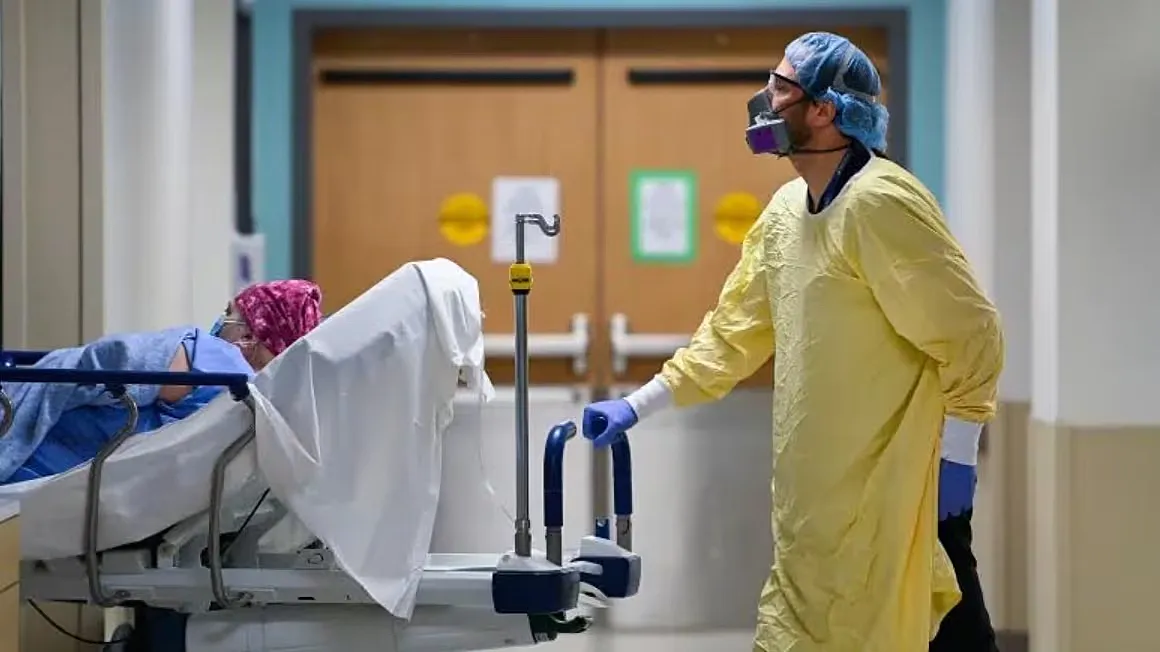
Together, they show that health emergencies now carry cascading consequences. They disrupt economies, deepen debt, close schools, strain governance, weaken trust and expose who has access to lifesaving tools, and who does not.
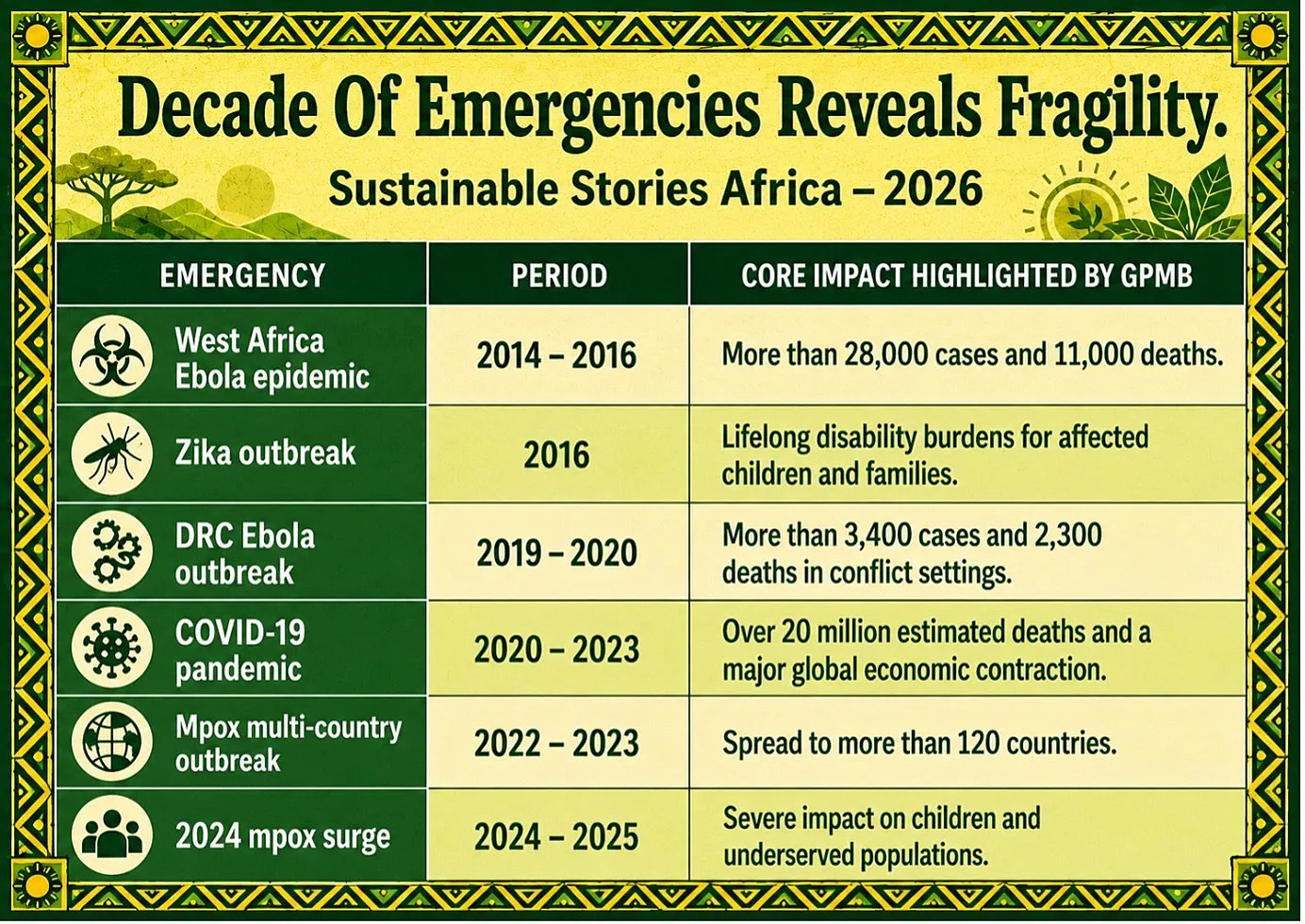
The report notes that each crisis began with a small number of cases. What determined the scale of harm was not only the pathogen, but the resilience of institutions, communities and response systems.
That matters for Africa because many countries face overlapping pressures: debt burdens, shortages of health workers, climate vulnerability, exposure to conflict and unequal access to medical supplies.
A local outbreak can quickly become a regional development shock when surveillance is weak, response financing is delayed, and communities do not trust official information.
Evidence Shows Preparedness Is Slipping
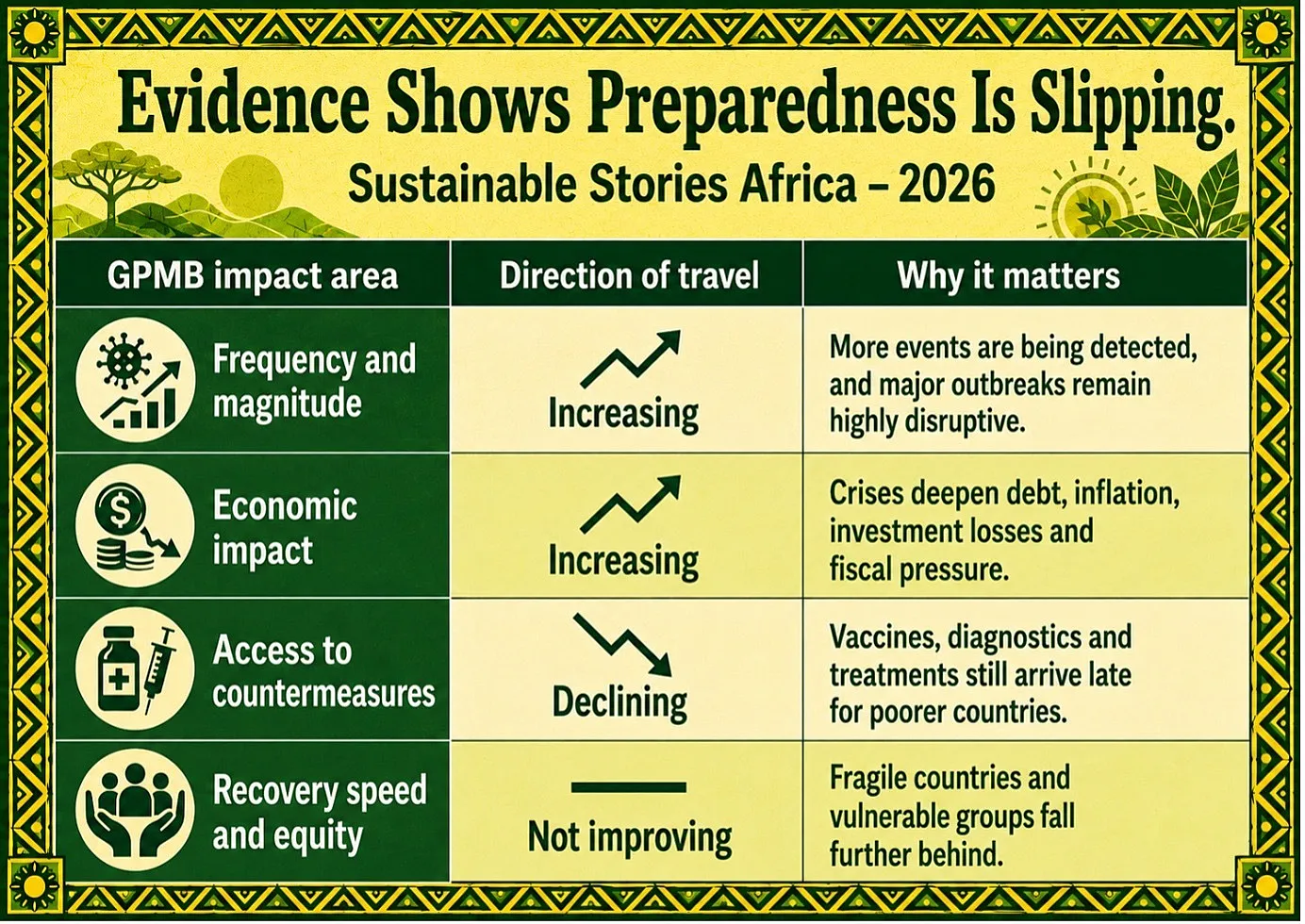
The Global Preparedness Monitoring Board's 2024 assessment delivers an uncomfortable verdict: the world is generating more health emergencies, not fewer, and responding to them less equitably.
WHO detected nearly twice as many health emergency events in 2024 compared to 2015.
Infectious diseases, which had declined from 25% of global deaths in 2000 to 15% by 2015, rebounded to 23% in 2021, driven by COVID-19.
Economic damage has been equally severe. GDP fell 5.1% during the West African Ebola epidemic and 2.9% during COVID-19, while foreign direct investment collapsed by 51% in the pandemic's first year, the steepest recorded decline.
Social costs compounded the crisis. Approximately 80% of children worldwide were out of school at the peak of disruption. Between two and three million additional child marriages occurred during the pandemic.
The most damning finding concerns equity. During recent mpox outbreaks, vaccines reached low-income countries in 24 to 27 months, slower than during the COVID-19 pandemic. Scientific capacity is advancing; distribution systems are not.
Equity And Trust Are Preparedness Infrastructure
The report’s deeper argument is that pandemic preparedness depends on trust and equity as much as laboratories, hospitals and vaccines.
Where people distrust authorities, health advice is easier to reject.
- Where countries distrust one another, information-sharing slows.
- Where communities believe lifesaving tools will arrive too late, cooperation becomes harder to sustain.
This is not abstract. In West Africa, Ebola responses were complicated by mistrust, fear and weak community engagement.
In the DRC, insecurity and attacks on health workers hindered response operations.
During COVID-19, misinformation, politicised public health measures and unequal vaccine access damaged confidence in institutions.
The GPMB argues that the world is paradoxically better equipped technologically; however, more socially and politically exposed.
Vaccines can be developed faster. Genomic surveillance is stronger. Artificial intelligence can improve risk modelling and early warning. However, these gains can be undermined if data governance is weak, public trust is fractured, and poorer countries remain at the bottom of the pyramid.
For African markets, the opportunity lies in treating preparedness as resilience building.
Stronger surveillance, regional manufacturing, emergency financing and trusted community communication can protect lives while also strengthening economies.
Preparedness Can Protect Development Gains
The positive case for action is powerful. Improving pandemic preparedness can ensure that developmental progress is not lost.
If countries invest early, they can detect outbreaks faster, deploy targeted measures, reduce the need for economy-wide lockdowns and maintain essential services.
That means fewer school closures, fewer missed immunisations, fewer job losses and less disruption to trade.
The report highlights several reforms, including what progress could look like: the Pandemic Fund, the WHO Pandemic Agreement, Africa CDC, African Vaccine Manufacturing Accelerator and the 100 Days Mission.
These initiatives reflect growing recognition that outbreak response must be faster, more coordinated and more equitable.
For Africa, regional manufacturing is especially important. COVID-19 showed that dependence on external supply chains can leave countries waiting for vaccines and medical supplies when every week matters.
Distributed manufacturing, technology transfer, workforce development and regulatory harmonisation can help reduce that vulnerability.
The benefits go beyond health. Pandemic resilience supports investor confidence, food security, education continuity, public finance and social stability.
It is also an ESG issue: companies, financiers and governments cannot claim resilience while ignoring biological risk, workforce protection and supply-chain continuity.
Leaders Must Finance Day-Zero Action
The Global Preparedness Monitoring Board's reform agenda rests on three pillars;
- Independent monitoring.
- Equitable access to medical countermeasures
- Sustainable financing
Each addresses a documented failure in how the world manages pandemic risk.
On monitoring, the report calls for an independent multisectoral mechanism that reports to the World Health Assembly, using ethical AI and digital tools to track threats across health, trade, finance, agriculture and security.
On access, it urges governments to finalise and implement the WHO Pandemic Agreement, arguing explicitly that voluntary arrangements and market mechanisms alone cannot guarantee fair distribution during crises.
On financing, the proposal is precise: pre-authorised "Day 0" surge funding with automatic triggers, and the WHO Contingency Fund for Emergencies maintained at a minimum capitalisation of $100 million through predictable commitments, rather than emergency fundraising after outbreaks begin.
For African governments, the message is unambiguous. Pandemic preparedness cannot remain hostage to donor cycles or post-crisis panic.
It must become a standing budget priority across domestic, regional and development finance institutions.
Path Forward – Requires Political Courage
Pandemic preparedness now requires political decisions, not only technical upgrades. Leaders must sustain financing, strengthen independent monitoring, expand regional manufacturing and make equitable access enforceable before the next emergency begins.
The 2026 UN High-Level Meeting on pandemic prevention, preparedness, response and the WHO Pandemic Agreement offer a critical test.
The goal is simple: rebuild trust, protect lives and ensure future outbreaks do not become another global development setback.