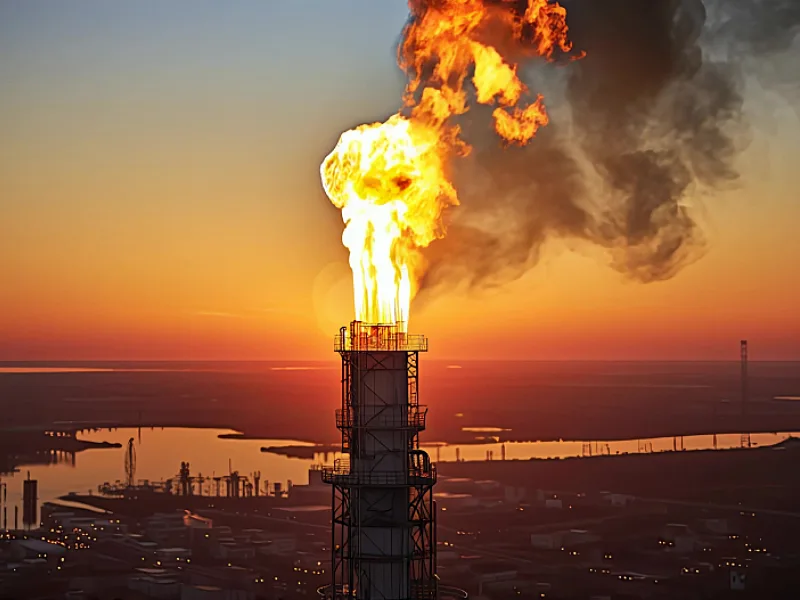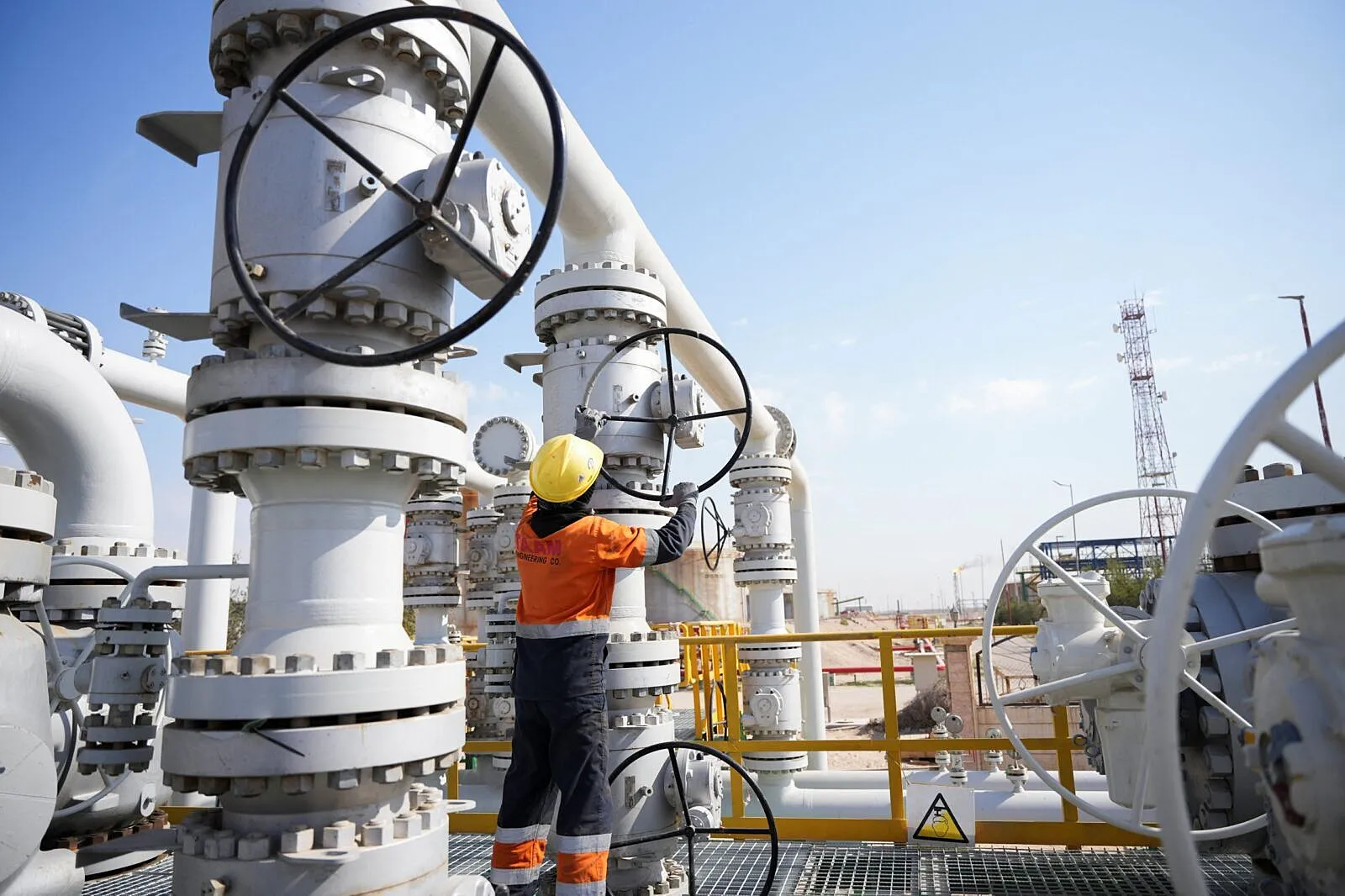
About a fifth of global oil supply and liquefied natural gas trade normally cross the Strait of Hormuz.
The 2026 disruption tested that route, McKinsey Global Institute reports. Reserves, pipelines and trade shifts limited the damage, but the buffers have limits.
For African fuel importers, the question is how to reduce vulnerability before the next shock.
The answer extends beyond crude inventories to refined products, power systems, efficiency and logistics.
Energy Shock Extends Beyond The Strait
The on-and-off closure of the Strait of Hormuz in 2026 has become a test of the world’s energy safety net.
McKinsey Global Institute’s September report says about 20% of global oil supply and a similar share of liquefied natural gas normally pass through the route.
At the peak, the disruption affected 14% of combined global oil and gas supply.
The initial shock did not produce a uniform collapse.
- Strategic stocks, bypass pipelines and changes in trade helped absorb it, while global growth stayed positive, according to the report.
- Oil prices still surged above $120 a barrel before declining, and stress on refining meant some consumers faced a sharper squeeze than crude-price movements alone would suggest.
For African economies, exposure varies by fuel mix, domestic production, refinery capacity and import contracts.
- A crude exporter can still face higher costs for refined products.
- McKinsey’s global findings show the mechanism of risk; they do not provide a single Africa-wide loss estimate.
Temporary Buffers Have Bought Limited Time
The report calls this the largest energy supply disruption of modern times.
- Oil made up 91% of energy flows normally crossing the Strait by energy content;
- Gas made up 9%.
The 14% peak interruption of combined oil and gas supply was more than double the relative size of the 1970s oil shocks, though duration and market conditions differ.
Buffers were built partly in response to earlier crises.
- Importers drew on inventories, while pipelines routed some Gulf oil around the Strait.
- Trade changed as China curtailed imports and the United States released stocks.
This capacity explains some of the resilience, but reserves can run down, and alternative routes can themselves be disrupted.
- Fuel availability depends on conversion and delivery of crude barrels.
- McKinsey notes that more than 70% of barrels made available by the coordinated stock release were crude.
When refining is constrained, a stockpile of unprocessed oil may not address an immediate diesel or jet-fuel shortage.
Uneven exposure is central to the story.
- Countries with reserves, alternative suppliers and flexible demand can defer or absorb some costs.
- Importers that purchase products on short contracts may feel price increases faster.
- Within a country, transport operators, farmers using diesel pumps and households facing higher distribution costs can experience the same global event differently.
This is a mechanism of exposure, not a quantified African impact in McKinsey’s study.
What The Security Numbers Really Mean
McKinsey estimates that measures underway or under discussion could offset 35% to 70% of the Strait’s pre-crisis oil flows by 2030 if another shock occurs.
- The estimate corresponds to roughly 7% to 15% of global oil supply.
- It depends on projects being completed and should not be treated as a guaranteed replacement for Gulf production.
Pipelines account for much of the potential offset and are comparatively cheap, but they mainly divert Gulf oil.
- They cannot extinguish the risk of a wider regional disruption.
- Electrification and efficiency can reduce some fuel use; however, the pace depends on grids, vehicles, financing and viable alternatives for industry.
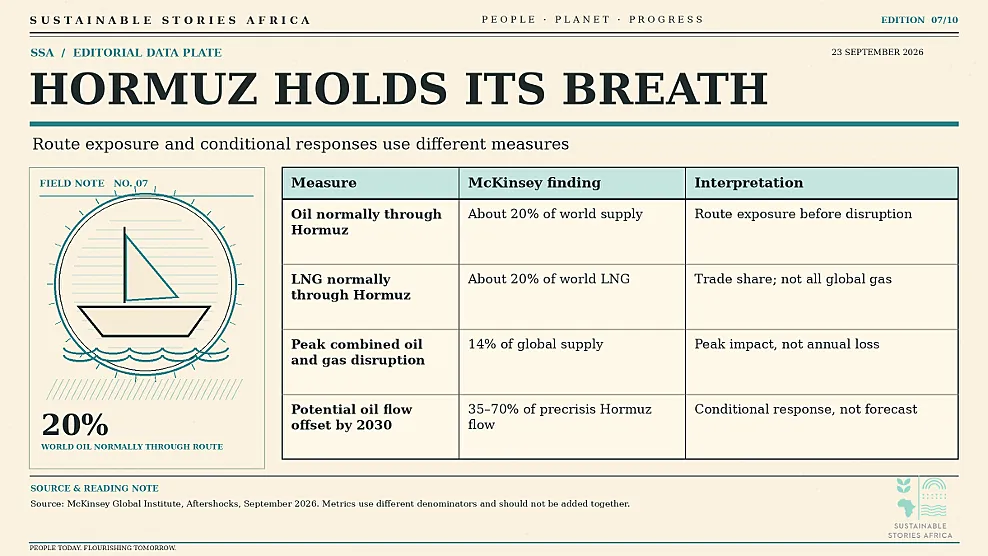
The denominator matters throughout the report.
The roughly one-fifth figures refer separately to global oil supply and LNG trade passing through Hormuz before the shock.
- LNG accounts for less than 15% of all natural gas supply, so one-fifth of LNG trade should not be presented as one-fifth of global gas.
- Comparing annual flows with a peak disruption without this distinction would exaggerate the measured effect.
Cleaner Options Can Strengthen Everyday Resilience
The report says mature clean technologies could, in theory, displace nearly a third of oil and gas use by replacing imports, while warning that costs, timelines and technical ceilings limit this potential.
- The theoretical ceiling is not a deployment forecast.
- A portfolio of demand management, supply diversity, storage and infrastructure will be needed.
For households and firms, energy security experience shows up in the ability to travel, run machinery and keep lights on at an affordable cost.
- In African cities, efficient transport and reliable electricity can reduce exposure to imported transport fuels where feasible.
- For clinics, cold chains and small businesses, diverse power options and maintenance matter as much as national stock figures.
The climate effect depends on the choices.
- Electrification supplied by cleaner generation may lower emissions, whereas a return to coal may increase them.
- Short-term continuity decisions therefore need a clear emissions and affordability test rather than a broad claim that every security investment advances sustainability.
The best option may also change with the time horizon.
- Emergency product stocks can be released quickly but need replenishment.
- Diversifying contracts can provide flexibility if transport and ports remain available.
- New grid connections, vehicle fleets and industrial equipment can take years to build.
Policymakers need to separate measures that cushion the next month from those that change demand over a decade.
Map Routes, Stocks, and Fuel Demand
Energy ministries and firms should identify where each essential fuel comes from, which maritime routes and refineries it depends on, and how long available stocks cover actual demand.
- Contingency planning should distinguish crude, diesel, gasoline and aviation fuel.
- The most useful reserve is one that can reach the end user when a specific bottleneck fails.
Governments can stress-test power and transport plans against import-price spikes and supply interruptions, publish assumptions for emergency releases and coordinate with ports, distributors and utilities.
- Importing firms can diversify suppliers and logistics, improve efficiency and prearrange substitutes where technically possible.
McKinsey’s findings do not prescribe a single African policy package.
- Decision makers should weigh the cost of protection against the cost of lost output and essential services, then invest in measures that work over short, medium and long horizons.
Budget choices should consider the costs of doing nothing.
- A reserve involves storage and financing, while a disrupted hospital, transport network or factory has wider costs that can persist beyond a price spike.
- Publishing assumptions on stock duration, release triggers and replenishment prevents a resilience claim from becoming an untested political promise.
An energy security plan should also say who receives scarce fuel first during a crisis.
- Essential health services, food distribution and public transport may deserve explicit priority, but prioritisation requires reliable inventories and a transparent procedure.
- Without one, better national storage can coexist with local shortages or opaque allocations that shift costs toward people with the least bargaining power.
A national fuel balance can make these choices concrete.
- It should distinguish domestic production from products that can actually be refined, stored and delivered; identify how imports reach major demand centres; and show which contracts or facilities are exposed to a common failure.
Repeating the exercise after a disruption tests whether the stated alternatives operated as planned.
The Path Forward – Values Flexible Systems
The report’s lesson is to manage dependencies before the next disruption.
African importers can test product stocks, refinery exposure and delivery routes alongside efficiency and electricity investment.
Public plans should state costs, emissions effects and delivery milestones.
Resilience will come from several usable options, maintained and tested, rather than a single fuel or route.