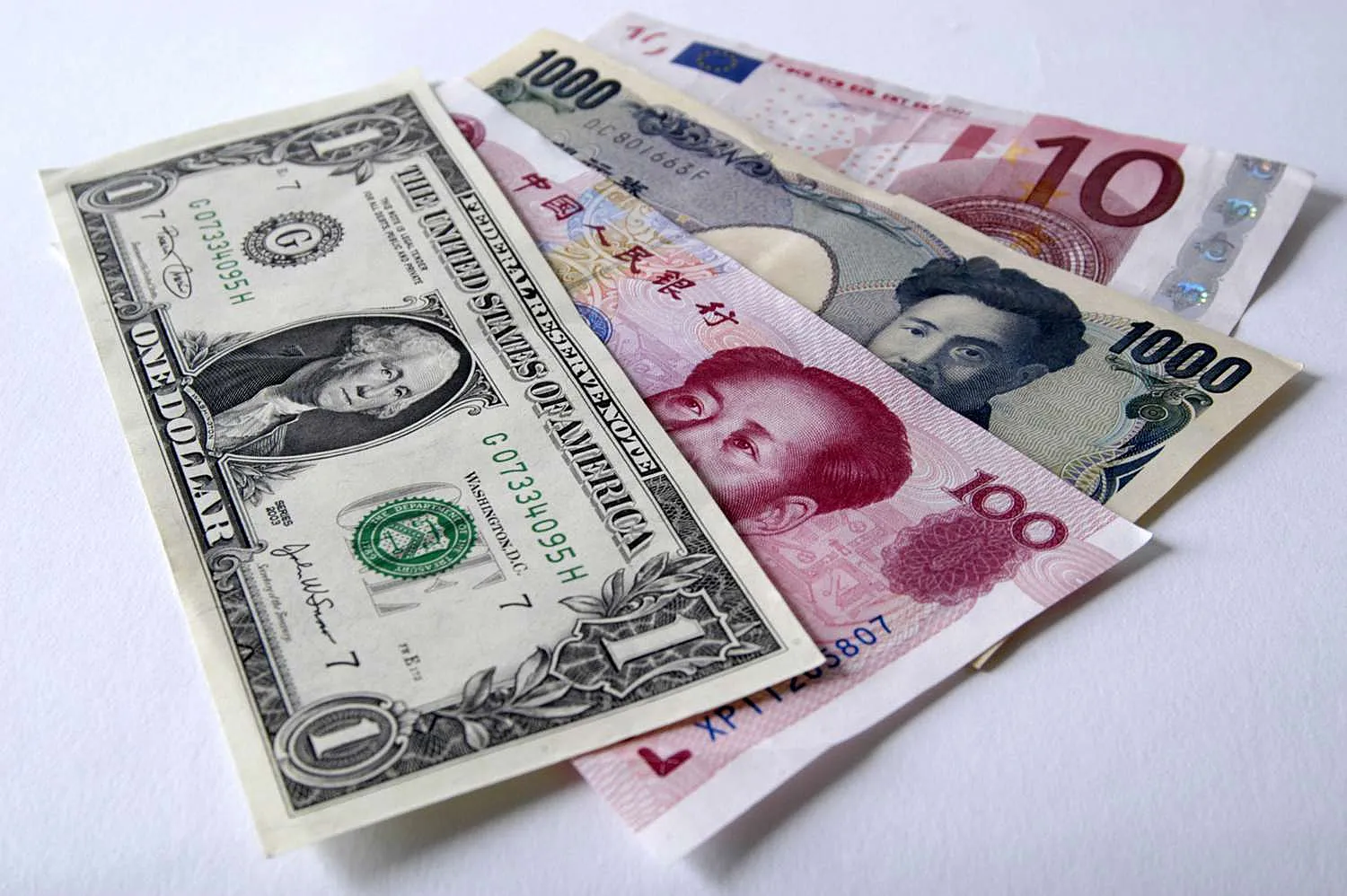
Foreign exchange reserves are the assets a central bank keeps ready for a bad day. They pay for imports, settle debts and steady a currency under pressure.
But the buffer is not free. Every dollar held in reserve is a dollar not working elsewhere.
For African economies, the question is how much insurance is enough.
Why Reserves Sit at Policy's Core
Foreign exchange reserves are cash and other reserve assets the central bank holds.
- They mainly balance a country's payments, influence the exchange rate and maintain confidence in financial markets.
- Most are held in reserve currencies, chiefly the US dollar and, to a lesser extent, the euro.
For commodity-dependent African economies, reserves are a first line of defence.
- When export earnings fall or capital leaves, the buffer decides whether adjustment is orderly or disorderly.
The trade-off is that reserves earn less than alternative uses of the same money.
That tension between safety and cost defines modern reserve management.
Every Central Bank Keeps a Quiet Buffer
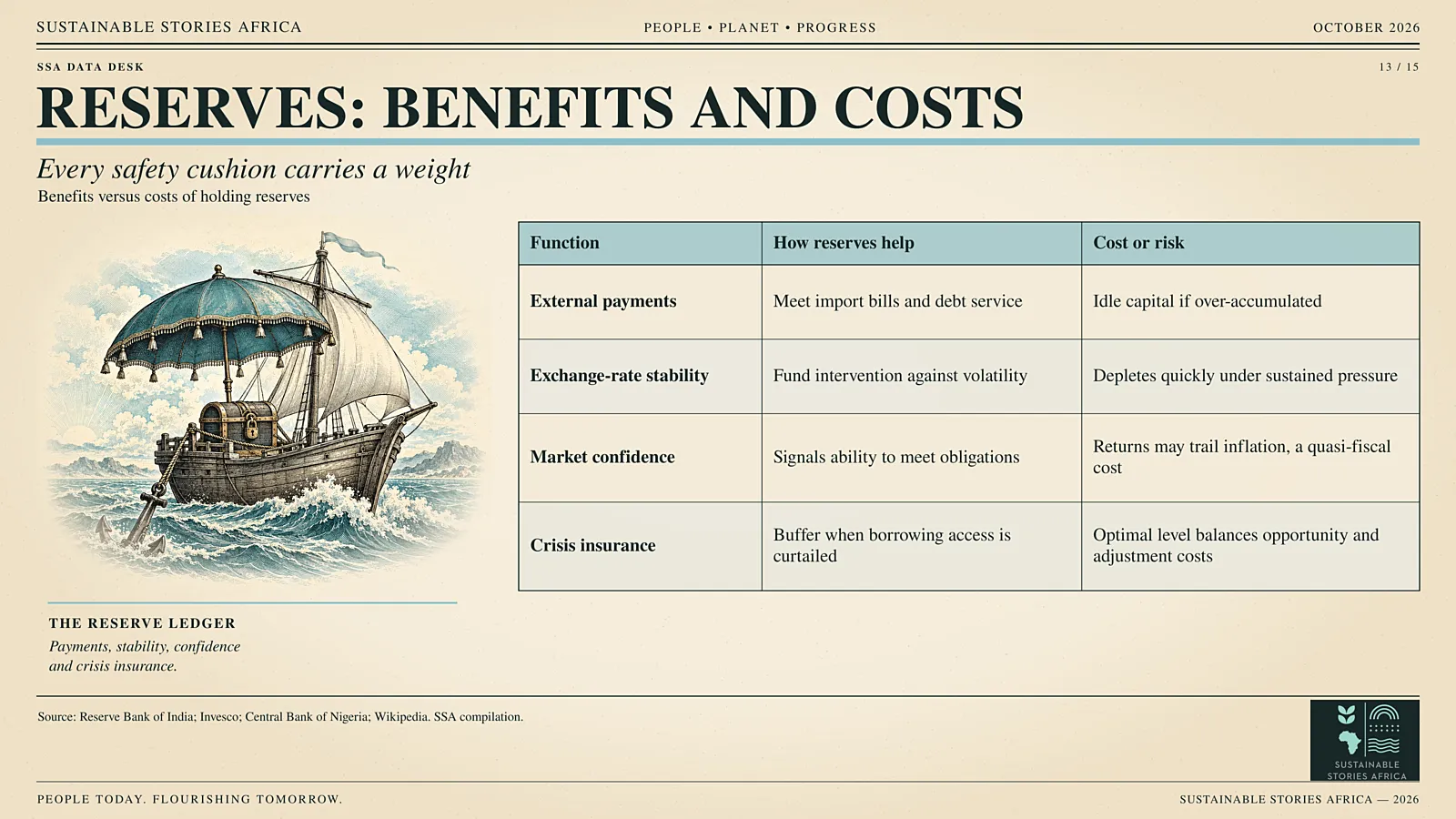
Reserves are best understood as a liquidity cushion.
- For example, the Reserve Bank of India describes their purposes as maintaining confidence in monetary and exchange-rate policy, enhancing the capacity to intervene in foreign exchange markets, and limiting external vulnerability in a crisis.
- They also reassure markets and credit-rating agencies that external obligations can be met.
Invesco's central-bank paper lists similar goals:
- Providing foreign exchange for government payments, supporting a currency peg or managing volatility, and backing against external exposures such as short-term foreign borrowing.
The scale of that insurance is rarely visible to citizens.
- However, when a currency comes under attack, the size, composition and liquidity of the reserve portfolio quickly become the most watched numbers in the financial press.
Markets read them as a verdict on whether a central bank can keep its promises.
What Reserves Hold and What They Do
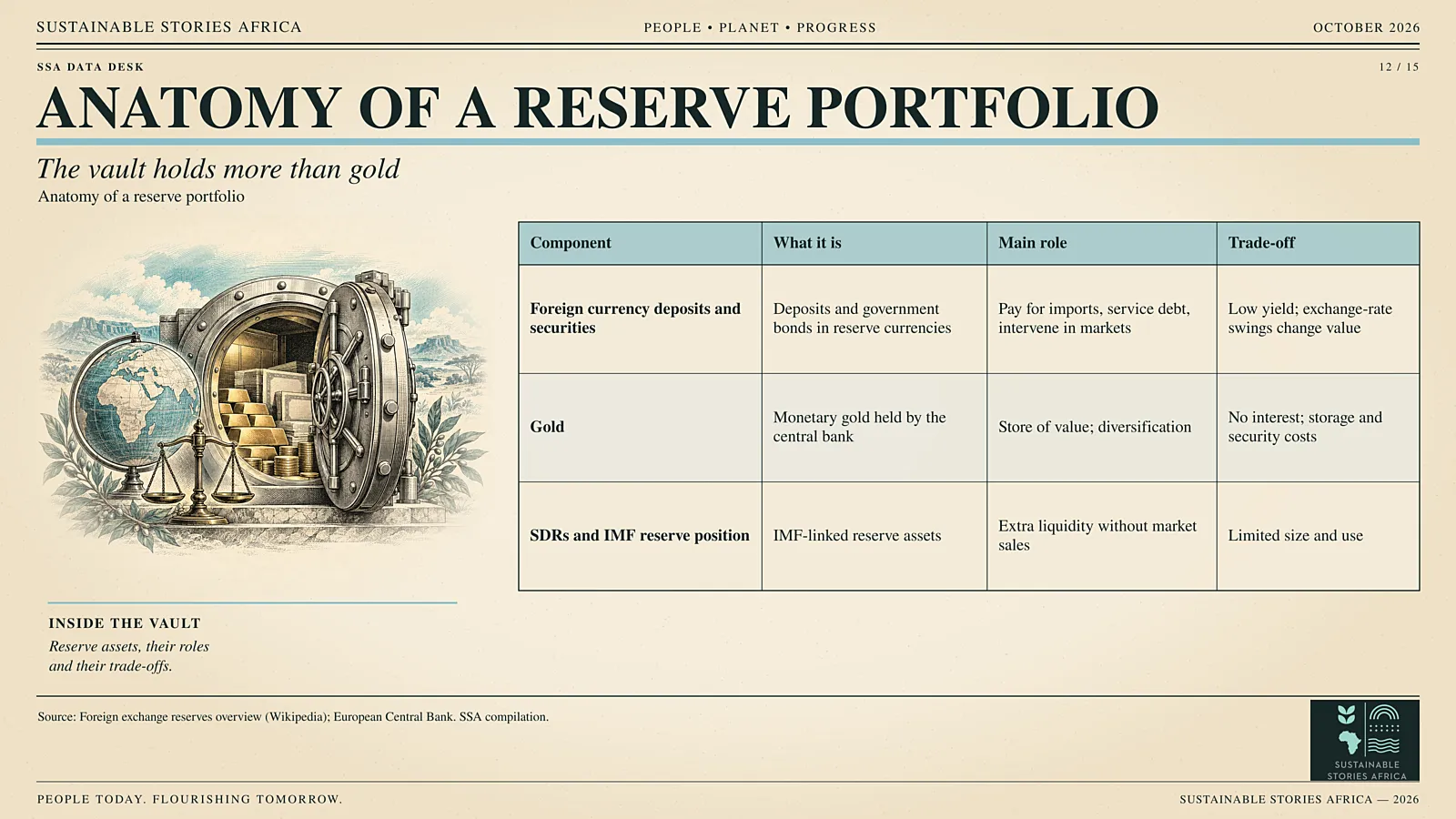
Reserve assets include foreign banknotes, bank deposits, treasury bills and government securities.
- They also include gold, special drawing rights (SDRs) and IMF reserve positions.
- For example, the European Central Bank ranks its own management objectives as liquidity, security and returns, in that order.
- Its portfolio holds US dollars, Japanese yen, Chinese renminbi, gold and SDRs.
This ordering matters.
- A reserve that earns a high return but cannot be sold quickly in a crisis fails its main test.
- Central banks therefore keep a liquid core for immediate needs and accept lower yields in exchange for certainty.
Adequate Buffers Protect Prices, Jobs and Confidence
For households;
- Strong reserves mean fewer sudden currency shocks feeding into food and fuel prices.
For firms;
- They mean more reliable access to foreign exchange for inputs and equipment.
For governments;
- They can lower borrowing costs by reassuring lenders.
For example, the Central Bank of Nigeria notes two motives for holding reserves: precautionary and mercantile.
It frames the optimal level as the one that minimises the sum of opportunity and adjustment costs.
- Too little invites abrupt, painful adjustment when a shock arrives.
- Too much ties up national savings in low-yielding assets.
Managing Reserves Between Safety, Liquidity and Cost
Central banks should publish clear adequacy benchmarks linked to import cover, external debt and exposure to volatile capital flows.
- Transparent benchmarks let markets judge policy and let citizens understand why the buffer exists.
They should also diversify across currencies and asset types while keeping enough liquidity for emergencies.
- Concentration in one currency leaves the portfolio exposed to that currency's swings.
Governments should avoid treating reserves as a substitute for reform.
- A buffer buys time; it does not fix a structural deficit or a narrow export base.
- Finance ministries and investors, for their part, should read reserve data alongside composition and liquidity, not headline totals alone.
Path Forward for Reserve Policy
Reserves work best as insurance with a clear purpose.
Central banks should set transparent adequacy targets, diversify prudently and weigh holding costs against crisis protection.
For African markets, the goal is resilience without waste.
Credible reserve policy supports currency stability, investor confidence and the sustainable financing that development goals require.