Nigeria mobilised about $2.5 billion in climate finance in 2021 and 2022 against a need of $29.7 billion a year.
A Lagos panel at “The 2026 Sustainable Finance Summit 3.0” asked whether domestic capital can close that gap.
Pension funds, sovereign wealth, infrastructure lenders and carbon-market players want local solutions, blended finance and transparent ESG reporting.
The question is whether projects, policy and trust can catch up with the ambition.
Domestic Capital Meets Climate Reality
Nigeria cannot finance its just transition from the outside alone.
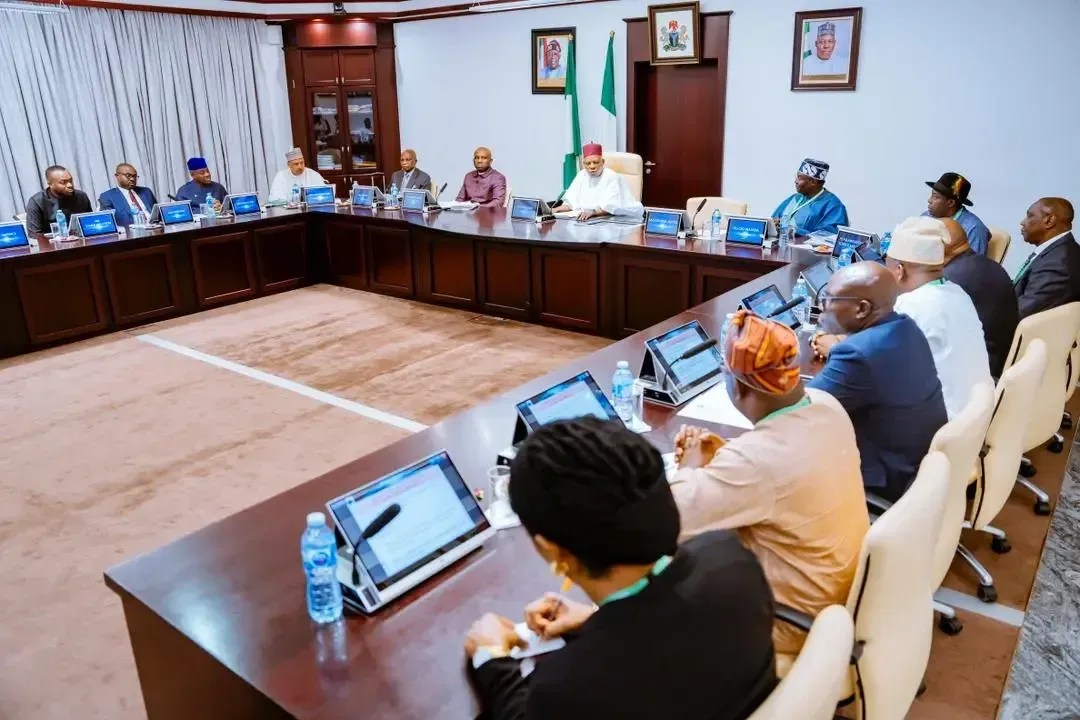
At the Sustainable Finance Summit 3.0 in Lagos on 24 September 2026, a high-level panel took up that challenge under the theme “Unlocking and Mobilising Domestic Capital for Nigeria’s Just Transition and Sustainable Growth.”
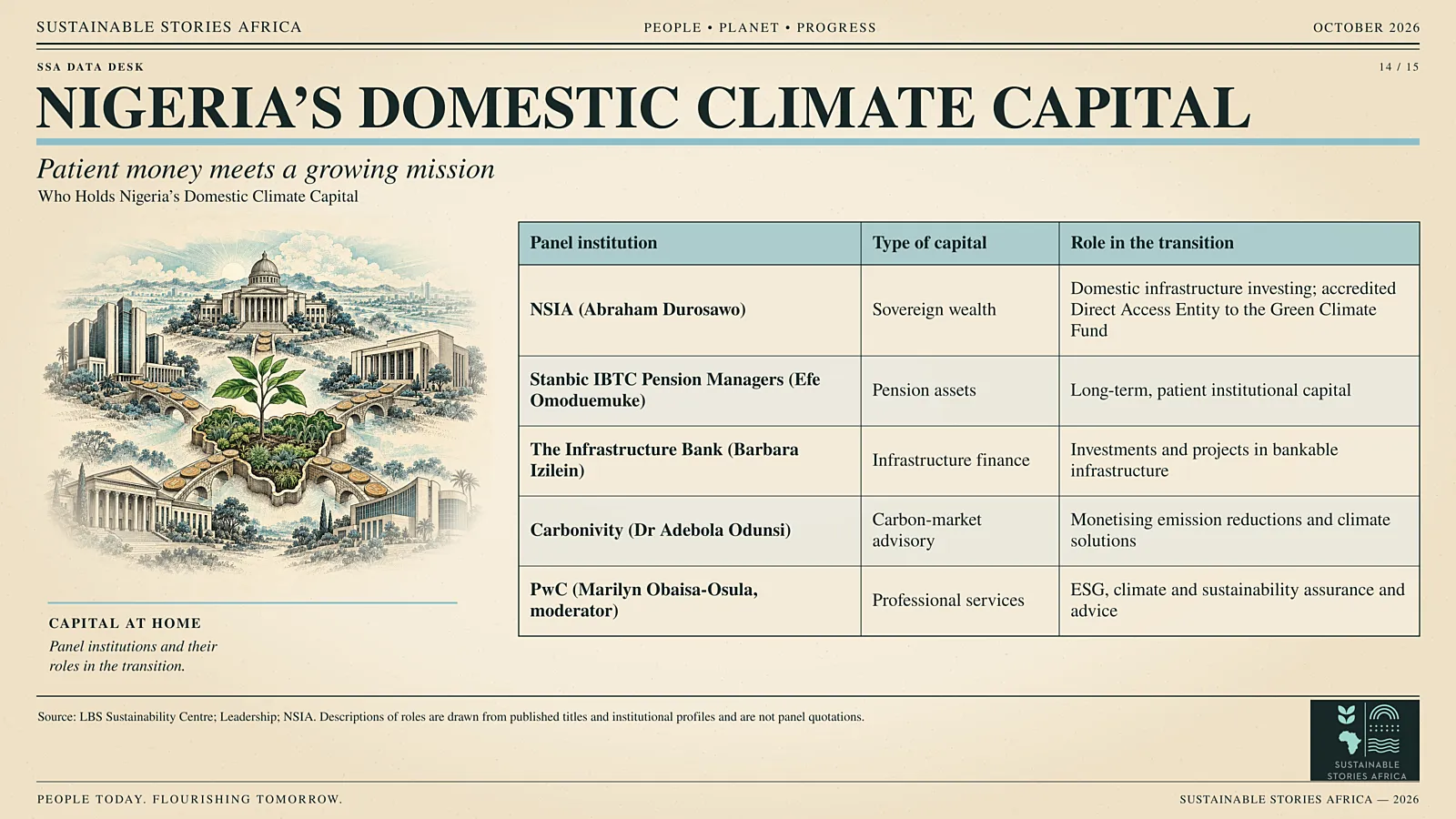
The panel brought together Abraham Durosawo of the Nigeria Sovereign Investment Authority (NSIA), Efe Omoduemuke of Stanbic IBTC Pension Managers, Barbara Izilein of The Infrastructure Bank (TIB) and Dr Adebola Odunsi of Carbonivity.
Marilyn Obaisa-Osula, Partner for ESG, Climate and Sustainability at PwC, moderated.
The stakes are high.
- Without adequate climate action, Nigeria could lose up to 30% of GDP by 2050, according to Ibrahim Shelleng, the President’s Senior Special Assistant on Climate Finance.
The panel asked who holds the capital to prevent that, and what it takes to move it.
A Gap That Demands Local Answers
Nigeria mobilised about $2.5 billion in climate finance across 2021 and 2022, against an estimated annual requirement of $29.7 billion, according to Climate Policy Initiative data cited at the summit.
That is approximately 8% of the annual need.
- Other reports from the event cited slightly different totals, but all point to a deficit above $25 billion a year.
Prof. Bongo Adi of Lagos Business School reframed the problem for investors.
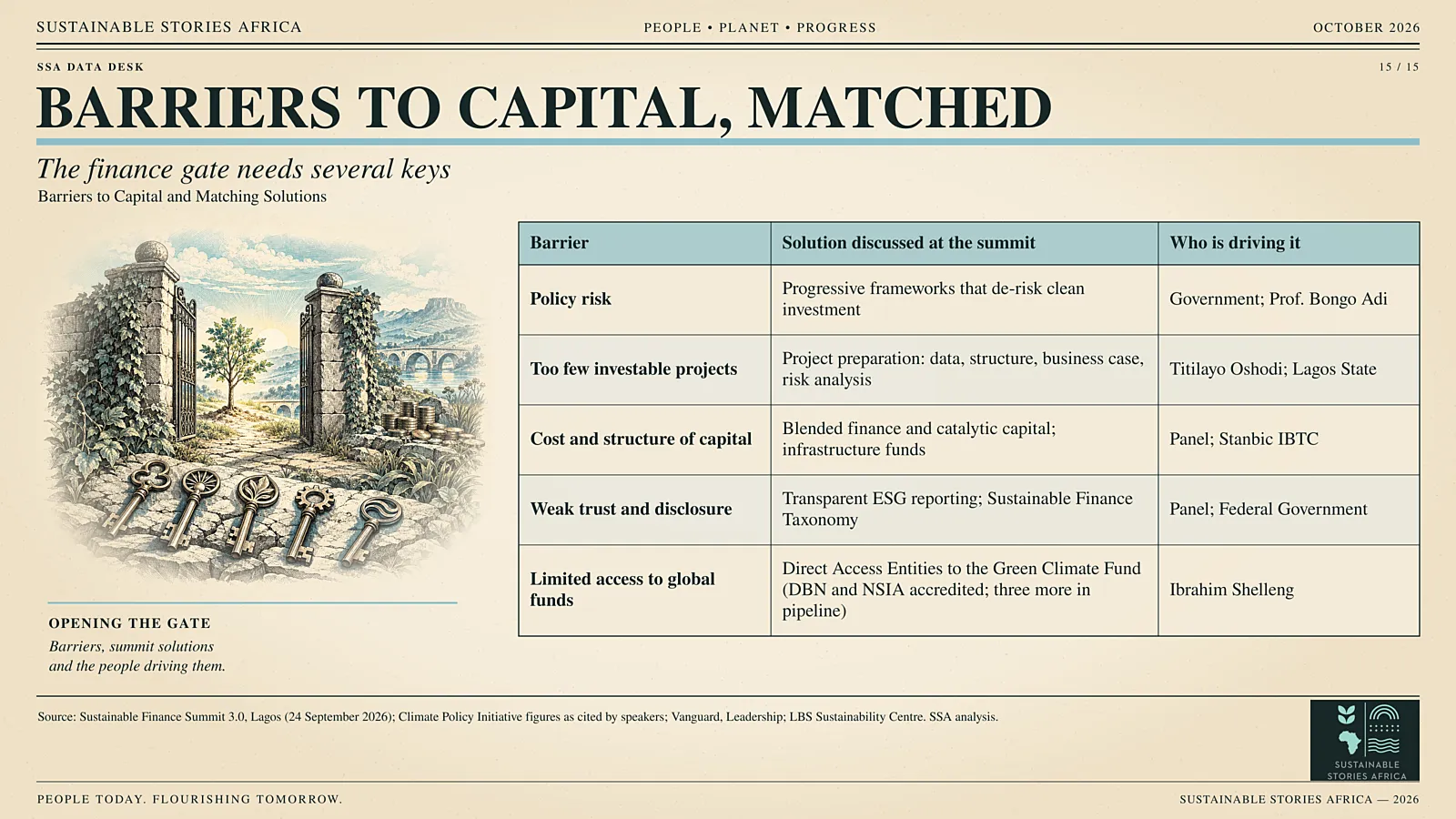
- The more useful question, he said, is what keeps capital from moving into opportunities that already exist: policy risk, a shortage of investable projects, the cost and structure of capital, or a mix of all three.
The long-term numbers are larger still.
- Nigeria’s Energy Transition Plan estimates about $1.9 trillion is needed to reach net zero by 2060, and about $337 billion by 2035 to meet current climate ambitions.
What the Panel Put on the Table
According to the organisers’ summary, the session emphasised three things: localising solutions, scaling blended finance models, and building transparent ESG reporting frameworks that give confidence to both domestic and international investors.
Chuma Nwokocha, Chief Executive of Stanbic IBTC Holdings, message called for “Nigerian solutions, Nigerian innovations”.
- He argued that while sustainability is a global imperative, its impacts and realities are local.
Blended finance, in which public or philanthropic money absorbs early risk so private capital can follow, ties into Adi’s call for progressive policy that de-risks clean investment.
Transparent reporting links to the Sustainable Finance Taxonomy that Shelleng said government is developing, to define what is green or transitional and curb greenwashing.
Keynote speaker Titilayo Oshodi added the project-side warning:
- “Capital is not the only challenge. Projects also need the right information, structure, business case and understanding of risk.”
Why Banks Already Show the Way
Evidence that domestic lenders can move comes from the host itself. Stanbic IBTC reported a sustainable finance portfolio of ₦469.5 billion in the first half of 2026, equal to 14.8% of its loan book.
- It also disbursed N58 billion to 1,003 SME clients and invested N22 billion in energy and infrastructure projects.
Pension and infrastructure funds add scale.
- The Stanbic IBTC Infrastructure Fund, for example, was set up as a N100 billion shelf programme to link patient investors with long-term infrastructure needs, in sectors such as energy, transport, gas, ICT, water and waste.
Benefits If Nigeria Gets It Right
If domestic capital is well mobilised, the gains reach beyond emissions.
- Nwokocha named the priorities: expanded energy access, jobs, food security, resilient infrastructure and industrial growth.
- Adi stressed that sustainable finance should enable green jobs and empower local enterprises, so that capital allocation becomes “a tool to uplift millions of Nigerians”.
There is also a sovereignty dividend.
- Money raised at home, in naira and on local terms, is less exposed to foreign exchange swings and shifting donor priorities.
- It also builds a track record that can attract global catalytic finance.
The risk of delay is plain: the 30% GDP exposure, the widening funding gap, and projects that never leave the concept stage.
What Next for Government, Banks and Investors
Government and regulators should finalise the Sustainable Finance Taxonomy, keep implementing reforms such as the Electricity Act and tax relief for renewables, and expand accredited access to the Green Climate Fund.
Banks, pension managers and sovereign funds should build pipelines of bankable projects and use blended structures to share early risk.
- State governments such as Lagos should convert climate frameworks into well-prepared, investable projects.
Companies should adopt transparent ESG reporting to earn investor confidence.
- In closing remarks, Kola Lawal of Stanbic IBTC urged stakeholders to move from dialogue to action.
The newly unveiled Standard Bank Group Sustainability Academy aims to widen the ESG skills base across Nigeria and Africa.
Path Forward – Priorities for Nigeria
The panel’s message was consistent: local solutions, blended finance and transparent reporting must work together.
Domestic pension, sovereign and bank capital can anchor Nigeria’s just transition.
Success depends on bankable projects, clear taxonomy and disciplined follow-through, so growth, jobs and climate resilience advance together across African markets.