Nigeria’s electricity sector is entering a more decentralised phase as Lagos pushes toward a cost-reflective, subsidy-free market while federal regulators tighten safety and metering rules.
The question now is whether reform can deliver reliable power without deepening affordability pressure for households, small businesses and industrial users.
Power Reform Enters State Markets
Nigeria’s power sector is moving into a new regulatory era, with Lagos State positioning itself as one of the most ambitious subnational electricity markets under the Electricity Act 2023.
A May 2026 power-sector update by Udo Udoma & Belo-Osagie highlights three major shifts: Lagos’ proposed transition toward a subsidy-free, cost-reflective electricity market; NERC’s revised Health and Safety Code; and NERC’s Third Edition Metering Code for the Nigerian Electricity Supply Industry.
Together, they point to a sector trying to fix reliability, accountability, safety and investment gaps at the same time.
- For consumers, the reforms could determine whether electricity becomes more dependable or more expensive.
- For investors, they signal a larger opening in generation, metering, embedded power and distribution.
- For policymakers, they pose a difficult test: how to build a commercially viable electricity market while protecting citizens from weak service and unfair billing.
Lagos Tests Nigeria’s Power Future
Lagos State is asking one of Nigeria's most consequential questions on electricity policy.
Can a state-led market attract investment, improve reliability and eliminate subsidy dependence without excluding vulnerable consumers?
Through the Lagos State Electricity Regulatory Commission, the state has signalled its intent to operate a cost-reflective, subsidy-free electricity market under the Electricity Act 2023, which empowers states to regulate intrastate markets independently.
At LASERC's maiden stakeholders' engagement on May 8, 2026, the Commissioner for Energy and Mineral Resources confirmed consumers would pay the full cost of supply.
The stakes extend beyond tariff policy. Lagos is Nigeria's commercial nerve centre.
Unreliable electricity directly reduces employment, productivity, inflation, public health and urban resilience, making this reform test one that the entire country is watching.
Regulation Tightens Across Electricity Value Chain
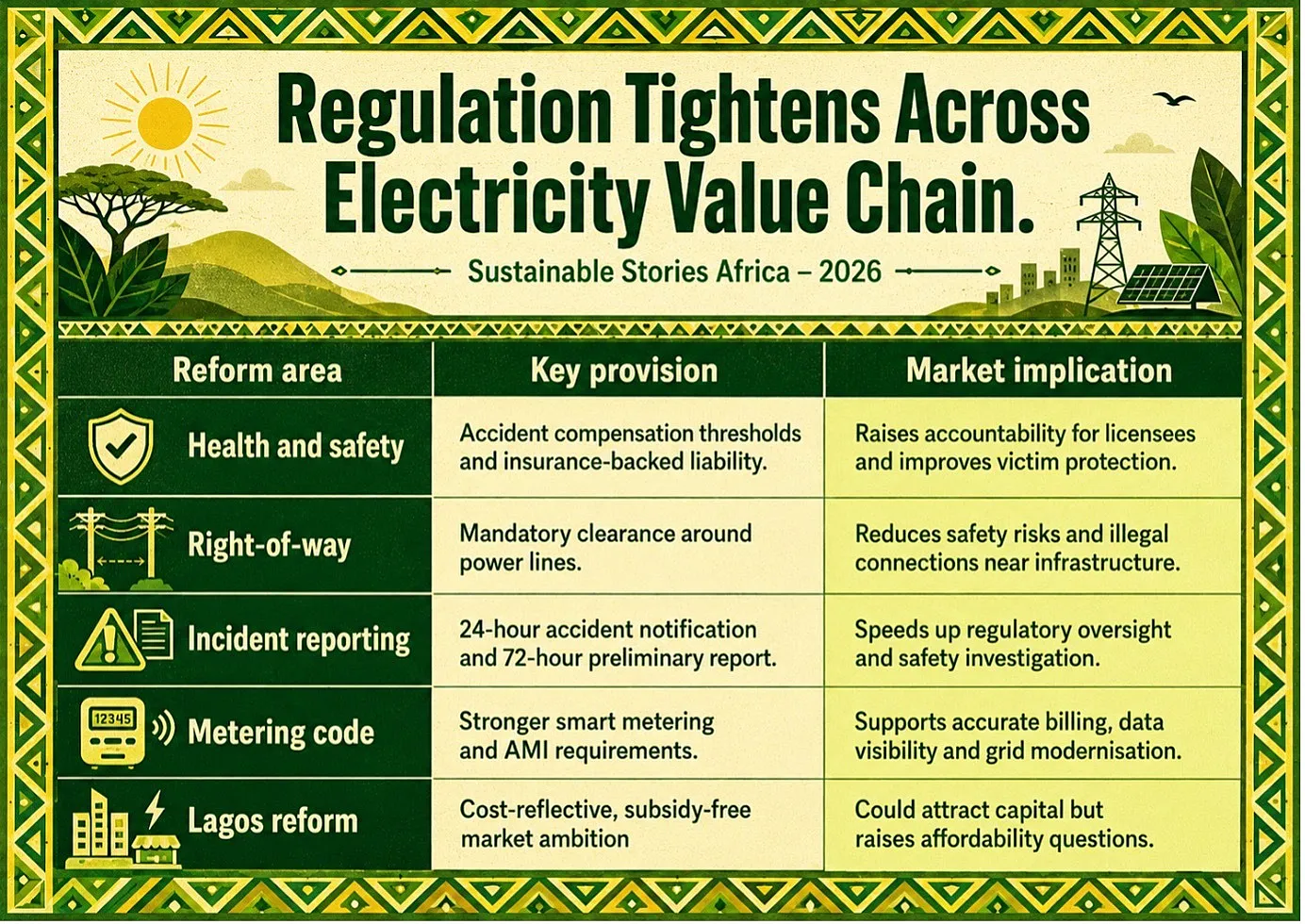
Nigeria's electricity reform agenda extends well beyond tariff restructuring. NERC's revised Health and Safety Code, updated in May 2026, establishes clearer obligations across the entire electricity value chain, from generation and transmission to distribution, embedded generation and construction activities.
The most significant change is the structured compensation framework for electrical accidents.
Minimum thresholds include N15 million for loss of life or disability exceeding 60%, N7.5 million for disability between 40% and 60%, and N750,000 for hospitalisation exceeding one week. Licensees must also bear the costs of medical treatment.
The code strengthens right-of-way enforcement, prescribing mandatory clearances of 50 metres for 330kV lines and 30 metres for 132kV lines.
Licensees that extend supply to non-compliant structures face penalties, signalling that safety compliance is now a commercial and regulatory obligation.
Metering Becomes Consumer Protection Test
Tariffs have always dominated the headlines of Nigeria's electricity reform narrative. is frequently dominated by tariffs.
For millions of customers, however, the deeper frustration is billing, and the revised Metering Code directly targets that trust deficit.
The updated framework strengthens the rules surrounding meter installation, replacement, data management and estimated billing.
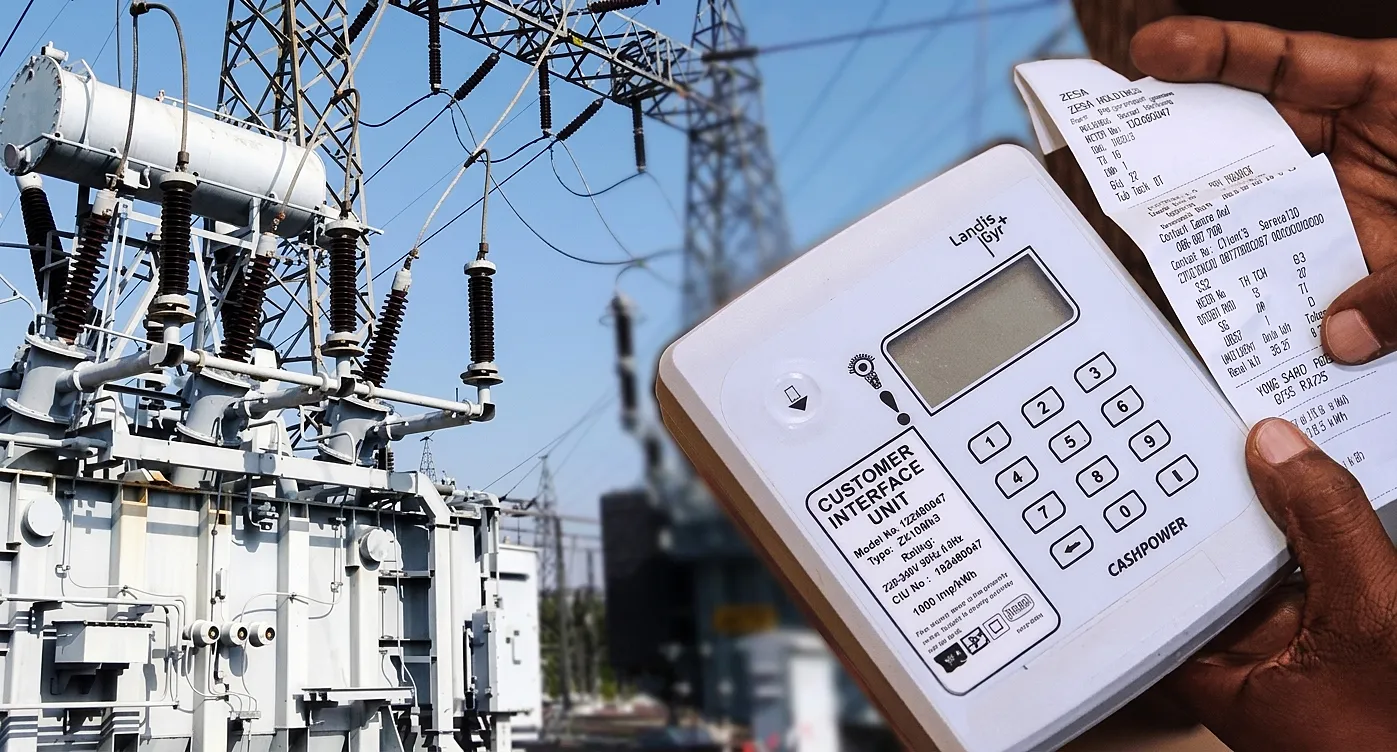
Critically, it expands the architecture for smart meters and Advanced Metering Infrastructure, enabling remote reading, remote connection and disconnection, multi-tariff billing, tamper detection and real-time utility-customer communication.
The consumer protection provisions are equally significant. Where a faulty or obsolete meter is removed, distribution licensees must urgently repair or replace it; customers cannot be placed on estimated billing during that period.
For Lagos, the stakes are elevated further. Section 89(2) of the Lagos State Electricity Law 2024 criminalises electricity supply without a meter, signalling a markedly tougher consumer-protection stance that aligns state-level reform with national regulatory efforts to reduce billing disputes.
Metering is where reform stops being institutional and becomes personal.
Private Operators Enter Lagos Market
The reform agenda also seeks to widen participation beyond incumbent distribution companies.
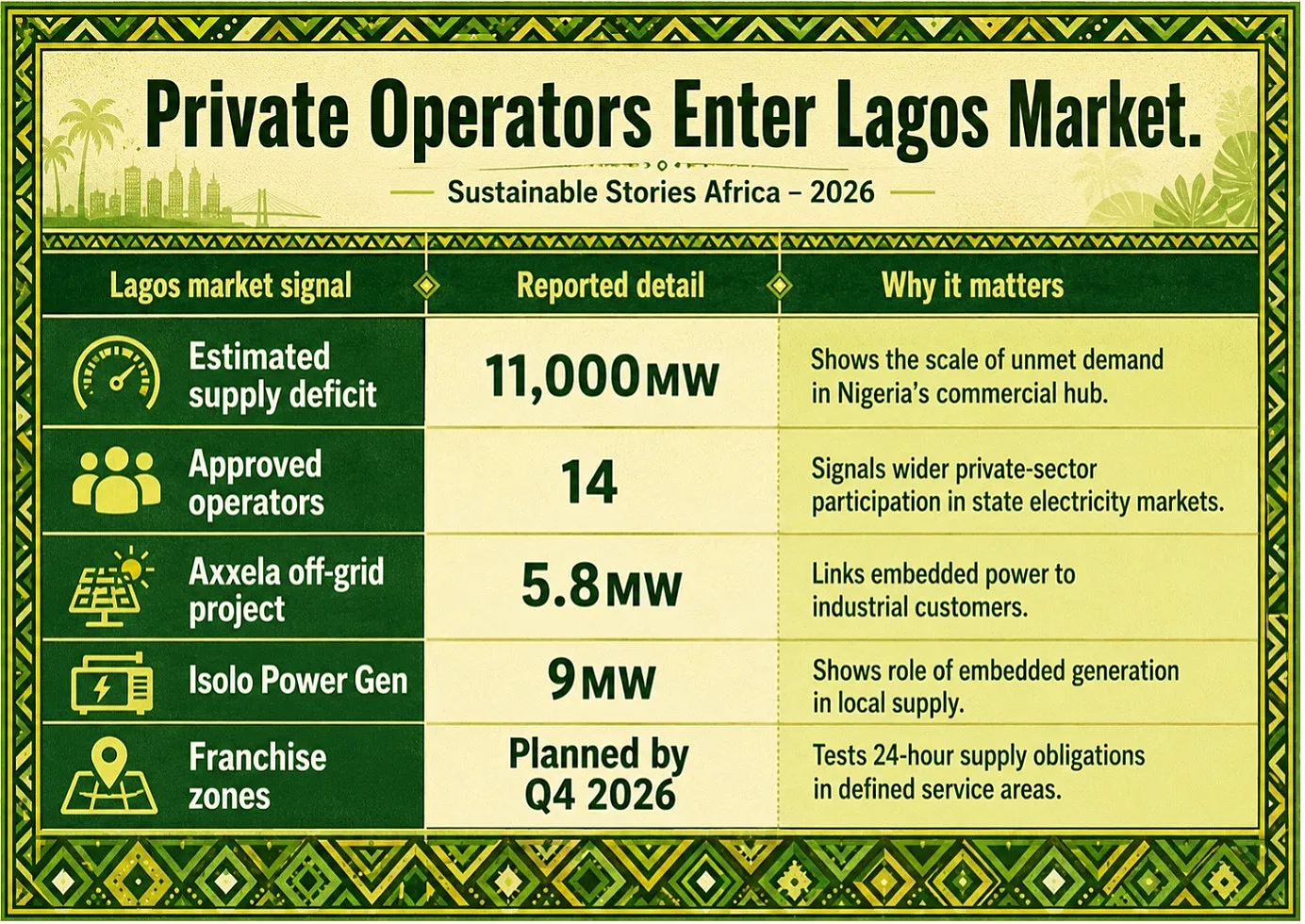
LASERC disclosed that it had approved licences for 14 electricity operators across off-grid generation, metering and distribution segments of the market.
Notable licensees identified include Axxela Limited, with 5.8 MW off-grid generation for Cadbury Nigeria Plc; Isolo Power Gen Limited, with 9 MW embedded generation; and Daybreak Power Solutions Limited, reportedly granted multiple off-grid licences covering industrial facilities linked to Seven-Up Bottling Company, Nigerian Breweries Plc and Promasidor Nigeria Limited.
This is important because Lagos faces a major supply gap. During the stakeholder engagement, LASERC outlined reforms aimed at addressing an estimated 11,000MW electricity supply deficit in the state.
The logic is straightforward: if centralised supply cannot meet demand, Lagos wants a market structure that can mobilise embedded generation, off-grid systems, metering providers and more efficient distribution models.
Industrial clusters, commercial zones and high-demand corridors could become early beneficiaries if licensing, pricing and service obligations are handled well.
Reliable Power Could Unlock Productivity
The potential dividend from Lagos' electricity reform is tangible and economy-wide.
Reliable power means fewer generator hours and lower fuel exposure for households, reduced diesel costs and longer operating hours for small businesses, less production downtime for manufacturers, and a credible pathway toward cleaner distributed energy through renewables, storage and smarter grids.
The proposed 24-hour electricity franchise zones are central to that vision. LASERC has announced plans to introduce designated zones by the fourth quarter of 2026, with licensed operators held to continuous supply standards.
Distribution companies failing to meet obligations in underserved areas could be required to sub-franchise or cede operational responsibility to more capable operators, shifting accountability from broad promises to measurable service delivery.
The risk, however, is real. Cost-reflective tariffs can attract investment while simultaneously creating affordability pressure.
Without transparent service guarantees and targeted protection for vulnerable consumers, reform risks being judged by capital raised rather than power delivered.
Lagos' credibility will ultimately rest on whether citizens receive better electricity for what they pay.
Reform Must Balance Cost And Trust
Electricity reform succeeds or fails on trust. Raising tariffs and issuing licences are necessary steps; however, they are insufficient.
Consumers will accept cost-reflective pricing only when electricity is reliable, billing is accurate, and complaints are resolved. Without those conditions, reform becomes another burden transfer.
- Regulators must move NERC's revised codes on metering, safety, compensation and smart infrastructure from regulatory documents into everyday industry conduct.
- Businesses and investors must treat franchise zones and embedded power projects as service obligations, not simply revenue opportunities.
- For financiers, Lagos' electricity transition is bankable; however, only where regulation is credible, contracts are enforceable, and dispute resolution is clear.
The quality of governance determines the cost and patience of capital.
Reform that builds trust attracts investment. Reform that extracts without delivering loses both.
Path Forward Demands Accountable Power Reform
Lagos’ electricity reform could become a model for state-led power markets if it delivers reliable supply, fair billing, enforceable safety rules and credible private investment.
The priority now is disciplined implementation: metering before billing disputes, service standards before tariff shocks, safety before expansion, and transparent regulation before market confidence.
That is how electricity reform becomes shared prosperity.