Lagos State says Nigeria’s industrial future will be decided not by policy ambition alone, but by execution, regulatory certainty, infrastructure, finance and trust.
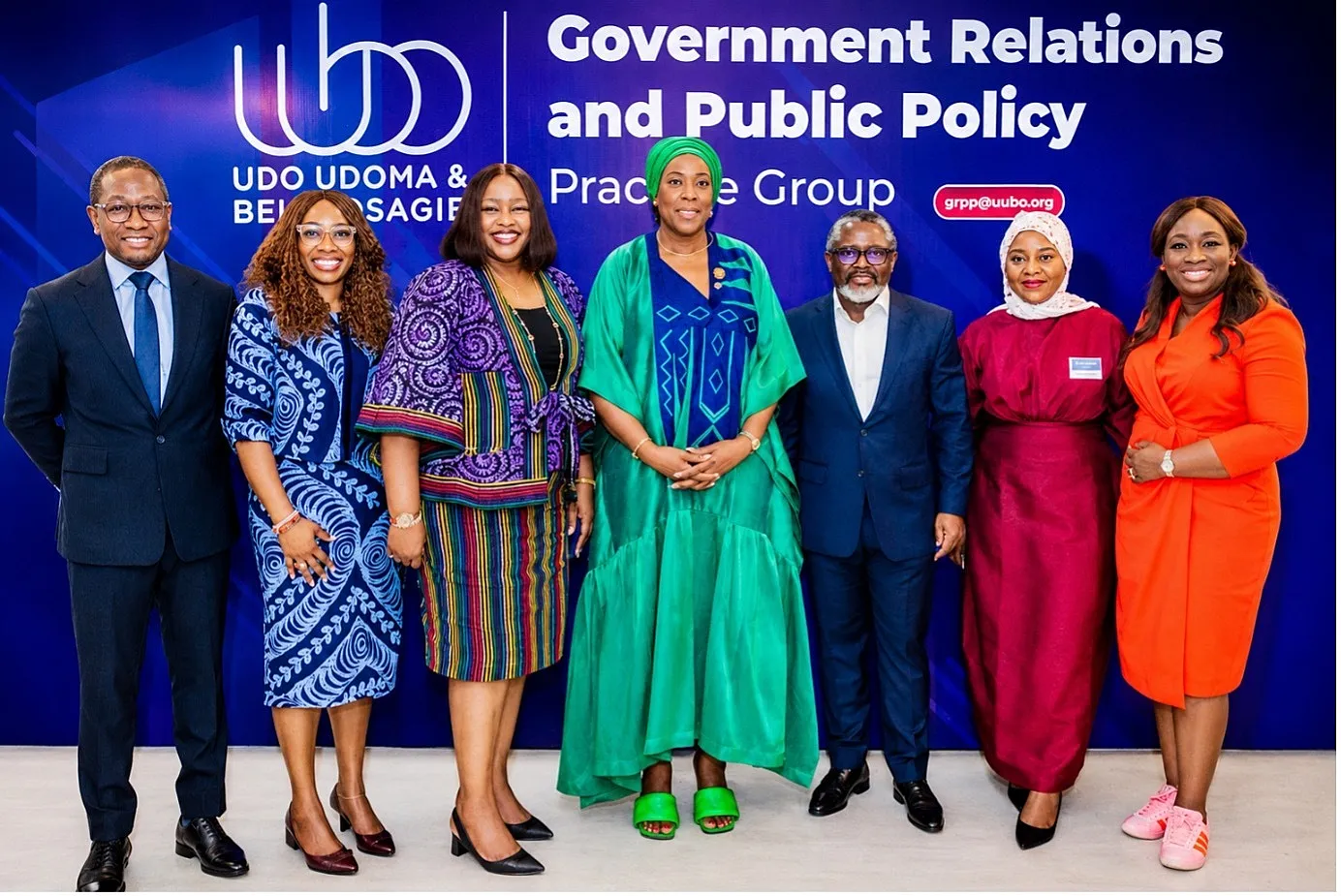
At a Udo Udoma & Belo-Osagie breakfast session, Commissioner Folashade Kaosarat Bada Ambrose presented the Lagos State Industrial Policy 2025–2030 as a practical state-level model for converting national industrial strategy into productivity, investment and measurable inclusion.
Lagos Tests Policy Through Industrial Execution
Lagos State is positioning itself as the clearest test of whether Nigeria’s new industrial policy can move from high-level aspiration to real productivity in factories, export corridors, industrial clusters and small businesses.
Speaking at the Udo Udoma & Belo-Osagie Law Firm breakfast session themed “Translating Nigeria’s Industrial Policy into Productivity: Navigating Legal and Regulatory Bottlenecks,” Mrs Folashade Kaosarat Bada Ambrose, Lagos State Honourable Commissioner for Commerce, Cooperatives, Trade and Investment, said industrial growth requires more than ambition.

It needs policy direction, coordinated implementation, regulatory certainty, infrastructure, finance, skilled talent and investor confidence.
Her core message was simple but weighty: Nigeria cannot industrialise by announcing plans alone.
It must build the delivery systems that allow businesses to produce, export, employ, formalise and compete.
For Lagos, that means making law, regulation, finance, infrastructure and institutional accountability work together.
Lagos Carries Nigeria’s Industrial Delivery Burden
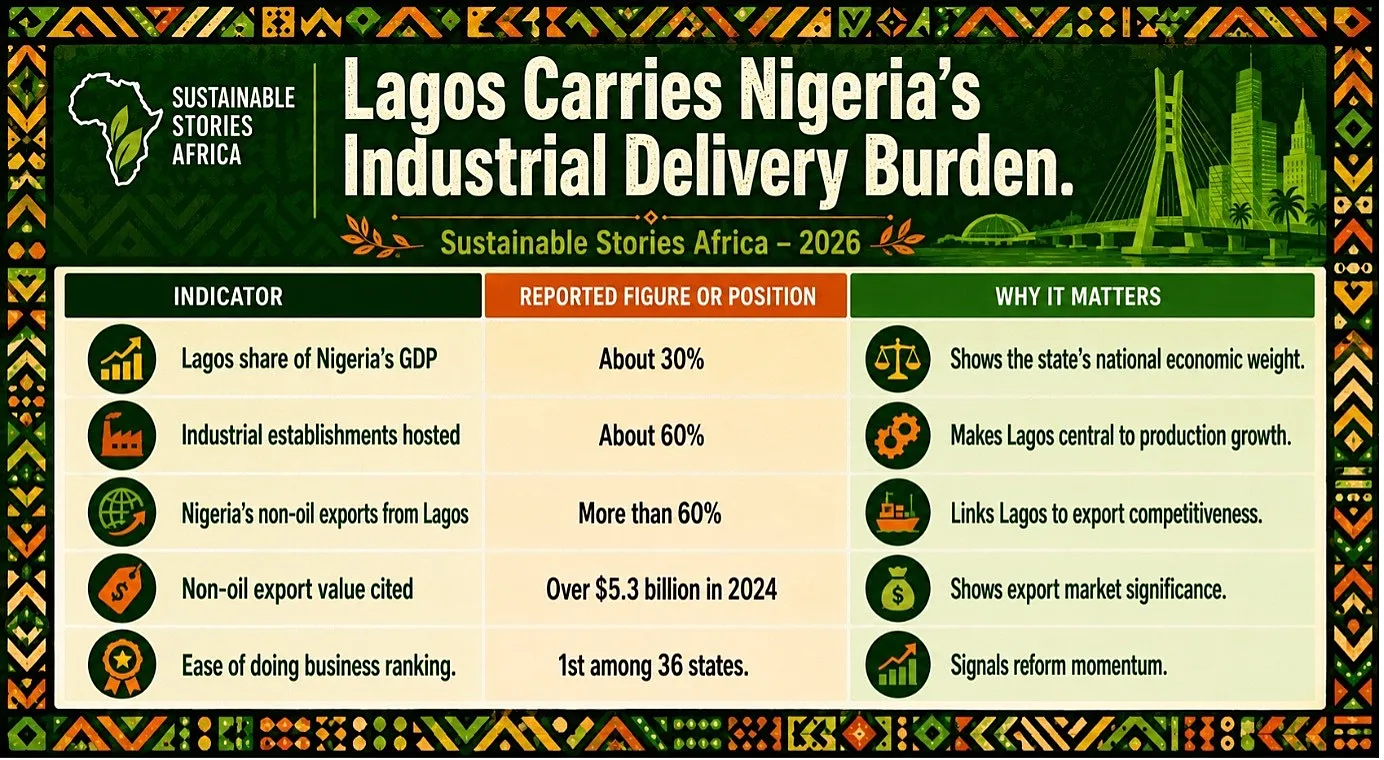
Lagos carries disproportionate weight in Nigeria's industrial conversation. The state contributes approximately 30% of the national GDP, hosts 60% of industrial establishments, and generates over 60% of non-oil exports, valued at more than $5.3 billion in 2024.
It also leads all 36 states on the Presidential Enabling Business Environment Council's ease of doing business index, cementing its role as a national industrial platform rather than a regional economy.
That scale means systemic failures in Lagos, such as unreliable power, slow approvals, logistics gaps, or restricted access to credit, ripple outward, dampening production, discouraging investment, and limiting economic inclusion.
Commissioner Ambrose identified trust and consistency as the foundation of investor confidence, built not through policy declarations alone, but through predictable rules, coordinated agencies, and clear business pathways.
The Lagos State Industrial Policy 2025 – 2030, launched April 30, 2026, responds directly to Nigeria's national Industrial Policy 2025, aligning state execution with federal priorities to value chains, MSMEs, export competitiveness, and long-term industrial governance.
Six Pillars Frame Lagos Industrial Ambition
The Lagos State Industrial Policy is anchored on six strategic pillars designed to transform the state into Africa's premier industrial and investment destination.
The pillars span competitive industrial base development, infrastructure, regulatory reform, access to finance, workforce readiness, and green industrial innovation.
Central to the strategy is the Lekki economic corridor, spanning 16,500 hectares, which, despite nearly 25 years of existence, remains less than 30% optimised.
Officials acknowledge that stronger coordination is needed to integrate land, ports, logistics, power and regulation into a coherent production and export ecosystem, a challenge echoed across African industrial zones.
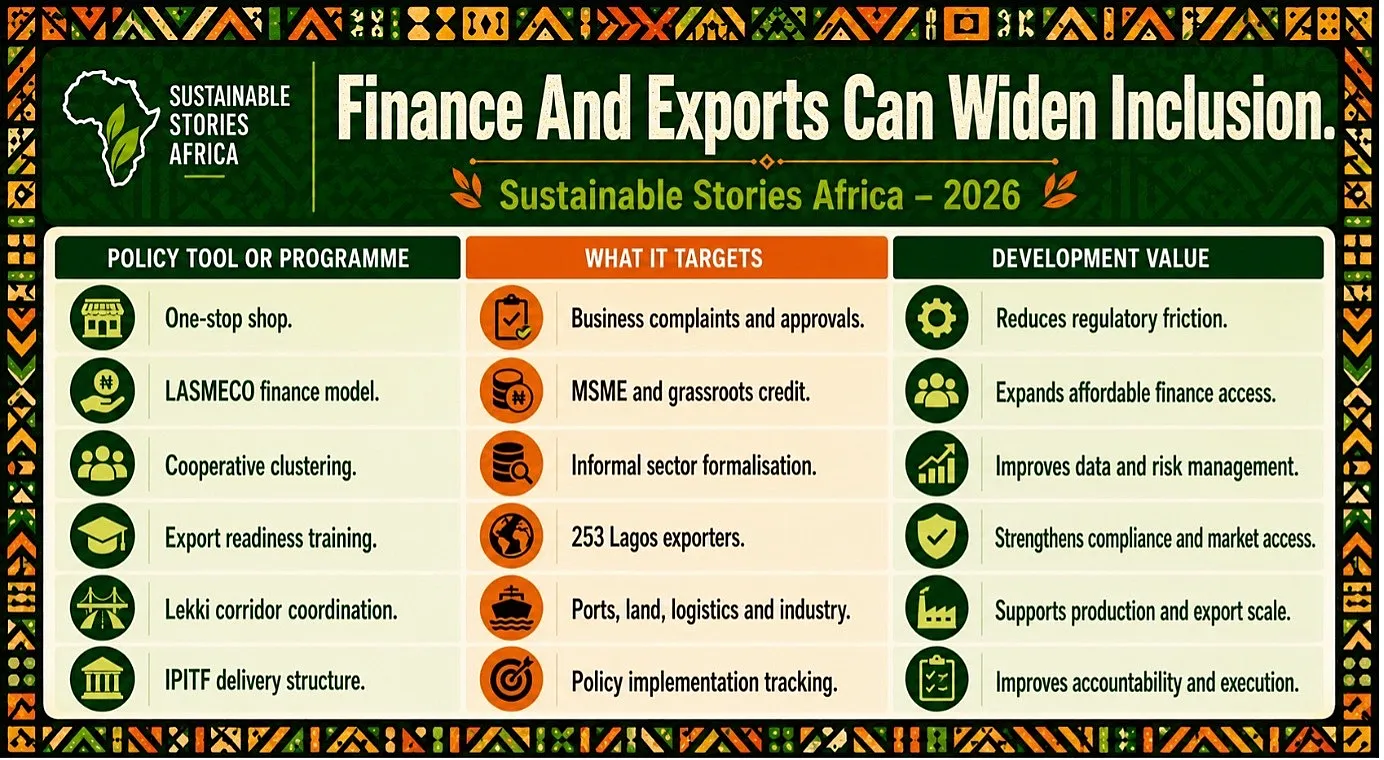
On ease of doing business, Lagos is developing a one-stop shop to streamline regulatory processes.
The broader policy signals a deliberate shift, treating industrial development not as a narrow manufacturing agenda, but as an integrated productivity system built for smart, sustainable growth.
Finance And Exports Can Widen Inclusion
For Lagos's nanopreneurs, small traders, cooperative members and informal producers, industrial policy can feel distant.
A food processor in Agege or a cosmetics exporter in Surulere is not asking for a national framework; they need power, affordable finance, certification support and a government process that does not penalise them for being small.
Lagos is addressing this through a partnership with the Bank of Industry, offering loans of up to N10 million per applicant at 9% interest, without collateral, on a three-year repayment term.
The state has paired this with clustering, cooperative registration and sector-based accelerators to reduce credit risk and strengthen business capacity.
The underlying challenge is bankability. Many micro and small enterprises lack documentation, credit history or structured financial records.
Lagos's approach links finance to formalisation and data, using cooperatives and clusters not merely as administrative structures, but as entry points for mapping enterprises, assessing needs and managing credit risk.
Data emerged as a recurring priority. Without reliable business information, targeted interventions remain guesswork.
On exports, the Lagos State Export Readiness Programme trained 253 exporters in trade procedures and international standards, with participants attending the 2025 Intra-African Trade Fair in Algiers.
The message was clear: having products is not enough, export competitiveness demands preparation, certification, compliance and fulfilment capacity.
Execution Requires Institutions, Data, and Trust
Lagos is not simply presenting a policy; it is building the institutional machinery to deliver it.
The Lagos State Industrial Policy is supported by an implementation framework centred on the Industrial Policy Implementation Task Force, designed as an institutional bridge between policy formulation and on-the-ground execution.
The task force will meet monthly to monitor progress, track performance indicators, resolve regulatory and operational bottlenecks in real time, and submit quarterly delivery reports to the governor.
Underpinning this is a results framework with measurable 2030 targets tied to each strategic pillar.
This architecture matters because Africa's industrial policy challenge is rarely a shortage of plans; it is weak execution, fragmented mandates and limited accountability. Commissioner Ambrose captured it directly: "Policies alone do not transform economies. What transforms economies is execution."
The policy itself was shaped through broad stakeholder consultation, including business member organisations, the Nigerian Economic Summit Group, NIPSS and the organised private sector, and pressure-tested before approval.
That process reflects a critical lesson: legal and regulatory bottlenecks are productivity issues.
Delayed approvals cost factories time, non-compliance costs exporters money, and regulatory uncertainty costs Lagos and investors.
Lagos Wants Investors To See Bankability
Lagos is taking its industrial agenda global. Invest Lagos 3.0 is scheduled for June 8 and 9 at Eko Hotels and Suites, in partnership with the Commonwealth Enterprise and Investment Council, and over 150 international investors are expected.
The summit will spotlight industrial growth, structural reform, investment partnerships and sustainable transformation, with sector sessions covering energy and fintech, with a visit to the Lekki economic zone.
Commissioner Ambrose was direct about investor expectations: "The numbers, the criteria have to stack."
Industrial ambition, she signalled, must translate into bankable projects, backed by credible data, regulatory clarity, risk-sharing mechanisms and governance structures that can outlast political cycles.
The stakes for citizens are tangible. Effective industrial policy means jobs, stronger supply chains, higher export earnings and more resilient enterprises.
Failure means import dependence, underused estates and small businesses trapped below scale.
On sustainability, the green industrial pillar links Lagos's future to renewable energy, smart technology, and clean production, aligning with pressures in the growing African market around energy transition, climate risk and responsible investment standards.
Path Forward – For Productive Industrial Growth
Lagos is advocating a move from policy announcements to delivery systems: measurable targets, regulatory coordination, affordable finance, export readiness, industrial infrastructure, data and private-sector accountability.
The next test is execution. If the Lagos State Industrial Policy delivers, it could become a subnational model for turning Nigeria’s industrial agenda into jobs, exports, productivity and sustainable growth.