Libya’s private sector is no longer just an economic story. An African Development Bank policy note frames MSMEs, informal traders, renewable energy, and regional value chains as possible stabilisers in a country still shaped by conflict and institutional fragmentation.
The central question is whether targeted investment can turn survival businesses into engines of jobs, trust, and national recovery.
Private Enterprise Becomes Libya’s Peace Test
Libya’s economic recovery may depend less on oil alone and more on the businesses that kept markets moving through more than a decade of conflict, according to an African Development Bank policy note on leveraging the country’s private sector for resilience and inclusive growth.
The report argues that private enterprise, especially informal actors and micro, small, and medium enterprises, can help rebuild livelihoods, strengthen social cohesion, and support political stability if reforms unlock finance, improve governance, and connect
Libya’s divided regions through productive value chains.
For African and emerging markets watching Libya, the lesson far exceeds a single country.
In fragile economies, private-sector development is not simply about growth. It can become a peace infrastructure when it creates jobs, keeps supply chains open, and gives communities a shared stake in stability.
Fragility Now Shapes Every Business Decision
Libya stands at a defining crossroads. More than a decade of conflict has left its economy fractured by regional division, institutional weakness, and volatile governance; however, the private sector has demonstrated quiet resilience, sustaining supply chains and livelihoods under considerable strain.
The structural gaps are stark. MSMEs contribute only 5% – 10% of GDP, formal access to credit is below 1%, and youth unemployment exceeds 50%.
Women's labour force participation remains below 25%, while over 70% of formal business activity clusters in Tripolitania, leaving Fezzan chronically underserved. Still, digital payments surpassing four million users signal an opening toward financial inclusion.
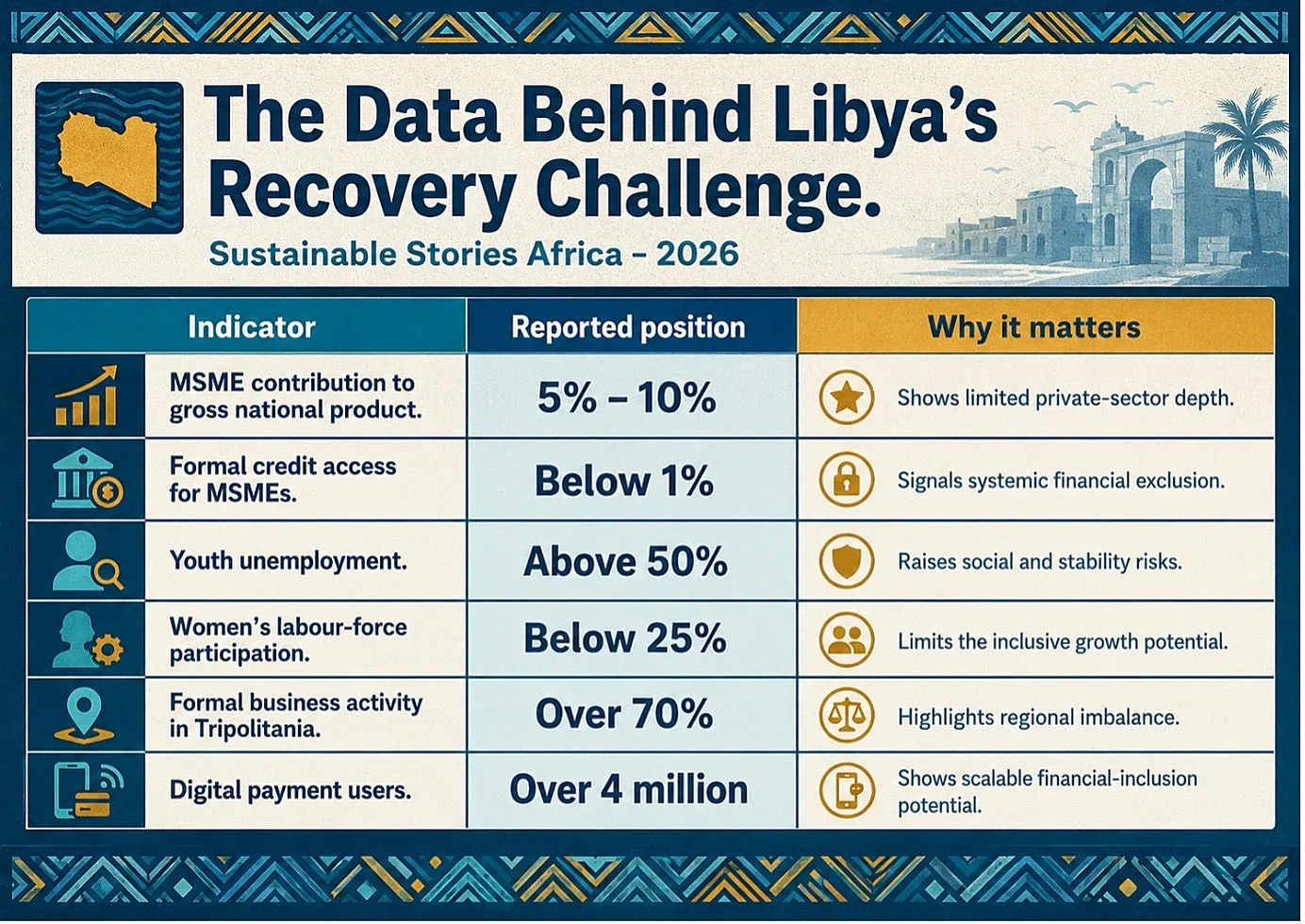
The AfDB policy note, grounded in consultations with 39 stakeholders and a 2025 Tripoli validation workshop, argues that Libya's recovery must reach beyond hydrocarbons and reconstruction contracts.
It must serve the small trader, the youth entrepreneur, the coastal fisher, and the inland logistics operator. Incomplete business registries and weak MSME data, however, remain critical barriers to effective policy design.
Informal Markets Carry Formal Peace Potential
Libya’s private sector is heavily shaped by informality, trade dominance and weak institutional coordination. Formal employment remains largely state-driven, while wholesale and retail trade account for nearly 90% of private-sector value.
The informal economy, by contrast, has helped preserve livelihoods where public service delivery has struggled.
That resilience is not accidental. The report points to economic networks that continue to move agricultural goods, manufactured products, livestock and essential supplies across politically fragmented regions.
Tribal networks, municipalities, NGOs, incubators and informal financing systems have become part of Libya’s economic coping mechanism.
One small business owner consulted for the report captured the governance gap directly: “There is no clear institutional framework or coordination mechanism to support private sector development effectively.”
Another private-sector representative said, “The absence of financing mechanisms and guarantees prevents the private sector from expanding despite existing capacity.”
For policymakers, this is where the opportunity lies. Libya does not need to invent private-sector resilience from scratch.
It needs to formalise, finance and protect what already works, while reducing the risks that keep firms small, informal and vulnerable.
Peace Dividends Could Follow Smart Investment
The AfDB note identifies agribusiness, fisheries and renewable energy as three sectors capable of delivering immediate and visible peace dividends because they combine employment potential with regional linkages and MSME participation.
Agriculture can strengthen South–North corridors; fisheries can connect eastern and western coastal economies; and renewable energy can support nationwide access, resilience and private investment.
Agribusiness is particularly important in Fezzan, Sabha, Murzuq, Ubari, Wadi Al-Shati’, Al-Kufra and Jalu, where date processing, tomato concentrate production, solar-powered cold chains and rural logistics hubs could reconnect producers to coastal markets.
A stakeholder quoted in the report said: “Supporting agricultural value chains in the south can create jobs while reconnecting local economies with northern markets.”
Fisheries offer another stabilising route. Libya’s coastline, stretching from Zuwara and Tripoli to Misrata, Benghazi and Tobruk, could support small-scale fishers, processors, vendors and transporters if landing sites, ice production, cold storage and transparent market systems are upgraded.
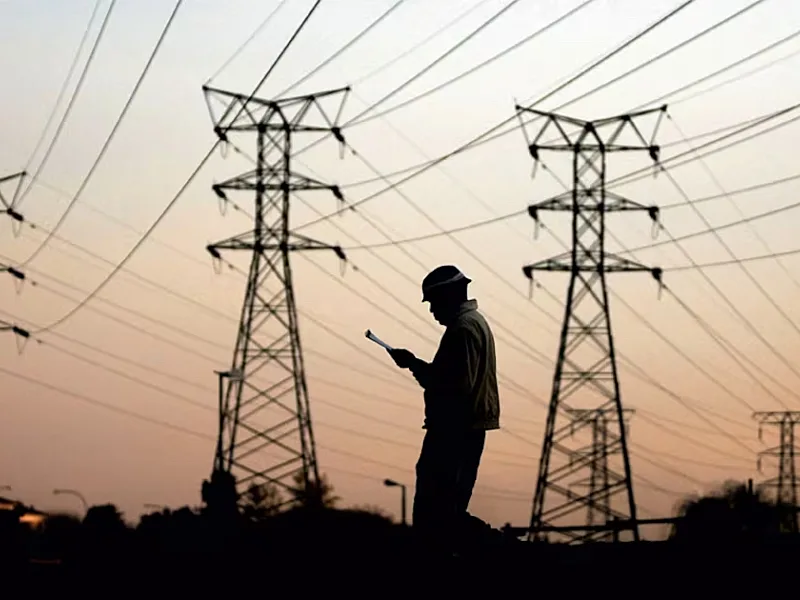
The most transformative sector may be renewable energy. Libya has more than 3,500 hours of annual sunshine, high solar potential in Murzuq and Al-Kufrah, rooftop solar opportunities in Tripoli and Benghazi, and promising wind corridors along coastal and inland zones.
However, deployment remains limited by regulatory gaps, weak incentives, inadequate technical capacity and the absence of bankable power-purchase and independent power producer frameworks.
Reforms Must Move From Diagnosis To Delivery
The policy note’s recommendations are deliberately sequenced. The AfDB proposes a phased approach: first analytical work, then targeted pilots, then scalable operations.
A technical support unit could help Libyan firms prepare concept notes, business plans and transaction documents that meet development-finance standards.
The next layer is institutional reform. Libya needs better MSME mapping, stronger incubator networks, a National MSME and Innovation Network, municipal capacity for simplified licensing, and clearer data systems.
Without these, investors will struggle to price risk, banks will remain cautious, and policymakers will continue working with incomplete evidence.
The PPP agenda is equally urgent. Libya’s outdated investment framework and still-unsettled PPP architecture weaken investor confidence.
The report recommends PPP diagnostics, conflict-sensitive models, solar and logistics projects, and legal advisory support through the African Legal Support Facility.
This would make infrastructure projects more predictable, especially where blended finance and guarantees can reduce political and commercial risk.
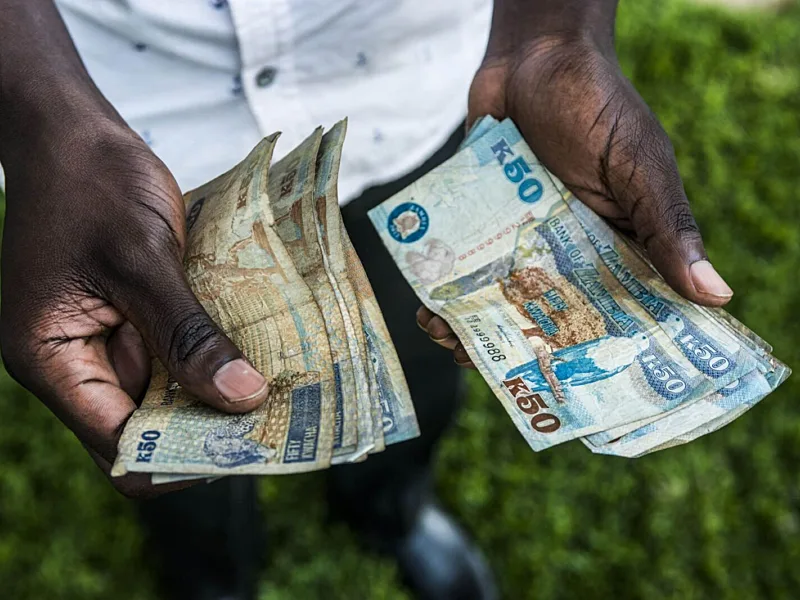
For finance, the proposed reforms are practical: partial credit guarantees, risk-sharing facilities, interoperable digital payments, alternative credit scoring, Sharia-compliant financing tools and stronger cybersecurity and digital ID frameworks.
These are not abstract reforms. They determine whether a youth-led logistics firm, a woman-owned food processor or a solar cold-chain operator can access working capital.
Where action must now concentrate
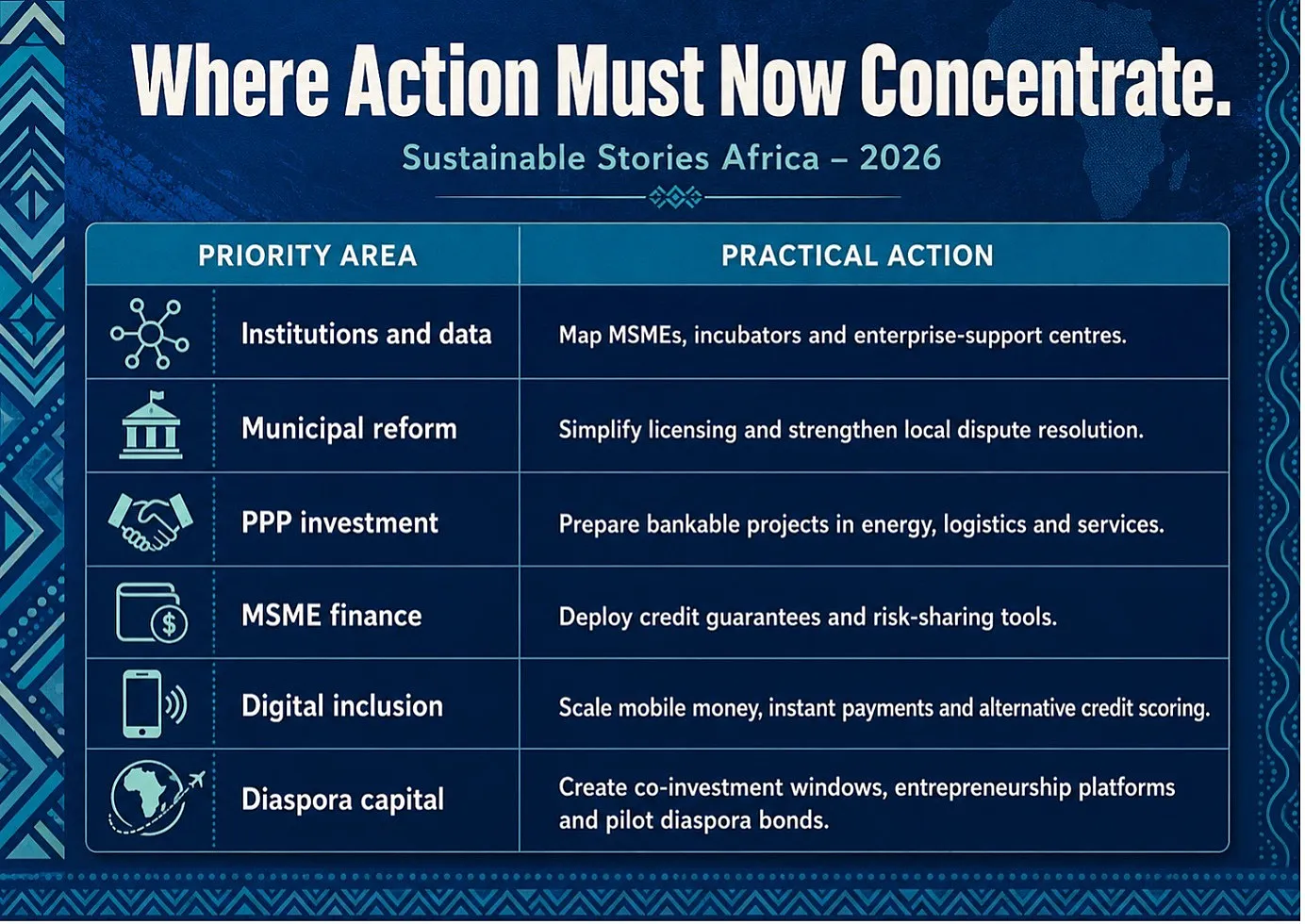
Diaspora finance is another underused lever. The report notes that Libyans abroad represent an untapped source of capital, skills and networks. But the channel must be credible, transparent and depoliticised.
Co-investment windows, diaspora bonds, matching grants and diaspora venture networks could direct capital towards agribusiness, fisheries, digital services and solar-energy MSMEs.
The broader ESG implication is clear: resilience is not only about climate adaptation or governance compliance.
In Libya, it is about whether finance, institutions and infrastructure can reduce exclusion, expand trust and give communities stronger incentives to cooperate than to fragment.
Path Forward – For Peace-Positive Investment
Libya’s recovery agenda should prioritise MSME finance, municipal reform, PPP readiness, renewable energy and diaspora capital, with agribusiness and fisheries treated as practical connectors between regions.
The AfDB’s strongest contribution may be catalytic: helping Libya move from fragmented opportunity to bankable, inclusive investment that creates jobs, strengthens governance and turns private enterprise into a platform for peace.