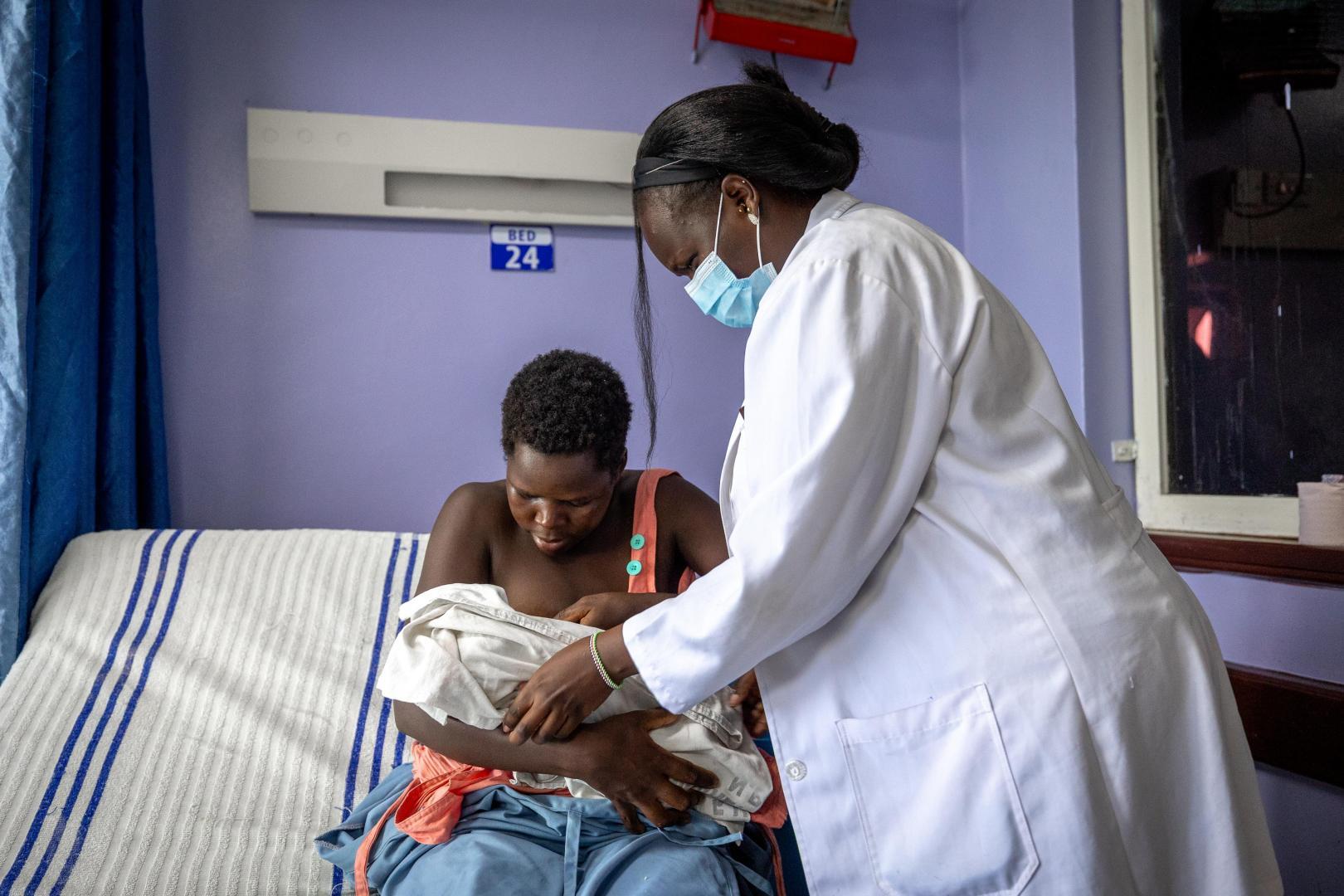
Maternal deaths fell globally to about 240,000 in 2023, but progress has slowed sharply since 2015, and Africa remains the epicentre of the crisis.
For African markets and communities, the warning is clear: safer pregnancies now depend on stronger frontline care, faster emergency response, and much better maternal health data.
Africa’s unfinished test of maternal survival
The world is still losing far too many women and girls to preventable causes linked to pregnancy, childbirth and the year after delivery.
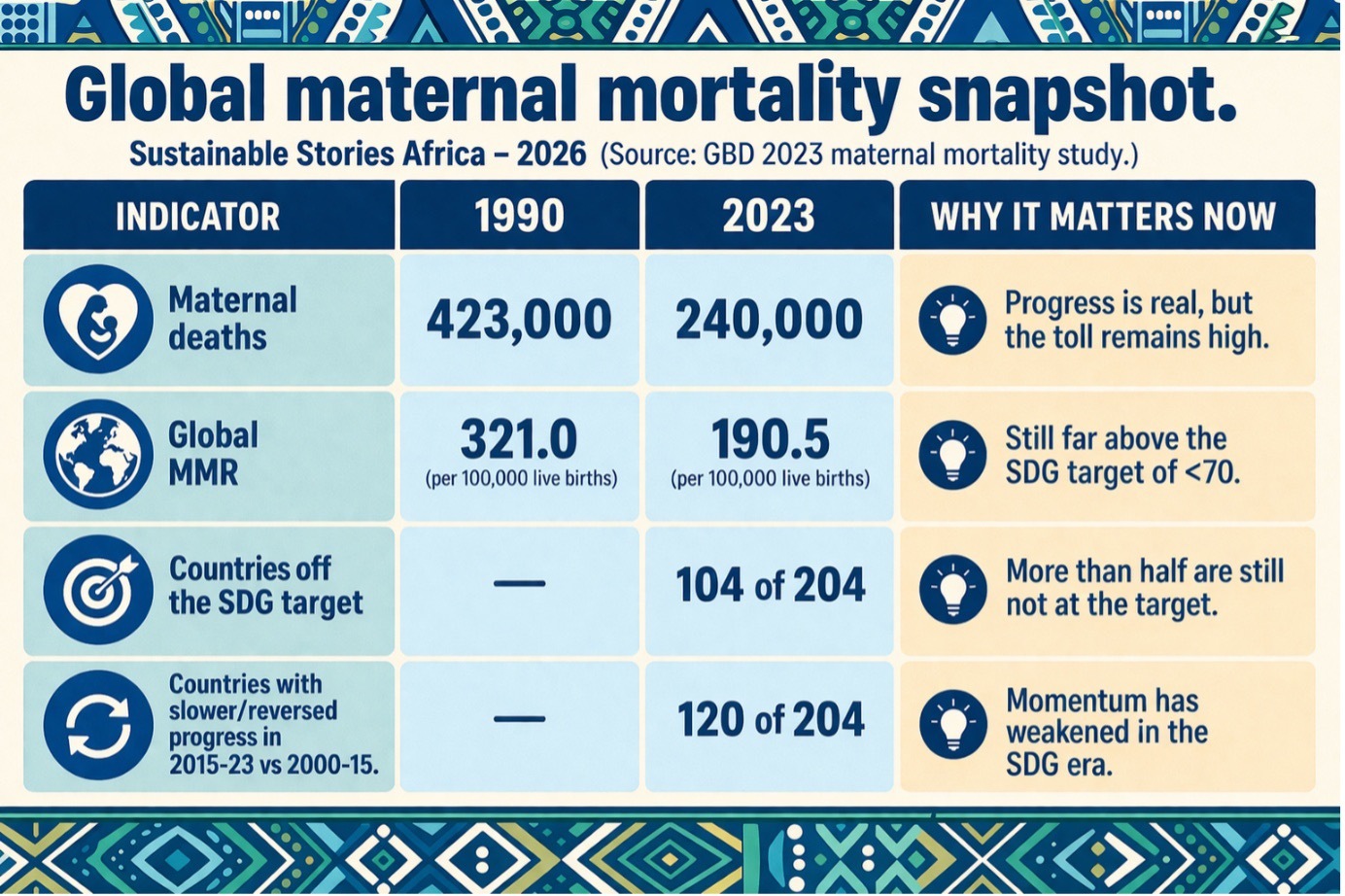
The latest Global Burden of Disease analysis puts the global maternal mortality ratio at 190.5 deaths per 100,000 live births in 2023, nearly three times the Sustainable Development Goal threshold of fewer than 70.
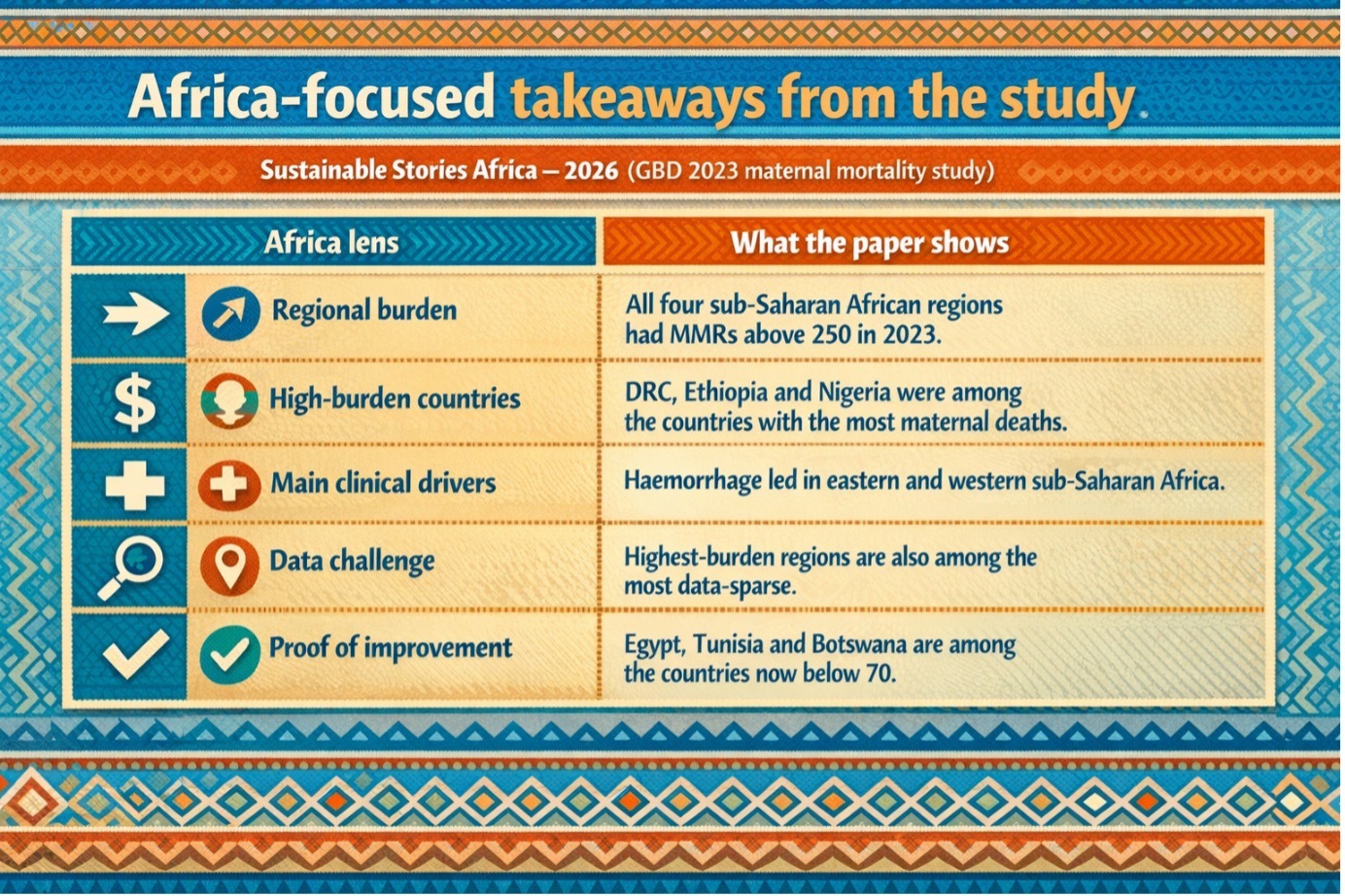
However, the global headline hides a deeper African reality. The study finds that the highest-burden regions in 2023 were all four sub-Saharan African regions, the Caribbean and Oceania, each with maternal mortality ratios above 250.
Countries with the highest number of maternal deaths included the Democratic Republic of Congo, Ethiopia and Nigeria.
That makes maternal mortality more than a health indicator. In Africa, it is a measure of state capacity, gender equity, transport reliability, data quality and whether health systems can protect life during their most time-sensitive moments.
The slowdown behind the headline
There is real progress to report. Global maternal deaths fell from 423,000 in 1990 to 240,000 in 2023, while the global maternal mortality ratio declined from 321.0 to 190.5 over the same period.
However, the pace of improvement has weakened. The sharpest gains came during the Millennium Development Goal era from 2000 to 2015. Since 2015, that momentum has flattened.
In fact, 120 of 204 countries and territories recorded slower or reversed annual progress in reducing maternal mortality during 2015-23 compared with 2000-15.
For Africa, that matters because the region entered the SDG era from a much higher base. When progress slows in already high-burden systems, the human cost compounds quickly: more preventable deaths, more orphaned children, more disrupted households and greater strain on fragile health systems.
The paper is blunt that most maternal deaths remain preventable and are shaped not only by obstetric emergencies but also by deeper inequalities in access, quality and continuity of care.
Five metrics explain Africa’s reality
- The crisis is still heavily concentrated – In 2023, 104 of 204 countries and territories still had not met the SDG 3.1 target. Of those, 73 were still above 140 maternal deaths per 100,000 live births, meaning they were not just off track but far off track.
- Sub-Saharan Africa remains the hardest-hit zone – The paper identifies eastern, western, central and southern sub-Saharan Africa as the highest-MMR regional clusters in the world in 2023. It also notes that the regions with the highest burden are often the most data-sparse, meaning some of the places needing the fastest action are also the places where timely evidence is weakest.
- Nigeria remains central to the burden story – Nigeria is listed among the countries with the highest number of maternal deaths globally in 2023, alongside the Democratic Republic of Congo, Ethiopia, India and Pakistan. For African policymakers, that means national progress in a few populous countries will heavily influence whether the continent shifts the global curve at all.
- The biggest killers are well known – Maternal haemorrhage and hypertensive disorders were the two leading sub-causes globally in 2023. Haemorrhage accounted for 21.7% of maternal deaths, and hypertensive disorders for 20.1%. In eastern and western sub-Saharan Africa, haemorrhage ranked as the leading sub-cause of death. That is important because it points to interventions that are not mysterious: blood availability, skilled birth attendance, referral systems, antenatal screening, magnesium sulfate, emergency obstetric care and postpartum follow-up.
- Africa also shows that improvement is possible. – The paper highlights countries such as Egypt, Tunisia and Botswana among places that moved from much higher maternal mortality levels in 1990 to below the SDG threshold by 2023. That matters because it shows the gap is not immutable. Gains are there when public health systems combine access, continuity, measurement and political commitment.
What a better outcome looks like
The hopeful reading of the paper is that maternal mortality is not governed by fate. It responds to systems.
Where countries invest in antenatal care, emergency obstetrics, referral transport, postpartum follow-up, better data and flexible responses to shocks, maternal deaths fall.
That is why the best-performing examples matter so much for Africa: they suggest that even countries starting from severe mortality levels can bend the trend with sustained policy attention.
For investors, development financiers and business leaders, the gains go beyond health alone. Fewer maternal deaths mean stronger labour participation, more stable households, lower catastrophic health spending and greater confidence that public systems can deliver on essential services.
In practical terms, maternal survival is also a productivity human-capital and governance story.
What African systems should do next?
The study’s message for African governments is not to search for a new miracle intervention, but to close old implementation gaps faster.
- First, strengthen routine maternal death measurement and civil registration so policy is driven by current evidence, not delayed estimates.
- Second, invest in the chain that saves mothers in real time: skilled providers, functioning facilities, blood, medicines, triage, transport and postpartum care.
- Third, protect maternal services during system shocks, whether those shocks come from epidemics, conflict, climate stress or fiscal strain.
The challenge also extends beyond ministries of health. Regulators, financiers, telecoms providers, transport planners and local governments all shape whether a woman reaches care early enough.
In Africa, maternal mortality will fall faster when it is treated as a systems challenge with national economic consequences, rather than as a narrow social-sector statistic.
Path Forward – Data, care and political follow-through
Africa’s maternal mortality challenge is still severe, but the latest evidence also shows where action should concentrate: better data, faster emergency response, stronger obstetric care and more resilient health systems.
The promise is practical, not abstract. Countries that align maternal health policy with measurement, access and continuity of care can move down the curve, just as some African peers have already.