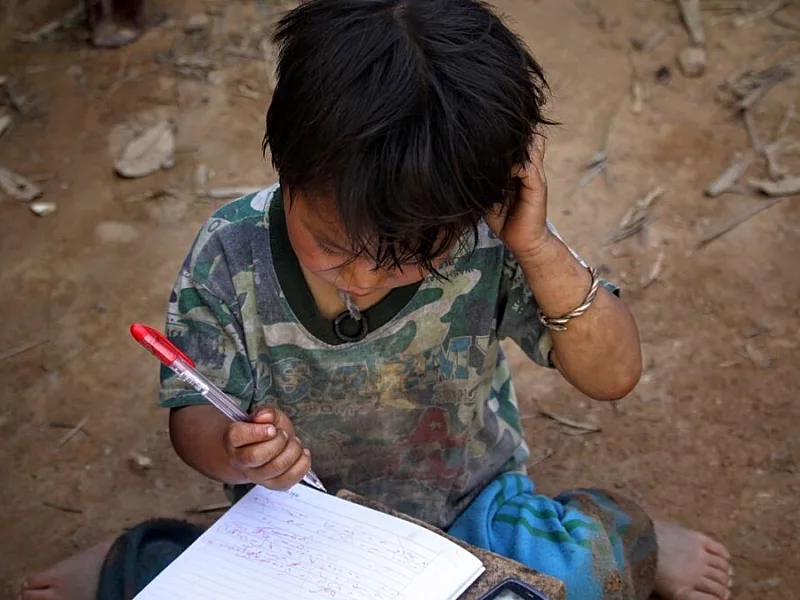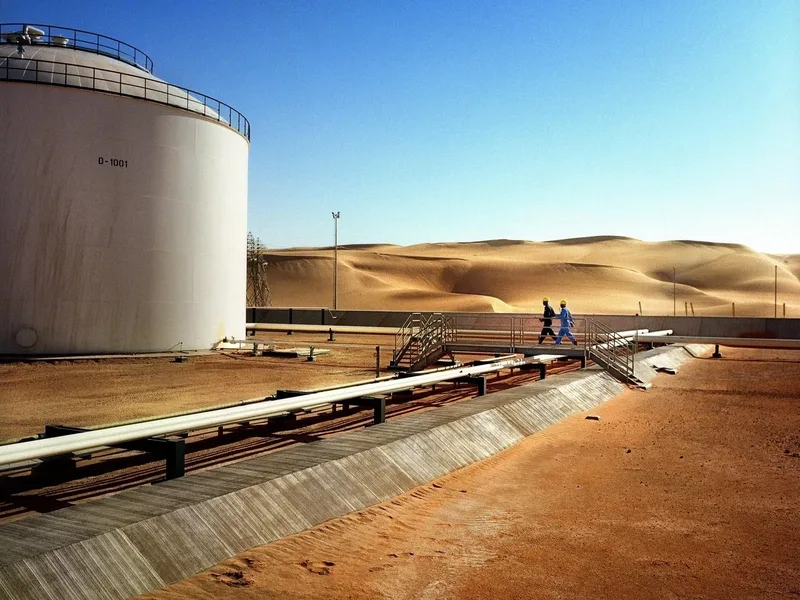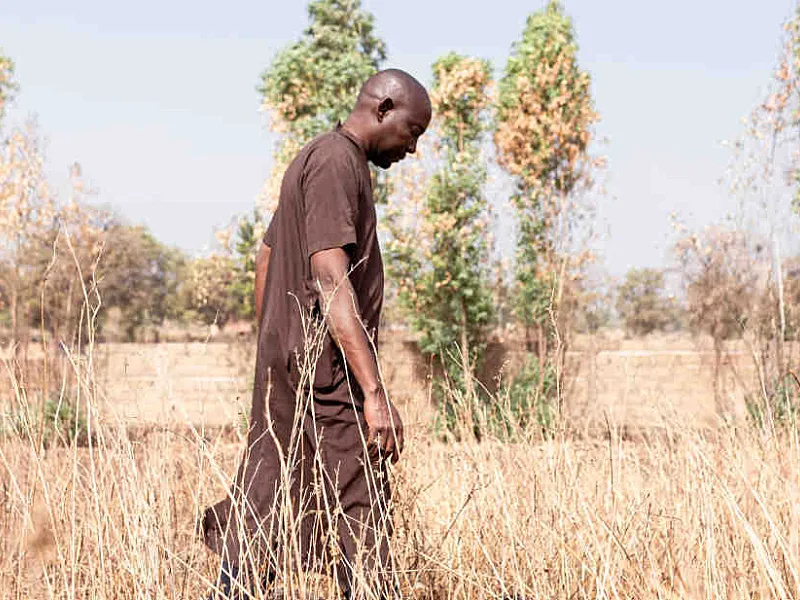
Lead poisoning is again forcing Nigeria to confront a hazard that kills quietly, damages children permanently and drains billions from the economy. Policy action is growing, but the scale of exposure remains alarming.
The central question now is whether enforcement, remediation and surveillance can keep pace with risks linked to mining, battery recycling and toxic paint, from northern communities to industrial corridors like Ogijo.
A Toxic Burden Still Poorly Counted
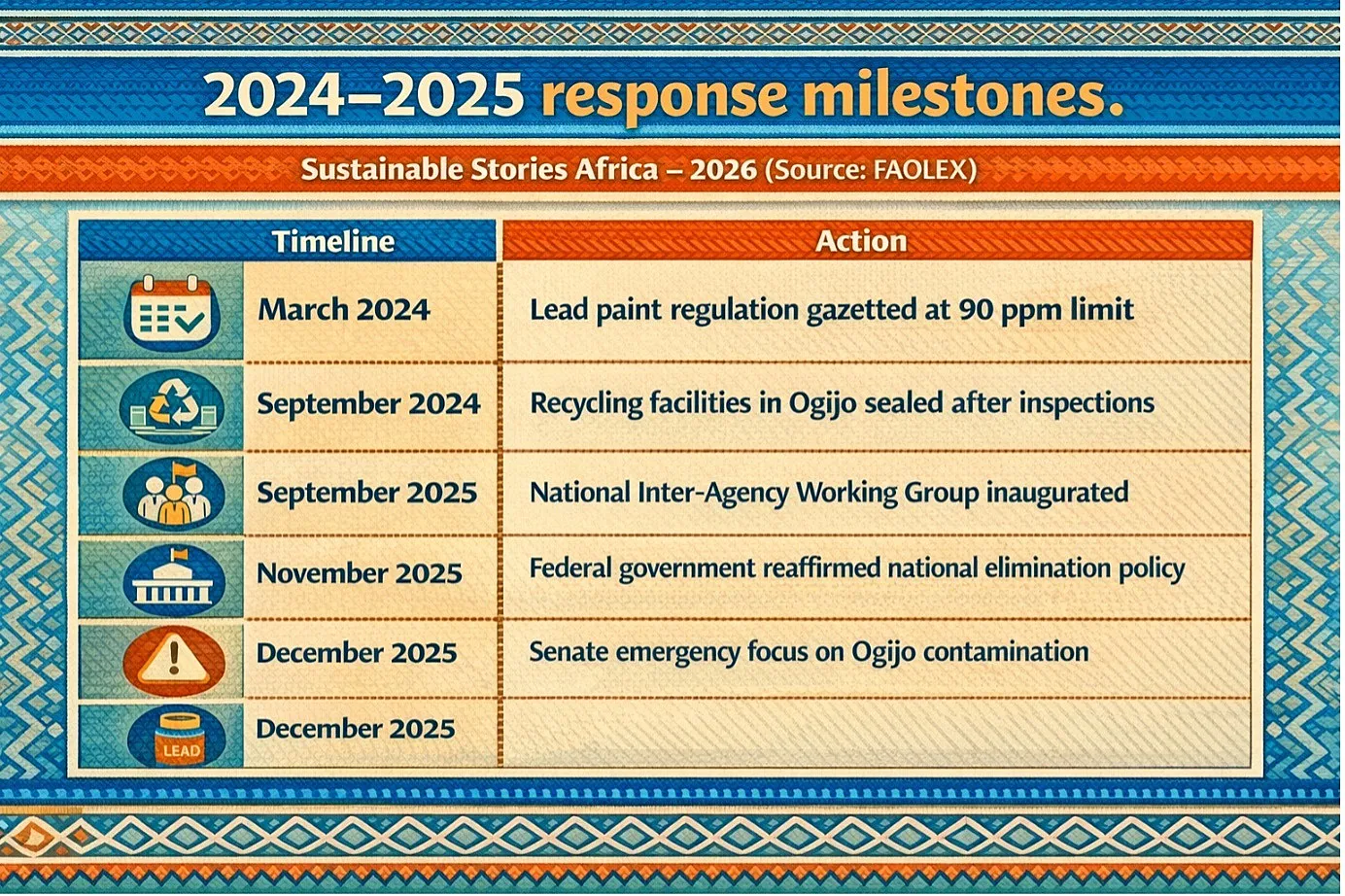
Nigeria is treating lead poisoning with new urgency after the Federal Ministry of Health and Social Welfare inaugurated a National Inter-Agency Working Group in September 2025 and unveiled a five-year plan to eliminate lead exposure.
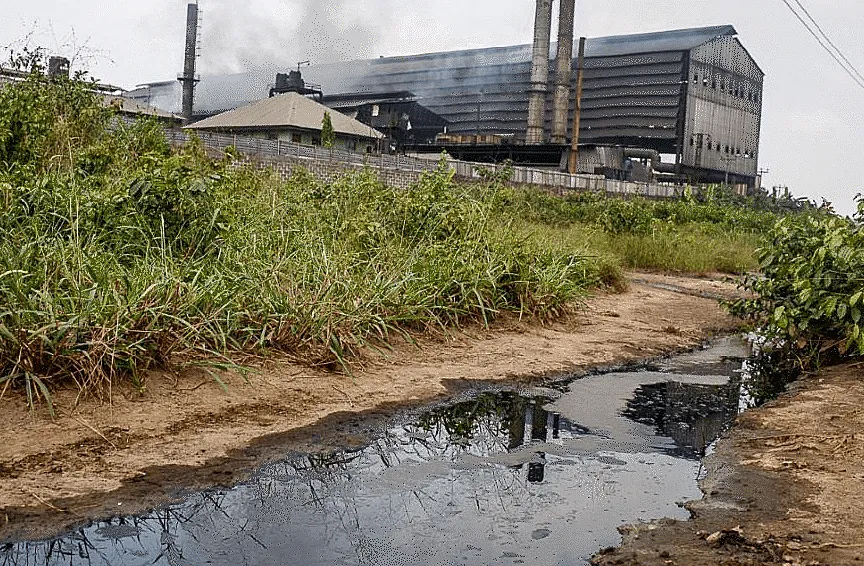
That policy push has been reinforced by enforcement actions in Ogun State, where regulators shut battery recycling facilities in Ogijo after inspections found serious environmental violations, including lead-contaminated emissions, wastewater and hazardous slag.
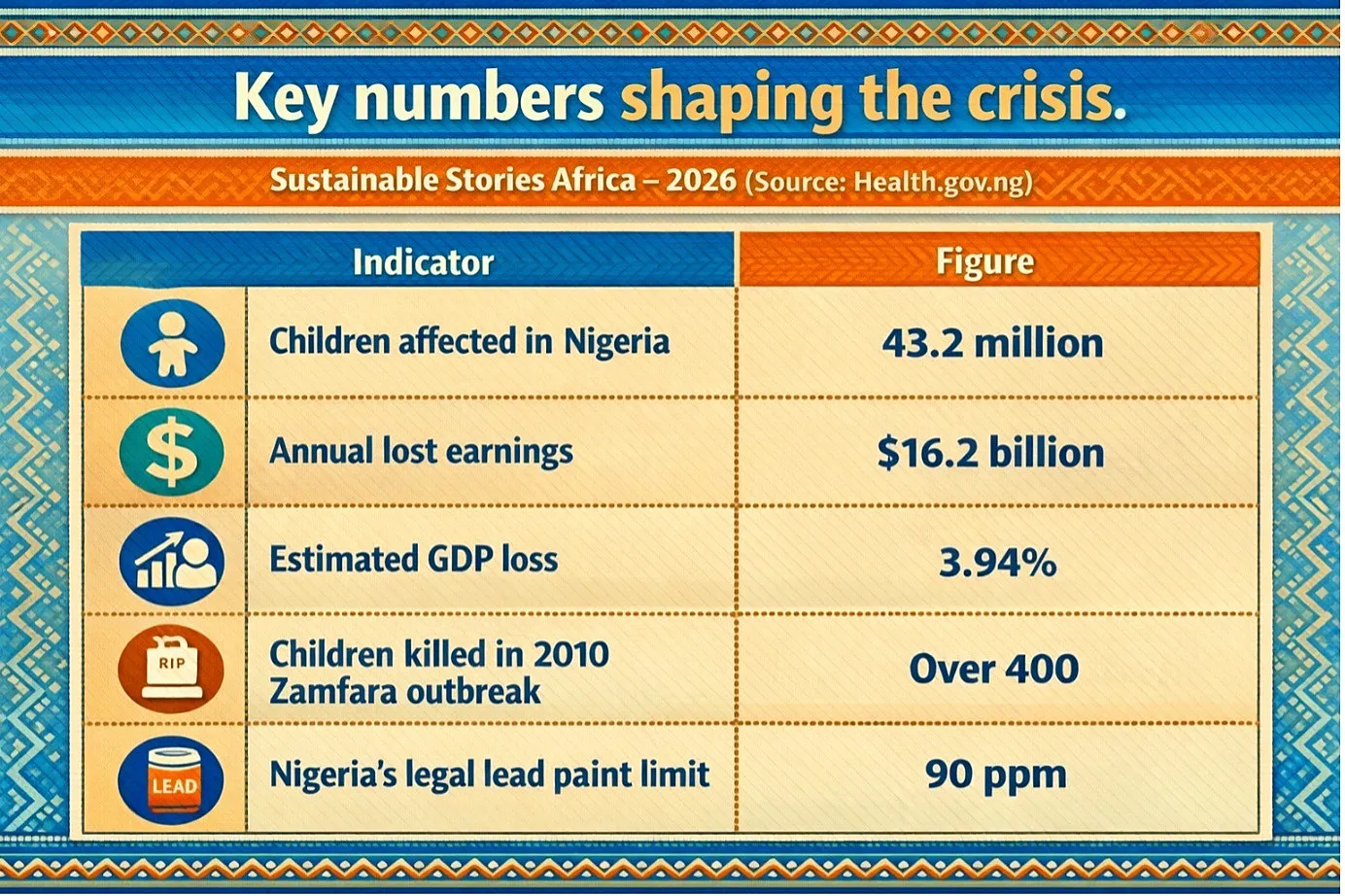
The stakes are unusually high. A briefing cites a UNICEF estimate that 43.2 million Nigerian children are affected by lead poisoning and that the country loses about $16.2 billion in earnings each year, equivalent to 3.94% of GDP.
Those are not just health metrics. They are productivity, education and governance losses, concentrated in the lives of children and in communities with the least capacity to absorb them.
This is also not a new story. Official policy material from the health ministry recalls that the 2010 Zamfara outbreak, driven by unsafe mining and ore processing, killed more than 400 children in three months.
It also notes a renewed heavy-metal outbreak in Zamfara in 2024, when 697 cases and 13 deaths were recorded, while the ministry’s 2025 statement says fresh cases were also reported in Sokoto.
A preventable crisis with national costs
Nigeria’s lead burden is alarming because it is both widespread and preventable. Lead exposure damages the brain, lowers IQ, disrupts learning and behaviour, and is also linked to hypertension, kidney dysfunction and reproductive harm.
Officials have described it as a public-health crisis that is quietly undermining children’s wellbeing and deepening long-term pressure on households and the health system.
The risk is embedded in productive sectors, including mining, recycling, manufacturing and trade.
Main exposure channels are artisanal gold mining, informal battery recycling and lead paint. In affected communities, contaminated ore and unsafe paint show how economic activity is driving a hazard.
Where the exposure comes from, and why it persists
- The first source is artisanal and small-scale gold mining, but the bigger risk lies in how the ore is processed. The briefing argues that unsafe crushing and washing in residential compounds make homes exposure sites, allowing toxic dust and contaminated soil to enter food, water, and living spaces. That shifts the problem from a mining issue alone to a community health emergency.
- The second source is battery recycling, where industrial utility collides with weak compliance. In Ogijo, enforcement action followed concerns over uncontrolled lead dust, contaminated effluent, poor slag handling and inadequate worker health surveillance. The significance is broader than a single cluster of factories: battery recycling is commercially important, yet dangerous when regulation, monitoring, and worker protection fail.
- The third source is lead paint. Nigeria’s legal framework has improved, with tighter limits already in place, but the briefing suggests market enforcement remains uneven. That leaves lead paint as a persistent exposure route to households, especially for children in homes, schools and informal retail spaces.
The wider implication is that lead poisoning in Nigeria is no longer a single-location tragedy. It is a systems failure to link informal work, weak industrial oversight, environmental contamination, child health and trade risk.
That is why the consequences now extend beyond illness to export disruption, reputational damage and forced reformulation across the paint market.
What success would look like
The encouraging signal is that Nigeria is no longer starting from zero. The new inter-agency platform aims to align strategy, strengthen surveillance, review regulations, build health-worker capacity and mobilise financing for a more coordinated response.
The briefing gives that effort a clearer shape. It sets out six priorities: prevention and surveillance, treatment, environmental remediation, mining formalisation, regulatory enforcement and community education.
It also notes that contaminated-soil removal has already been used in Zamfara, Niger and Kaduna.
If coordination holds, the gains could be substantial: fewer poisoned children, lower treatment costs, better school outcomes, cleaner industrial corridors and stronger export credibility.
In sustainability terms, this is a social harm with governance failures written all through it, and reputational damage reduced across sectors.
What Nigeria must do next
- The near-term agenda is already clear: enforcement must become routine, not episodic. That means inspections in high-risk zones, credible prosecution powers, mandatory labelling and regular factory audits.
- Emergency response must also move faster. Blood-lead testing, medical teams, treatment access and standing remediation systems need to be in place before crises escalate.
- Surveillance, meanwhile, must be treated as core infrastructure, with a national blood-lead database, early-warning systems, environmental sampling and real-time alerts.
- Industry reform is the fourth test. Mining needs safer processing zones, battery recyclers need real containment and worker protection, and paint makers must comply with safety rules.
Path Forward – Make prevention measurable
Nigeria has already outlined a serious response: regulation, enforcement, coordination and remediation. The test now is whether those pieces become a permanent operating system rather than another short cycle of outrage and closure.
What is being advocated is straightforward: count exposure earlier, regulate harder, clean faster and protect children first. If Nigeria gets that right, lead poisoning shifts from a silent recurring scandal to a measurable public-health and sustainability victory.