Africa's Multilateral Report Card: A Data Story
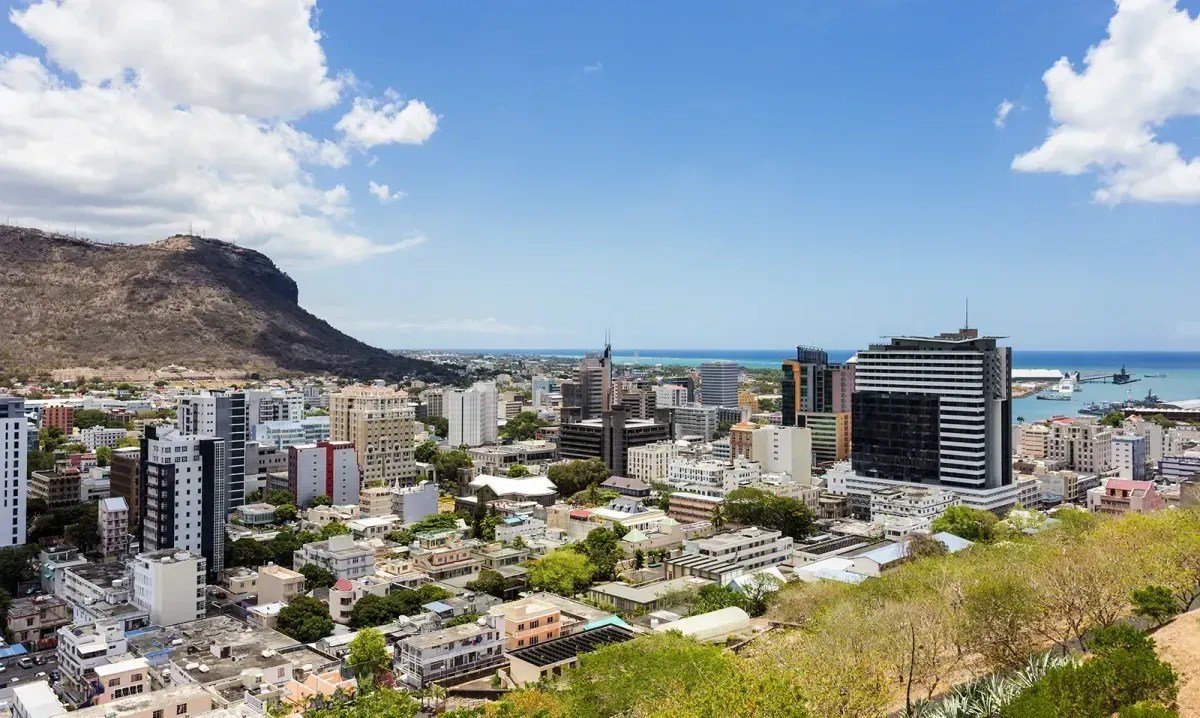
Mauritius has emerged as Africa's top-ranked champion of UN-based multilateralism in 2026, scoring 85.3 points and sitting 7th globally out of 193 countries, according to the newly released UN-Mi Index data from the SDG Transformation Center.
The continent's average performance, however, reveals stark regional fault lines, from Southern Africa's relative strength to Central Africa's persistent lag, with implications for how African nations shape global governance, climate finance, and development diplomacy.
Africa's engagement with the United Nations system is far from uniform.
New 2026 index data show Mauritius, Seychelles, and Senegal leading 54 African states in treaty ratification, dues payment, and UN General Assembly alignment.
The findings raise a pressing question: can Africa's most committed multilateral voices help reshape global governance rules that still favour the Global North, or will fragmented regional performance blunt the continent's collective bargaining power?
A Continent Split On Global Commitment
Africa is not one bloc inside the United Nations; it is 54 separate voices, and the UN-Mi Index 2026 measures precisely how loudly and consistently each one speaks up for multilateral cooperation.
The index combines treaty ratification, UN dues payment, General Assembly voting alignment, peacekeeping membership, conflict behaviour, and official development assistance into a single comparable score.
For a continent regularly asked to unite behind common positions on climate finance, debt relief, and Security Council reform, this data matters enormously right now.
It shows which African governments are already "walking the talk" on multilateralism and which ones risk being sidelined in negotiations where consistency builds credibility.
The numbers tell a story of two Africas: a cluster of small, high-scoring states punching above their weight, and larger economies with more uneven records.
Small States Punch Above Weight
The hook here is unmistakable: none of Africa's five biggest economies by population, Nigeria, Ethiopia, Egypt, DR Congo, or South Africa, cracked the continent's top 10 on the UN-Mi Index.
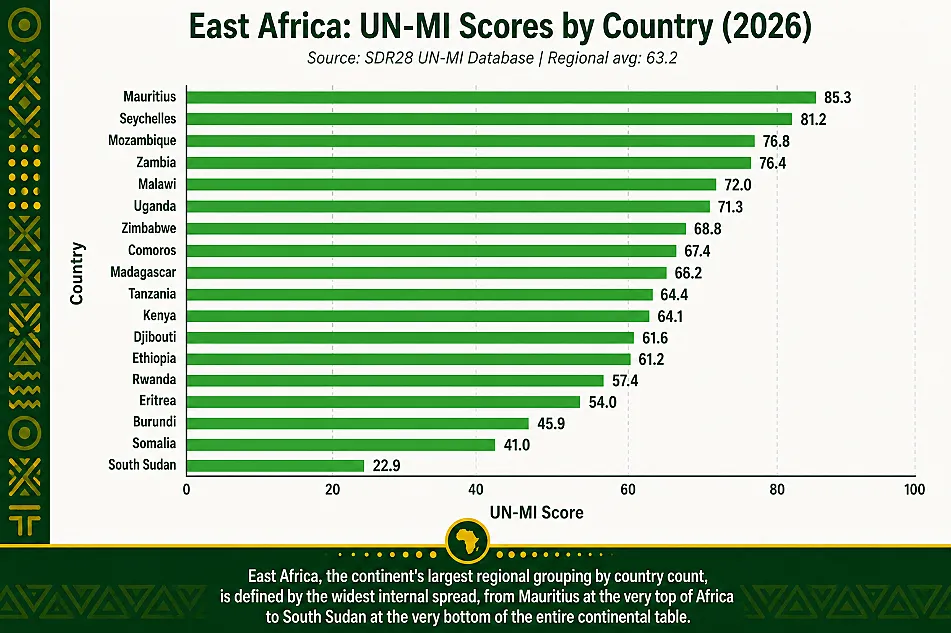
Instead, small island and coastal states dominate the leaderboard, with Mauritius scoring 85.3, Seychelles 81.2, and Senegal 81.1.
This matters today because Africa's diplomatic weight at the UN is often assumed to track economic or population size.
The data challenges that assumption directly, showing consistency in treaty compliance and dues payment can matter as much as GDP.
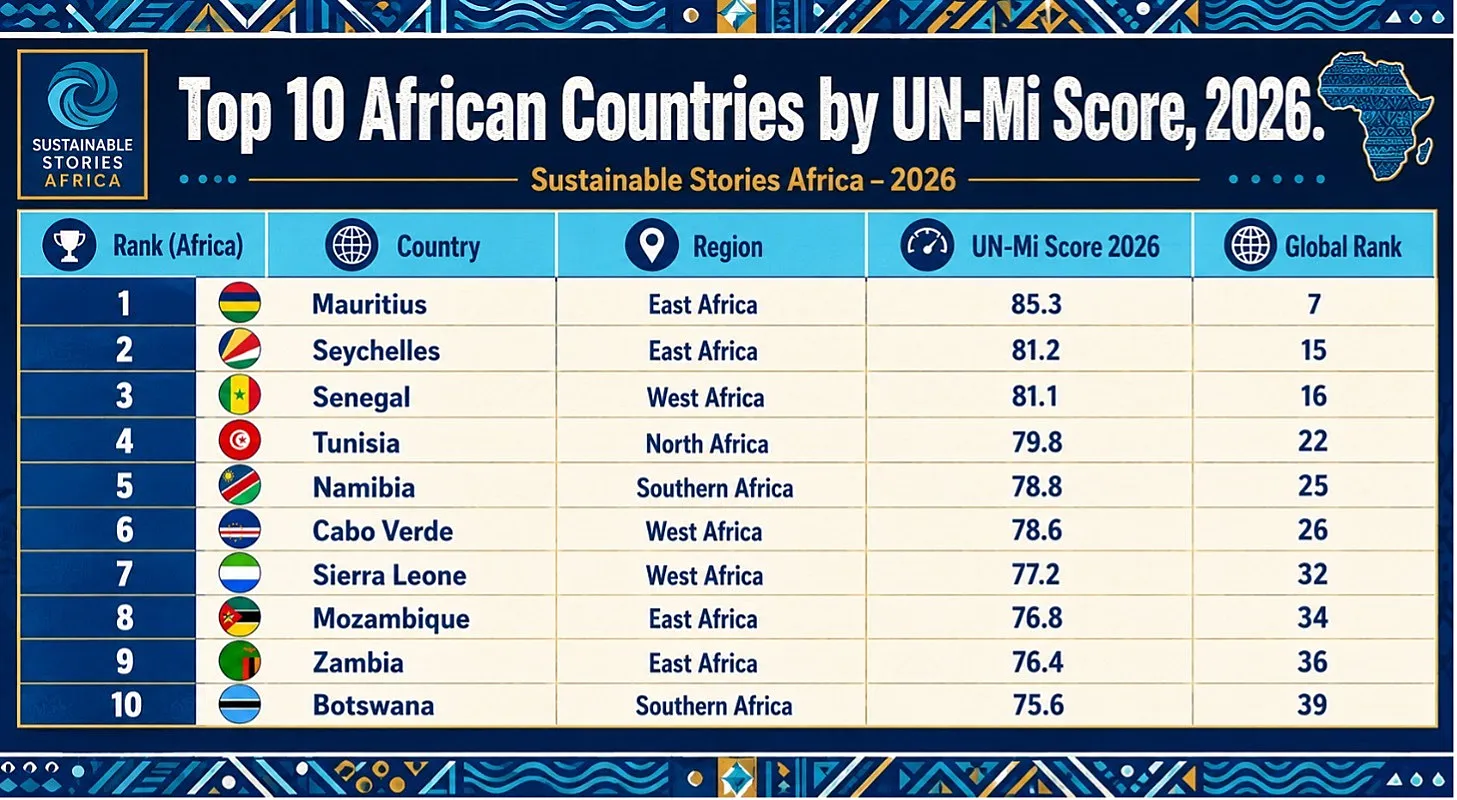 | 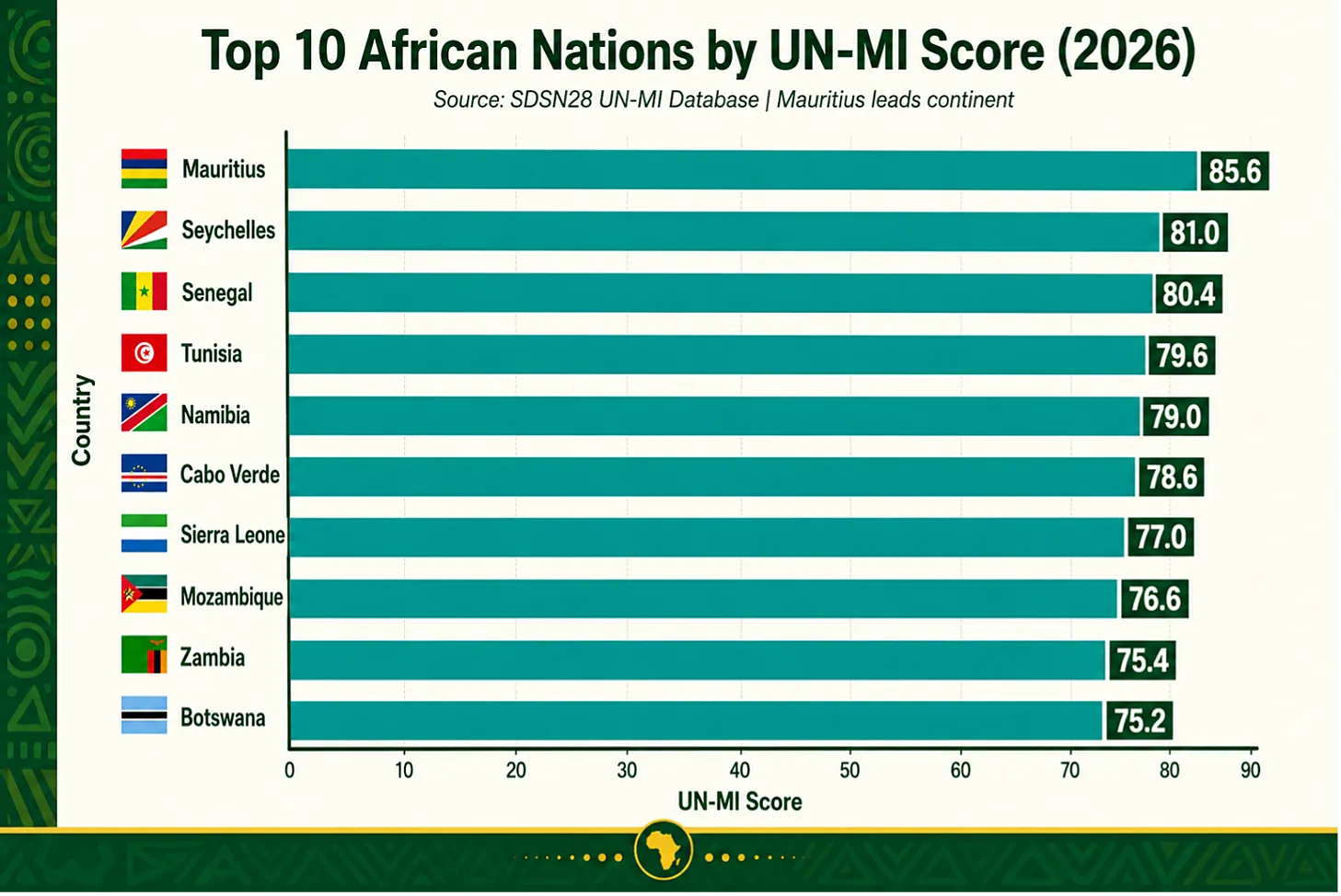 |
Nigeria, despite its economic heft, ranks 62nd globally with a score of 70.5, while South Africa, Africa's most industrialised economy, sits 50th globally at 72.7.
Meanwhile South Sudan (22.3) and Somalia (41.0) anchor the bottom of the continental table, reflecting how conflict and fragile governance directly depress multilateral engagement.
Regional Divide Shapes Bargaining Power
If action is delayed on closing these regional gaps, Africa's negotiating bloc risks entering critical climate and finance summits with a fractured voice, some delegations arriving as model UN citizens, others weighed down by unpaid dues or weak treaty records.
Conversely, the data shows a credible path to a stronger, more unified African position.
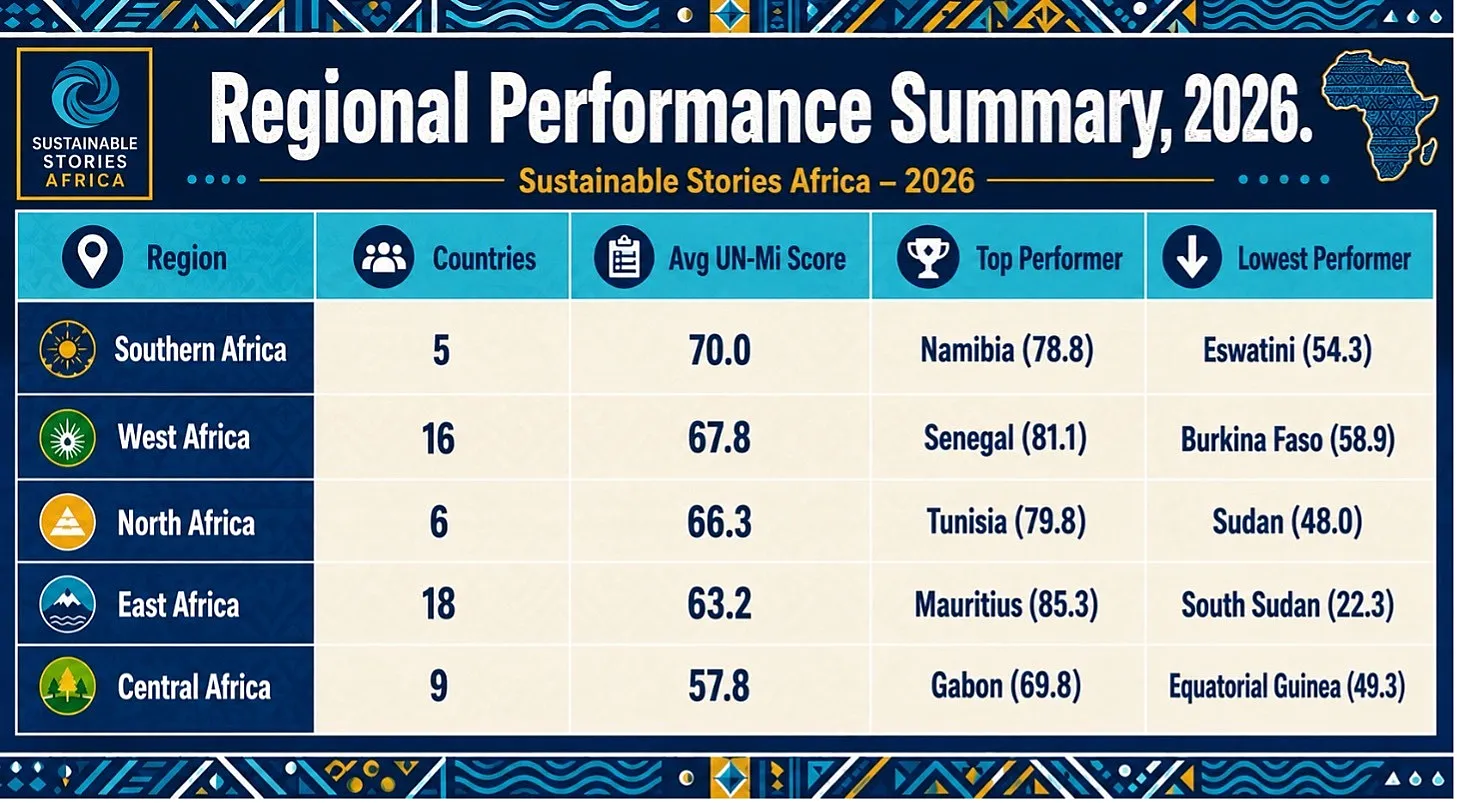
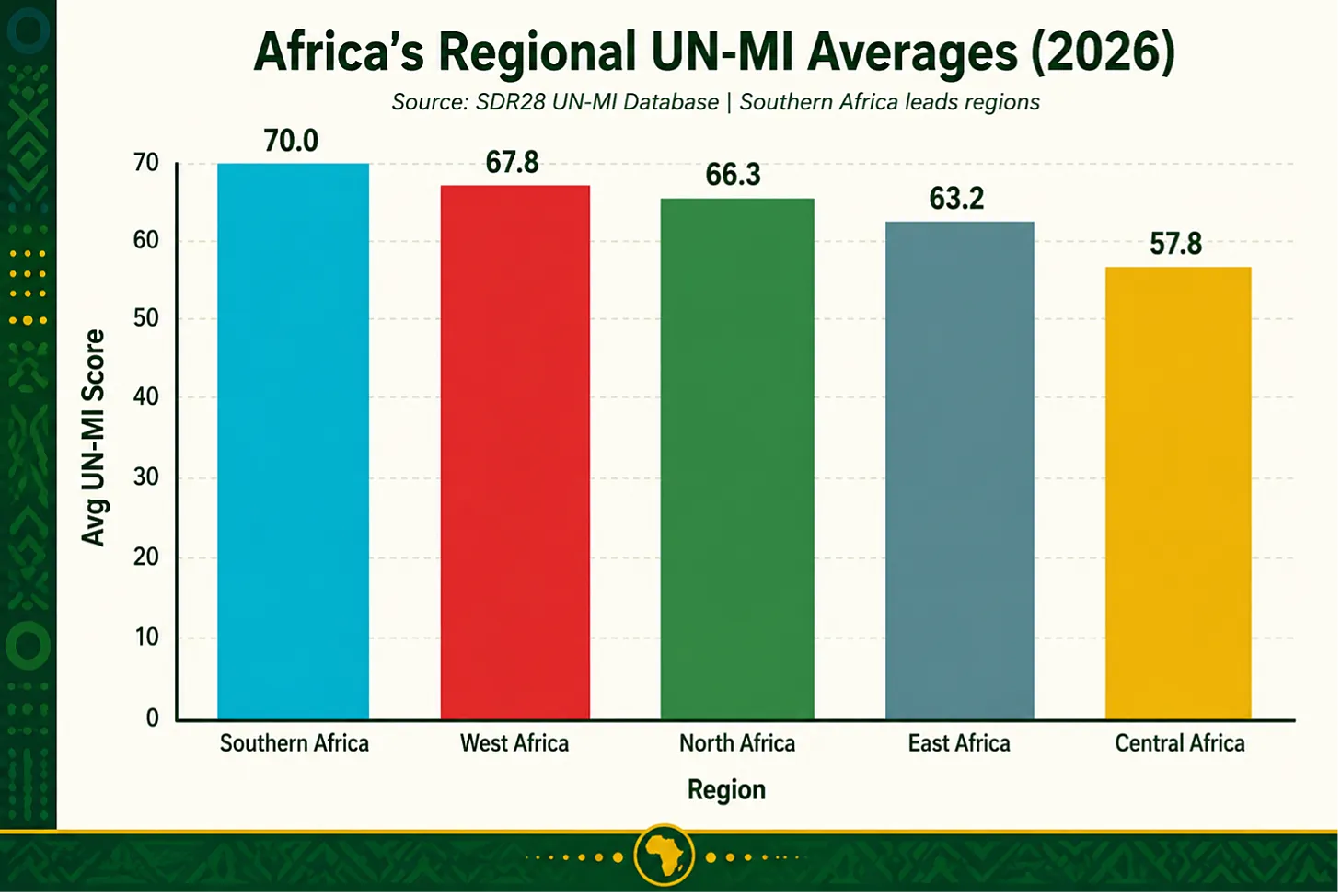
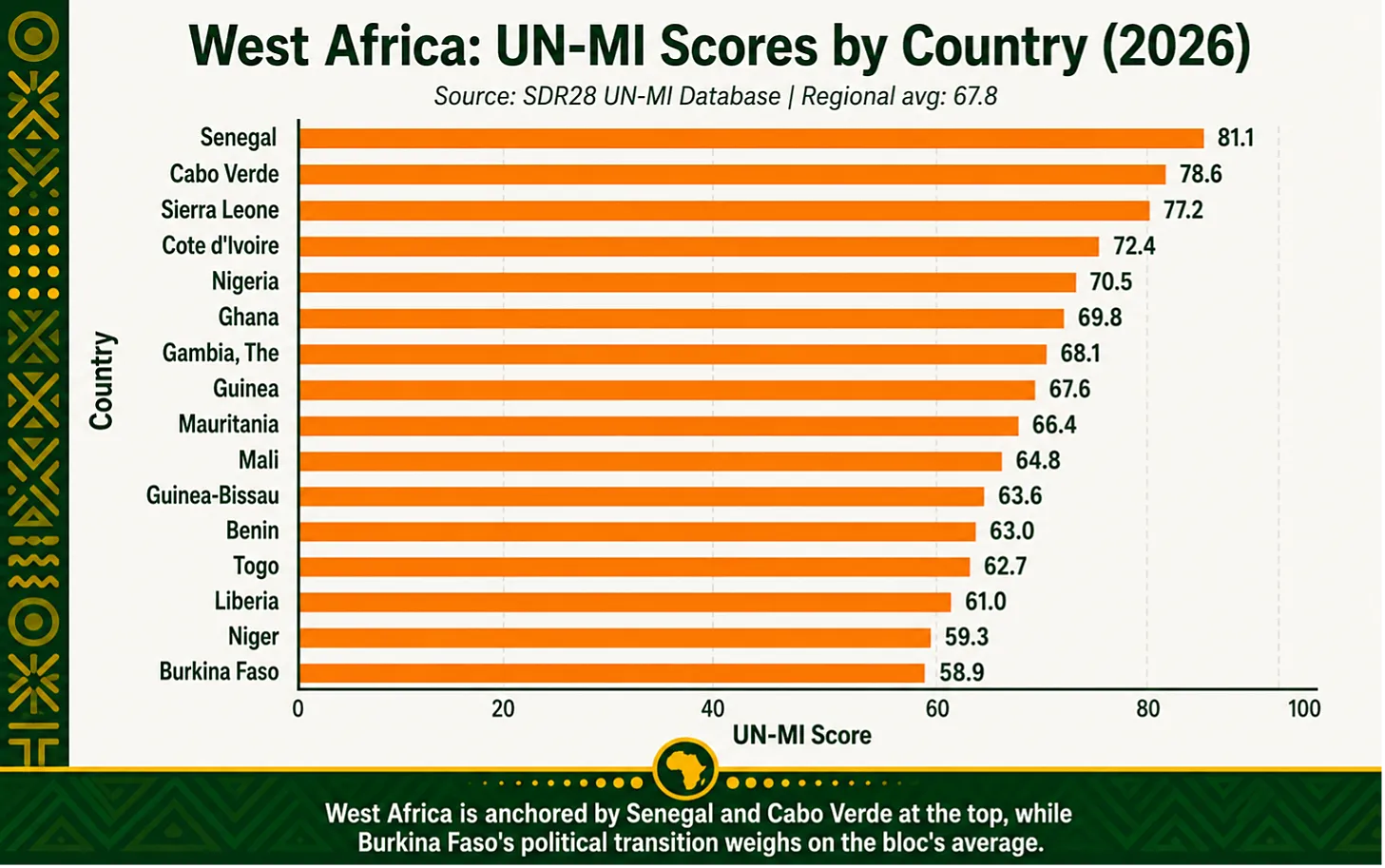
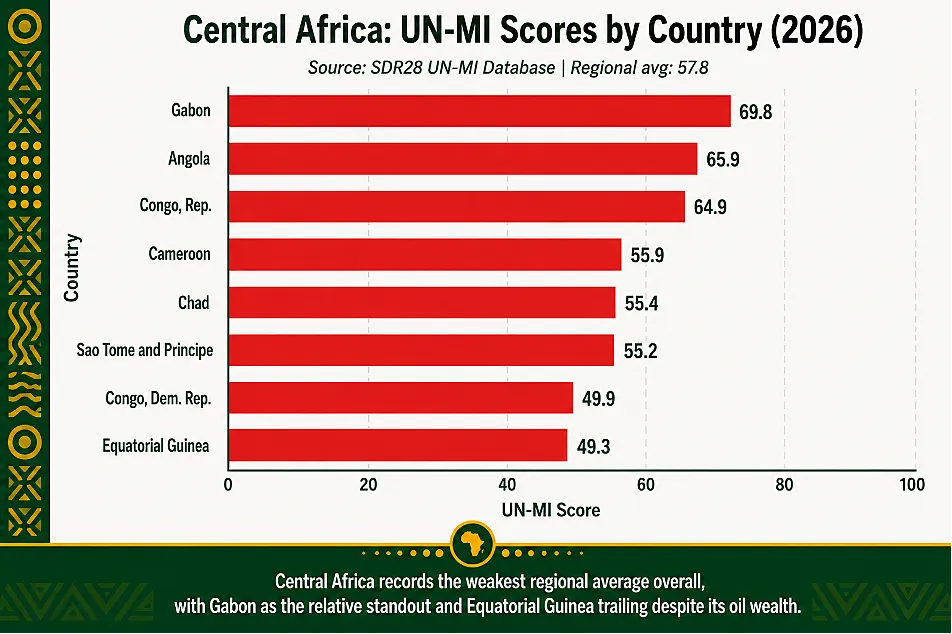
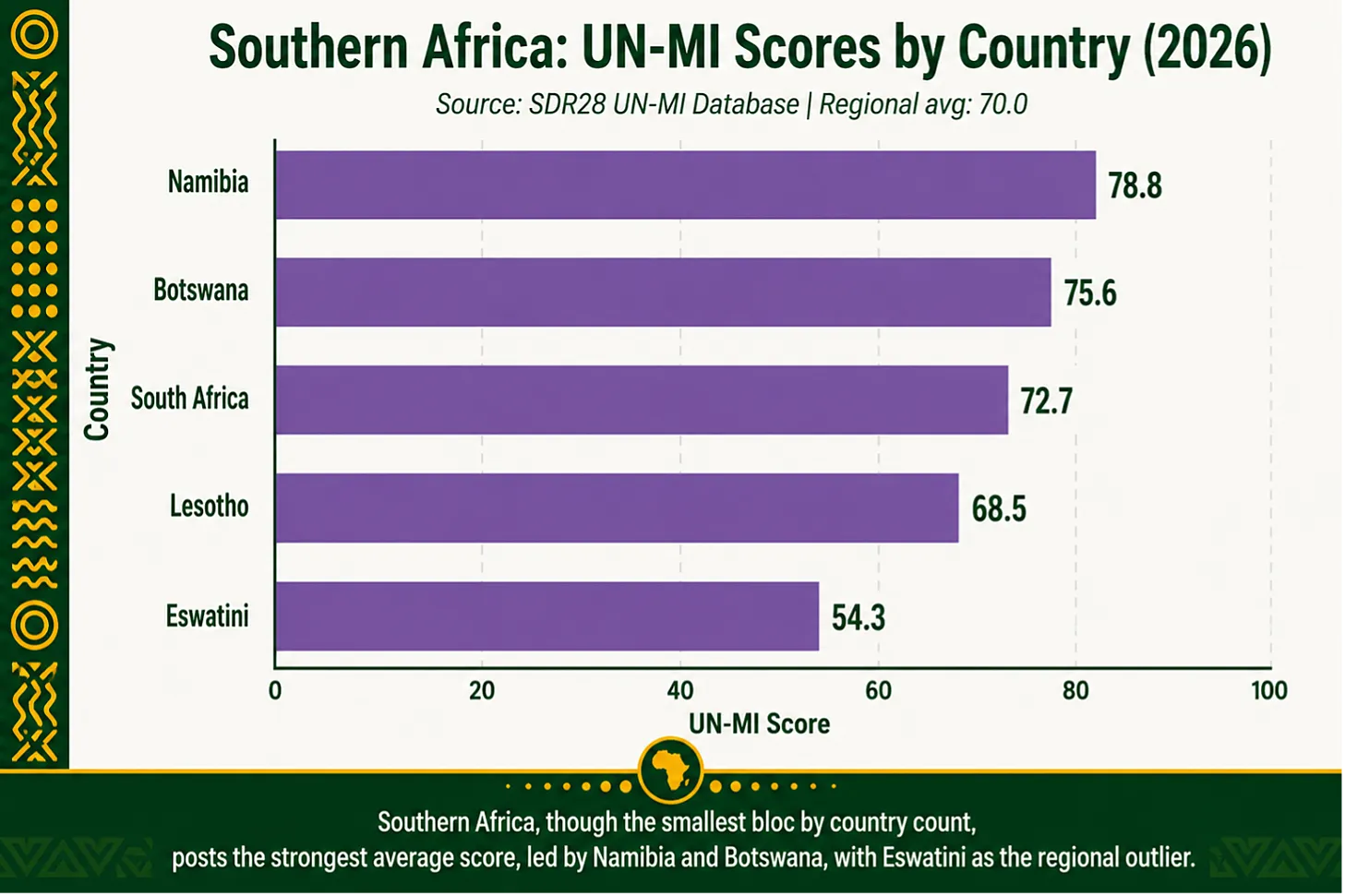
Regional averages expose the divide clearly: Southern Africa leads at 70.0 points, followed by West Africa (67.8), North Africa (66.3), and East Africa (63.2), while Central Africa trails at just 57.8, nearly 12 points below the continental leader.
This gap reflects deeper structural realities, including ongoing conflict in the Democratic Republic of Congo, and delayed institutional reforms in Central African Republic and Chad.
 |  |
For African diplomats and negotiators, the implication is direct: countries with strong index performance, such as Mauritius, Senegal, Namibia, can serve as credible bridge-builders in African Union coordination, while lower-scoring states may need targeted capacity support to strengthen treaty compliance and UN engagement systems.
Regional Infographics – Country-Level Breakdown
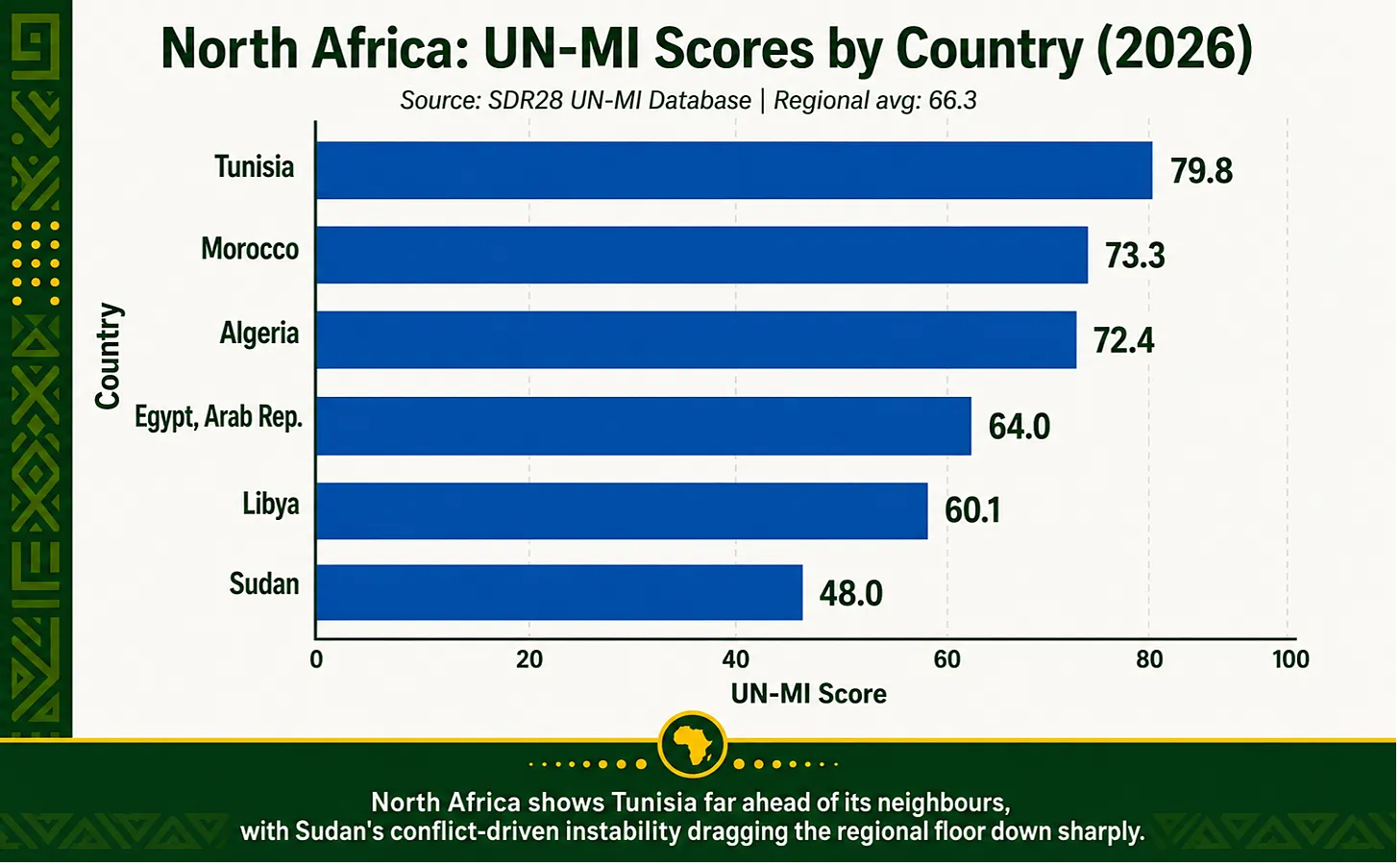
Beyond the continental snapshot, each African region shows wide internal variation that a single average score can mask.
The infographics below break down every country's UN-Mi score within its own regional bloc, showing exactly where the leaders and laggards sit inside North, West, East, Central, and Southern Africa.
 |  |
 |  |
 |
Turning Metrics Into Diplomatic Leverage
Governments, regional blocs, and financiers now have a clear roadmap embedded in this data.
African Union coordination mechanisms should formally track UN-Mi performance alongside existing peer-review tools, using it to identify which member states can lead joint negotiating positions at UN climate and finance forums.
Regional economic communities, such as ECOWAS, SADC, ECCAS, and EAC, should use these scores to design targeted technical assistance for lower-performing states, particularly around treaty ratification backlogs and UN dues arrears that currently weaken Central and East African engagement.
Development partners and multilateral lenders, meanwhile, can factor in consistent UN engagement as a partnership criterion, rewarding states that demonstrate long-term institutional reliability rather than one-off diplomatic gestures.
Path Forward – Africa’s Collective Power Through Stronger Multilateral Engagement
Africa's path forward hinges on converting individual country strength into collective bargaining power.
Regional blocs should institutionalise UN-Mi-style tracking, pairing high performers like Mauritius and Senegal with lower-scoring states through structured peer mentorship on treaty compliance and dues payment.
The African Union's ongoing reform agenda should explicitly incorporate metrics for multilateral engagement into its Agenda 2063 monitoring framework, ensuring that Africa's voice at global tables becomes more consistent, rather than just louder, over the coming decade.