Sustainability reporting is no longer just a communications exercise. A new ICAEW and WBCSD buyer’s guide is urging companies to treat sustainability assurance as a governance, risk and capital-market priority.
For African businesses, the message is clear: trusted ESG data could shape investor confidence, regulatory readiness and access to finance.
Trust Is Now The Real Metric
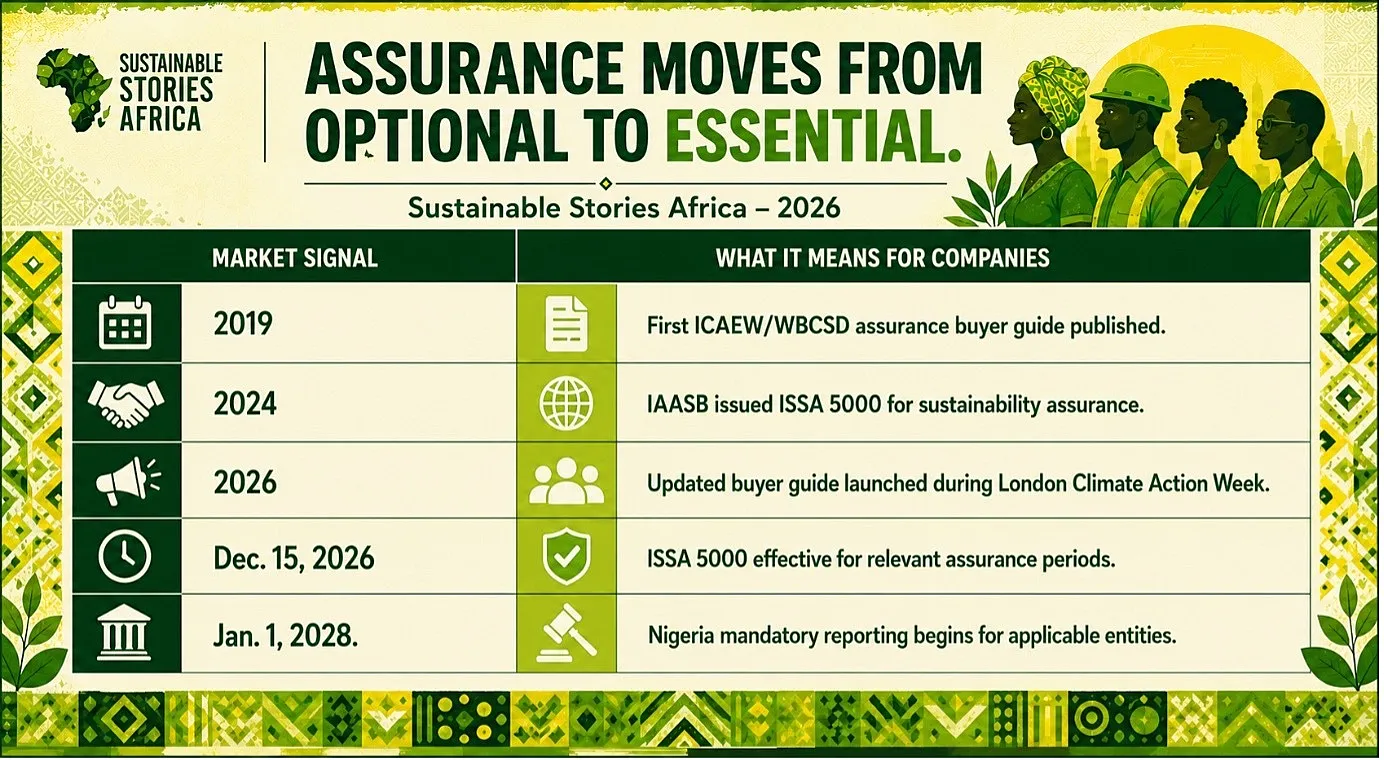
The Institute of Chartered Accountants in England and Wales and the World Business Council for Sustainable Development have launched the second edition of A Buyer’s Guide to Assurance on Sustainability Information, updating a 2019 publication for a market now shaped by ISSB standards, CSRD-style regulation and growing investor scrutiny.
The guide, released during London Climate Action Week 2026, is designed for companies buying assurance services, helping boards, audit committees and management understand what assurance is, how to define its scope, and how to use it to improve decision-making.
For African and emerging-market companies, the stakes are practical. As Nigeria, Ghana, Kenya and other jurisdictions move toward adopting IFRS S1 and S2, the credibility of sustainability data will increasingly determine whether ESG reports become investor-grade evidence or remain glossy narratives with weak controls.
Assurance Moves From Optional To Essential
The new guide lands at a time when sustainability disclosure is becoming part of mainstream financial architecture.
The IFRS Foundation data provides that 36 jurisdictions had adopted, used, or were finalising steps toward ISSB sustainability disclosure standards by June 2025.
That shift matters because sustainability data now affects valuations, lending, procurement, insurance, board oversight and transition planning.
The guide’s core message is that assurance should not be bought at the end of reporting as a compliance stamp.
It should be built into governance, systems, controls and accountability from the start.
African Markets Face A Readiness Test
In Africa, the challenge is not whether sustainability reporting is coming. It is whether companies can produce information strong enough to be trusted.
Nigeria’s amended IFRS sustainability roadmap confirms phased adoption, with full mandatory reporting for applicable entities beginning from accounting periods on or after January 1, 2028.
Ghana’s ICAG has approved a roadmap for IFRS S1 and S2 adoption, while Kenya has outlined phased implementation from voluntary adoption in 2024 to mandatory requirements for public interest entities starting in 2027.
The pressure will be felt most sharply by listed companies, banks, insurers, manufacturers, energy firms and exporters exposed to international finance or supply chains.
- A mining company reporting water risk, a bank disclosing financed emissions, or a telecom operator reporting energy use will need more than attractive charts.
They will need traceable data, responsible owners, documented controls and board-level oversight.
Better Assurance Can Unlock Value
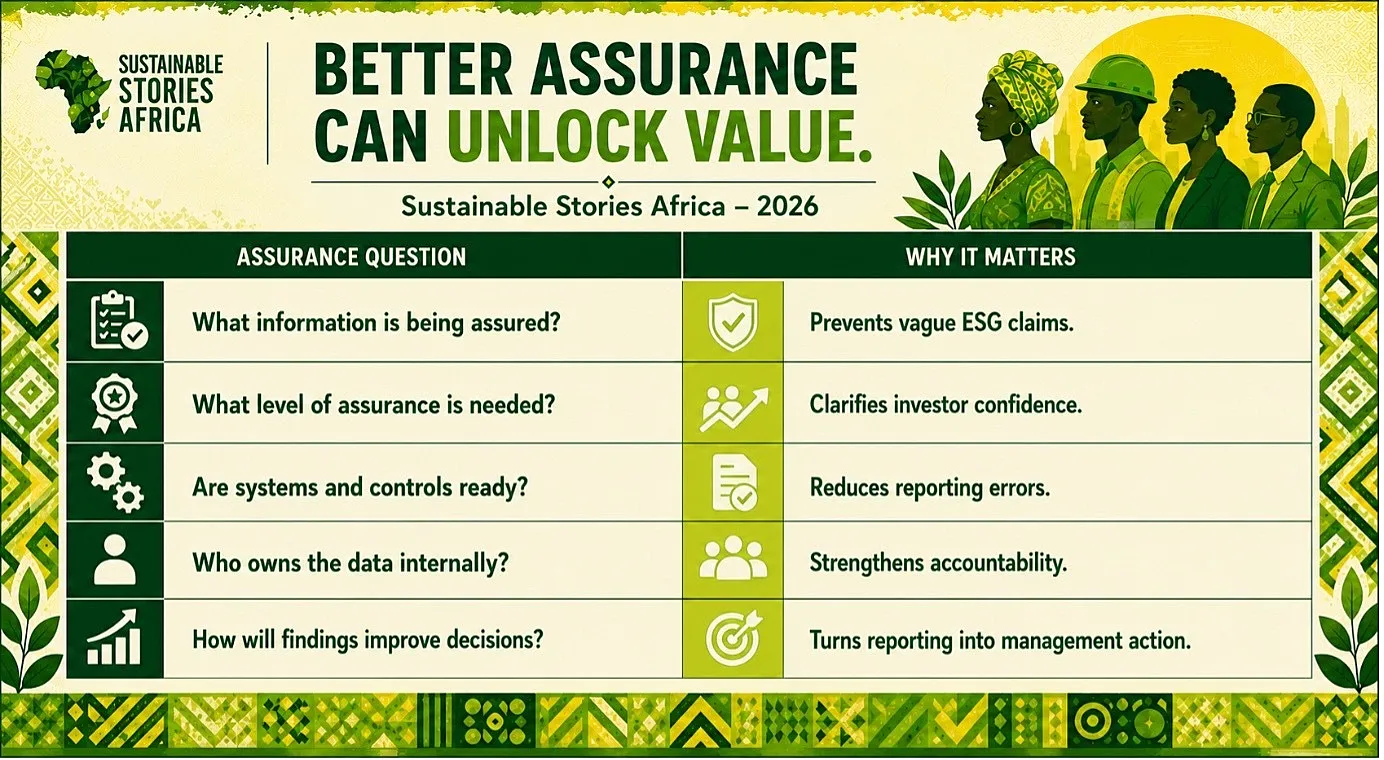
The opportunity is significant. Credible assurance can reduce the risk of greenwashing, strengthen investor confidence and help companies compete for sustainability-linked capital.
- For citizens and communities, better assurance can also close the gap between corporate promises and lived reality.
If a company claims reduced emissions, safer supply chains or improved community investment, assurance helps test whether those claims are supported by evidence.
Boards Must Own The Assurance Journey
The guide’s practical value is its buyer-focused lens. It reminds companies that assurance quality depends not only on the assurance provider, but also on the readiness of the organisation buying the service.
- Boards and audit committees should define material sustainability information, test internal controls, appoint accountable data owners and integrate sustainability information into enterprise risk management.
- Management teams should also avoid treating assurance as a last-minute procurement task.
For regulators, the priority is capacity.
- Reporting rules without preparer education, assurance standards, digital taxonomies and enforcement clarity can create confusion.
For professional bodies;
- The next frontier is training accountants, auditors and sustainability professionals who can work across finance, climate science, governance and data systems.
Path Forward – For Trusted ESG Markets
African markets should treat sustainability assurance as market infrastructure, not paperwork.
Regulators must clarify timelines, companies must strengthen controls, and boards must demand decision-useful ESG data.
The next phase is credibility. Where sustainability information is assured, comparable and aligned with financial performance, it can support better capital allocation, stronger governance and more trusted development outcomes across African economies.