Africa’s agrifood supply chains are under increasing pressure from rising demand, climate disruption, and persistent food waste.
A new logistics optimisation model proposes a strategic approach to transporting perishable goods more efficiently from farms to consumers.
The study introduces a multi-objective supply chain planning framework that integrates cold hubs, distributor networks, and route optimisation, offering insights into how data-driven logistics can reduce waste, emissions, and delivery delays across food systems.
Cold Chain Logistics Reshaping Africa’s Food Systems
Africa’s food supply chains face a persistent challenge: how to transport highly perishable goods from farms to consumers before spoilage erodes economic value and environmental sustainability.
Across developing economies, weak logistics infrastructure and inefficient routing systems continue to drive post-harvest losses and greenhouse gas emissions.
New research proposes a strategic logistics planning model designed to improve the sustainability of agrifood supply chains for perishable goods.
The framework integrates transportation, storage, and distribution planning into a multi-objective optimisation model to balance profitability, delivery speed, and environmental performance.
By combining tactical planning with advanced optimisation algorithms, the study argues that cold-chain infrastructure, particularly strategically located distribution hubs, can significantly improve delivery efficiency, reduce waste, and strengthen food system resilience.
Perishable Food Supply Chains Face Structural Inefficiencies
The agrifood supply chain encompasses the entire journey of food products, from farms through processing, storage, transportation, distribution, and retailing before reaching consumers.
Each stage requires coordination among farmers, suppliers, logistics providers, distributors, and retailers.
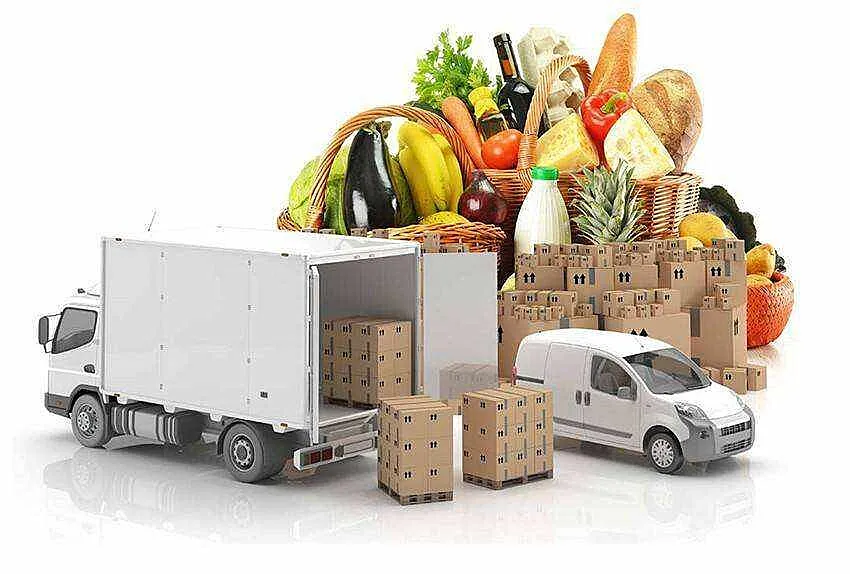
Perishable products, however, introduce unique logistical challenges. These goods deteriorate rapidly, meaning delays in shipment, poor storage conditions, or inefficient routing can quickly lead to spoilage and financial losses.
Cold-chain logistics systems, such as refrigerated storage, transport, and retail infrastructure, account for more than half of post-harvest emissions in many food distribution systems, reflecting the energy intensity of temperature-controlled logistics.
As global populations grow and food demand increases, improving supply chain sustainability has become critical for both food security and environmental protection.
Multi-Objective Logistics Models Improve Food Distribution
To address these challenges, researchers developed a Strategic–Tactical (S-T) optimisation model designed to determine the most efficient distribution pathways for perishable agrifood products.
The model evaluates multiple logistics objectives simultaneously:
- Profit maximisation
- Customer response time
- Customer power rating
- Credit performance
- Distributor reputation
Rather than optimising a single variable, the model seeks a compromise solution balancing operational efficiency with strategic decision-making.
This approach reflects the complexity of real-world supply chains, in which profitability, reliability, and service quality must be managed simultaneously.
Using Chebyshev goal programming, the model minimises deviations from target performance levels across these objectives, ensuring balanced outcomes rather than extreme single-objective solutions.
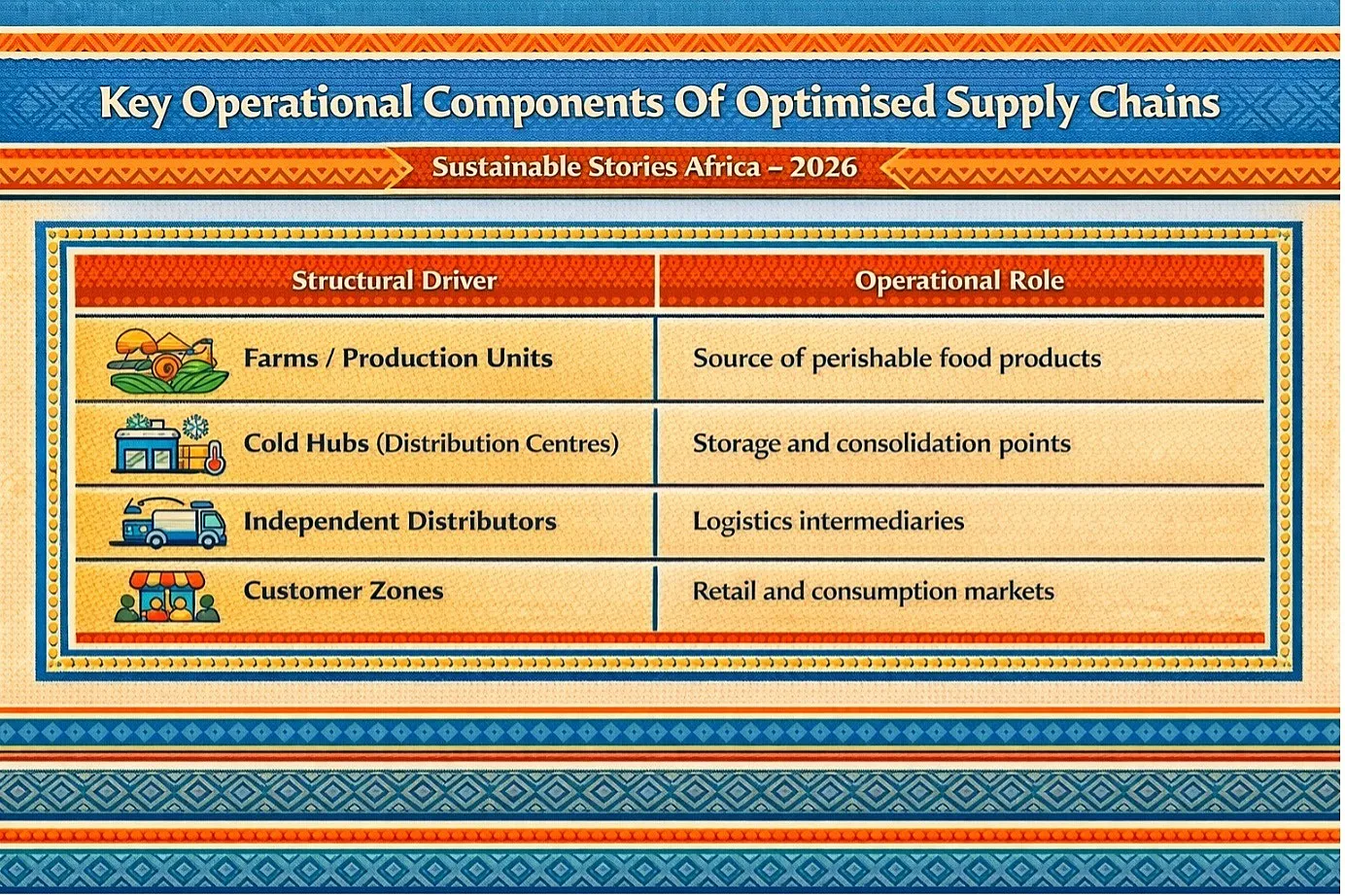
Key Operational Components Of Optimised Supply Chains
The model evaluates distribution decisions across these four tiers to determine optimal shipment pathways.
Supply Chain Component |
|---|
Farms / Production Units |
Cold Hubs (Distribution Centres) |
Independent Distributors |
Customer Zones |
Objective Performance Outcomes From Optimisation Model
Objective | Example Result |
|---|---|
Profit | N853.6 million optimal scenario |
Customer Power Rating | 634 score |
Credit Performance | 511 score |
Response Time | 6,394 delivery metrics |
Distributor Reputation | 13,243 rating score |
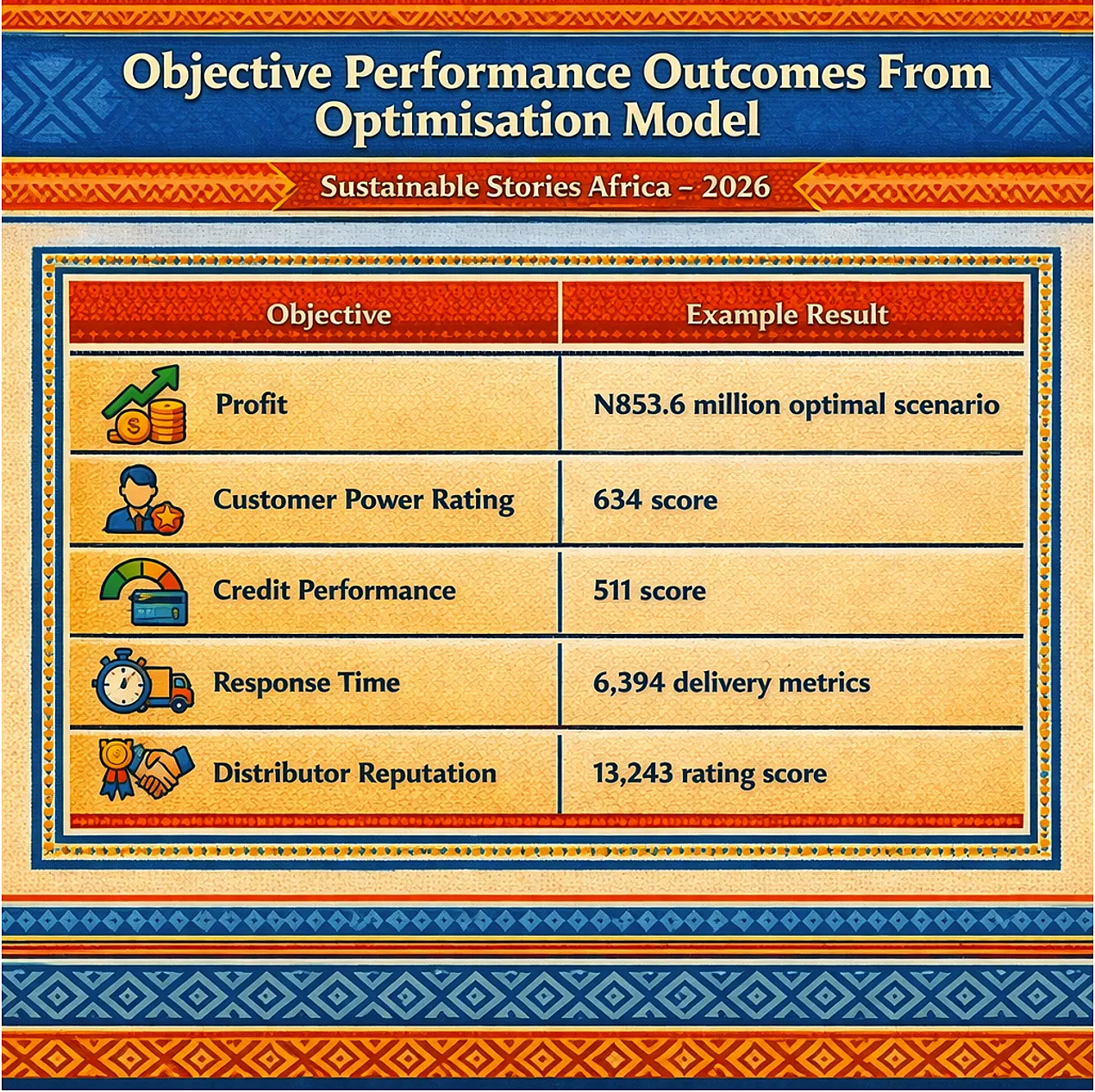
These results demonstrate that different optimisation priorities produce different supply chain outcomes.
For example:
- Profit-focused optimisation generates the highest financial return but slower delivery times.
- Response-time prioritisation improves logistics speed but reduces overall profitability.
Cold Hub Infrastructure Emerges As Strategic Solution
One of the study’s most significant findings is the importance of strategically located cold hubs.
Distribution centres act as consolidation points where products are stored, sorted, and redistributed through optimised logistics routes.
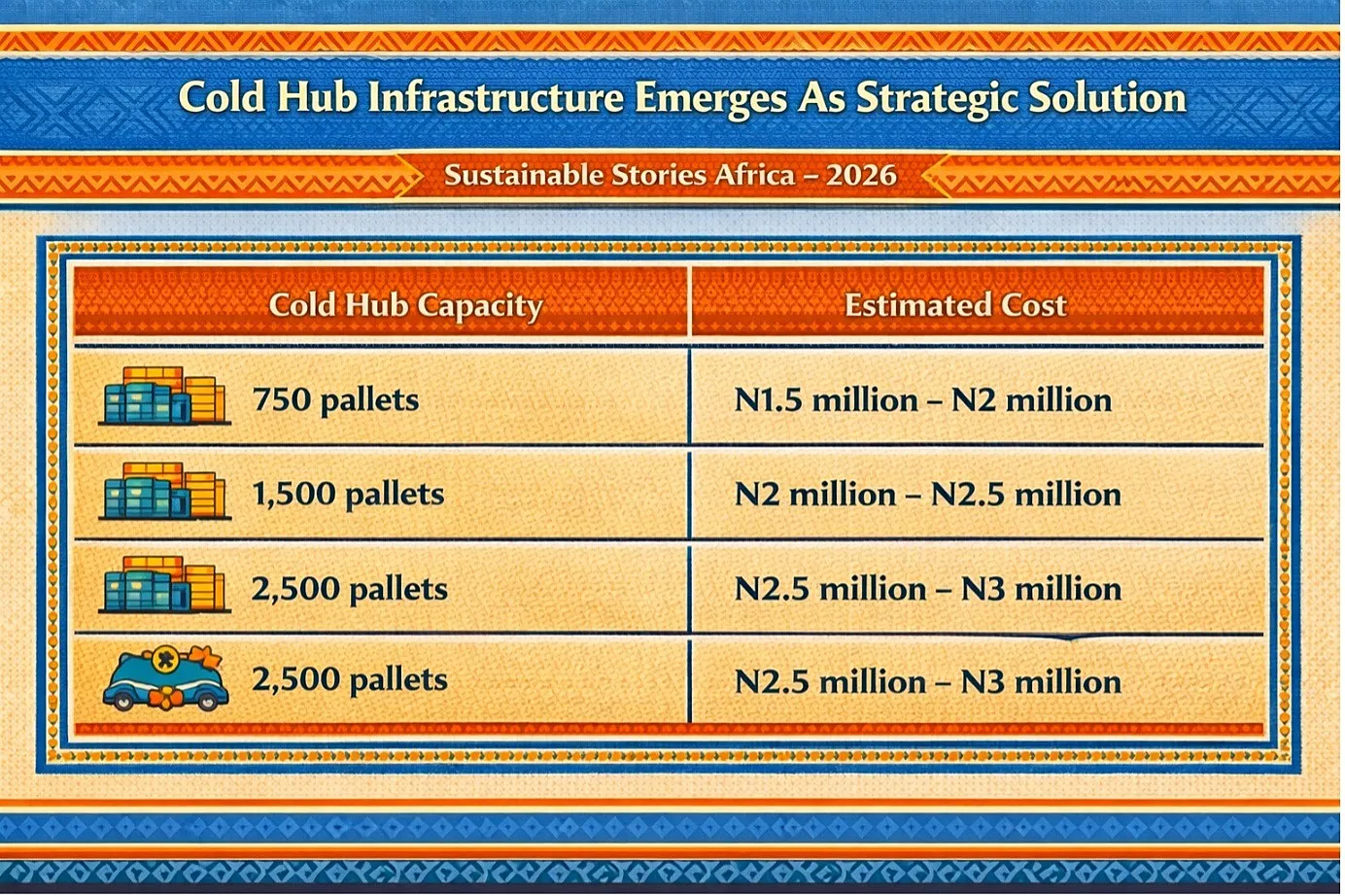
The model evaluates three potential cold hub locations with different capacities:
Cold Hub Capacity | Estimated Cost |
|---|---|
750 pallets | N1.5 million – N2 million |
1,500 pallets | N2 million – N2.5 million |
2,500 pallets | N2.5 million – N3 million |
These infrastructure investments allow companies to:
- reduce transportation distance
- improve delivery response time
- optimise inventory management
- minimise spoilage losses
The research also emphasises maintaining buffer capacity in cold storage facilities to absorb demand fluctuations.
Operating distribution centres at around 85% utilisation leaves reserve space for unexpected demand spikes or supply chain disruptions.
Digital Optimisation Strengthens Supply Chain Sustainability
The model was implemented using the GAMS optimisation platform, producing a computational framework with:
- 23,564 equations
- 191,343 decision variables
Depending on input data and optimisation scenarios, solution times ranged from 20 minutes to four hours.
Such digital optimisation tools allow companies and policymakers to simulate different supply chain scenarios before investing in logistics infrastructure.
This capability is increasingly important as climate volatility, population growth, and food demand place additional pressure on global food systems.
Path Forward – Strategic Logistics: Transform Food Distribution Systems
Sustainable agrifood supply chains will require investments in cold-chain infrastructure, digital optimisation tools, and integrated logistics planning systems.
Strategic placement of distribution hubs can significantly reduce spoilage, improve delivery speed, and enhance supply chain resilience.
Policymakers and agribusiness leaders must therefore prioritise cold storage infrastructure, advanced logistics analytics, and collaborative distribution networks to support sustainable food systems and reduce post-harvest losses across emerging markets.