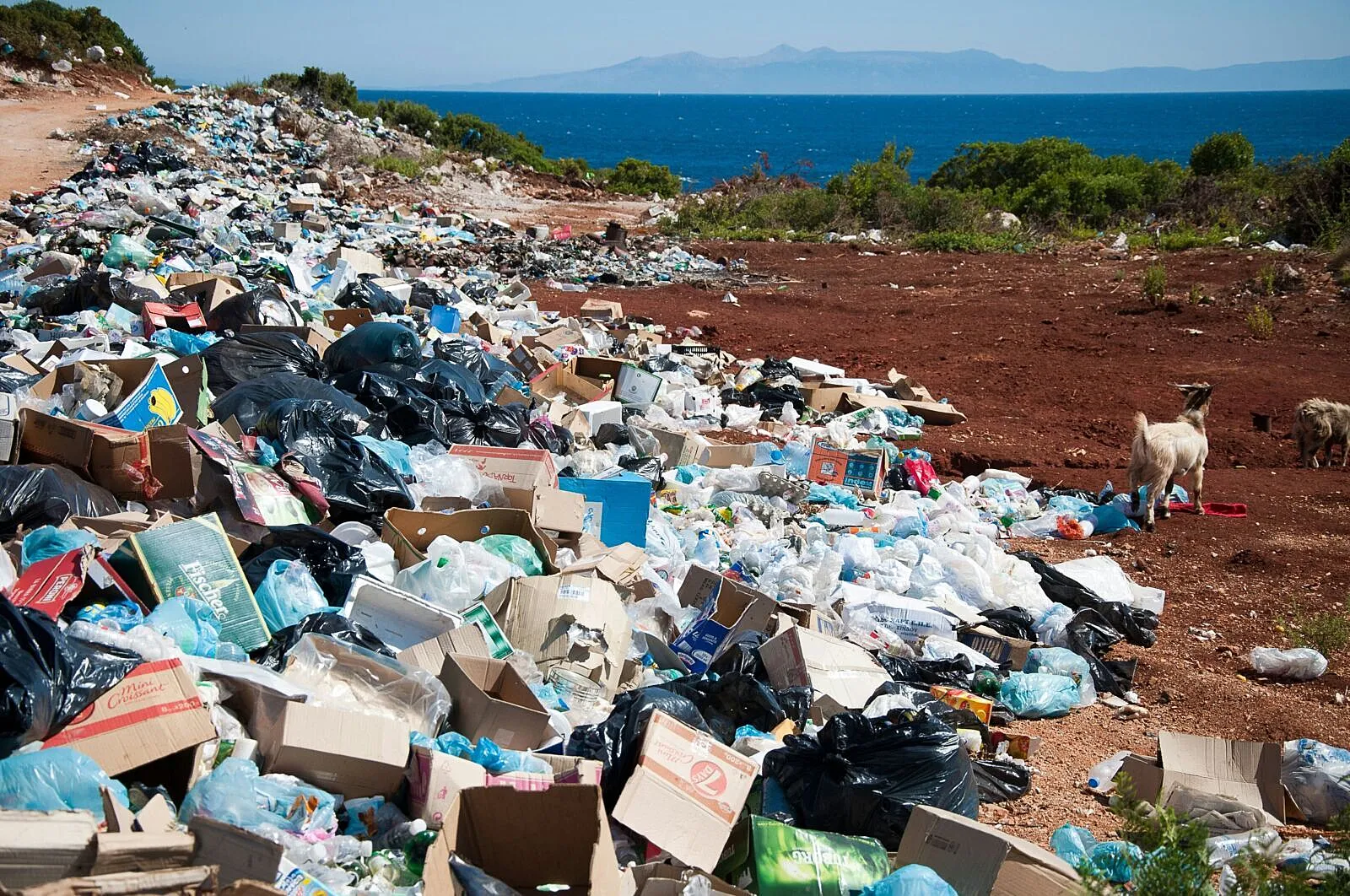
Plastic pollution is no longer only a waste-management problem. A new World Economic Forum report shows it is damaging biodiversity, weakening ecosystem services and exposing economies to rising risks.
The question now is whether governments, companies and cities can move from collecting tonnes of waste to protecting the natural systems that support food, tourism, fisheries, climate resilience and livelihoods.
Plastic Waste Now Threatens Natural Wealth
Plastic pollution has become one of the clearest signs of a development model that extracts value from nature while leaving communities to carry the cost.
A new insight report by the World Economic Forum’s Global Plastic Action Partnership warns that plastic waste and biodiversity loss must now be treated as one interconnected crisis.
Based on field assessments across nine geographies on three continents, including Nigeria, Indonesia, Colombia, Costa Rica, Ecuador, Peru, Viet Nam, the Philippines and Maharashtra in India, the report shows how plastic is damaging ecosystems that economies depend on.
For African and emerging markets, the warning is immediate. The same rivers, mangroves, fisheries, farms and sacred forests threatened by plastic pollution also support food security, tourism, flood protection, cultural identity, jobs and climate resilience.
Nature Is Paying Plastic’s Hidden Bill
The scale is staggering. Plastic production has surged from 2 million tonnes in 1950 to nearly 500 million tonnes today.
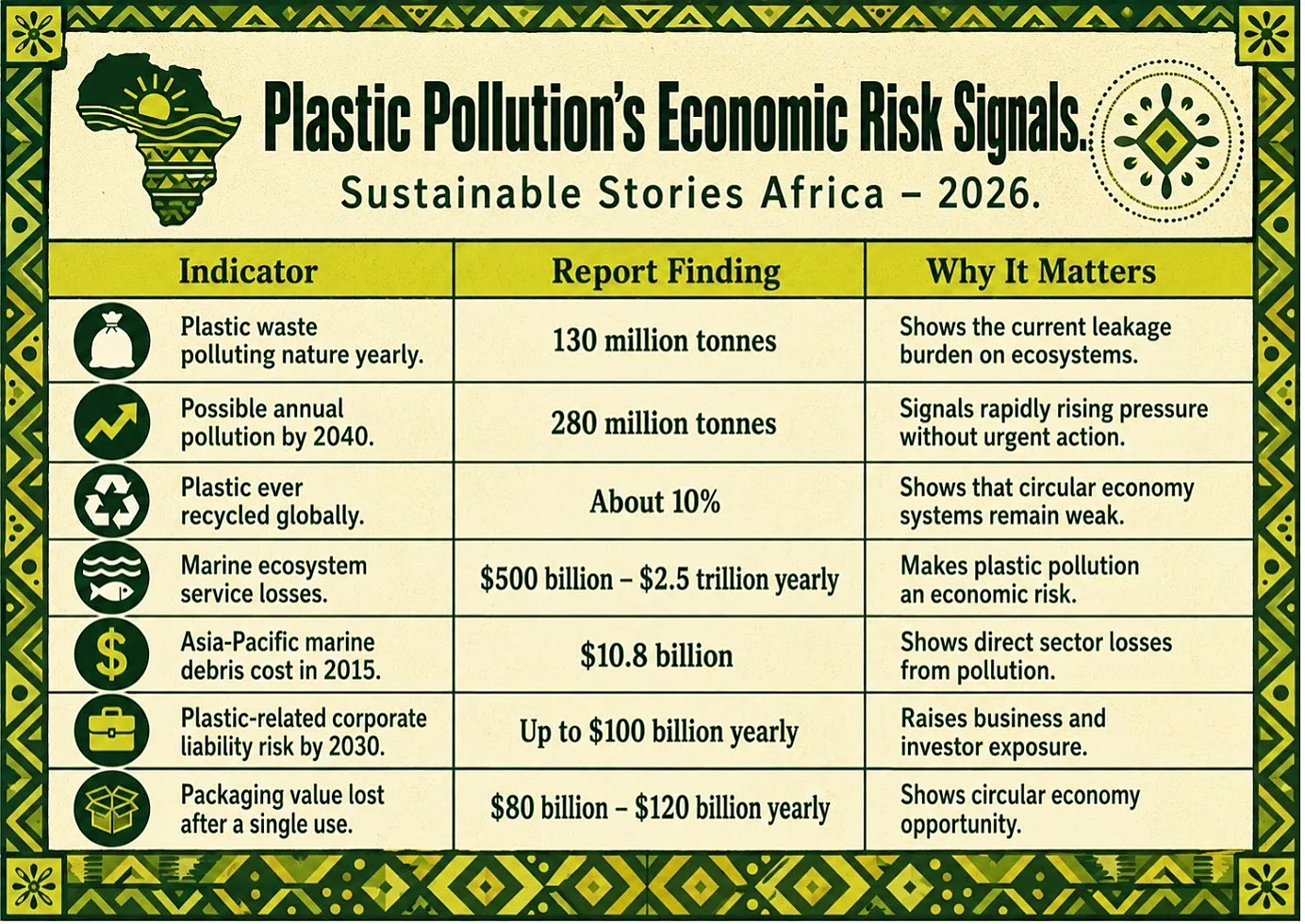
However, only 10% of all plastic ever produced has been recycled. The rest has been burned, buried or leaked into ecosystems.
Without urgent action, annual plastic waste could more than double from 130 million tonnes to 280 million tonnes by 2040, the equivalent of a truckload dumped into nature every second.
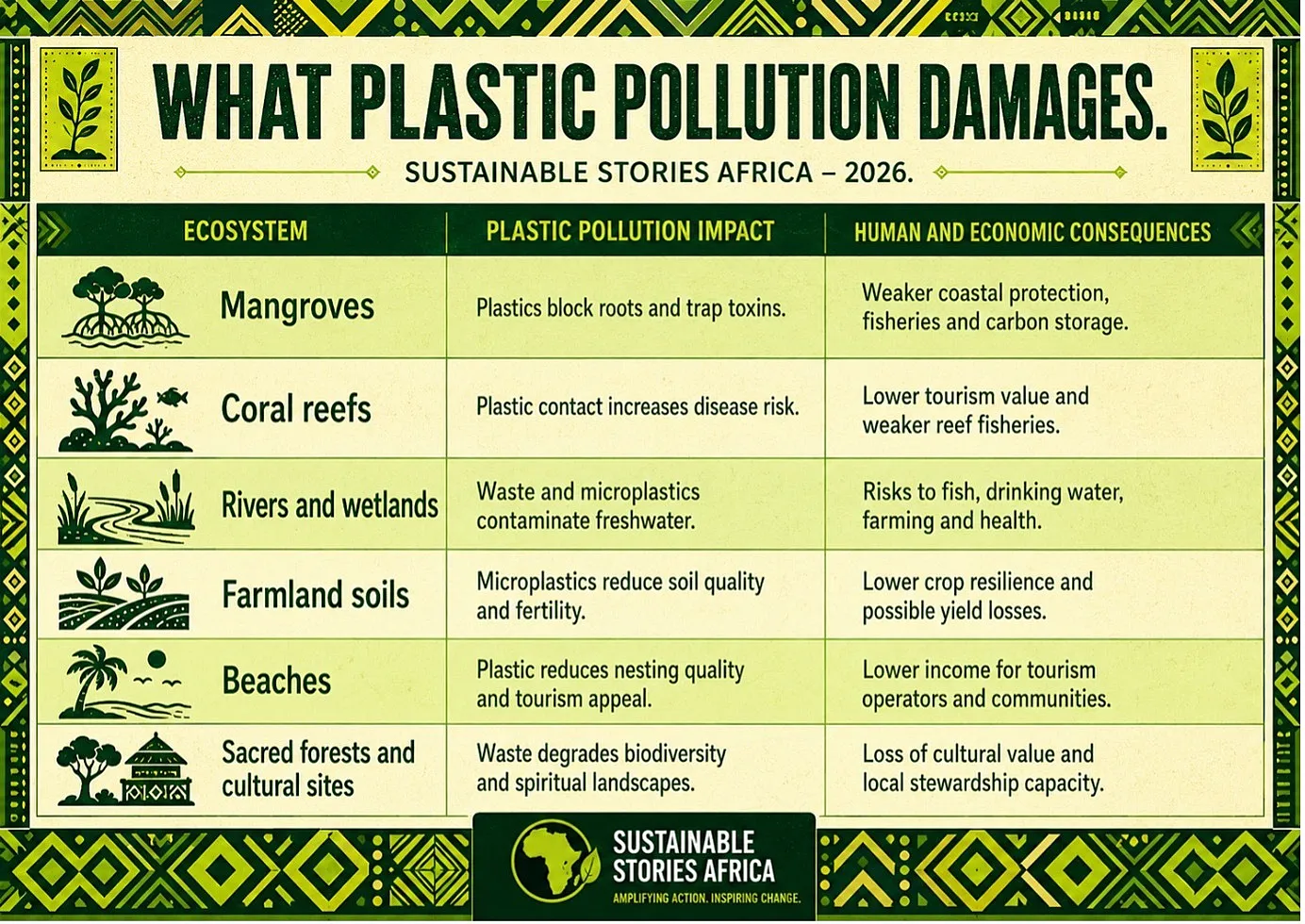
Plastic pollution now ranks among the top five drivers of biodiversity loss, harming species through ingestion and entanglement, degrading critical habitats including mangroves, coral reefs and farmlands, and spreading chemical contamination via microplastics and toxins.
For communities, the consequences are tangible: depleted fisheries, smothered coastlines, degraded soils and dying marine life.
Biodiversity Loss Is Now Economic Risk
The environmental damage is inseparable from the economic cost. Over half of global GDP, an estimated $58 trillion, is moderately or highly dependent on nature.
When plastic degrades ecosystems, the losses ripple through food systems, fisheries, tourism, insurance and public finance.
The numbers are sobering. Plastic already in the world's oceans has caused annual losses of $500 billion to $2.5 trillion in marine ecosystem services.
In Asia-Pacific alone, marine debris cost regional economies $10.8 billion in 2015, with cumulative sectoral damage projected to reach $216 billion by 2050.
For African coastal economies, where fisheries, tourism and blue economy strategies anchor growth plans, this is a direct threat to revenue, jobs, food supply and the community resilience that no recovery plan can afford to ignore.
Plastic Is Damaging Ecosystems Directly
The biodiversity toll is both visible and systemic. Over 4,000 species, including turtles, seabirds, dolphins, whales, corals and plankton, have been documented to interact with plastic through ingestion or entanglement.
Globally, 52% of sea turtles have eaten plastic.
- In the Philippines, turtle deaths were recorded almost monthly in 2024
- In Indonesia, sperm whales and dugongs were found dead with stomachs full of debris.
Habitat destruction runs equally deep. Plastic trapped in mangrove root systems blocks waterways, degrades soil aeration and reduces survival rates, a critical loss given that mangroves store up to four times more carbon per hectare than tropical forests and sequester carbon dioxide at ten times the rate.
Coral reefs face a compounding threat. Contact with plastic increases the likelihood of coral disease from 4% to 89%, weakening reef fisheries, reducing fish stocks and stripping coastal economies of the resilience they cannot afford to lose.
Africa’s Plastic Challenge Is Also Local
Nigeria is among nine geographies studied in the report, making the findings directly relevant for African policy and business audiences. Community observations in Nigerian river systems point to rising fish deaths linked to plastic waste, while farmlands face declining soil fertility.
The Osun-Oshogbo Sacred Grove, a UNESCO World Heritage Site, illustrates how plastic pollution can simultaneously threaten biodiversity, cultural heritage and spiritual identity.
The challenge runs deeper than infrastructure. It encompasses livelihoods, public health, informal labour, women's roles in waste recovery, weak enforcement and the persistent gap between national policy and local realities.
The WEF/GPAP geographic mapping approach is critical here, identifying where plastic pollution pathways intersect with high-biodiversity zones, so that interventions deliver maximum ecological and economic impact.
Businesses Face Rising Exposure And Opportunity
The business case is no longer optional. The WEF Global Risks Report 2026 ranks biodiversity loss as the second most severe global risk over the next decade, and plastic pollution sits at its centre.
Corporate liability cases linked to plastic could reach $100 billion annually by 2030, with extended producer responsibility schemes adding another $100 billion.
However, only 12% of companies have set biodiversity targets, against 78% with climate commitments, a gap that is increasingly indefensible.
The opportunity is equally significant. Some 91% of plastic waste is burned, buried or discarded, representing between $80 and $120 billion in lost packaging value.
Shifting toward reusable and compostable packaging could nearly halve plastic pollution by 2040 while creating 8.6 million jobs.
Better product design could increase the value of recyclable plastic from 22% to 54% by 2040.
Cities, Communities, and Governments Must Move Together
Communities are carrying a disproportionate burden. Informal workers collect and sort nearly two-thirds of recycled plastic globally; however, they operate without formal recognition, stable wages or legal protection.
Women waste pickers, Indigenous Peoples, and local communities are central to both plastic recovery and biodiversity protection; however, they remain largely excluded from formal decision-making.
For African cities, the imperative is clear: plastic governance must be local, practical and inclusive, reaching dense settlements, markets, waterways and peri-urban zones, and linked to biodiversity maps, not merely disposal targets.
The structural challenge is policy fragmentation. Plastic waste and biodiversity conservation sit under separate ministries in most countries.
The report argues that effective action requires connecting extended producer responsibility targets to ecological outcomes, integrating plastic pollution into National Biodiversity Strategies, and formally recognising informal waste workers.
Joint Action Can Multiply Benefits
The case for an integrated approach is compelling and practical.
- Tangibility – plastic-choked rivers, dead turtles and degraded farmlands make biodiversity loss visible and relatable in ways abstract ecosystem metrics cannot
- Broader coalitions – waste managers, tourism boards, finance ministries, farmers, fishers, consumer goods companies and community leaders all have direct stakes
- Better returns – hotspot mapping directs scarce public and private resources where ecological and economic impact is greatest
- Broken silos – connecting upstream urban waste decisions to downstream ecosystem outcomes, bridges governance gaps that have long weakened action
- Built resilience – reducing plastic pressure gives nature a stronger foundation to recover from climate change and habitat loss
For African markets, this reframes the circular economy goal: not collecting more waste to fulfil reporting targets, but reducing leakage into the ecosystems that underpin food security, flood protection, culture and local livelihoods.
Path Forward: Protect Nature, Redesign Plastics
Plastic pollution and biodiversity loss must be addressed as a single crisis, with policies that connect waste systems to ecosystem protection, public health, business accountability and community livelihoods.
For Africa, the priority is clear: map plastic hotspots, strengthen EPR, fund circular solutions, protect informal workers and measure success by healthier rivers, farms, forests, mangroves and coastal economies, rather than only tonnes collected.