A rice-farming case study from Ajinomoto shows how biostimulants helped reduce fertiliser use by about 50% while increasing yields by 11% in a commercial farm trial in Thailand.
The result opens a bigger climate question for agriculture: can companies credibly measure avoided emissions while helping farmers produce more food with fewer inputs
Agriculture’s Climate Equation Is Changing Fast
A commercial rice farm trial in Thailand is offering a practical glimpse into one of agriculture’s most urgent climate challenges: how to grow more food while reducing the emissions linked to fertiliser use.
The case study, presented by WBCSD as an avoided-emissions illustration, focuses on Ajinomoto’s biostimulants, Agriful, Tecamin Max and Fertigrain Foliar, applied alongside reduced synthetic fertiliser doses.
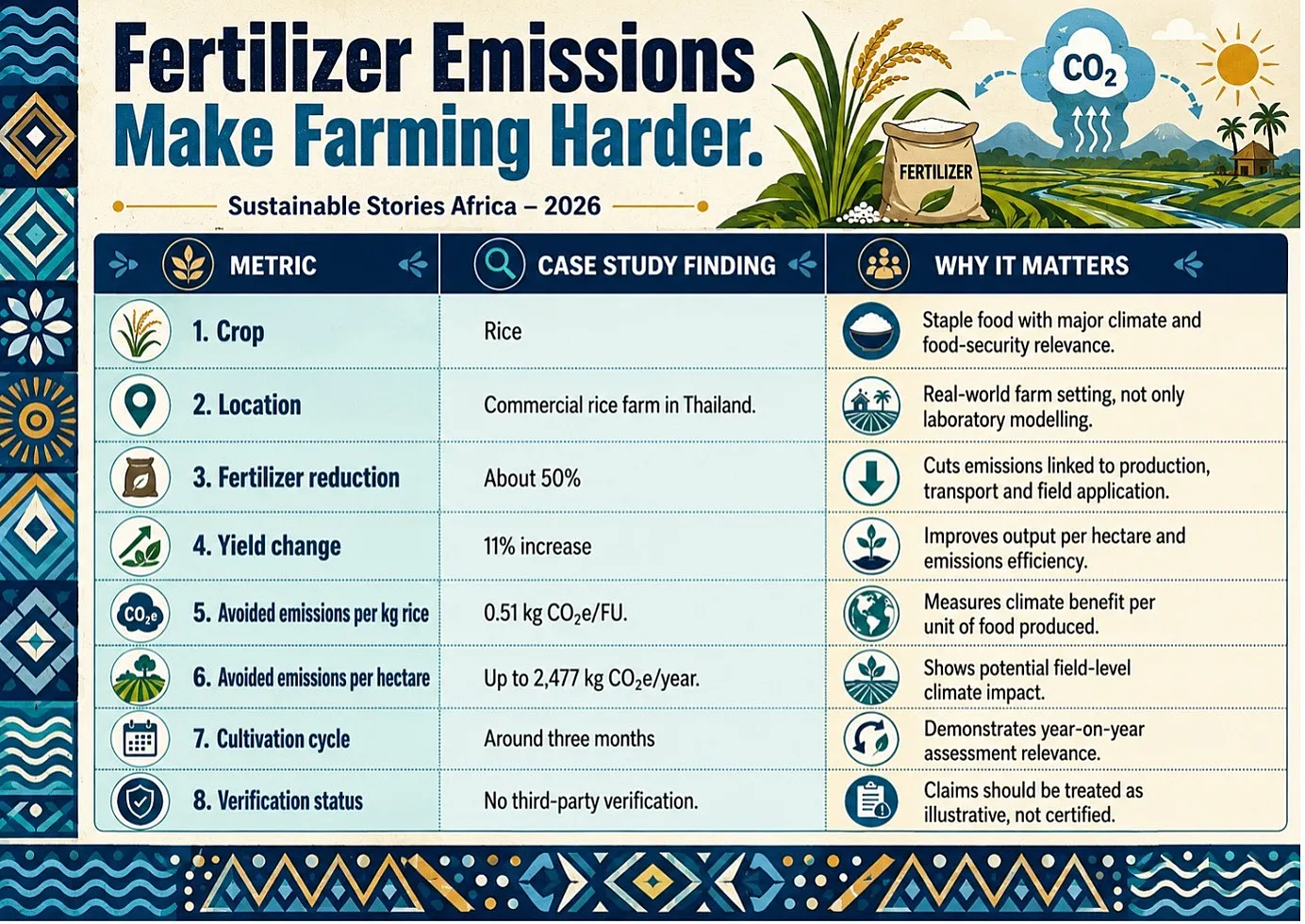
The trial recorded about a 50% reduction in fertiliser use over a roughly three-month cultivation cycle, while rice yields rose by 11%.
For African and emerging-market food systems, the signal is important. Fertiliser access, soil productivity, food prices and climate resilience are already tightly linked.
Any solution that reduces input intensity while improving yields could matter for farmers, agribusinesses, investors and governments trying to balance food security with climate action.
Fertiliser Emissions Make Farming Harder
Fertiliser is one of modern agriculture's biggest productivity tools—and one of its toughest climate problems. Globally, fertilisers account for about 5% of greenhouse gas emissions, roughly a third from production and two-thirds from field application, mainly as nitrous oxide.
The Ajinomoto case study does not propose removing fertiliser from farming; however, it explores a pragmatic alternative: using biostimulants to improve nutrient uptake, crop quality and yields while reducing the need for synthetic fertiliser.
In the Thailand rice trial, the reference scenario used the full recommended synthetic fertiliser dose with no additives, while the low-carbon scenario paired biostimulants with a reduced dose.
Measured per kilogram of rice, the result was 0.51 kg CO2 equivalent avoided, up to 2,477 kg CO2 equivalent avoided per hectare annually compared with typical fertiliser use.
Avoided Emissions Need Careful Interpretation
The case study is as much about accounting discipline as it is about agricultural innovation.
Avoided emissions measure what is not released when a lower-carbon solution replaces a higher-emitting reference scenario, here, from two linked effects: reduced synthetic fertiliser use and higher rice yield per hectare.
That distinction matters for ESG communication.
- A company cannot claim "green" status simply by citing efficiency.
- It must explain comparisons, boundaries, included emissions, assumptions and verification status.
The WBCSD case study specifies the details:
- System boundaries cover full life-cycle emissions of biostimulants and fertilisers.
- The scope is a Thailand commercial rice farm trial, and the timeframe is year-on-year.
Crucially, it notes the WBCSD Guidance on Avoided Emissions is not a verification standard; the case is an indicative illustration only, not third-party reviewed.
In a market wary of greenwashing, such claims must remain transparent, conservative, and distinct from verified carbon credits or formal certification.
The Farmer Benefit Is Practical
The most compelling part of the case study isn't only the carbon number; it's the farm-level logic.
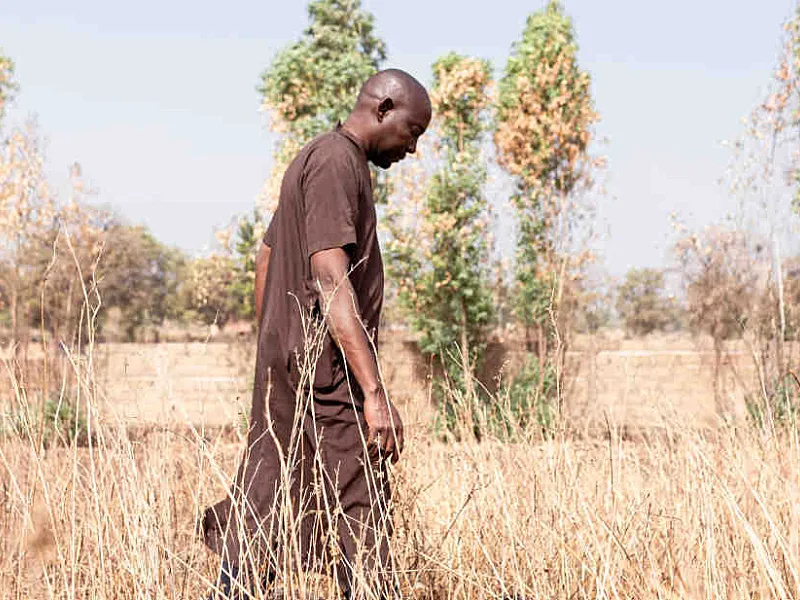
For farmers, fertiliser is both a productivity input and a cost burden; in many African markets, prices, exchange-rate pressure and distribution bottlenecks shape what farmers can actually apply, with overapplication raising emissions and scarcity threatening yields.
This is why the Ajinomoto trial matters beyond Thailand.
- If biostimulants help farmers cut fertiliser use while maintaining yields, the value becomes multidimensional: lower input intensity, improved productivity, reduced emissions per kilogram of food, and better climate resilience.
- The biostimulants work by stimulating natural plant processes to improve nutrient uptake and stress tolerance.
Climate-smart agriculture must work for farmers before it can work for dashboards. The case study acknowledges a key risk directly: higher productivity could incentivise land expansion, as seen with other yield-enhancing practices, meaning the opportunity requires safeguards, land-use governance and credible monitoring, not automatic assumption.
What This Means For African Agriculture
For Africa, the case study lands in a high-stakes context.
The continent needs higher agricultural productivity, stronger food security, more resilient farming systems and lower emissions intensity.
At the same time, many farmers face limited access to finance, extension services, irrigation, soil testing, storage, digital advisory tools and quality inputs.
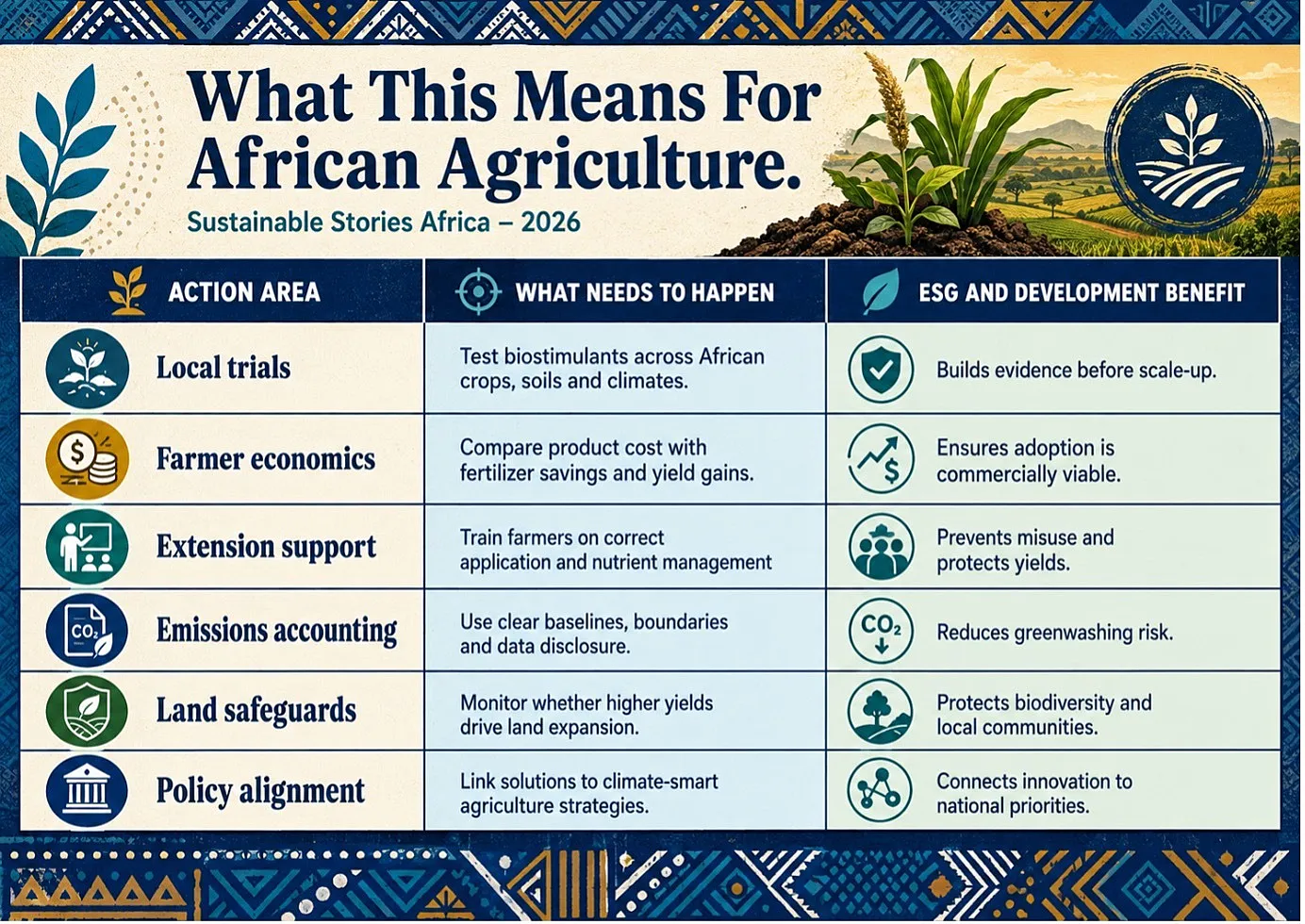
Biostimulants could fit into this transition if they are affordable, locally tested, agronomically appropriate and supported by farmer education. But they should not be treated as a silver bullet.
The right question for policymakers is not simply:
- Can this reduce emissions?
It is:
- Can this improve farmer economics, protect soil health, reduce input waste, increase yield, avoid harmful side effects and support national food-security priorities?
For agribusinesses, the message is also clear. Avoided-emissions claims can strengthen sustainability storytelling, but only when backed by transparent methodology and credible evidence.
Investors will increasingly ask whether climate solutions are measurable, scalable and socially responsible.
Companies Must Prove Climate Legitimacy
Ajinomoto's case study shows how companies are beginning to position agricultural products as climate solutions.
Its biostimulants sit within the Bio & Fine Chemicals business, in the Healthcare and Others segment, positioned within the Green/agri-solutions growth area. Currently, it is a small share of Group revenue; however, it is an important development priority.
This is a familiar pattern in the climate-solutions economy: promising low-carbon products often start small before becoming strategic growth areas. The challenge is ensuring corporate climate narratives don't outpace field evidence.
WBCSD's eligibility gates matter here: climate action credibility, climate science alignment and contribution legitimacy.
The solution reduces farmers' Scope 1 emissions through lower direct nitrous oxide emissions and Scope 3 emissions by farmers and agribusinesses via raw materials.
Properly disclosed, avoided-emissions accounting can support better capital allocation, helping investors identify genuine impact.
Poorly disclosed, it risks becoming marketing language that obscures real outcomes.
Policy Should Scale Evidence, Not Hype
Governments and regulators should treat cases like this as early evidence of what climate-smart agriculture could deliver, not as final proof of universal performance.
- First, agriculture ministries should support independent field trials across different agroecological zones. Rice performance in Thailand may not automatically translate to rice, maize, sorghum or cassava systems in Africa.
- Second, public research institutions should work with agribusinesses to measure yield, input reduction, soil health, emissions, cost-benefit outcomes and farmer adoption barriers.
- Third, climate and ESG regulators should encourage companies to disclose avoided-emissions claims with clear baselines, functional units, boundaries, assumptions and verification status.
- Fourth, financiers should support farmer access only where solutions show credible agronomic and economic performance. Climate finance should not push products into communities without evidence, affordability and safeguards.
- Finally, farmers must remain central. The credibility of any agricultural climate solution depends on whether it works in the field, under local conditions, with real cost pressures and real livelihood risks.
Path Forward – Measure, Verify, Then Scale
The Ajinomoto case study points to a practical climate pathway: reduce fertilizer intensity, protect yields, and measure avoided emissions transparently.
For Africa, the next step is local evidence. Governments, agribusinesses and financiers should fund independent trials, farmer training and credible disclosure systems. Climate-smart agriculture will scale best when productivity, affordability, land safeguards and emissions integrity move together.