The difference between organisations that thrive and those that stagnate often comes down to one variable: team quality. As economies across Africa and the Global South face intensifying competitive and structural pressures, the ability to build and sustain high-performing teams is no longer a soft management aspiration; it is a hard business imperative. The question is no longer whether leaders should invest in team excellence, but precisely how.
The Cost of Mediocre Teams Is Too High
Across boardrooms in Lagos, Nairobi, Accra, and Johannesburg, a quiet crisis is unfolding. Organisations are investing in technology, strategy, and capital; however, they fail to unlock the one asset that sits at the centre of every business outcome: their people.
High-performing teams do not emerge by accident; they are deliberately designed, carefully nurtured, and systematically sustained through leadership, structure, and culture.
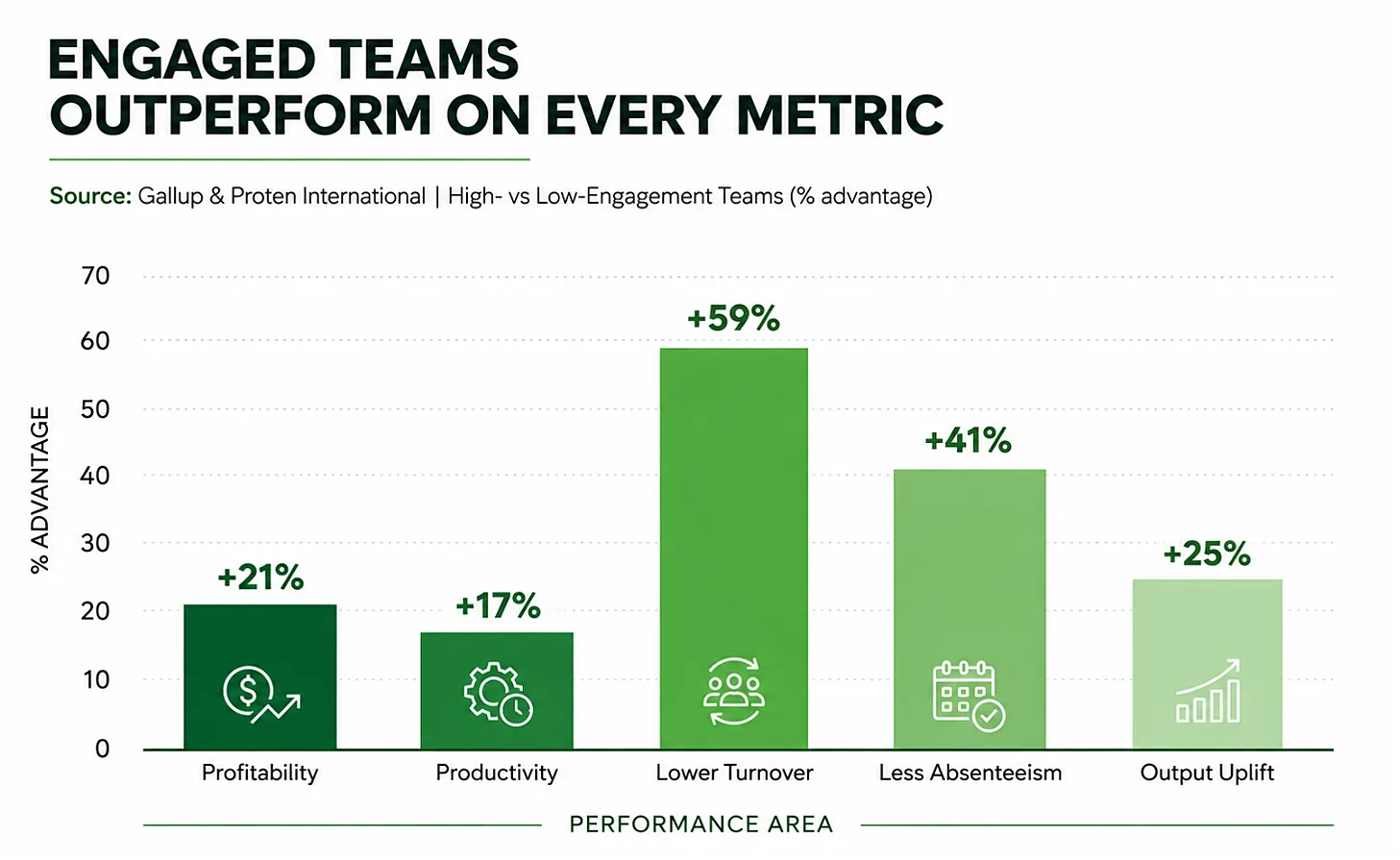
The stakes have never been higher. According to research by Gallup and Proten International, highly engaged, high-performing teams achieve 21% higher profitability, 17% higher productivity, 59% lower staff turnover, and up to 41% lower absenteeism compared to low-engagement teams.
In Africa's high-stakes, resource-constrained markets, where talent mobility is accelerating and margins are tightening, these are not just performance numbers; they are survival metrics.
For organisations navigating Nigeria's infrastructure volatility, Kenya's rapid digital transformation, or South Africa's structural unemployment pressures, building a resilient, high-performing team is the single greatest competitive lever available to leaders today.
The question is not whether your organisation can afford to invest in team excellence. The evidence is clear: it cannot afford not to.
One Statistic Every Leader Must Know
70% of a team's engagement is directly determined by the quality of its manager, rather than pay, perks, or office space.
That figure, from Gallup's landmark workforce research, reframes leadership development as the most scalable investment any organisation can make.
In Africa's emerging markets, where informal work structures, infrastructure gaps and resource scarcity complicate talent retention, the leadership variable is even more decisive.
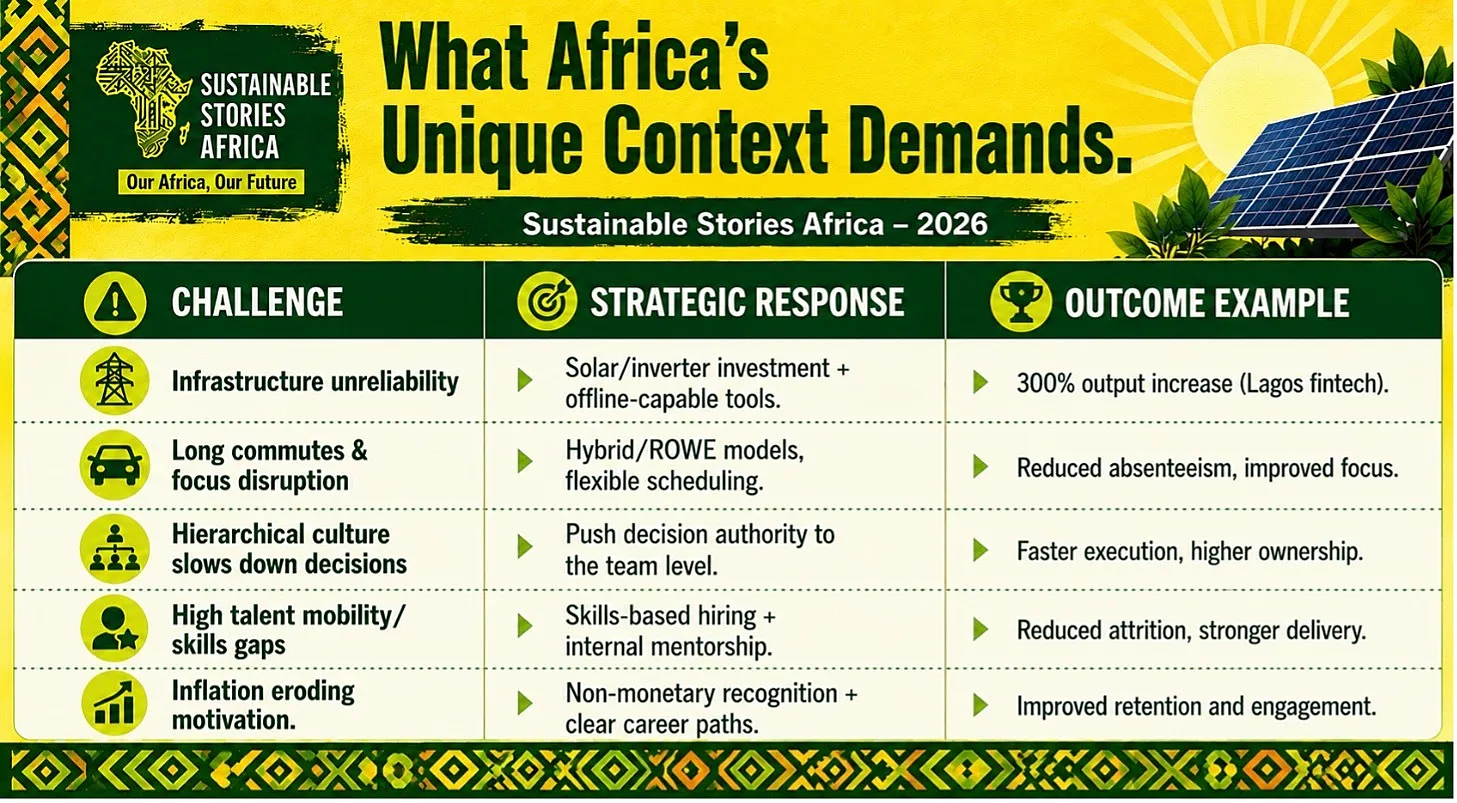
A Lagos-based fintech, cited in Stonehill Research's 2026 organisational analysis, achieved a 300% increase in feature releases after adopting outcome-focused management, autonomy-driven leadership and individual connectivity solutions for remote engineers.
Across the continent, organisations are moving away from rigid hierarchies and credential-focused hiring toward agile, psychologically safe team environments. This is not an imported Western trend; it is a performance imperative that African organisations are defining on their own terms.
The Six Pillars of High-Performing Teams
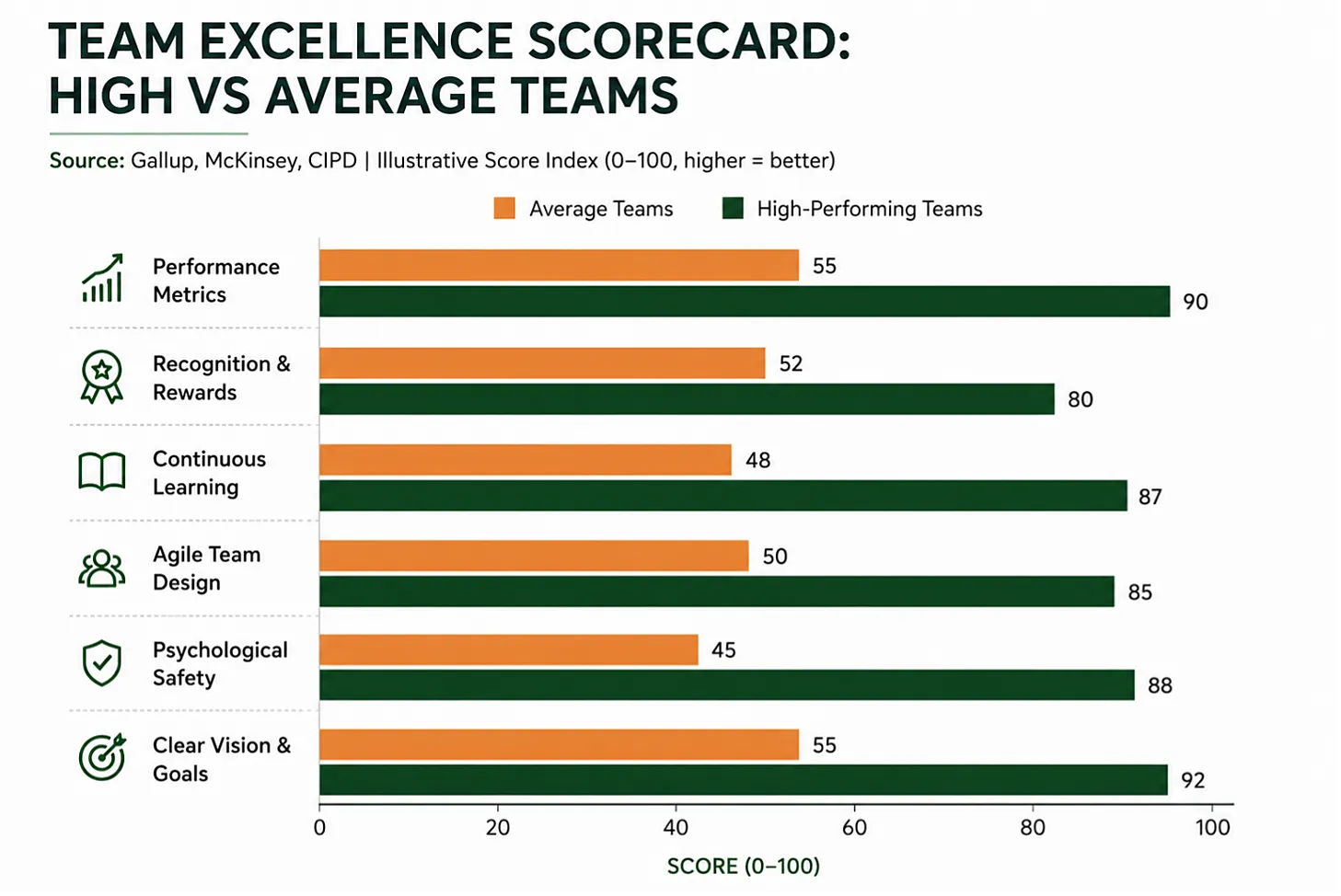
Building a high-performing team is not one decision; it is an architecture of six interconnected choices, each reinforcing the others.
Global research from McKinsey, CIPD, Gallup and Harvard Business School Online converges on a consistent framework:
- Clear Vision and Aligned Goals – High-performing teams start with shared purpose. SMART objectives, cascaded from organisational strategy to individual deliverables, create the clarity that enables execution. Teams that understand why they do what they do are demonstrably more resilient under pressure.
- Psychological Safety – Google's Project Aristotle identified psychological safety as the single most important factor in team performance, ahead of talent or seniority. For African organisations navigating cultural hierarchies, this means training leaders to enable rather than control.
- Agile Team Design – Smaller, autonomous, cross-functional units consistently outperform larger groups. Proten International's research highlights that teams of three to five people are most effective, with Agile methodology now translating beyond tech into manufacturing, financial services and other sectors across the continent.
- Continuous Learning and Development – CIPD's 2023 research underscores deliberate investment in training, debriefs and mentorship — critical even where connectivity is limited.
- Recognition and Rewards Systems – Non-monetary recognition is as strategically important as compensation. Gallup confirms that consistent, fair acknowledgement directly drives engagement and retention.
- Data-Driven Performance Metrics – Top-quartile teams are 18% more productive and 23% more profitable than bottom-quartile peers, per Gallup's analysis of over 180,000 teams — powered by real-time feedback, not annual appraisals.
What Africa's Unique Context Demands
African teams operate in conditions that demand an additional layer of strategic intentionality.
Power supply unreliability, internet inconsistency, long urban commutes, and currency volatility create operational friction that can quietly erode team performance.
The organisations succeeding in these environments are not ignoring these realities; they are designing around them.
A manufacturing firm in Nigeria's Southeast, cited in Stonehill Research's analysis, reduced production waste by 40% and increased output by 25% within two years, not by importing expensive technology, but by cross-training staff, implementing team-based incentives, and creating a structured suggestion system that rewarded efficiency improvements.
The lesson for African leaders is profound: excellence is not a question of resources. It is a design question.
What Becomes Possible When Teams Perform
The case for high-performing team architecture is measurable. Proten International's 2025 research shows that organisations adopting agile team design can expect a 20% – 30% uplift in productivity and a 25% reduction in lost time and meeting overload, with faster decision cycles and stronger innovation capacity following closely.
The cost of inaction is equally concrete. Toxic work environments increase voluntary turnover by up to 50%, suppress innovation by over 30%, and reduce overall performance by up to 40% through disengagement and burnout, according to MIT Sloan Management Review.
For Africa's investors, policymakers and business leaders, these multipliers carry systemic weight. Teams that perform deliver products faster, serve clients better and attract sustained investment.
A continent building its future across fintech, clean energy, agri-business and public services will ultimately be built by people who feel empowered, aligned and valued.
What Leaders Must Do Starting Now
Shifting from average to exceptional teams requires deliberate, phased action. Global and Africa-specific research points to three levels of intervention:
For Leadership Teams and C-Suites:
- Commission team health diagnostics assessing psychological safety, workflow efficiency and engagement before designing any intervention
- Redesign management development to prioritise coaching, delegation and trust-building alongside technical skills
- Set team-effectiveness KPIs tied to collective outcomes, not individual metrics alone
For HR and People Functions:
- Shift recruitment from credential-based to competency-based assessments, particularly where practical skills outpace formal qualifications
- Build structured recognition programmes, peer acknowledgement, quarterly awards and transparent career progression, independent of budgetary cycles
- Implement 360-degree feedback and quarterly retrospectives to sustain continuous improvement
For Regulators, Development Institutions and Investors:
- Embed people-capital metrics, engagement scores, team diversity and leadership investment into ESG and governance reporting frameworks
- Support affordable digital infrastructure enabling remote and hybrid work models
- Recognise talent development as a material ESG risk, and price it accordingly
Path Forward – Designing Africa's High-Performance Future
High-performing teams are not a luxury; they are the operating model every African organisation must intentionally build, from Lagos startups to Johannesburg financial institutions.
The steps are clear: invest in leadership, enable psychological safety, design agile structures, measure what matters and build cultures where people choose to stay.
Africa's most urgent development challenge is not capital; it is execution capacity. Organisations that commit to team excellence today will build the human infrastructure sustaining Africa's next decade of growth.
This article draws on research from Gallup, McKinsey & Company, Proten International, CIPD, Harvard Business School Online, MIT Sloan Management Review, and Stonehill Research (2026).
Sustainable Stories Africa | Leadership & Organisational Development