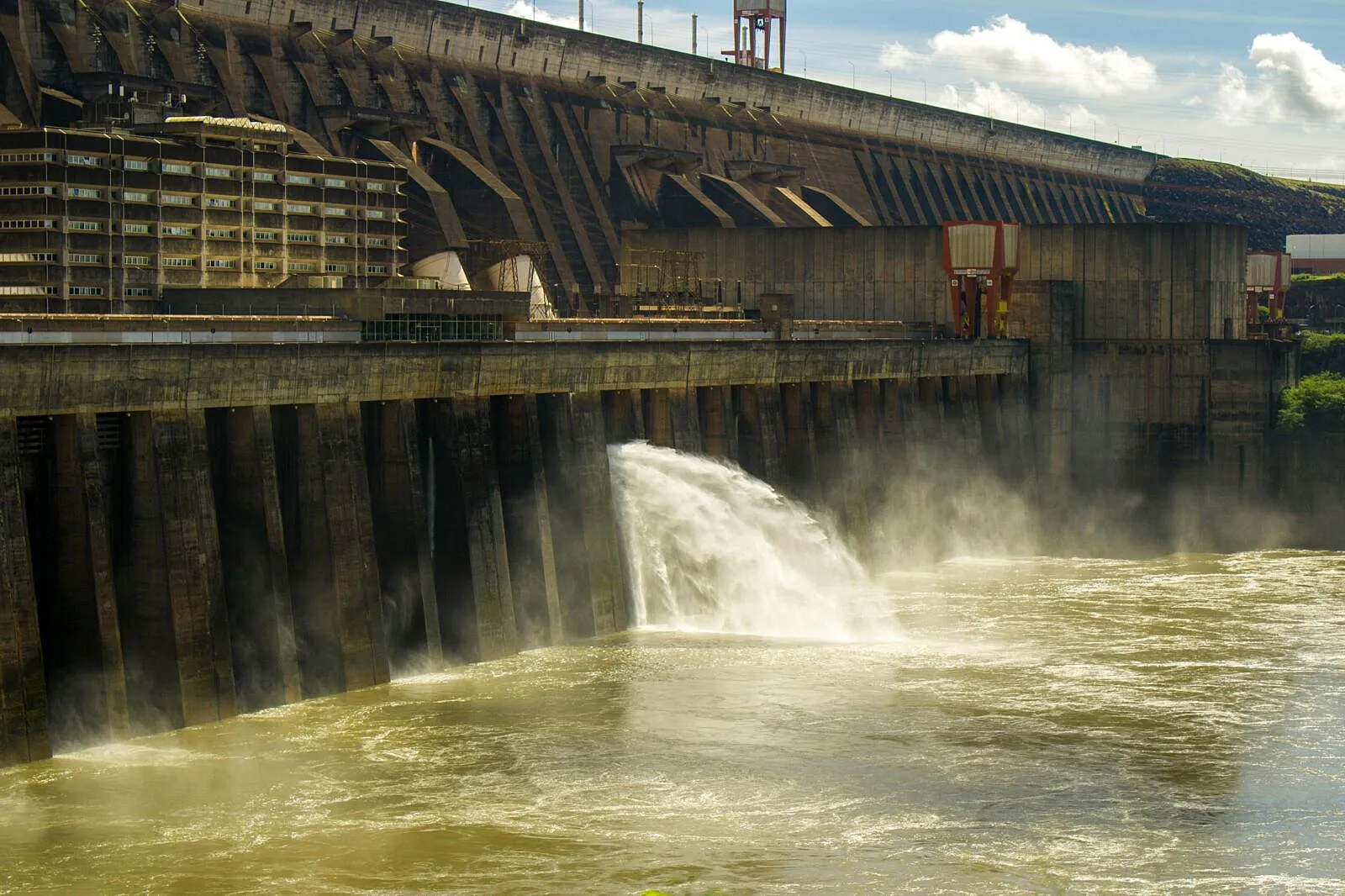
Two neighbouring nations in Central Africa are moving forward with plans to build what could become Africa’s largest hydropower facility, a project that could reshape electricity supply across the continent.
The Democratic Republic of Congo and the Republic of Congo are exploring the Grand Inga-linked hydro expansion in the Congo River basin. This development, which analysts say could unlock one of the world’s largest untapped renewable energy resources, will redefine regional energy cooperation.
Congo Hydropower Project Reshapes Africa
Africa’s most powerful river system is once again at the centre of the continent’s energy ambitions. Plans by the Democratic Republic of Congo (DRC) and the Republic of Congo to build a major hydropower plant along the Congo River could deliver one of the largest renewable electricity projects ever attempted in Africa.
Energy analysts say the project, if completed, would significantly expand hydropower generation in Central Africa and strengthen regional electricity integration across the Southern and Central African power pools.
With the Congo River basin possessing some of the largest hydropower potential globally, the project represents a strategic opportunity to transform Africa’s electricity landscape.
For policymakers and investors, the proposal reflects a growing recognition that Africa’s energy transition will depend not only on solar and wind but also on large-scale hydropower infrastructure capable of delivering reliable baseload electricity for rapidly expanding economies.
Hydropower Potential Signals Continental Energy Opportunity
The Congo River is widely regarded as one of the world’s most powerful hydro resources. The basin holds an estimated 100 GW of hydropower potential, representing nearly half of Africa’s total hydro capacity.
The proposed project between the two Congos aims to harness a portion of this immense energy potential through a large-scale dam capable of supplying electricity to multiple countries across Central and Southern Africa.
Hydropower projects in the region have long been discussed but frequently delayed due to financing challenges, governance concerns, and complex cross-border coordination.
However, the urgency of Africa’s energy deficit, where nearly 600 million people lack access to electricity, has revived interest in mega-scale renewable infrastructure.
Energy planners increasingly view hydropower as a cornerstone of Africa’s long-term energy mix, capable of providing stable power that complements intermittent renewable sources such as solar and wind.
Regional Energy Cooperation Drives Infrastructure Ambitions
The joint project reflects a broader shift toward cross-border energy collaboration across African electricity markets.
Both the DRC and the Republic of Congo possess abundant natural energy resources but limited domestic infrastructure to utilise them fully.
A shared hydropower facility could allow the countries to pool resources, reduce project risk, and attract international investors.
Regional power pools, including the Southern African Power Pool (SAPP) and Central African Power Pool (CAPP), are increasingly prioritising large generation projects capable of supplying electricity across borders.
Analysts say this approach could help overcome a common challenge facing African energy markets: many countries individually lack the demand or financing capacity to support mega infrastructure projects.
Congo Basin Hydropower Potential
Indicator | Estimated Value |
|---|---|
Congo River hydropower potential | 100 GW |
Share of Africa’s total hydro potential | Nearly 50% |
Current installed hydro capacity in DRC | 3 GW |
Potential future capacity with major projects | >40 GW |
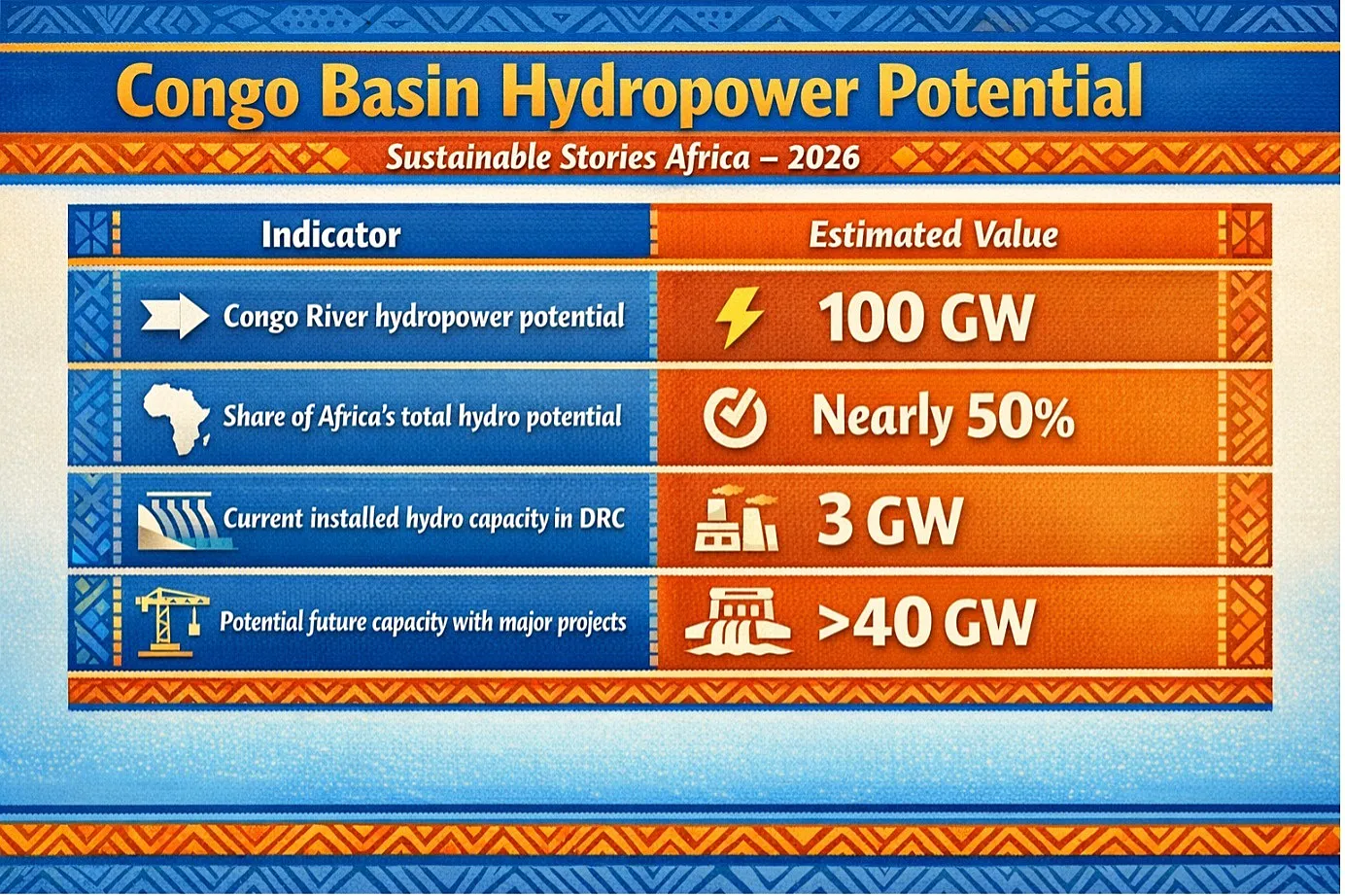
The figures illustrate the scale of the untapped opportunity. Even partial development of the Congo basin’s hydro resources could dramatically expand Africa’s renewable electricity supply.
Africa’s Energy Gap Drives Mega Projects
Africa’s electricity demand is expected to grow rapidly over the next two decades as urbanisation, industrialisation and digital infrastructure accelerate.
Large hydropower projects are increasingly viewed as essential to bridging the gap between electricity supply and demand.
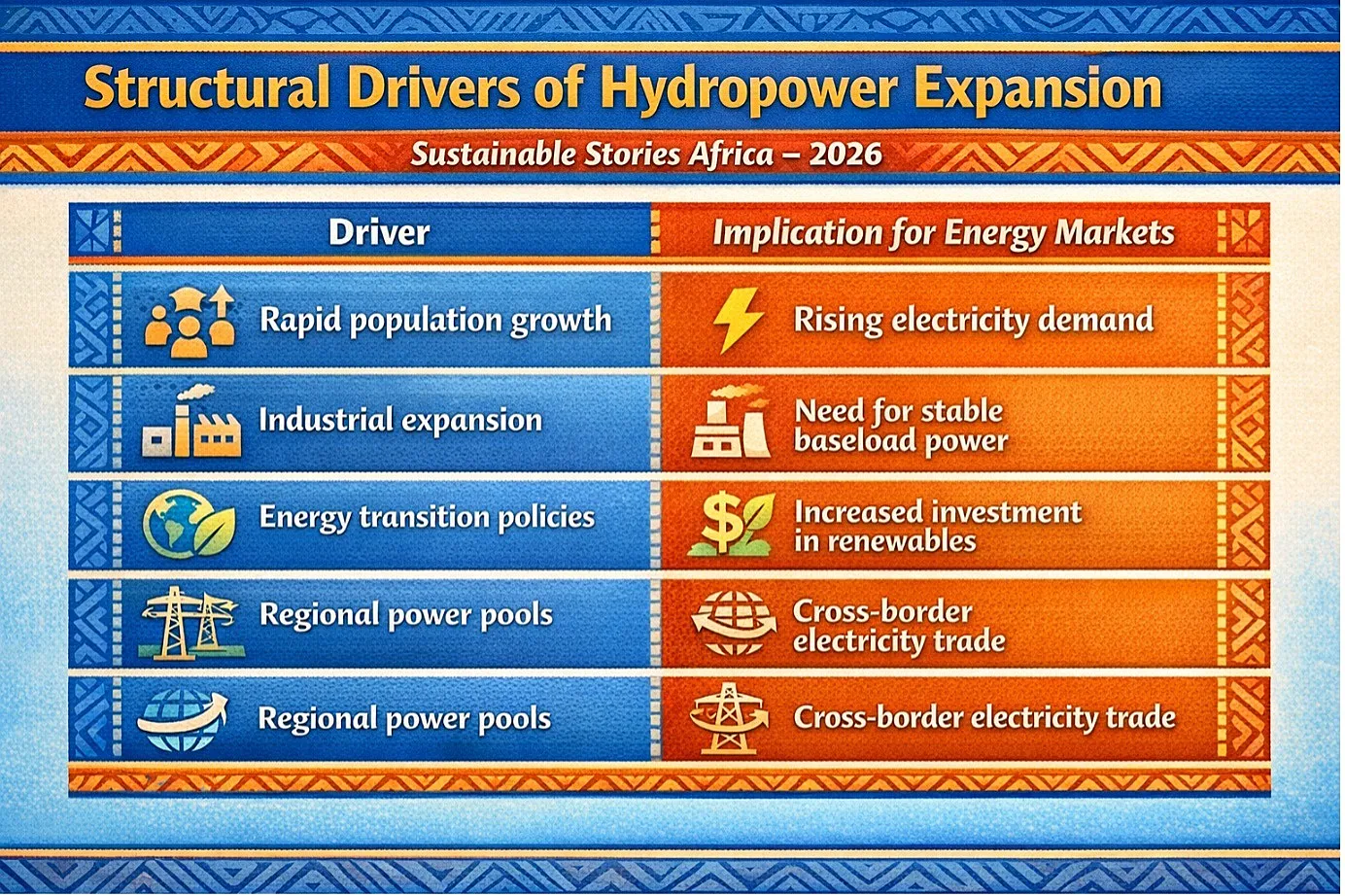
Structural Drivers of Hydropower Expansion
Driver | Implication for Energy Markets |
|---|---|
Rapid population growth | Rising electricity demand |
Industrial expansion | Need for stable baseload power |
Energy transition policies | Increased investment in renewables |
Regional power pools | Cross-border electricity trade |
For investors, hydropower offers a long operational lifespan and relatively low operating costs once infrastructure is built.
However, construction risks and long development timelines have historically slowed project implementation.
Financing And Governance Remain Critical Challenges
Despite the immense potential, large hydropower developments in Africa face persistent obstacles.
Financing remains the most significant barrier. Projects of this scale can cost tens of billions of dollars, requiring complex financing structures involving governments, development banks, private investors and export credit agencies.
Environmental and social considerations also play a major role. Hydropower projects can impact ecosystems and local communities, requiring rigorous safeguards and transparent governance frameworks.
Energy experts say successful implementation will depend on strong institutional coordination between the two countries and clear long-term policy commitments.
For Africa more broadly, the project represents a test case for whether large-scale renewable infrastructure can be delivered efficiently and sustainably.
If successful, it could serve as a blueprint for similar cross-border energy projects across the continent.
Path Forward – Hydropower Expansion Requires Regional Policy Alignment
The Congo hydropower initiative highlights Africa’s growing emphasis on regional energy integration and large-scale renewable infrastructure.
Strong governance frameworks and coordinated investment strategies will be critical to moving the project from proposal to reality.
If executed effectively, the project could deliver reliable electricity to millions, strengthen regional power markets and position Central Africa as a key hub in the continent’s renewable energy transition.