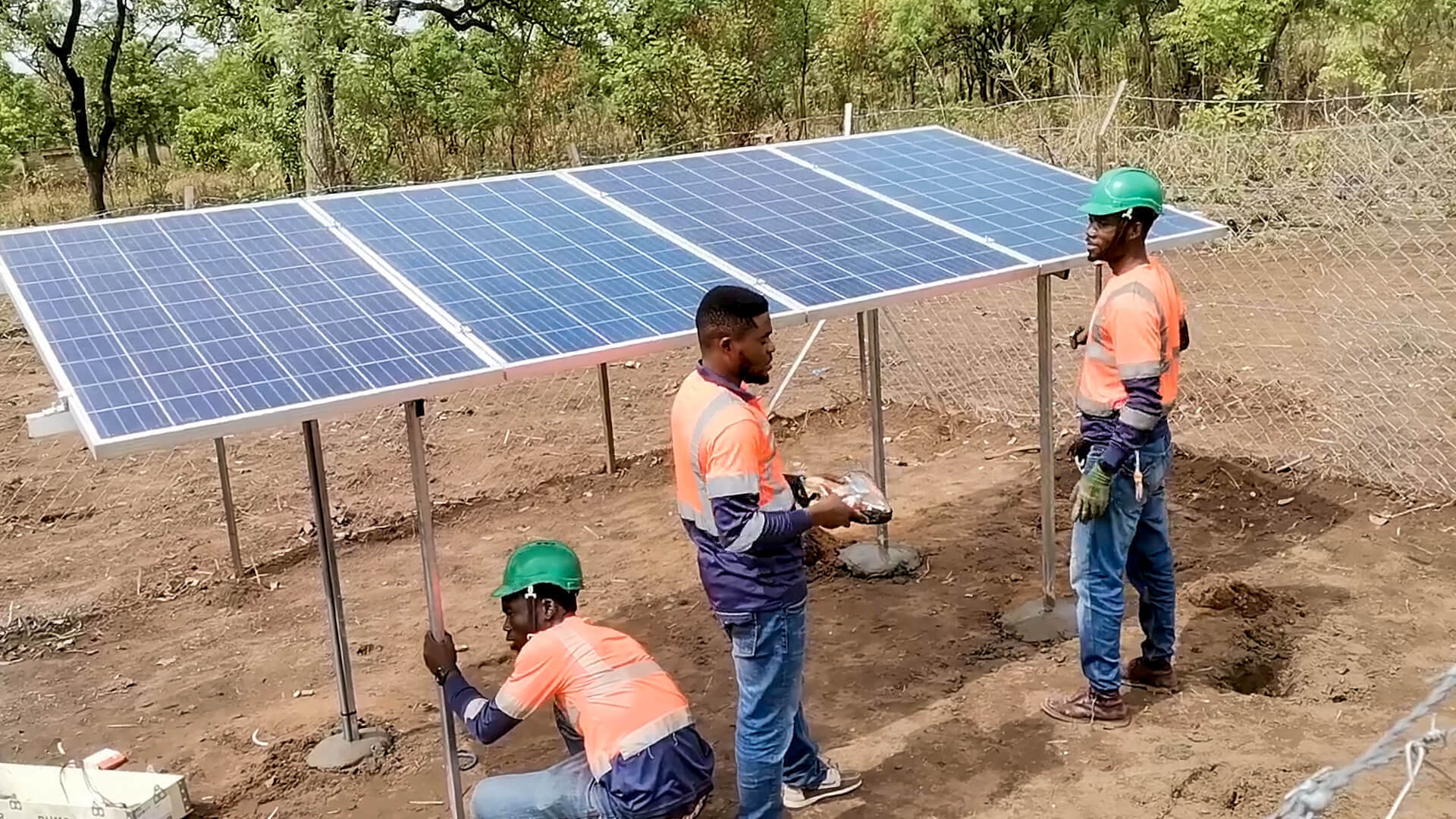
Africa is accelerating efforts to produce up to half its solar hardware locally.
The shift aims to reduce import dependence and strengthen energy security.
If realised, it could reshape industrial growth, create jobs, and anchor the continent’s clean energy transition.
From Import Dependence to Industrial Ambition
Africa could soon produce up to 50% of its solar hardware domestically, a significant shift that signals the continent’s ambition to move from energy consumption to clean energy production.
Driven by rising demand for solar solutions and growing concerns about supply chain vulnerabilities, governments and private sector players are increasingly investing in local manufacturing capacity for components such as panels, inverters, and batteries.
The push reflects a broader strategic pivot: reducing reliance on imports. particularly from Asia, and building resilient, homegrown energy value chains that can support Africa’s transition to renewables.
A Market Growing Faster Than Its Supply Base
Africa’s solar demand has surged in recent years, driven by electrification gaps, rising diesel costs, and the rapid expansion of off-grid and mini-grid solutions.
However, the continent remains heavily dependent on imported solar equipment, with countries like China dominating global supply chains. This imbalance exposes African markets to currency fluctuations, shipping delays, and geopolitical risks.
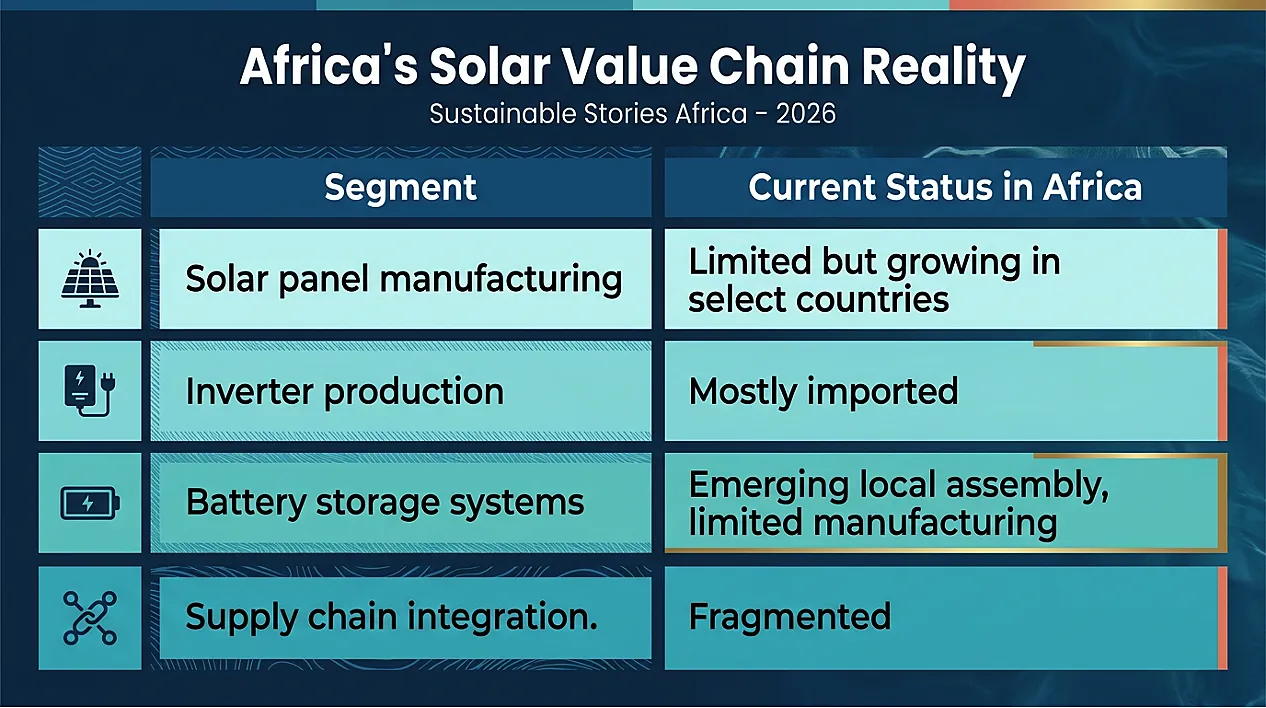
Africa’s Solar Value Chain Reality
Segment | Current Status in Africa |
|---|---|
Solar panel manufacturing | Limited but growing in select countries |
Inverter production | Mostly imported |
Battery storage systems | Emerging local assembly, limited manufacturing |
Supply chain integration | Fragmented |
In response, countries such as South Africa, Egypt, Morocco, and Kenya are accelerating investments in solar manufacturing ecosystems, supported by policy incentives, industrial parks, and partnerships with global manufacturers.
Industry stakeholders point to a clear opportunity: to capture more value within Africa’s renewable energy boom.
As one energy analyst observed in similar discussions, “Africa is one of the fastest-growing solar markets—but captures the least value from it.”
Unlocking Jobs, Value, and Energy Security
Localising solar manufacturing could deliver far-reaching benefits beyond energy access.
By producing hardware domestically, African economies can retain more value within their borders, reduce foreign exchange pressures, and create jobs across the manufacturing value chain, from assembly to advanced component production.
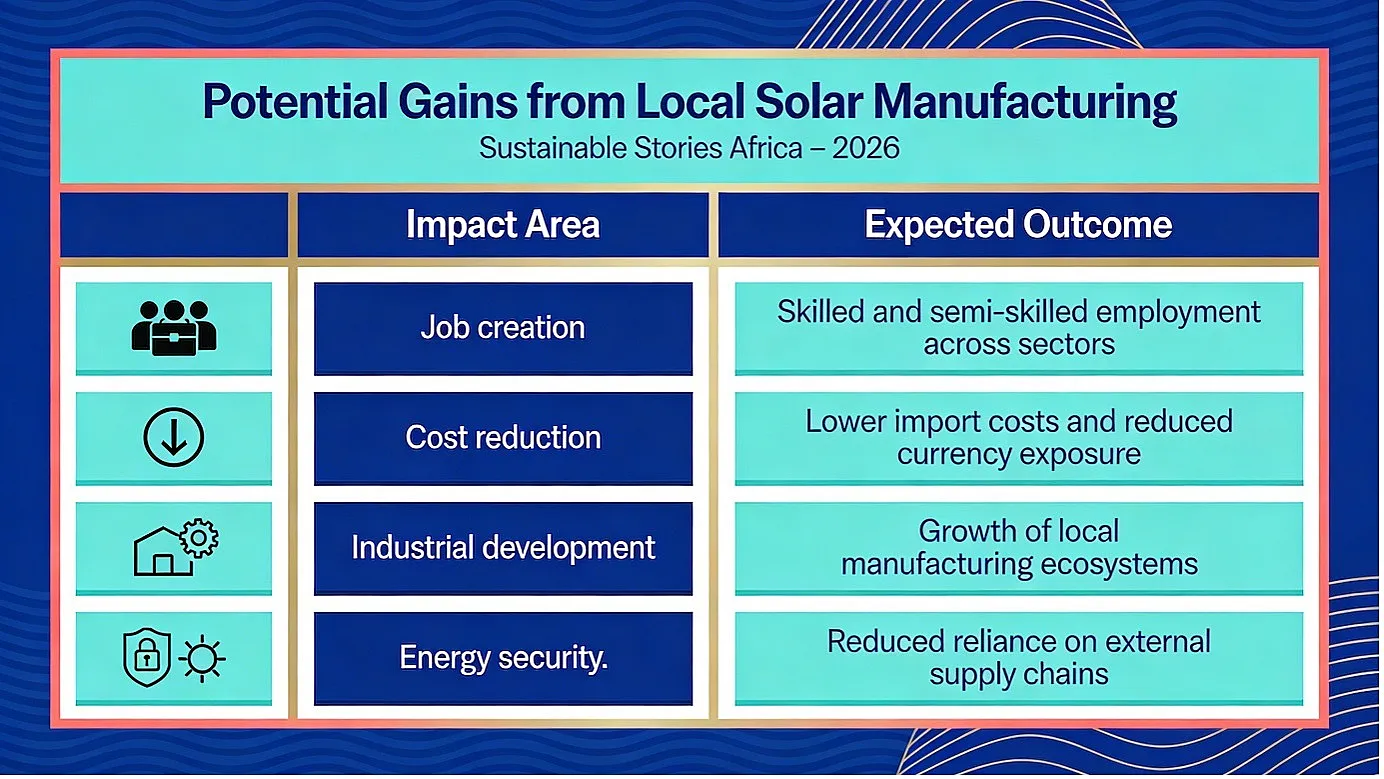
Potential Gains from Local Solar Manufacturing
Impact Area | Expected Outcome |
|---|---|
Job creation | Skilled and semi-skilled employment across sectors |
Cost reduction | Lower import costs and reduced currency exposure |
Industrial development | Growth of local manufacturing ecosystems |
Energy security | Reduced reliance on external supply chains |
For communities, the implications are tangible. More affordable and accessible solar solutions can power homes, businesses, schools, and healthcare facilities—especially in underserved regions.
However, achieving this vision requires more than ambition. It demands coordinated investment, supportive policy frameworks, and long-term commitment to industrial development.
Building the Foundations of a Solar Manufacturing Ecosystem
To achieve its goal of producing half its solar hardware, Africa must address several structural challenges.
- First, governments need to create an enabling policy environment that offers incentives for local manufacturing, protects nascent industries, and ensures stable regulatory frameworks.
- Second, infrastructure investment is critical. Reliable power supply, transport networks, and industrial facilities are essential for competitive manufacturing.
- Third, skills development must be prioritised. Building a workforce capable of supporting advanced manufacturing processes will determine the sector’s sustainability.
Finally, regional collaboration, through frameworks such as the African Continental Free Trade Area, can help scale production and create integrated markets for solar products.
The shift from import dependence to industrial capability will not happen overnight, but the trajectory is increasingly clear.
PATH FORWARD – Build Local Capacity, Power Africa’s Clean Energy Future
Africa’s solar manufacturing ambition requires aligned policy, investment, and skills development.
By strengthening local production ecosystems and regional integration, the continent can reduce import dependence while accelerating inclusive, sustainable energy growth.
Culled From: Africa could soon make half of its solar hardware