Africa’s sustainability agenda is shifting from ambition to execution as clean-energy finance, climate resilience and ESG accountability gain urgency.
Recent renewable-energy deals show momentum, but climate-finance pressures remain significant.
For households, businesses and governments, the stakes are practical: electricity, jobs, resilience and fairer growth.
Africa’s Green Moment Faces A Delivery Test
Africa’s sustainability story is entering a tougher, more practical phase in 2026, as governments, investors and development partners move from climate commitments to the harder work of building projects that deliver power, jobs and resilience.
Recent announcements show the scale of ambition. More than $11 billion in renewable energy investments were announced at a France-Africa summit in Nairobi, including clean cooking, solar, wind, hydropower and sustainable aviation fuel projects.
The deals include TotalEnergies’ planned African investments, EDF-linked hydropower activity and private-sector renewable projects across Kenya, Rwanda and Zambia.
The momentum matters because Africa’s sustainability challenge is not abstract. It is about whether clinics can keep lights on, whether manufacturers can avoid diesel costs, whether farmers can adapt to climate shocks, and whether young people can find jobs in a greener economy.
Clean Energy Momentum Is Building
Africa’s energy transition will be shaped by larger investment platforms as well as targeted initiatives.
Mission 300, backed by the World Bank Group and the African Development Bank, aims to connect 300 million Africans to electricity by 2030, with emphasis on grids, mini-grids, standalone solar and private-sector mobilisation.
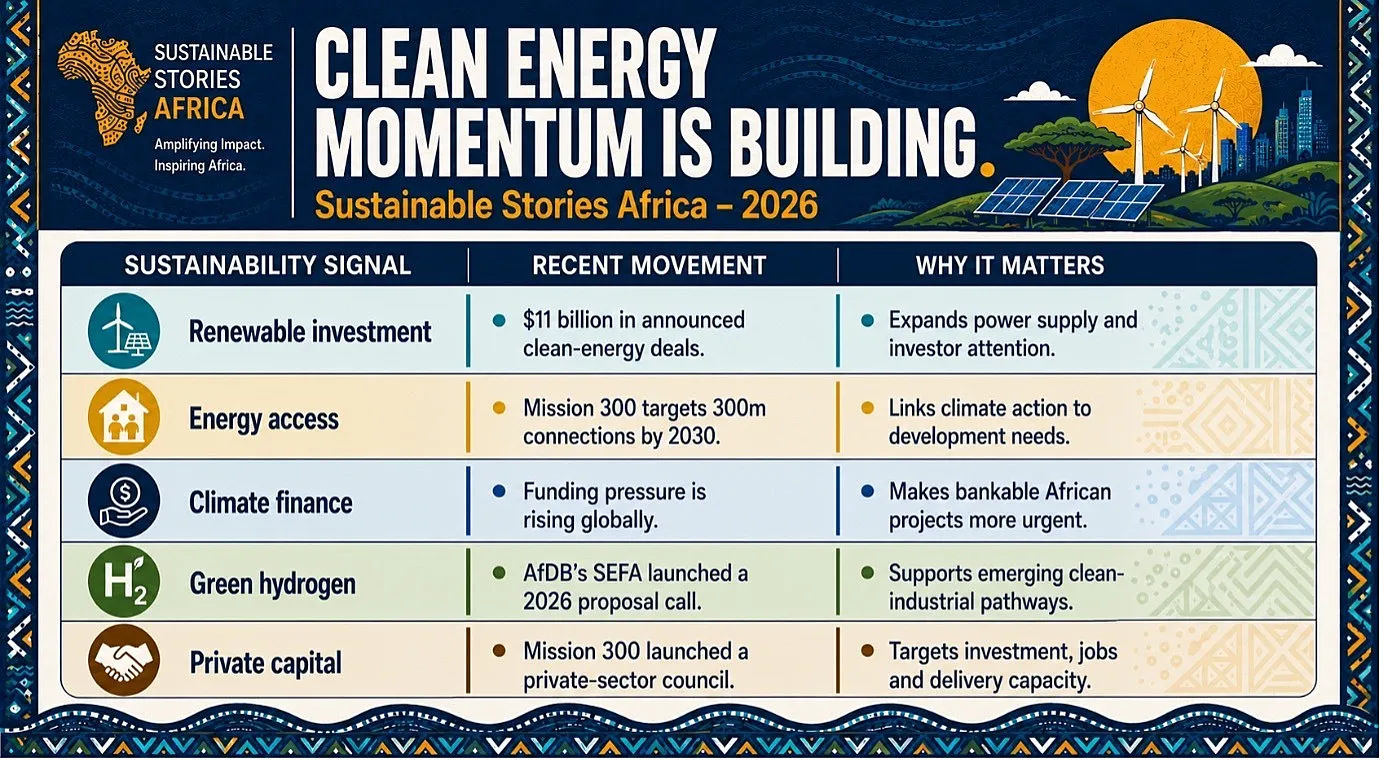
At the same time, climate finance remains uncertain. The UK has reportedly cut more than £800 million from its Green Climate Fund pledge, lowering its contribution to £815 million, adding pressure on developing-country climate finance pipelines.
This creates a difficult balance. African countries need investment to build resilient infrastructure, expand energy access and prepare for climate risks.
However, global finance is becoming more selective, making governance, data quality and project preparation more important.
Sustainability Can Become a Growth Strategy
If handled well, sustainability can become one of Africa’s strongest growth strategies.
Clean power can reduce production costs, support digital infrastructure, strengthen local manufacturing and reduce dependence on imported fuels. Climate-smart agriculture can protect food systems. Better ESG reporting can help African companies attract patient capital. Green industrialisation can move countries from raw-material exports toward processing, manufacturing and higher-value jobs.
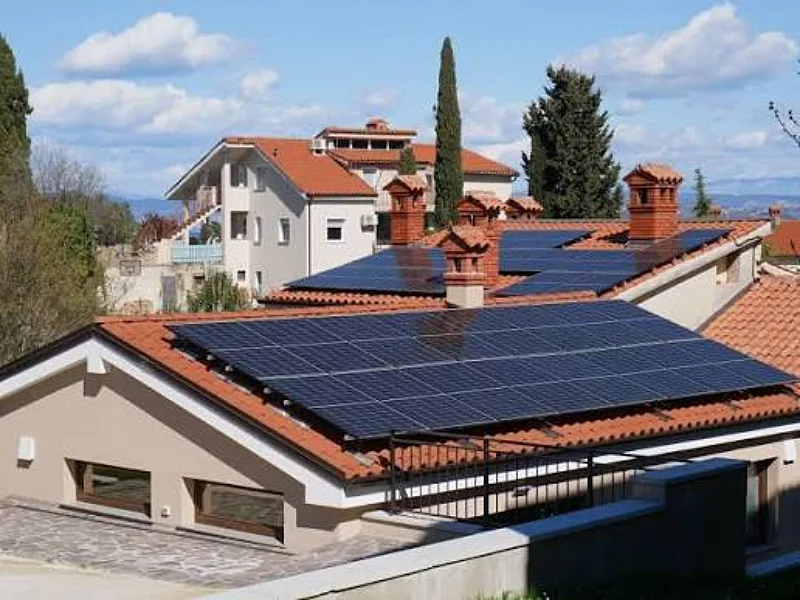
The human impact is immediate. A solar mini-grid can power a rural school. A clean cooking programme can reduce household pollution. A resilient road can keep traders connected during floods. A transparent sustainability report can help investors distinguish serious companies from those making vague claims.
But without execution, the risks are equally clear: stranded projects, widening inequality, climate losses and missed industrial opportunities.
Action: Finance Must Match Local Realities
Africa’s sustainability agenda now needs stronger discipline.
- Governments must improve project preparation, simplify approvals, strengthen utilities and create bankable policy frameworks.
- Companies must move from broad ESG language to measurable targets on emissions, water, safety, jobs, local procurement and community impact.
- Development partners should also design finance around African realities: high capital costs, currency risk, weak grids and the need for inclusive development.
Sustainability must not become another external compliance burden. It must help solve local problems.
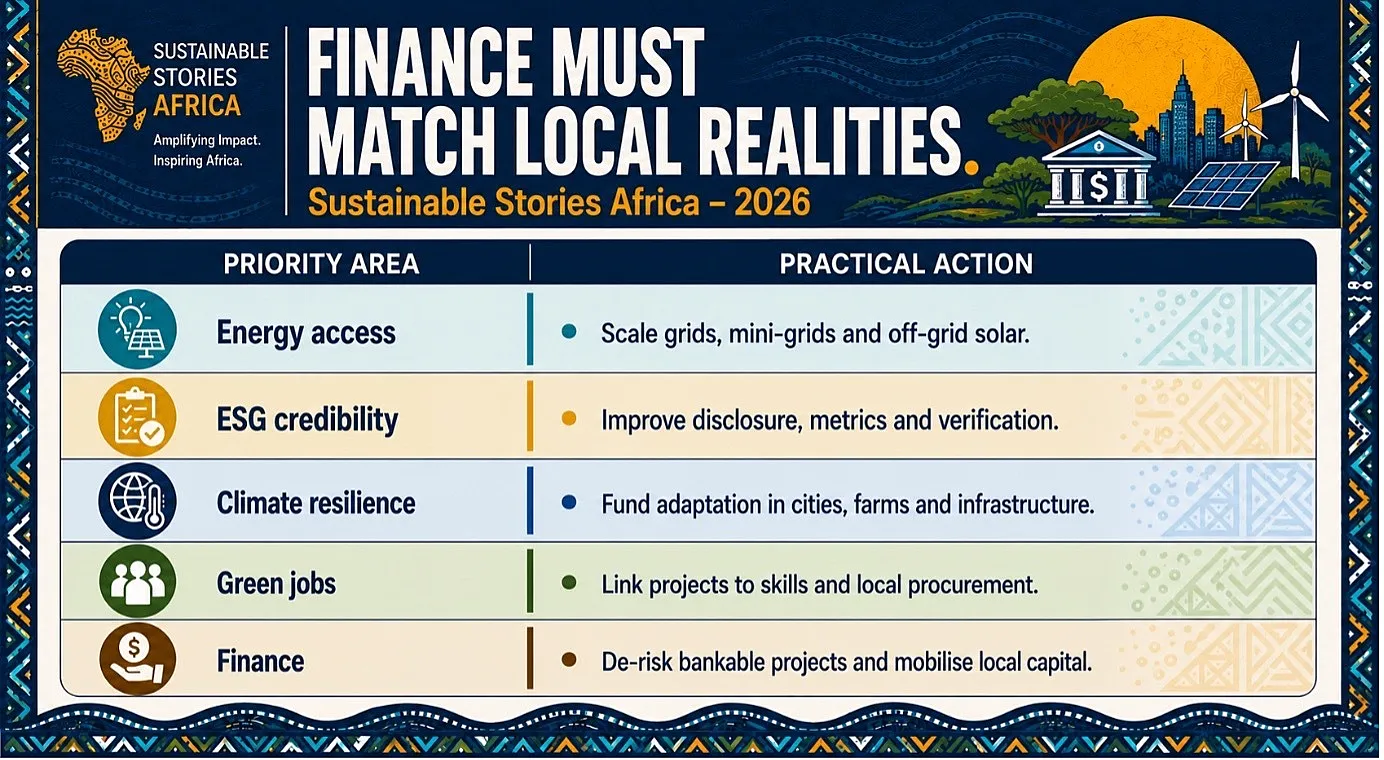
The next phase should be judged by delivery: homes connected, emissions avoided, jobs created, communities protected and businesses made more competitive.
Path Forward – Make Sustainability Practical, Local, Measurable
Africa’s path forward is to turn sustainability into everyday development: reliable power, resilient infrastructure, credible ESG data and inclusive green industries.
The promise is clear, but execution will decide the outcome. Governments, financiers and businesses must build projects that are bankable, locally useful and transparent.
That is how sustainability becomes not just a climate agenda, but a practical growth strategy.
Culled From: Sustainability News Africa