South Africa is advancing a major 1.5GW hybrid renewable energy project in the Eastern Cape.
The initiative, linked to Dimsum Energy and Goldwind Africa, combines wind, solar and storage to support grid reliability.
For communities and industry, the project reflects a wider shift: clean power is becoming central to jobs, investment and energy security.
A Power Crisis Meets Clean Ambition
South Africa is pushing ahead with a 1.5 GW renewable energy project designed to strengthen energy security, reduce coal dependence and deepen the country’s green transition, according to African Leadership Magazine.
The project is being positioned as one of the country’s most significant clean-energy moves as households, mines and manufacturers continue to feel the consequences of power instability.
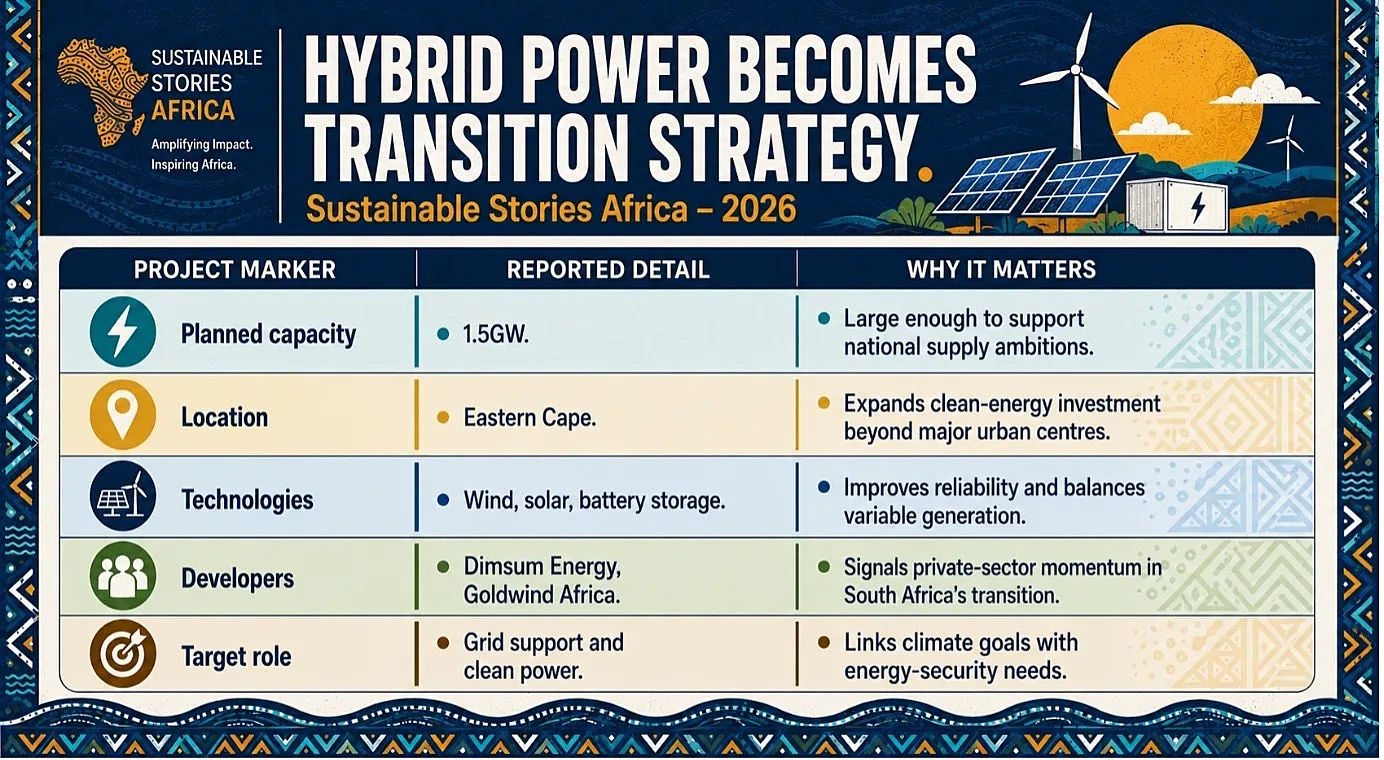
The project, reported as a hybrid renewable cluster in the Eastern Cape, is being developed by Dimsum Energy and Goldwind Africa, combining wind, solar and battery energy storage to deliver more stable power to the national grid.
For South Africa, the timing matters. The country remains heavily dependent on coal, while ageing grid infrastructure and recurring electricity shortages have strained economic activity.
A project of this scale is not just about megawatts; it is about whether Africa’s most industrialised economy can rebuild confidence in its power system while cutting emissions.
Hybrid Power Becomes Transition Strategy
The structure of the project points to a practical lesson now shaping energy planning across Africa: renewable energy must be reliable, not just clean.
By combining wind and solar with storage, hybrid projects can smooth output, reduce intermittency and support grid stability more effectively than single-technology plants.
The broader context is also shifting. Eskom has outlined plans to move toward mainly clean energy by 2040, targeting an increase in renewable capacity from under 1 GW to 32 GW while cutting coal capacity from 39 GW to 18 GW.
That ambition is difficult but unavoidable. South Africa’s coal-heavy electricity system has long powered its industries, from mining to manufacturing.
However, it has also left the country exposed to emissions pressure, infrastructure breakdowns and rising investor scrutiny.
Cleaner Power Can Build Confidence
The promise of the 1.5GW project lies in what it could unlock beyond electricity generation.
- For communities, construction and operations can support jobs, local procurement and technical skills.
- For the industry, cleaner and more stable electricity can reduce downtime and strengthen export competitiveness, especially as global buyers demand lower-carbon supply chains.
- For the government, the project offers another route to show that climate action and energy security do not have to compete.
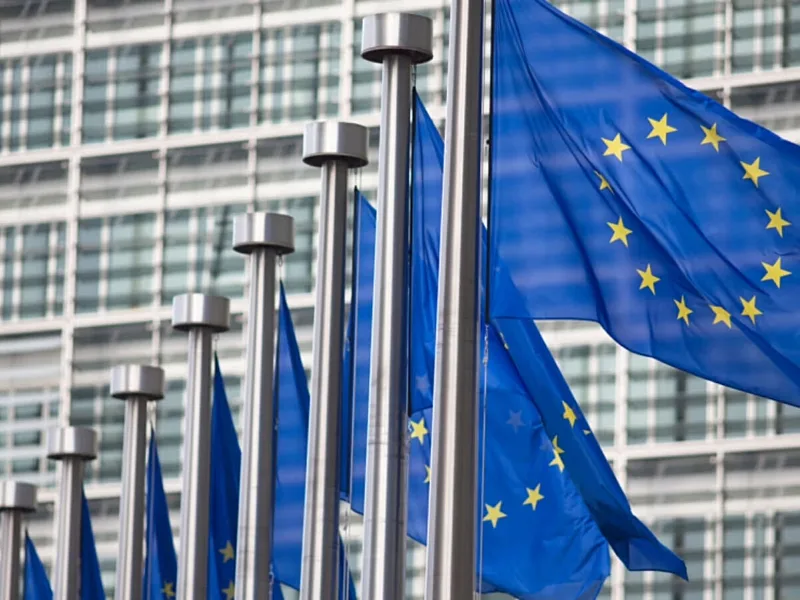
South Africa’s energy transition is already attracting international attention. The European Union has previously committed grant support for South Africa’s green hydrogen plans, reflecting the country’s potential to become a clean-energy industrial hub if infrastructure, finance and policy execution improve.
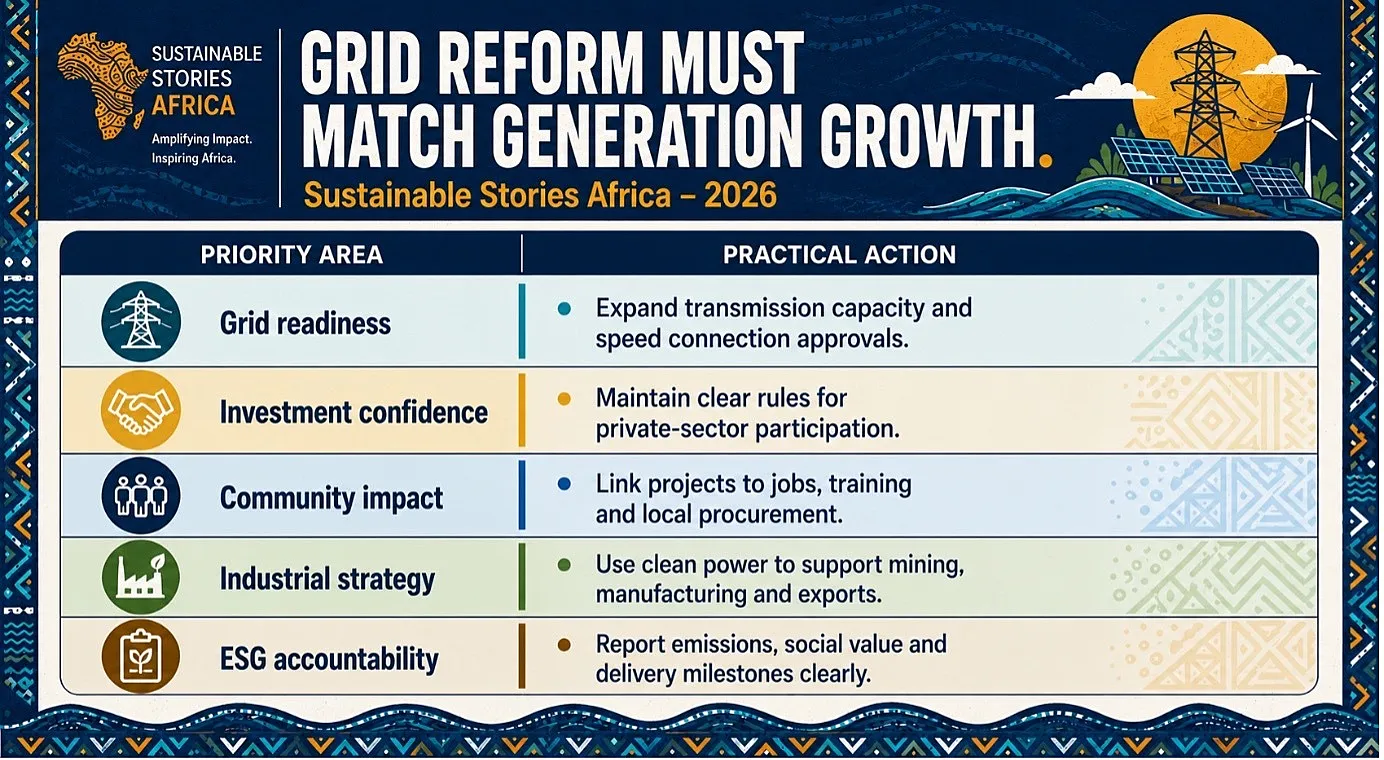
However, success is not guaranteed. Renewable projects still face grid connection constraints, permitting delays, financing risks and local-content debates.
Without faster transmission upgrades and stronger municipal-level implementation, new clean-power capacity may not reach the consumers and businesses that need it most.
Grid Reform Must Match Generation Growth
The next test is execution. South Africa needs more than landmark announcements; it needs bankable projects that close financing, connect to the grid and deliver power on schedule.
Policymakers should prioritise transmission investment, transparent procurement, community benefit agreements and skills development.
Developers must also show that clean-energy expansion can create measurable local value, not just new generation capacity.
For African markets watching South Africa, the message is direct: energy transition projects succeed when they solve real power problems.
The strongest clean-energy strategies will be those that combine climate credibility with affordable electricity, industrial resilience and community participation.
Path Forward – Build Green Power With Local Trust
South Africa’s 1.5GW project shows how renewable energy can move from policy language to infrastructure delivery.
The value is judged by power reliability, jobs, grid integration, and emissions reductions.
The path forward is clear: finance the grid, protect communities, accelerate permits and make clean power central to industrial renewal.
For Africa, the energy transition must be both green and practical.