Global leaders are calling for stronger blue finance to build a sustainable ocean economy.
The push comes as SDG 14 remains severely underfunded despite rising pressure on marine ecosystems.
For Africa’s coastal communities, the issue is practical: food, jobs, trade, resilience and survival.
Oceans Need Finance, Not Just Promises
The global blue economy debate has entered a sharper phase, with UN Environment Programme Executive Director Inger Andersen calling for a surge in sustainable blue finance to protect marine ecosystems while unlocking jobs and resilience for vulnerable coastal communities.
In a speech published by Mirage News and UNEP, Andersen said the world must direct more capital toward ocean initiatives that “conserve and restore marine ecosystems” and support a regenerative, nature-positive and equitable ocean economy.
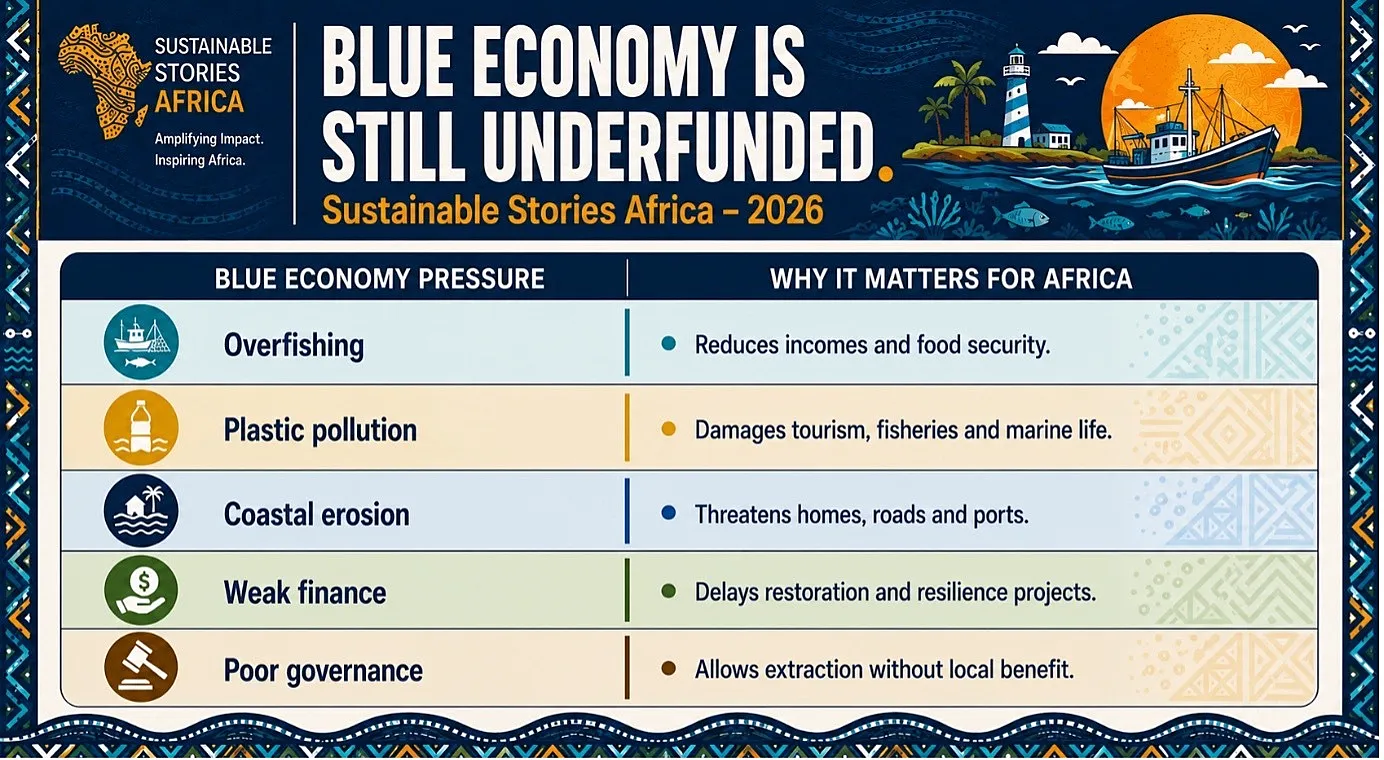
The message lands strongly in Africa, where coastal cities, fishing communities and port economies depend on healthy oceans, yet face pollution, overfishing, erosion, climate shocks and weak infrastructure.
Blue Economy Is Still Underfunded
The blue economy covers fisheries, ports, coastal tourism, marine conservation, aquaculture, shipping and emerging sectors such as offshore renewable energy. But the financing needed to protect and sustainably use oceans remains far below the scale of the challenge.
UNEP’s message is direct: Sustainable Development Goal 14, focused on life below water, remains drastically underfunded.
That gap threatens ecosystems and livelihoods, especially in coastal developing economies.
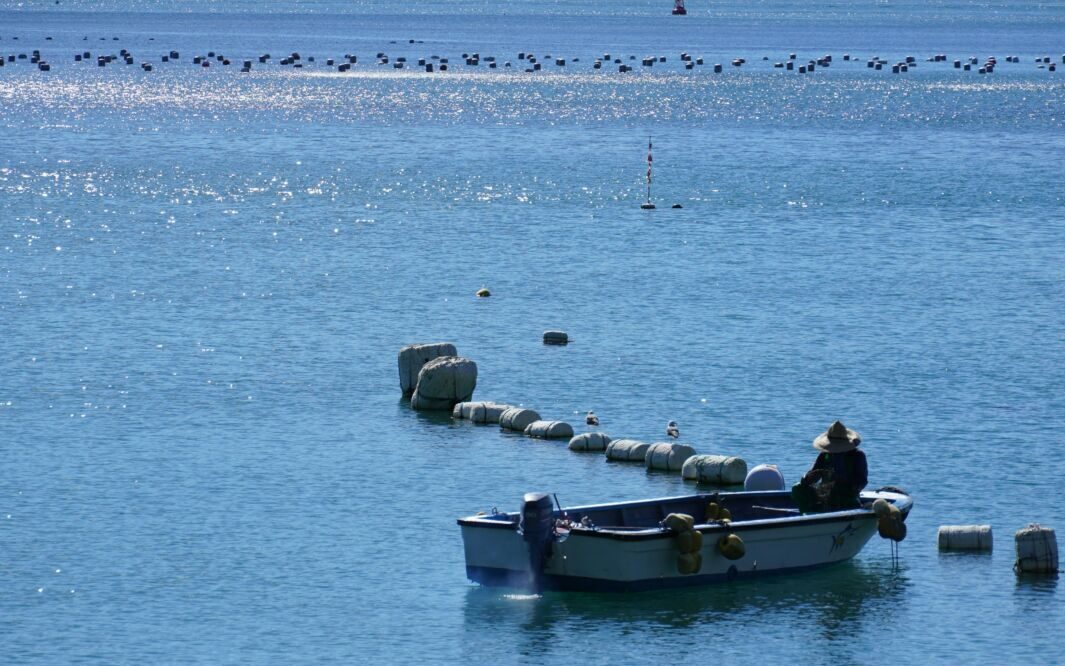
For a fish trader in Lagos, Mombasa or Dakar, the blue economy is not a slogan. It is the price of fish at dawn, the condition of landing sites, the cost of cold storage and whether storms disrupt the day’s income.
Oceans Can Drive Inclusive Growth
A sustainable blue economy offers a development pathway that links climate action with livelihoods.
Well done, it can create jobs, improve food security, expand coastal tourism, modernise ports and protect ecosystems that buffer communities from storms.
Africa has strong potential. The continent’s blue economy already supports maritime trade, fisheries and tourism, while coastal states are increasingly exploring marine spatial planning, port reform and ocean-based investment.
However, the gains will depend on whether finance flows into projects that protect nature and people.
Blue finance should support mangrove restoration, sustainable fishing, clean ports, waste systems, coastal resilience and small businesses across marine value chains.
Build Rules Before Scaling Investment
Governments and investors must avoid treating the ocean as a resource to extract.
The stronger model is to build rules first: transparent licensing, science-based fisheries management, anti-pollution enforcement, community safeguards and measurable ESG reporting.
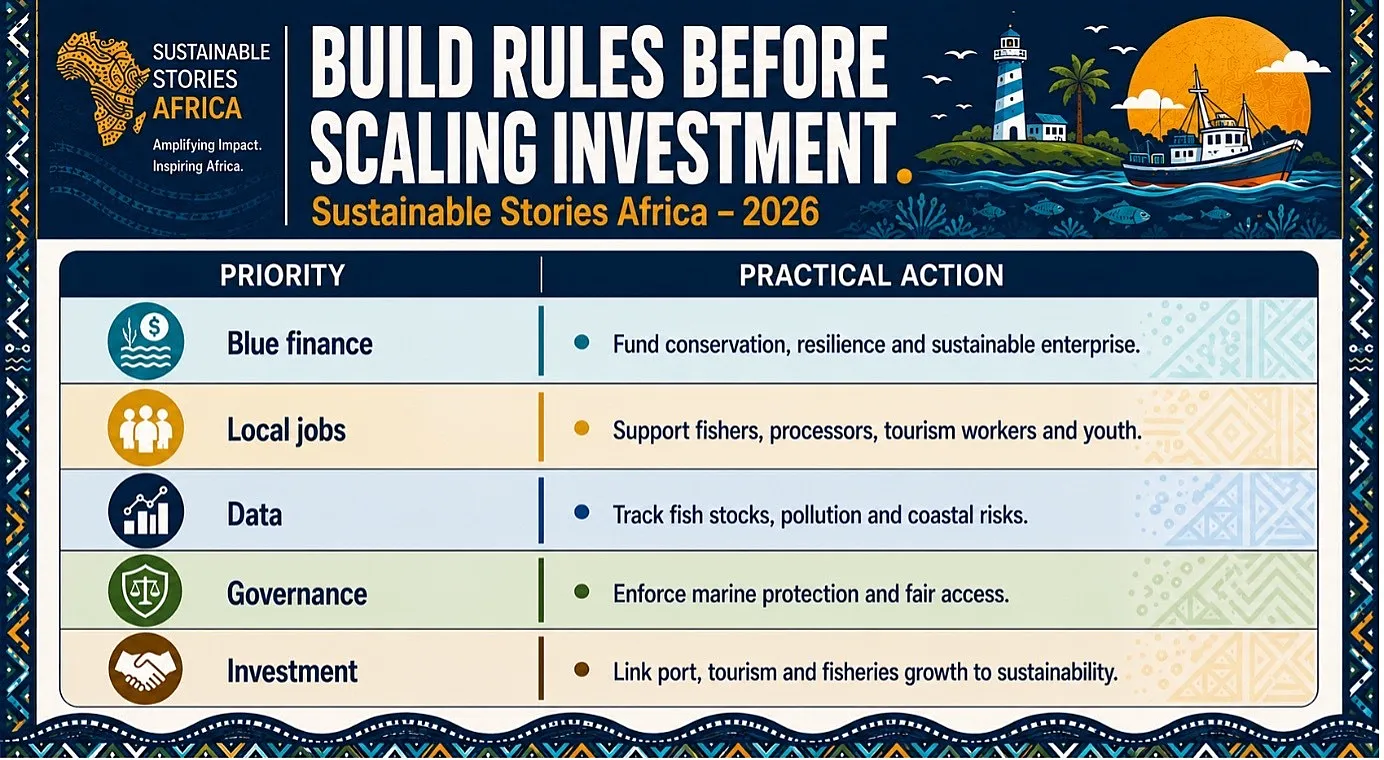
For African markets, the call to action is clear. Blue economy strategies must be tied to national development plans, climate adaptation budgets and private-sector investment pipelines.
Fund Oceans, Protect Coastal Futures
Africa’s blue economy can create jobs and resilience, but only if finance protects the ecosystems that make those opportunities possible.
The path forward is practical: mobilise blue finance, protect marine habitats, reduce pollution and ensure coastal communities share the benefits. A vibrant ocean economy must be sustainable first.
Culled From: Building Sustainable, Vibrant Blue Economy | Mirage News