Africa has assembled a wind-project pipeline of at least 22 GW as governments and developers seek more balanced renewable power systems.
Wind is gaining importance because solar-heavy and drought-exposed grids need generation that can operate across different hours and seasons.
For households and businesses, success will mean fewer interruptions, stronger local economies and shared community benefits, rather than more turbines on the horizon.
Wind Moves From Margin Toward System Balancer
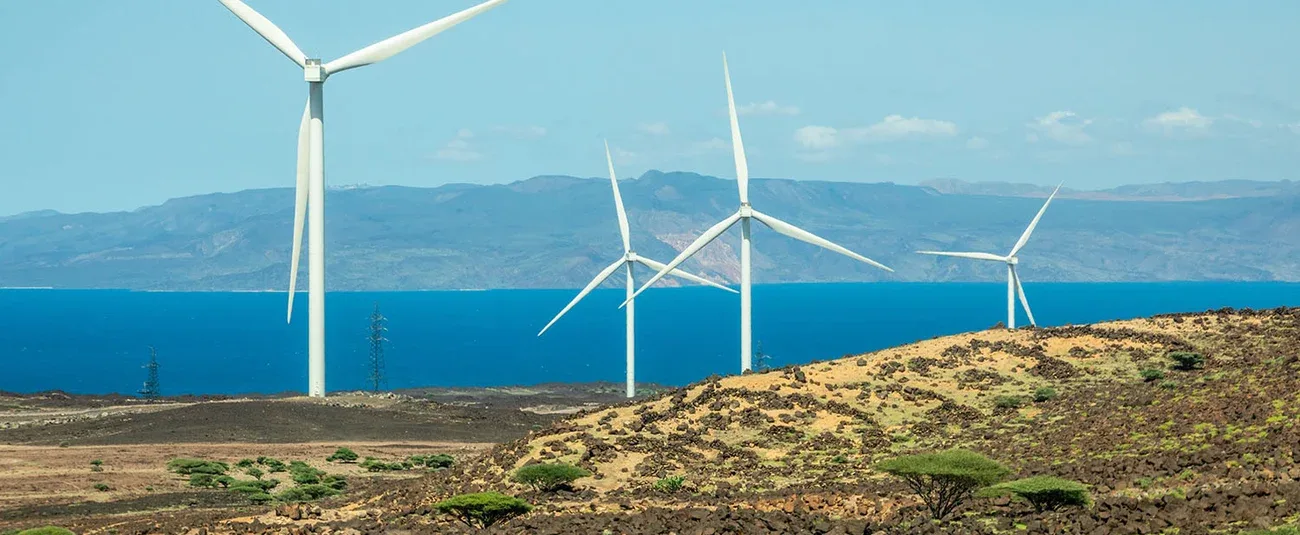
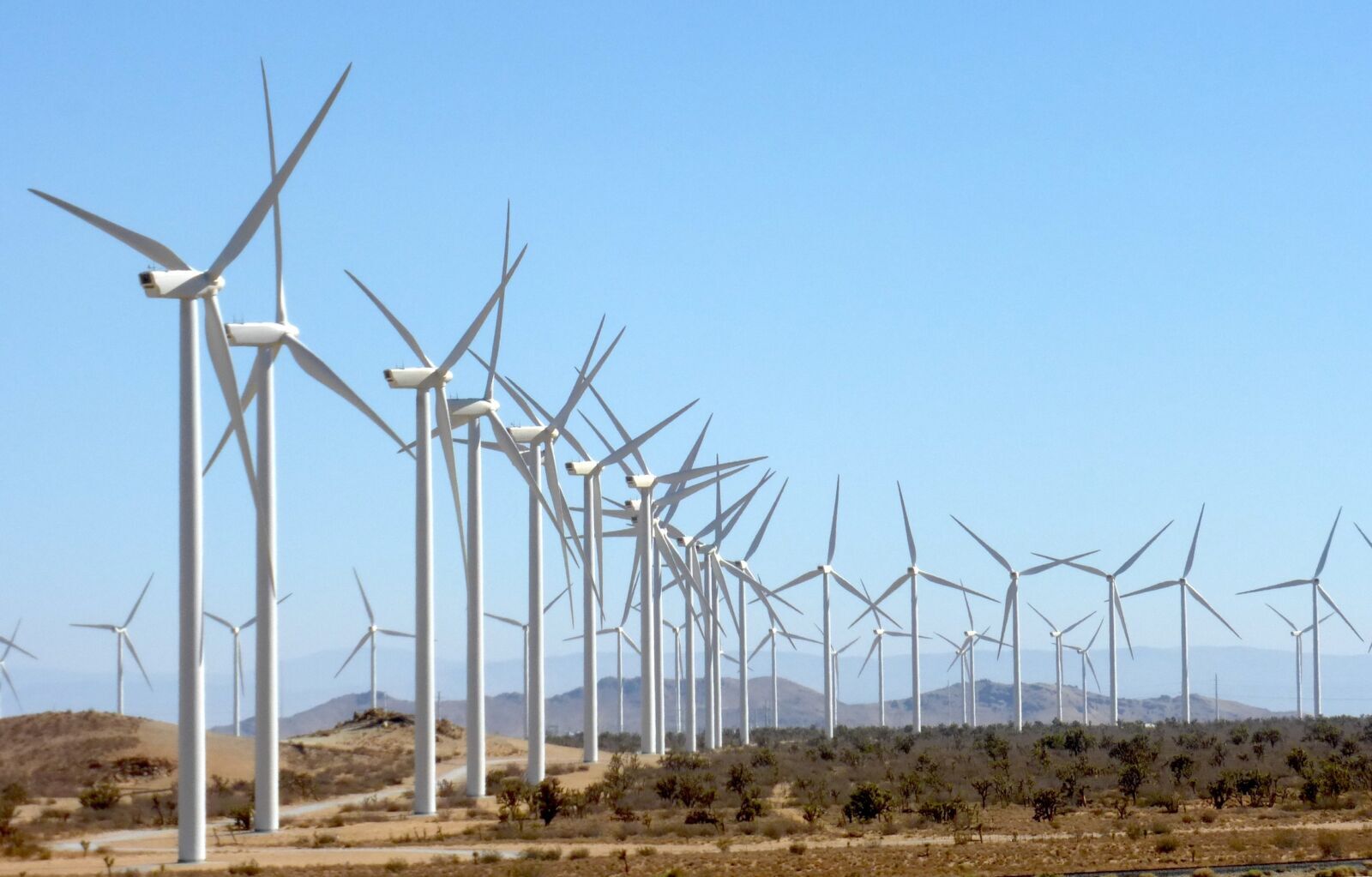
Africa is turning more deliberately towards wind power, building a pipeline of at least 22 GW as electricity systems seek generation that can complement daytime solar and reduce dependence on drought-exposed hydropower.
South Africa remains the continent’s largest wind producer. Its wind generation increased by 60% over three years, attaining 10,450 GWh in 2024, according to Renewables Rising.
Egypt and South Africa continue to lead project development, while countries including Ethiopia and Zambia are taking steps to open new wind markets.
The shift is about more than adding capacity. When solar production falls in the evening, electricity demand often remains high.
In locations where wind strengthens at different hours, combining both technologies can create a steadier generation profile.
For a clinic keeping medicines cold or a small manufacturer working through an evening shift, that balance can mean the difference between dependable service and another costly interruption.
Established Leaders Meet Africa’s New Entrants
South Africa brought wind into the mainstream through its Renewable
- Energy Independent Power Producer Procurement Programme, using competitive auctions and standardised contracts to attract private investment.
Egypt has accelerated delivery further.
- Its 650 MW Red Sea Wind Energy project finished four months ahead of schedule in 2025, capable of powering over one million homes annually.
Developer Engie confirmed the electricity undercut imported-gas generation costs, reinforcing wind's energy-security value.
The next phase targets underdeveloped markets.
- Ethiopia has opened its sector to private investment.
- Zambia selected Noubeg Power & Co. to prepare a 40 MW project, potentially the country's first utility-scale wind farm, under its Scaling-Up Renewable Energy Programme.
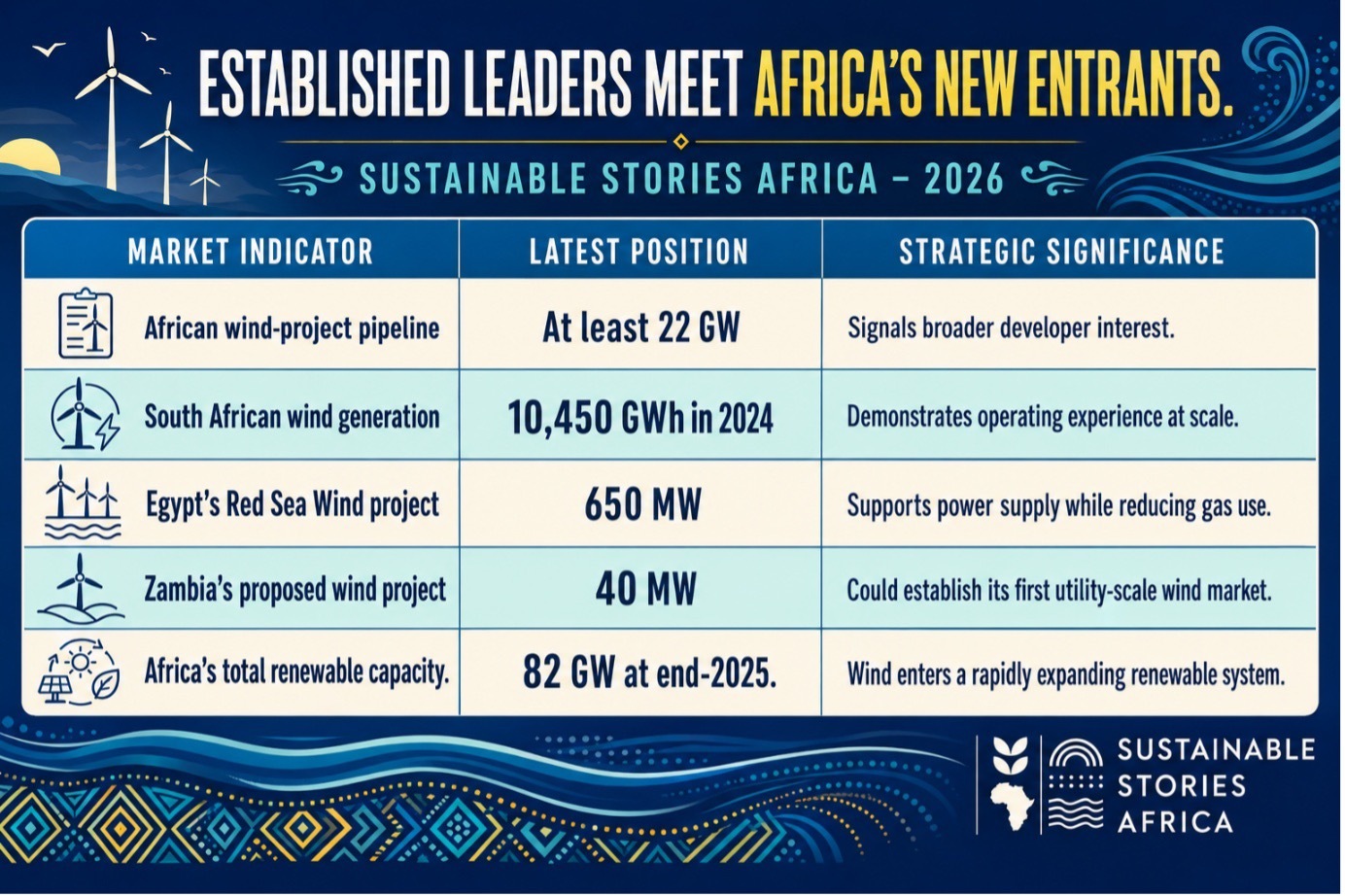
Africa's renewable capacity rose a record 15.9% in 2025 to roughly 82 GW, led by Ethiopia, South Africa and Egypt.
A Diverse Power Mix Builds Resilience
Wind can give African power systems another layer of protection against fuel-price shocks, hydrological volatility and excessive dependence on a single renewable resource.
In countries dominated by hydropower, well-sited wind projects can preserve electricity supply when drought reduces reservoir levels.
In solar-heavy systems, wind generation outside peak sunshine hours can limit evening supply gaps; combined with battery storage, regional interconnections and flexible demand, it can reduce the need for expensive emergency generation.
Wind development can also create opportunities in civil engineering, transportation, turbine maintenance and environmental monitoring.
Land leases and community ownership structures can generate local revenue over the operating life of a project.
These benefits are not automatic. Poorly planned developments can affect livelihoods, landscapes and biodiversity while leaving host communities with few lasting gains.
Turbines may produce clean electricity; however, a project cannot be considered sustainable if consultation is weak or benefits are distributed unfairly.
Wind Growth Needs Grids, Finance and Consent
- Governments must move beyond broad capacity targets and develop detailed wind resource maps, competitive procurement schedules and transmission plans. Investors need reliable data before committing capital to the costly measurement, permitting and development process.
- Utilities must identify where their networks can absorb variable generation and invest in substations, transmission corridors, storage and modern system-management tools.
Without those upgrades, otherwise viable wind farms could face delays, congestion or curtailment.
- Financiers should expand project-preparation grants, guarantees and local-currency instruments, particularly for countries entering utility-scale wind for the first time.
Stronger offtaker credit and transparent power-purchase agreements will also be essential.
- Developers must engage with communities before finalising sites, disclose environmental and social risks, protect migratory routes and establish measurable commitments for jobs, procurement, ownership and community investment.
IRENA has emphasised that large renewable projects should combine energy delivery with equitable benefit-sharing and informed participation.
PATH FORWARD – Balanced Grids Must Deliver Shared Benefits
Africa’s priority is to convert its wind pipeline into bankable projects supported by stronger grids, credible auctions, storage and regional power trading.
Planning must recognise that wind and solar complement each other differently across locations and seasons.
Progress should be measured through reliable electricity, lower system costs, local skills and enduring community value.
With transparent procurement and responsible siting, wind can strengthen energy security while advancing Africa’s climate, social and governance objectives.
Culled From: Africa turns to wind to balance its renewable power systems