ENERGY • SAFETY • RESPONSIBLE OPERATIONS
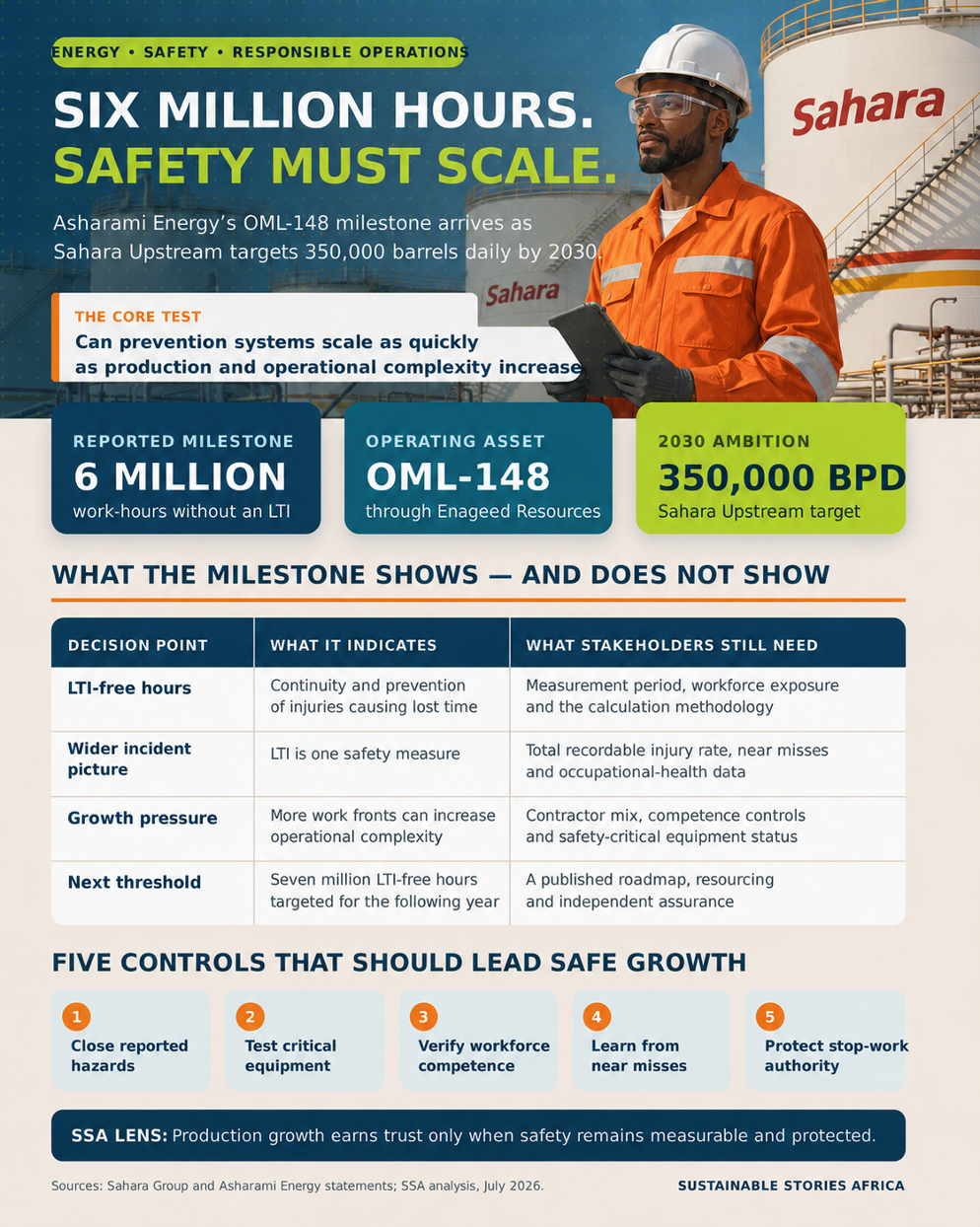
Asharami Energy says its OML-148 operations have completed six million work-hours without a lost-time injury.
The milestone arrives as Sahara Upstream targets production of 350,000 barrels daily by 2030, putting execution discipline under sharper scrutiny.
For workers, contractors and host communities, the real test is whether safety remains embedded as activity and operational complexity increase.
Six Million Hours Put Safety First
Asharami Energy Limited has recorded six million work-hours without a lost-time injury at its OML-148 operations.
A safety milestone was announced on July 17 by its parent company, Sahara Upstream, which is pursuing a production target of 350,000 barrels of oil per day by 2030.
The achievement was delivered through Asharami subsidiary Enageed Resources Limited and presented with Nigerian Upstream Investment Management Services, representing the production-sharing-contract partners.
It matters because the planned output expansion will expose people, assets, and nearby communities to greater operational complexity; the safety culture must therefore scale as quickly as production.
A lost-time injury is a work-related injury that causes an employee or contractor to miss work. Six million LTI-free hours is a meaningful measure of continuity and prevention, although it does not mean that no recordable incident, near miss or occupational-health risk occurred.
The company’s statement did not disclose the period over which the hours accumulated or comparable incident-rate data.
Discipline Behind OML-148’s Safety Record
Behind the number are repeated decisions made by crews, supervisors and contractors: following procedures, stopping unsafe work, reporting hazards and learning before a near miss becomes an injury.
Leste Aihevba, Asharami Energy’s chief technical officer, described each LTI-free hour as the result of “safe decisions, disciplined actions, and shared accountability.”
Vincent Uwadileke, NUIMS asset manager for PSC Asset B, said the record reflected vigilance and health, safety, security and environment discipline. He challenged the operation to reach seven million LTI-free hours next year. The release, however, did not provide a detailed programme, budget or independent assurance process for achieving that next threshold.
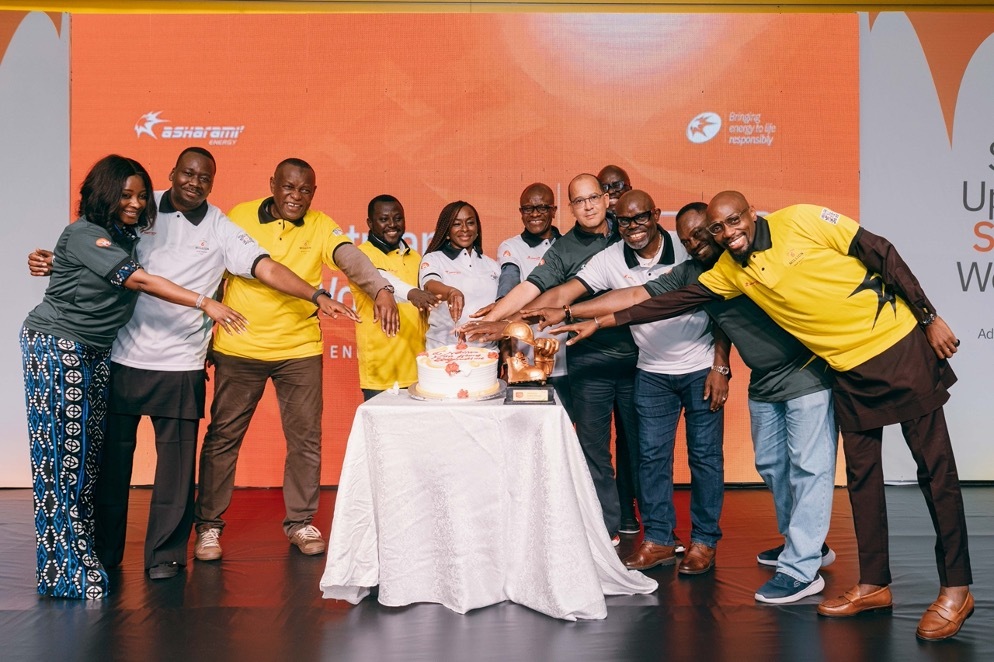
At a plaque-unveiling event, Sahara executive director Temitope Shonubi connected safety with investment quality.
Upstream production depletes a finite resource, he said, requiring operators to combine technical delivery with commercial discipline and sustainable value.
That framing shifts the milestone from celebration alone to a test of whether capital allocation, contractor management and production planning carry the same safety expectations.
Safer Growth Can Strengthen Energy Delivery
If maintained, the culture can produce benefits beyond fewer injuries. Reliable operations reduce disruption, protect skilled workers, support contractor confidence and strengthen relationships with regulators and host communities.
For Sahara, those outcomes would also provide a more credible foundation for its 2030 production ambition and its wider Beyond XXX strategy.
The downside of complacency is equally clear. Rapid expansion can introduce new contractors, simultaneous work fronts and pressure to meet schedules. A backwards-looking LTI count cannot, by itself, reveal whether critical controls are weakening.
Leading indicators, including hazards closed, safety-critical equipment tested, workforce competence, near-miss learning and contractor performance, are needed to show whether risk is being managed before harm occurs.
Scale Production Without Weakening Safety Controls
Asharami should convert the milestone into a transparent operating baseline. That means disclosing the measurement period and workforce exposure, tracking total recordable injuries alongside LTIs, independently assuring material safety data, and publishing leading indicators that allow stakeholders to see whether prevention systems are improving.
Executives, regulators and production partners must also preserve stop-work authority and ensure contractor standards remain consistent as activity grows.
As Sahara executive director Ade Odunsi said, the result came because people repeatedly chose the safer course.
The next million hours will depend on whether systems continue to make that choice practical, expected and protected.
Safety Must Lead Every Growth Decision
The immediate priority is to sustain the OML-148 record while making the route to seven million hours measurable through stronger leading indicators, contractor oversight, workforce learning and credible assurance.
For African energy operators, the lesson is wider than a single asset. Production growth earns trust when worker welfare, community protection and operational resilience are treated as core performance measures rather than ceremonial milestones after the work is done.
SAHARA GROUP PRESS RELEASE