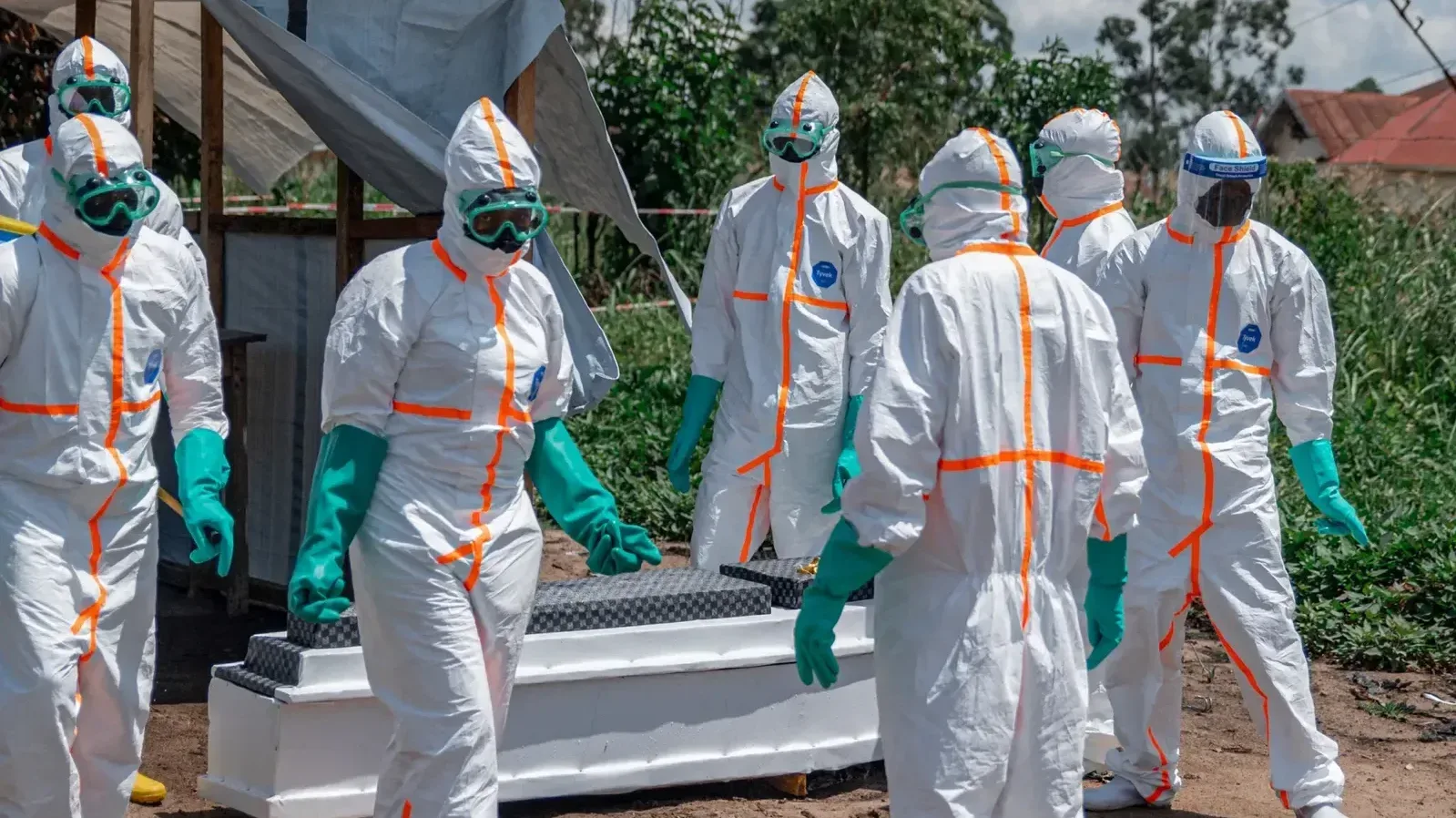
Health workers fighting Ebola in eastern Democratic Republic of Congo have gone on strike over unpaid salaries and bonuses as confirmed infections exceed 2,000.
The walkout threatens treatment, contact tracing and safe burials during the country’s fastest-growing Ebola outbreak.
Behind the statistics are exhausted responders confronting a deadly virus without reliable pay, adequate protection or confidence that the systems supporting them will hold.
Unpaid Responders Walk Out As Infections Surge
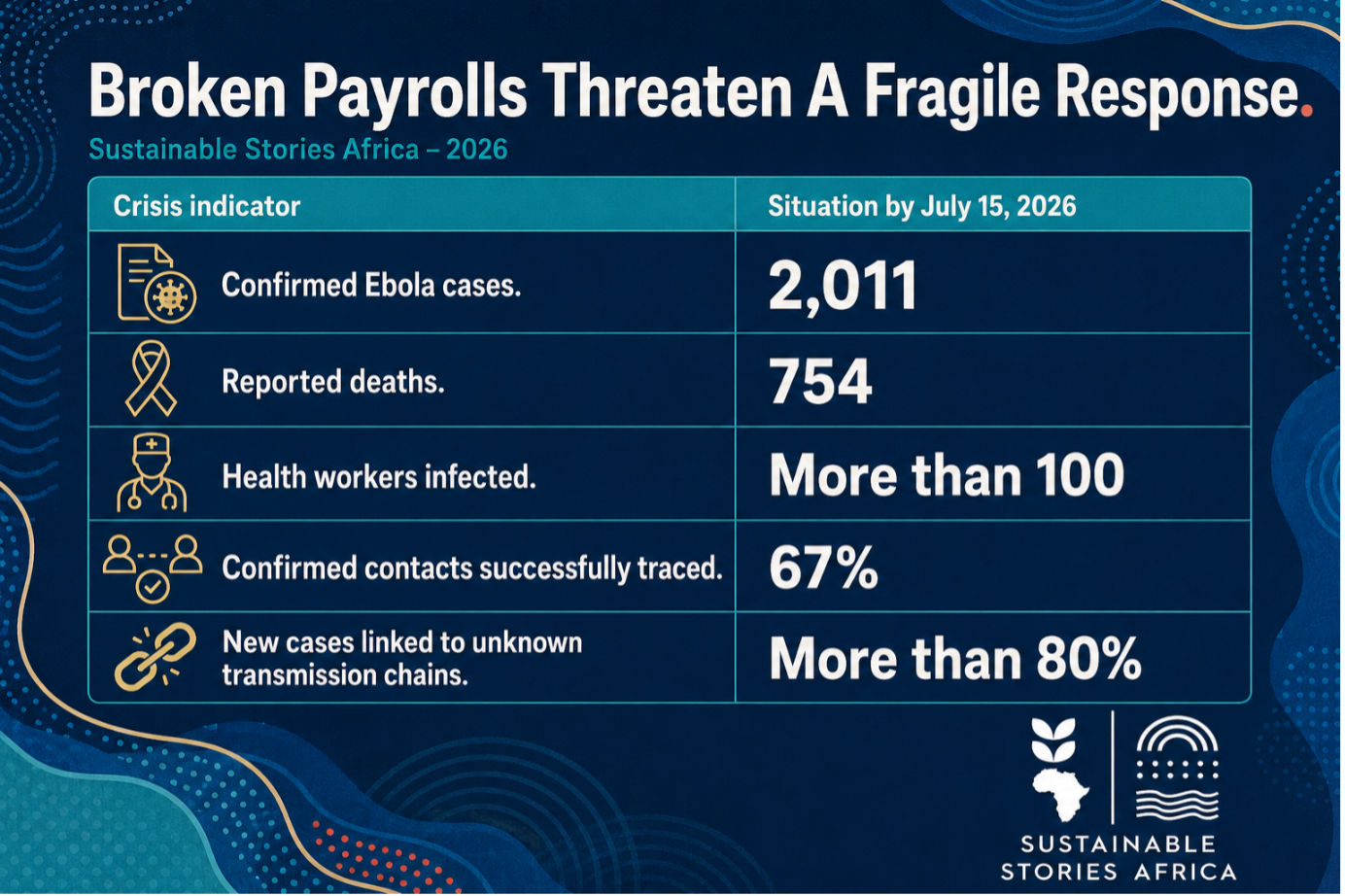
Health workers at Ebola treatment facilities in eastern Democratic Republic of Congo have withdrawn their services over unpaid wages, deepening a public-health emergency that had reached 2,011 confirmed cases and 754 deaths by July 15.
Epidemiologists, drivers, cleaners and gravediggers joined the industrial action at facilities in Bunia and Rwampara in Ituri province.
At the Rwampara treatment centre, workers closed the hospital and blocked a nearby road, including by burning a tyre.
The strike has interrupted essential services just two months after the outbreak was declared on May 15.
More than 100 health workers have already been infected, highlighting the personal risk faced by responders demanding payment for work performed under dangerous conditions.
The outbreak, caused by the comparatively rare Bundibugyo strain of the Ebola virus, is spreading faster than containment teams can identify its transmission routes.
Unlike the Zaire strain responsible for several previous outbreaks, there is no approved vaccine or treatment specifically available for Bundibugyo Ebola.
Broken Payrolls Threaten A Fragile Response
At an Ebola centre, every role forms part of the containment chain: clinicians isolate and treat patients
- Epidemiologists identify contacts, drivers move samples and response teams
- Burial workers ensure safe interment without exposing families and communities. When any link fails, the virus gains time.
The Congolese government says payment delays stem partly from the discovery of unrelated or inaccurate names on response-worker payrolls.
Health Minister Samuel Roger Kamba said officials were verifying lists before releasing funds, a step that may protect public resources
Although frontline workers argue legitimate responders shouldn't bear the cost of administrative failure, many have been working without being paid since the outbreak began.
The consequences extend beyond treatment centres. Only 67% of known contacts are being traced, while over 80% of new infections emerge from unidentified transmission chains, per AP.
Conflict, displacement, terrain and mistrust already strain the response; the labour dispute adds another avoidable barrier.
Funding also falls short; WHO had received just 40% of the $115 million required by mid-July, warning that actual infections could run two to four times the official count.
Paying Workers Could Restore The Frontline
Resolving the salary dispute would not end the outbreak, but it could immediately restore treatment, surveillance, laboratory support and safe burial operations.
It would also send an important message to communities: institutions asking citizens to report symptoms and surrender loved ones for isolation can meet their obligations to the people delivering care.
There are signs of scientific progress. Congolese and international researchers have begun testing experimental treatments, including remdesivir and the antibody therapy MBP134.
The rapid launch of the trial demonstrates what coordinated leadership can achieve.
However, medicines cannot replace functioning public systems. Experimental therapies only reach patients when trained workers remain at their posts, ambulances operate, and communities trust response teams.
If the strike continues, preventable infections could rise, and valuable opportunities for early treatment and clinical research are lost.
Congo And Partners Must Act Now
The Congolese government should urgently complete payroll verification, publish transparent eligibility criteria and pay verified workers without further delay
- A protected digital register could reduce ghost names and allow responders to track payment status.
- International partners must also close the outbreak’s financing gap.
- Emergency funding should cover not only vaccines, laboratories and treatment trials but also the people performing the daily work of containment.
For African governments, the crisis offers a broader governance lesson. Health security depends on decent work, accountable institutions and reliable public finance.
Asking frontline responders to confront a lethal disease without predictable compensation is neither sustainable nor an effective emergency strategy.
Path Forward – Rebuilding Trust Before The Virus Spreads
Congo’s immediate priorities are restoring treatment services, paying verified workers, tracing missing contacts and protecting frontline teams.
Government, Africa CDC, WHO and donors must align funding with transparent payroll and response systems.
Beyond containment, the country needs stronger emergency financing, workforce protection and community engagement.
These measures advance social sustainability by safeguarding workers and governance objectives by ensuring that every emergency dollar reaches the people and services for which it was intended.
Culled From: Congo's Ebola crisis deepens with unpaid workers on strike | AP News