African governments are increasingly using procurement programmes, public investment and policy guarantees to accelerate renewable-energy deployment.
Zambia’s award of contracts for 156 solar-and-storage plants shows how coordinated state action can turn national ambitions into investable projects.
If implementation matches the promise, communities could gain more reliable power, employment and locally retained revenue, while private developers gain a clearer route into African electricity markets.
Zambia Turns Public Direction Into Distributed Power
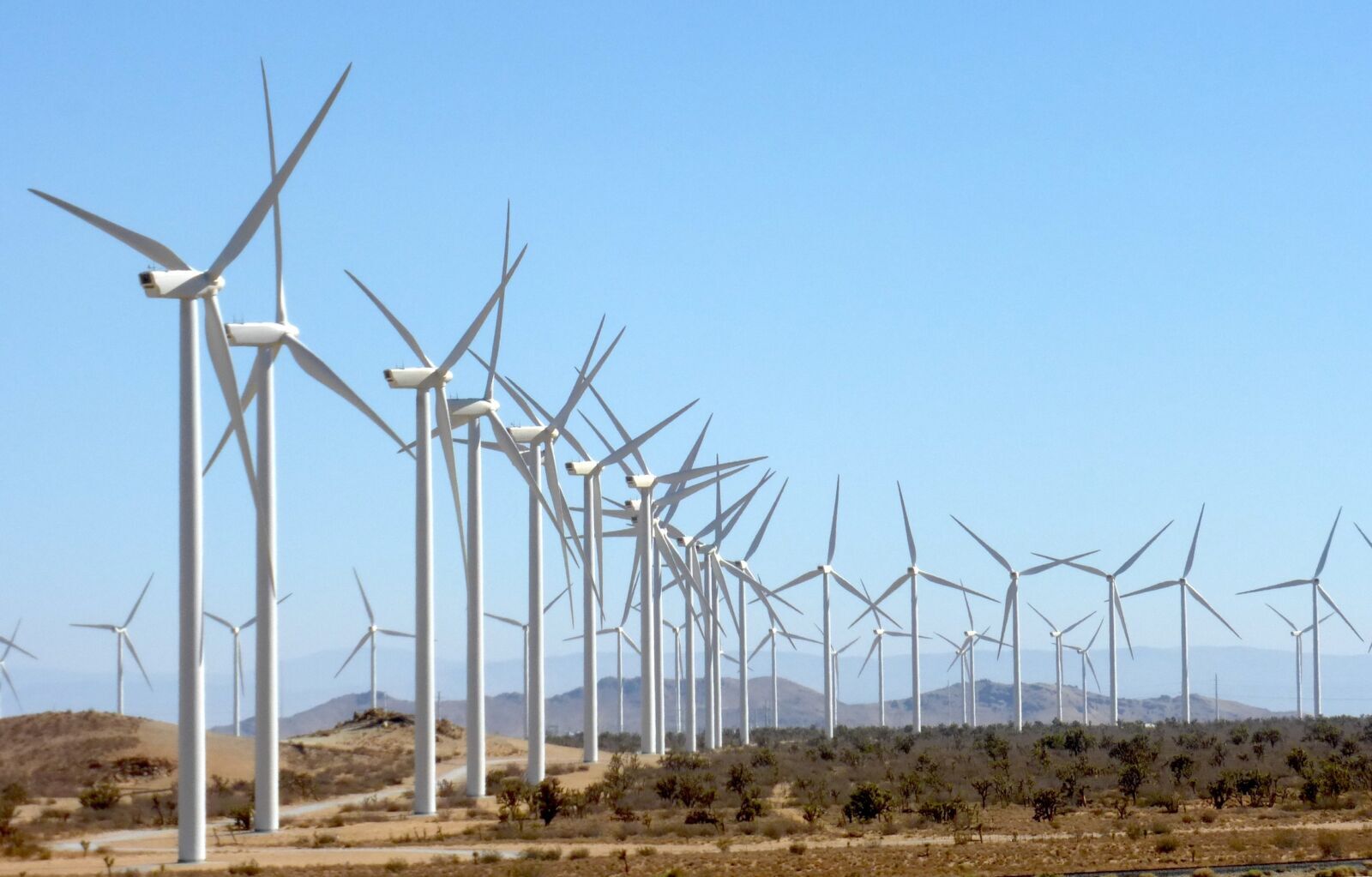
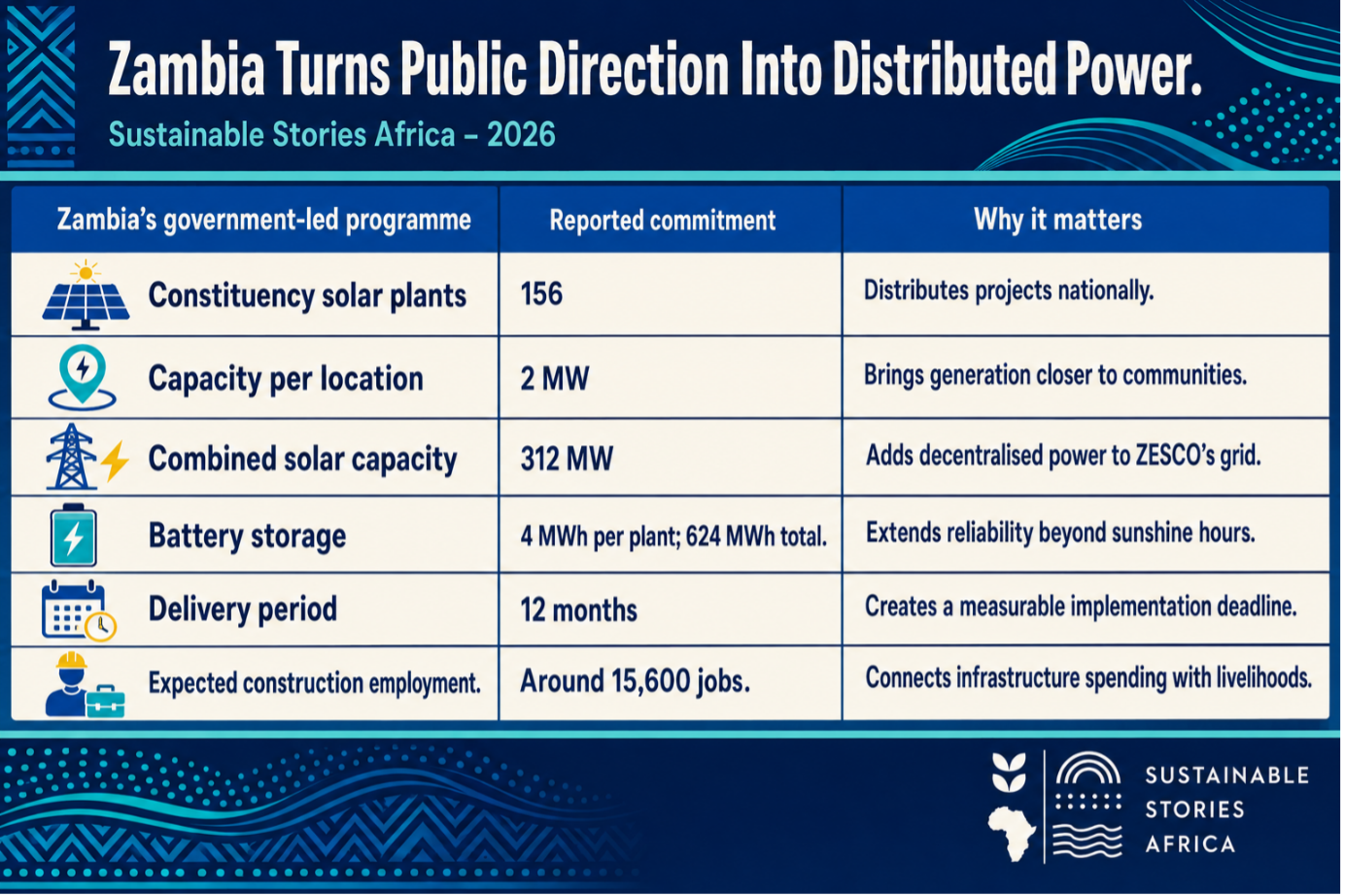
Zambia has placed government coordination at the centre of its renewable-energy response, awarding contracts to build a two-megawatt solar plant in each of 156 constituencies under its Presidential Constituency Energy Initiative.
The programme will provide a combined 312 MW of solar generation and an expected 624 MWh of battery storage.
Five contractor groups have been given 12 months to deliver the plants, which will connect directly to infrastructure operated by national utility ZESCO.
The model illustrates the catalytic role African governments can play when they assemble land, procurement, grid access, public institutions and private expertise around a defined national objective.
For a farmer awaiting dependable irrigation, a health centre protecting temperature-sensitive medicines or a small manufacturer losing production during outages, that coordination is not an abstract policy achievement.
It could determine whether electricity becomes a foundation for income, health and productivity.
Policy Certainty Helps Private Capital Move
Governments need not finance, build and run every renewable project themselves.
Their greater value lies in creating credible markets where private investors can clearly assess rules, risks and returns.
Zambia's K4.3 billion programme reflects this, combining public direction with private contractors, joint ventures and technology partners.
Local authorities are expected to acquire equity, spreading financial benefits beyond the national level into community development.
South Africa offers a proven model. Its Renewable Energy Independent Power Producer Procurement Programme used competitive bidding to draw private developers into grid-connected solar and wind projects.
Across three bidding rounds, it awarded 64 projects worth 3,922 MW, attracting roughly $14 billion in private investment while cutting solar tariffs by 68% and wind tariffs by 42%.
Recognising that storage matters as much as generation, South Africa later launched a Battery Energy Storage Procurement Programme to strengthen grid flexibility.
The takeaway is clear: private capital flows confidently when governments deliver competitive procurement, credible contracts, transparent evaluation and a visible project pipeline.
Reliable Power Can Transform Local Economies
Well-designed government programmes can deliver more than megawatts. They can create construction and maintenance jobs, support domestic enterprises, strengthen local government finances and reduce dependence on expensive backup generation.
Distributed projects can also spread infrastructure investment beyond capital cities and major industrial centres.
In Zambia, locating generation across constituencies could bring electricity production closer to farms, schools, clinics and businesses while reducing pressure on long-distance transmission infrastructure.
The wider need remains enormous. Nearly 600 million Africans still live without access to electricity.
The International Energy Agency estimates that achieving universal access by 2035 requires approximately $15 billion in annual investment.
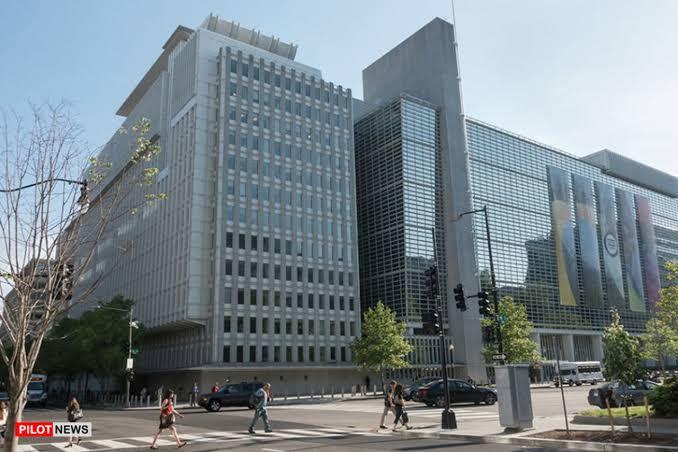
Mission 300 demonstrates what coordinated public leadership can unlock. By June 2026, the World Bank and African Development Bank initiative reported that more than 50 million people across 40 countries had been connected with access to electricity.
Nearly $15 billion had been committed by both institutions, alongside about $4.5 billion in co-financing.
Governments Must Build Markets, Not Dependency
- Government intervention must nevertheless remain transparent, competitive and accountable.
Poorly designed programmes can produce inflated contracts, politically selected projects, delayed payments and infrastructure that cannot connect to the grid.
- Public authorities should publish procurement calendars, standardise power purchase agreements and disclose project costs, ownership structures and delivery milestones.
- Independent regulators must protect competition, while utilities provide credible grid-capacity and connection information.
- Financiers can reinforce this process through guarantees, concessional capital and local-currency lending.
- Developers should be held to measurable commitments covering local employment, environmental safeguards, skills transfer and community participation.
- Most importantly, programmes must survive changes of administration. Investors price policy reversals, delayed approvals and unreliable offtakers into every project.
Consistency, therefore, is not administrative housekeeping; it is an incentive for investment.
PATH FORWARD – Stable Institutions Must Outlast Political Cycles
African governments should build renewable markets around transparent auctions, credible contracts, stronger grids and clearly assigned delivery responsibilities.
Public capital should reduce early-stage risks and mobilise private finance, rather than permanently substitute for it.
Progress should be measured to operational capacity, reliable connections, local employment and community value rather than announcements alone.
When rules survive election cycles, and institutions remain accountable, government leadership can advance energy access, climate resilience and inclusive economic development.
Culled From: Governments play a catalytic role in renewables adoption