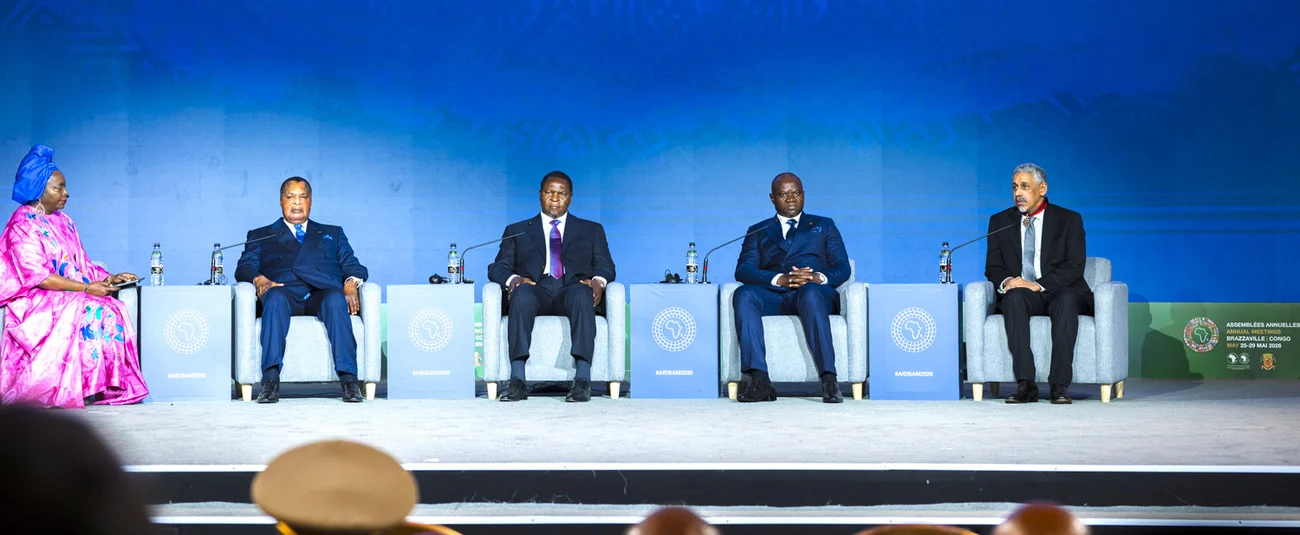
African leaders have pitched energy, infrastructure and green development projects at the AfDB Presidential Dialogue in Brazzaville.
The call comes as the continent faces a large financing gap and rising pressure to industrialise sustainably.
For households and businesses, the issue is practical: power, jobs, resilience and cheaper production.
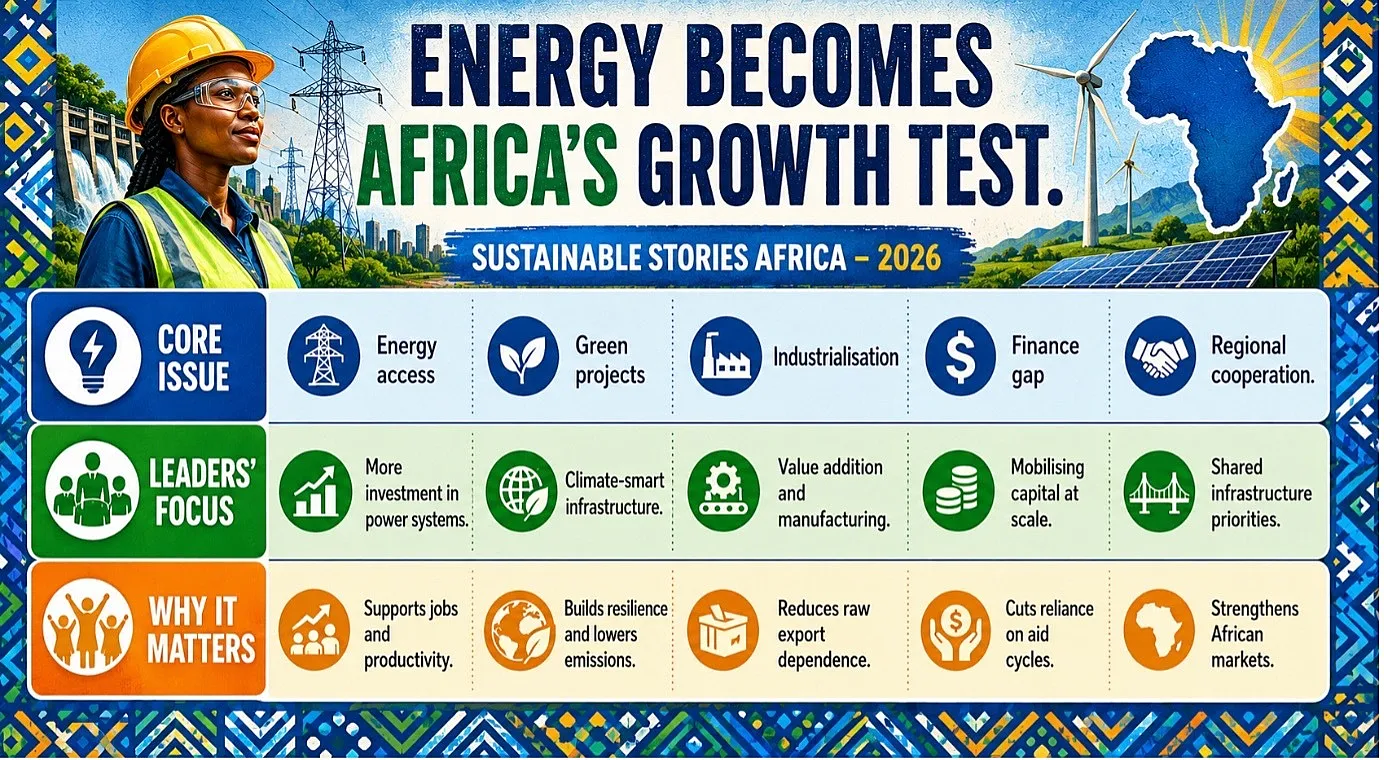
Energy Becomes Africa’s Growth Test
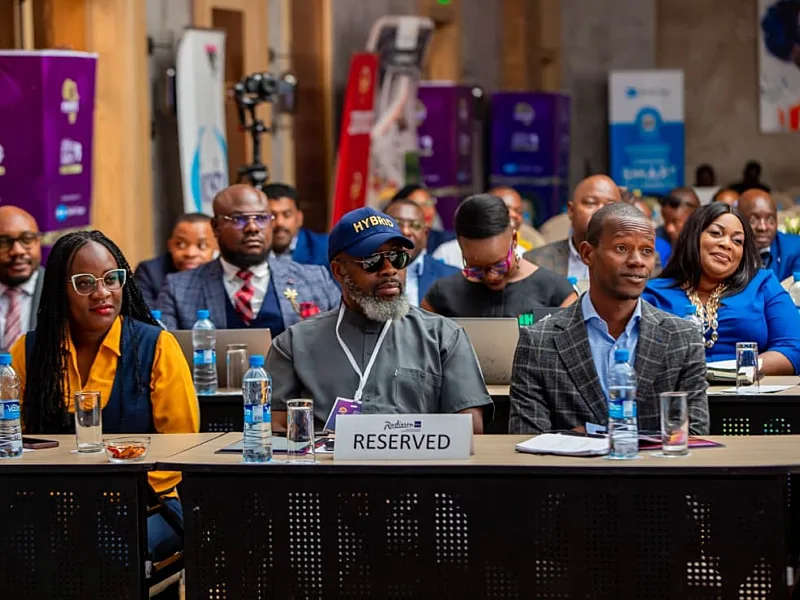
African leaders used the Presidential Dialogue at the African Development Bank Group’s 2026 Annual Meetings in Brazzaville to make a direct pitch for investment in energy, infrastructure, industrialisation and climate finance, arguing that Africa’s growth ambitions will remain constrained unless power and green projects are financed at scale.
The dialogue brought presidents, ministers, development financiers and private-sector actors into the same room around one question: how can Africa fund its own transformation in a fragmented global economy?
The answer, leaders suggested, must begin with energy. Without reliable electricity, factories cannot expand, farmers cannot process produce, hospitals struggle, and young entrepreneurs remain locked out of productivity gains.
With it, African economies can move from raw-commodity dependence toward value addition, jobs and climate-smart industrialisation.
Leaders Turn Projects Into Investment Pitches
The Presidential Dialogue reflected a shift in tone. African leaders were not only discussing challenges; they were presenting bankable needs.
Energy systems, transport corridors, clean industry, water infrastructure and climate adaptation projects were framed as investable opportunities rather than charity appeals.
That distinction matters. For years, Africa’s development debate has been dominated by financing gaps.
However, at Brazzaville, the emphasis was on turning those gaps into structured pipelines that can attract public, private and blended capital.
The urgency is clear across the continent.
- A food processor without reliable power pays more to run generators.
- A manufacturer loses competitiveness when logistics are weak.
- A rural clinic without electricity cannot store vaccines properly.
- A young digital entrepreneur cannot scale if power and broadband remain unstable.
The leaders’ message was therefore both economic and human: infrastructure is not concrete alone; it is the foundation for opportunity.
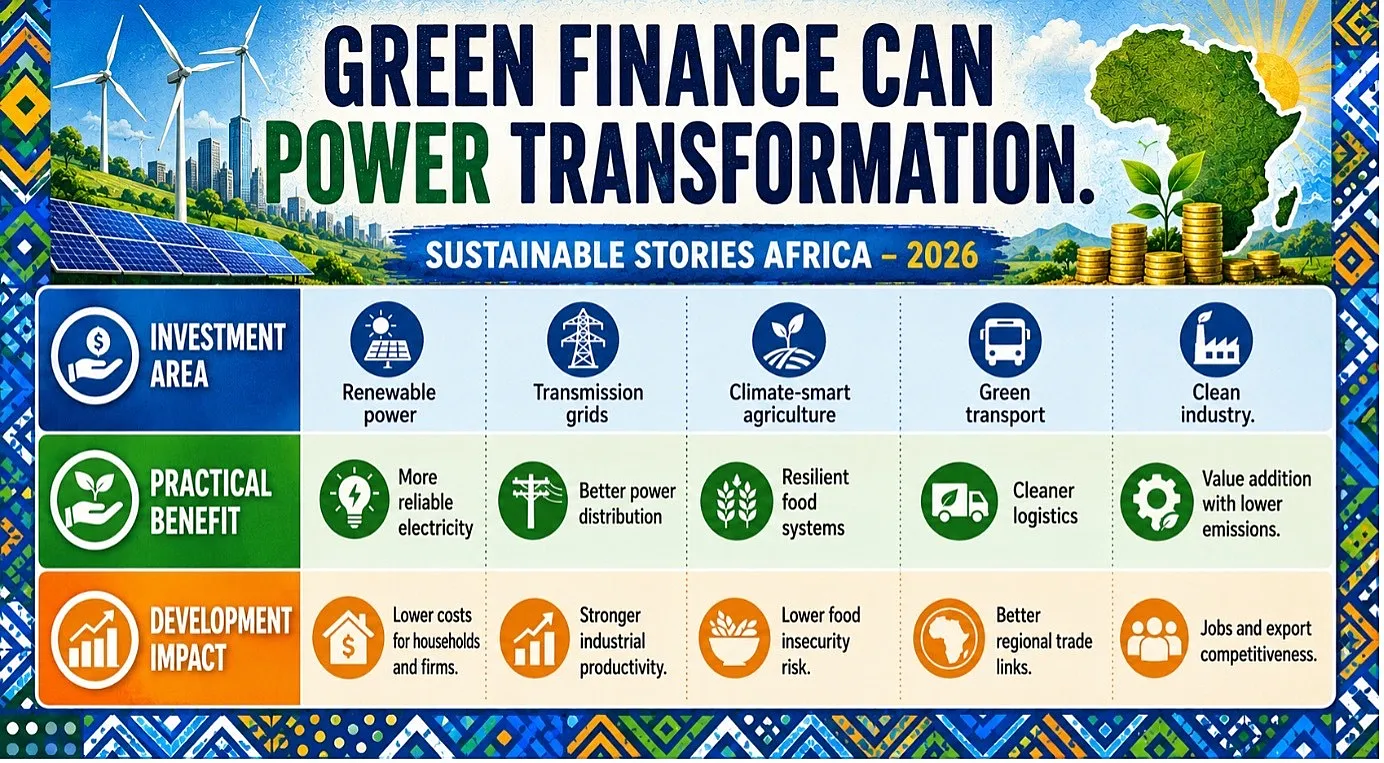
Green Finance Can Power Transformation
If the projects pitched at the dialogue move from speeches to execution, the gains could be significant.
Clean energy investment can expand electricity access while reducing long-term fuel dependence. Climate-smart infrastructure can protect communities from floods, droughts and heat stress.
Green industrialisation can help African countries process minerals, food and materials closer to the source.
The opportunity is also geopolitical. As the world competes for critical minerals, renewable energy and sustainable supply chains, Africa has an opportunity to negotiate from a stronger position.
However, that requires credible institutions, bankable projects and financing instruments that reduce risk.
For investors, Africa’s green pipeline is increasingly difficult to ignore. Solar, hydro, geothermal, wind, transmission, battery storage, clean cooking, electric mobility and climate-resilient agriculture all present growth opportunities.
The challenge is not a lack of need; it is converting need into reliable investment structures.
Capital Must Follow Credible Delivery
The real test now is execution. African governments must prepare stronger project pipelines, improve procurement, protect policy consistency and strengthen regulatory frameworks.
- Development banks must provide guarantees, first-loss capital and long-term finance that crowd in private investors.
- Private capital also needs to move beyond short-term returns.
Africa’s energy transition requires patient financing, local-currency tools and partnerships with domestic institutions.
Pension funds, sovereign wealth funds, commercial banks and development finance institutions should be aligned around productive infrastructure.
For citizens, accountability will matter. Green projects must not remain elite announcements.
They must connect to cheaper power, jobs, local enterprise, better services and climate protection.
Africa’s leaders have made the pitch. The next phase is to prove that the continent can turn political ambition into investable, inclusive and measurable transformation.
Path Forward – Finance Projects That Change Lives
The priority is clear: build bankable energy and green infrastructure pipelines, strengthen institutions and mobilise African and global capital to deliver.
If implemented well, the Presidential Dialogue agenda can advance ESG goals by expanding clean energy, improving resilience, creating jobs and supporting low-carbon industrial growth.
Africa’s green transition must now become a development engine, not just a conference theme.
Culled From: AM 2026: African leaders pitch energy and green projects at AfDB Presidential Dialogue