African nations are facing rising energy costs linked to Middle East tensions.
Global supply disruptions are driving fuel prices higher across the continent.
The impact is reshaping inflation, energy policy, and economic resilience strategies.
A Distant War, A Direct Economic Shock
A conflict thousands of kilometres away is tightening the cost of living across Africa.
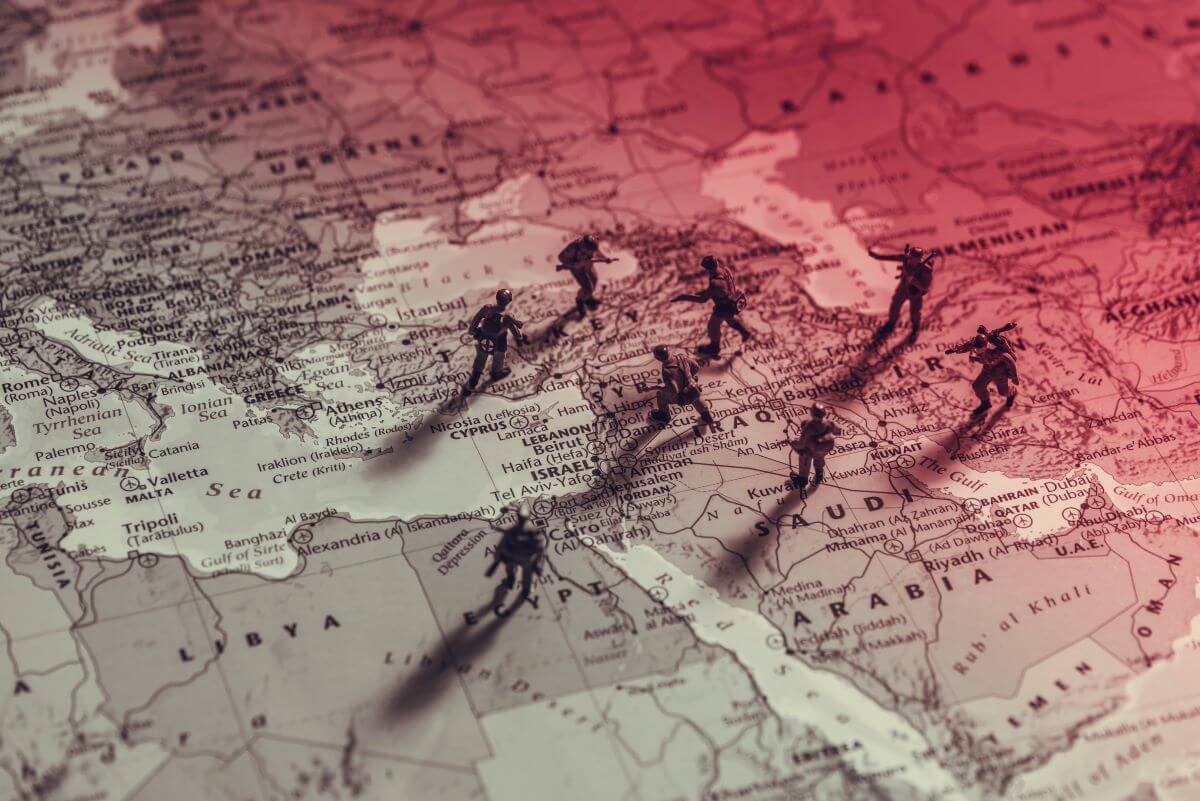
As tensions in the Middle East disrupt global oil and gas supply chains, African economies, many heavily dependent on imported fuel, are facing a sharp rise in energy costs.
From transport fares in Lagos to electricity tariffs in Nairobi, the ripple effects are immediate and widespread.
For governments, businesses, and households, the challenge is clear: how to absorb rising energy costs without destabilising already fragile economies.
How Global Disruptions Are Hitting Local Systems
The Middle East remains a critical hub for global energy supply. Any disruption, whether from conflict, shipping risks, or geopolitical uncertainty, translates to higher global oil and gas prices.
For Africa, the consequences are amplified by structural vulnerabilities:
Africa’s Energy Exposure Profile
Factor | Description | Impact |
|---|---|---|
Import Dependence | Many countries rely on imported refined fuel | Exposure to global price shocks |
Currency Weakness | Local currencies often depreciate against the dollar | Higher import costs |
Limited Refining Capacity | Insufficient domestic refining infrastructure | Increased reliance on imports |
Energy Mix | Heavy dependence on fossil fuels | Limited short-term alternatives |
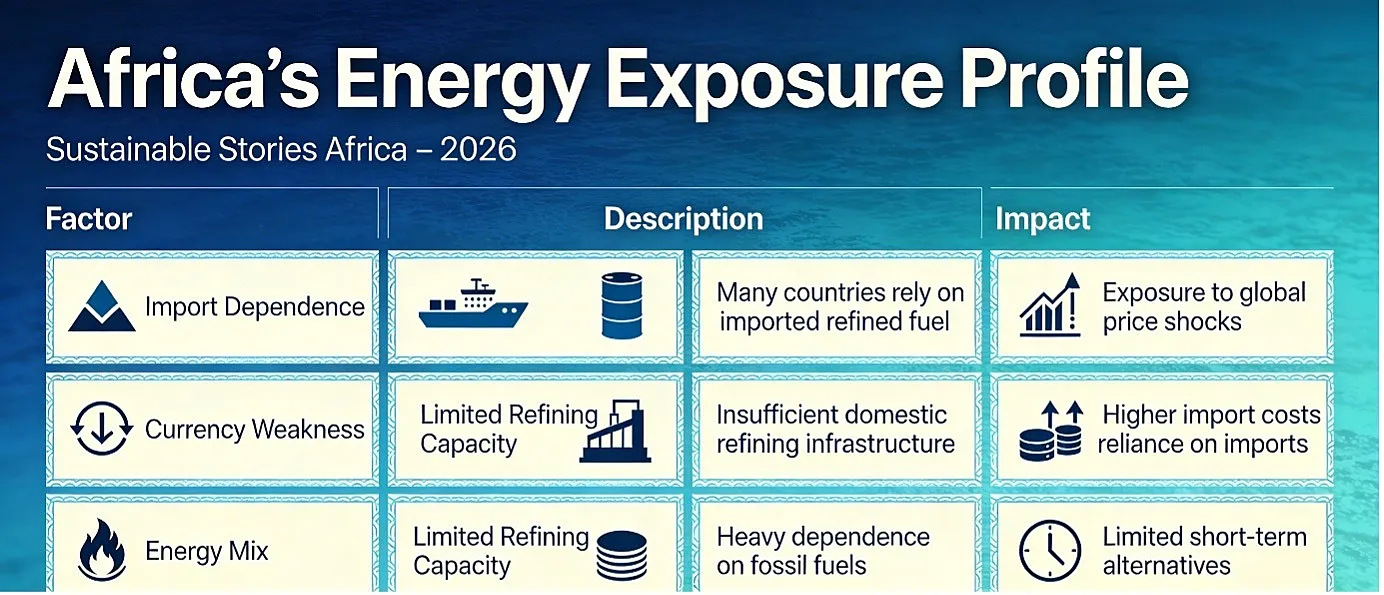
Countries such as Nigeria, despite being oil producers, still import refined petroleum products, making them vulnerable to global price volatility. Meanwhile, non-oil-producing countries face even greater exposure.
In response, governments are taking varied approaches, ranging from fuel subsidies and price controls to tariff adjustments and fiscal tightening.
However, these measures often bring trade-offs, including increased public debt and reduced fiscal space for development spending.
Crisis as Catalyst for Energy Transition
While the current situation presents immediate challenges, it also highlights an opportunity: accelerating the transition toward more resilient and diversified energy systems.
If leveraged effectively, the crisis could drive:
- Investment in renewable energy – Reducing dependence on imported fuels
- Expansion of local refining capacity – Strengthening energy security
- Adoption of decentralised systems – Solar mini-grids and off-grid solutions
- Energy efficiency improvements – Lowering overall consumption
For example, countries investing in solar and wind energy can reduce exposure to global fuel price fluctuations while improving long-term sustainability.
The shift is already underway in some regions, where businesses and households are increasingly adopting self-generation solutions to manage costs and reliability.
Balancing Short-Term Relief With Long-Term Reform
African policymakers face a delicate balancing act: managing immediate economic pressures while laying the groundwork for structural energy reform.
Key Policy Responses Emerging
Response Area | Strategy | Outcome |
|---|---|---|
Subsidy Management | Targeted or phased subsidies | Short-term price relief |
Energy Diversification | Investment in renewables | Reduced import dependence |
Infrastructure Development | Refining and grid expansion | Improved resilience |
Regional Cooperation | Cross-border energy trade | Greater stability |
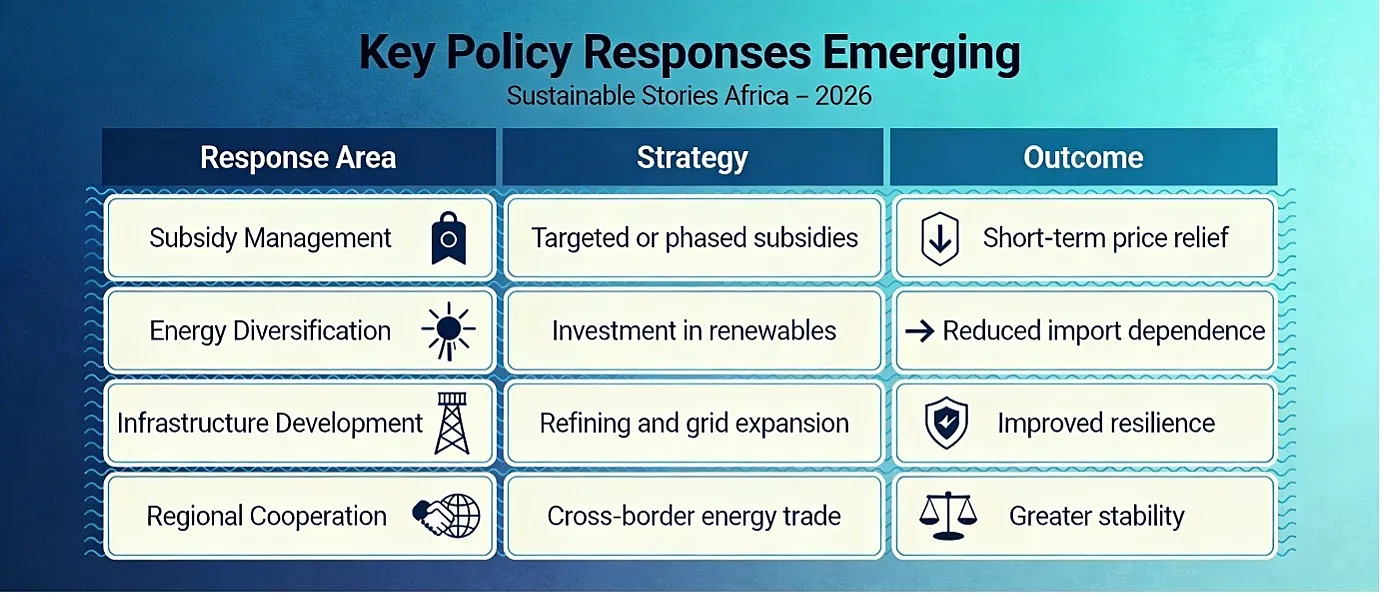
For businesses, the response is increasingly proactive, investing in alternative energy sources and efficiency measures to reduce operational costs.
For citizens, the reality is more immediate: higher transport costs, rising food prices, and increased pressure on household incomes.
The broader lesson is clear: energy security is no longer just a policy issue; it is an economic imperative.
PATH FORWARD – Resilience Through Diversification and Energy Reform
Africa’s response to rising energy costs must balance immediate relief with long-term structural change. Diversifying energy sources and investing in local capacity will be critical.
As global volatility persists, building resilient, affordable, and sustainable energy systems will define the continent’s economic stability and growth trajectory in the years ahead.
Culled From: How African nations are coping with high energy costs amid ongoing Middle East war - Energy in Africa