Independent power producers across Africa are shifting away from sole reliance on state utilities, seeking direct contracts with corporates and industrial clients to stabilise revenues.
Mounting payment delays, currency volatility and grid fragility have pushed developers toward private power purchase agreements and embedded generation models.
The pivot marks a structural reset in how electricity is financed, sold and secured across emerging African energy markets.
Utilities No Longer Sole Anchor Buyers
For decades, Africa’s power model revolved around a single buyer: the national utility. Independent power producers (IPPs) financed generation assets on the strength of sovereign-backed power purchase agreements.
That model is fraying.
Persistent arrears, tariff shortfalls and fiscal constraints have eroded utility creditworthiness in several markets.
Developers are now diversifying risk by contracting directly with mines, manufacturers, data centres and commercial clusters.
Energy finance is moving from centralised offtake dependence to multi-buyer resilience.
Corporate PPAs Gain Strategic Momentum
Corporate power purchase agreements (PPAs) and embedded generation frameworks are becoming mainstream.
Industrial players, facing unreliable grid supply and diesel exposure, are willing to sign long-term contracts for stable, cleaner power.
Three forces drive this shift:
- Payment certainty from private counterparties
- Hard-currency or indexed contract structures
- ESG-driven demand for renewable sourcing
Developers argue that diversified offtake reduces systemic risk while improving project bankability.
Utilities remain critical to transmission and balancing, but they are no longer the exclusive revenue backbone.
Revenue Diversification Reshapes Risk Profiles
Offtake Model | Revenue Stability Outlook | Key Risk Mitigation Lever |
|---|---|---|
Sole Utility PPA | Dependent on fiscal health | Sovereign guarantees |
Corporate Direct PPA | Higher payment certainty | Escrow and indexation |
Embedded Generation | Stable industrial demand | On-site consumption model |
Hybrid Portfolio Mix | Diversified risk exposure | Multi-buyer structures |
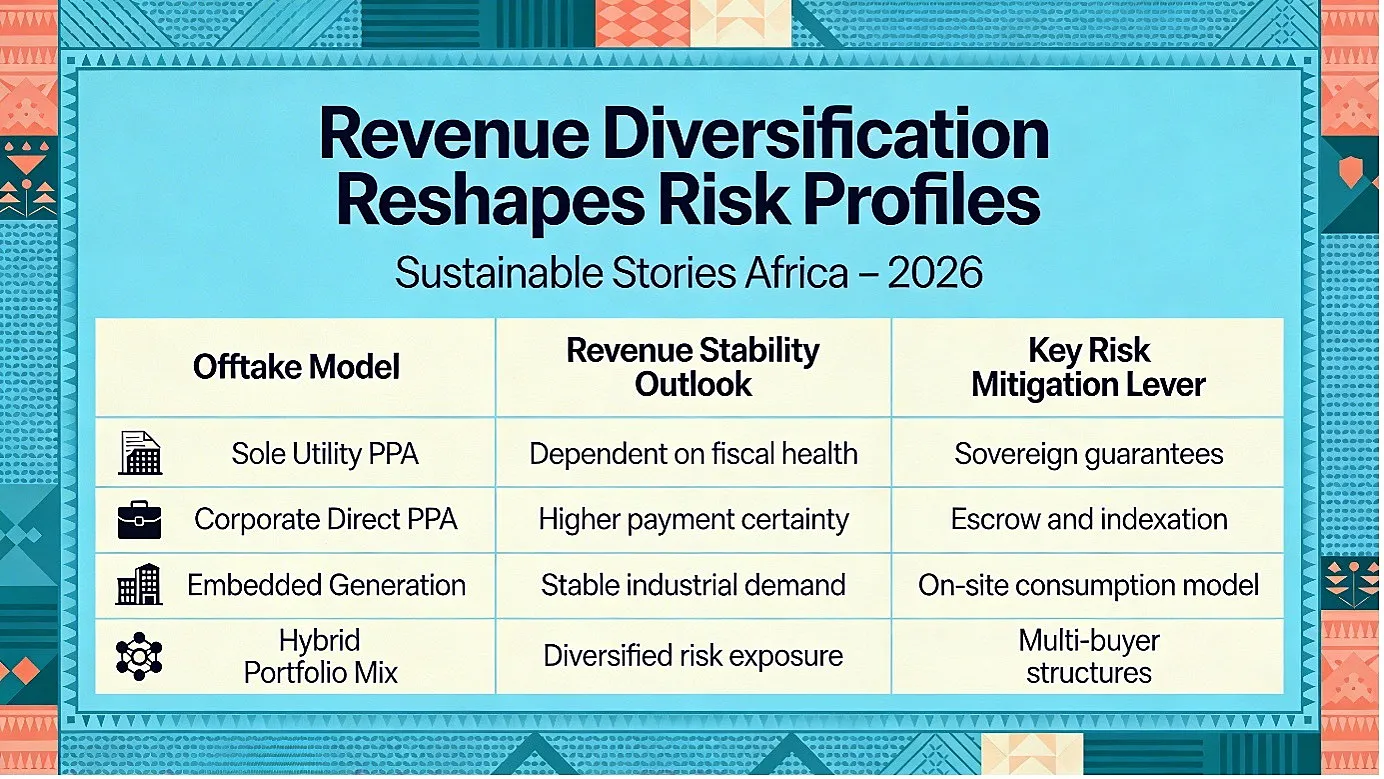
Financial institutions increasingly favour blended offtake portfolios over single-utility exposure, particularly in markets with volatile public balance sheets.
Distributed Generation Expands Footprint
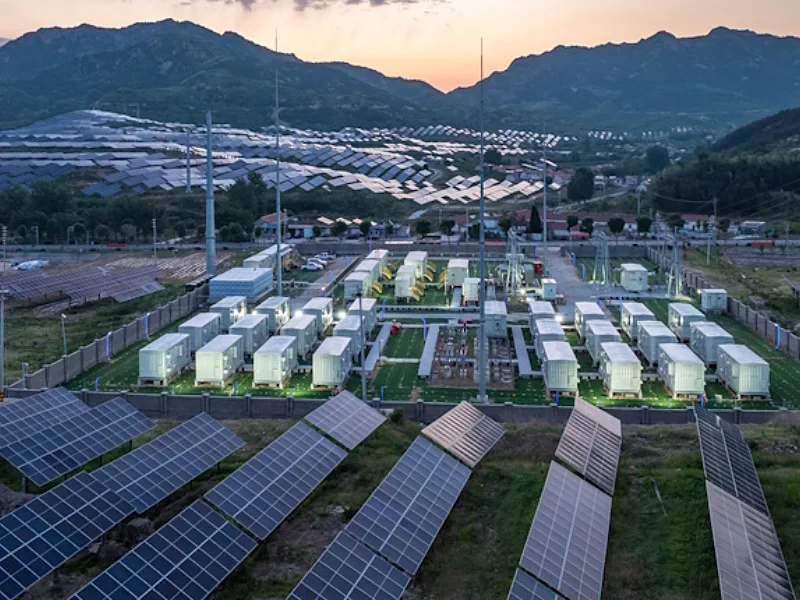
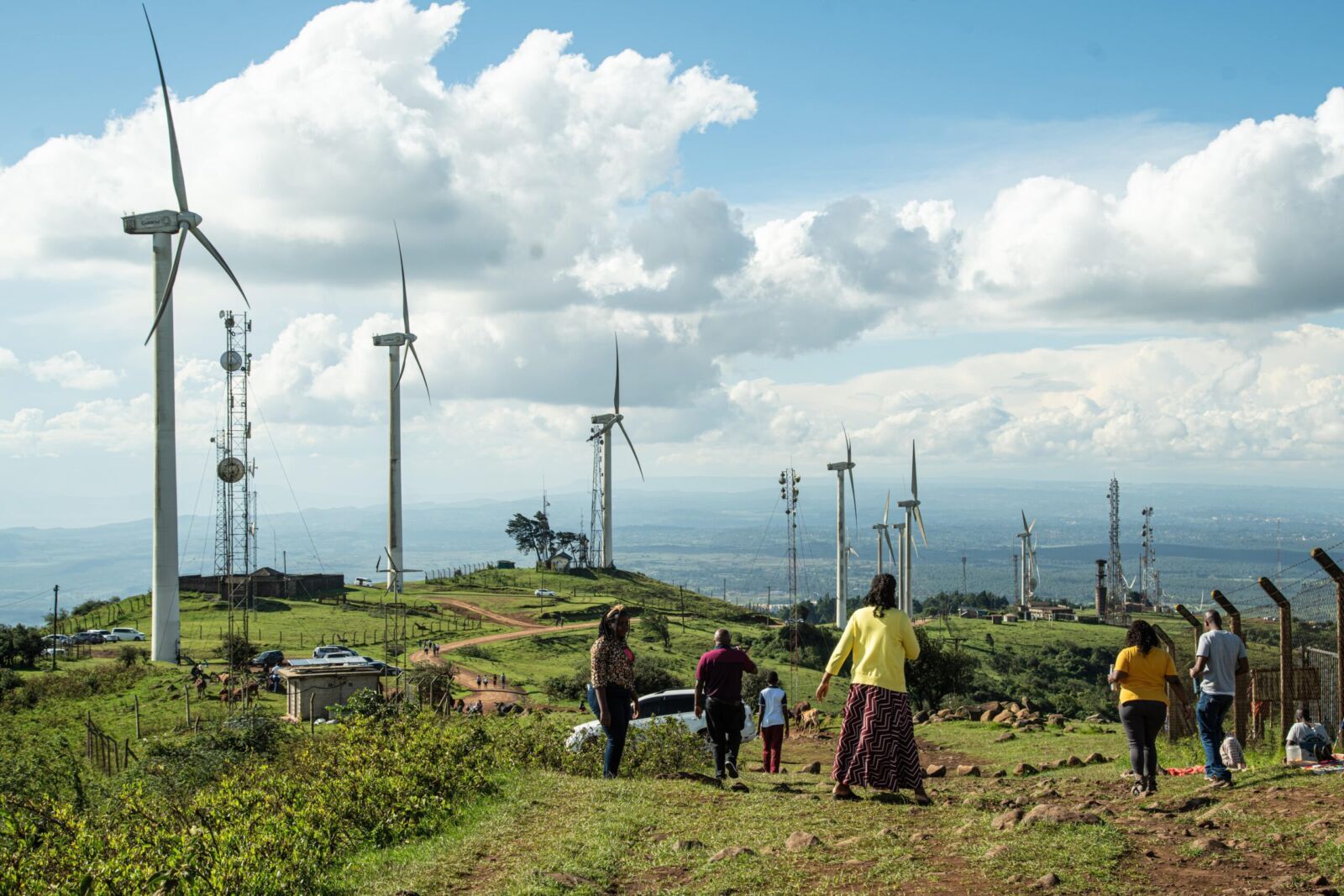
Across Southern and West Africa, mines are directly contracting wind and solar projects. Industrial parks are deploying embedded solar-plus-storage systems.
Data centres, such as energy-intensive and uptime-sensitive, are locking in long-term renewable supply agreements.
This decentralised evolution reduces reliance on fragile grids while unlocking new financing channels.
Developers are structuring portfolios that combine utility sales with corporate PPAs to help stabilise cash flow volatility.
Building a More Bankable Energy Ecosystem
The diversification trend carries broader economic implications.
- Improved project bankability lowers financing costs.
- Corporate decarbonisation targets accelerate renewable build-out.
- Reduced diesel dependence strengthens energy security.
However, if producers remain tied solely to distressed utilities, capital costs rise and project pipelines stall.
In contrast, diversified offtake can unlock sustained infrastructure scaling.
Energy markets are becoming more flexible, commercially grounded and climate aligned.
Path Forward – Strengthen Regulation, Diversify Offtake
Regulators must modernise embedded generation rules, clarify wheeling frameworks and ensure transparent tariff-setting to support diversified contracts.
Strengthening transmission infrastructure remains essential to integrating distributed generation effectively.
For investors and developers, portfolio diversification, such as combining utility, corporate and industrial buyers, offers the clearest path to long-term stability, enabling Africa’s power sector to transition from vulnerability toward resilience.
Culled From: Power producers seek stability beyond utilities