Africa’s energy transition is gaining momentum despite significant structural challenges.
New data highlight increasing investment in renewables across the continent.
However, financing gaps and development pressures continue to shape the pace of progress.
A Transition Under Pressure and Momentum
Africa’s energy transition is no longer a distant ambition; it is unfolding in real time, under pressure.
A new study highlights that while renewable energy deployment across the continent is accelerating, the transition remains constrained by financing gaps, infrastructure limitations, and competing development priorities.
For a continent where over 600 million people still lack access to electricity, the challenge is uniquely complex: how to expand energy access while simultaneously decarbonising systems.
Progress Amid Persistent Structural Constraints
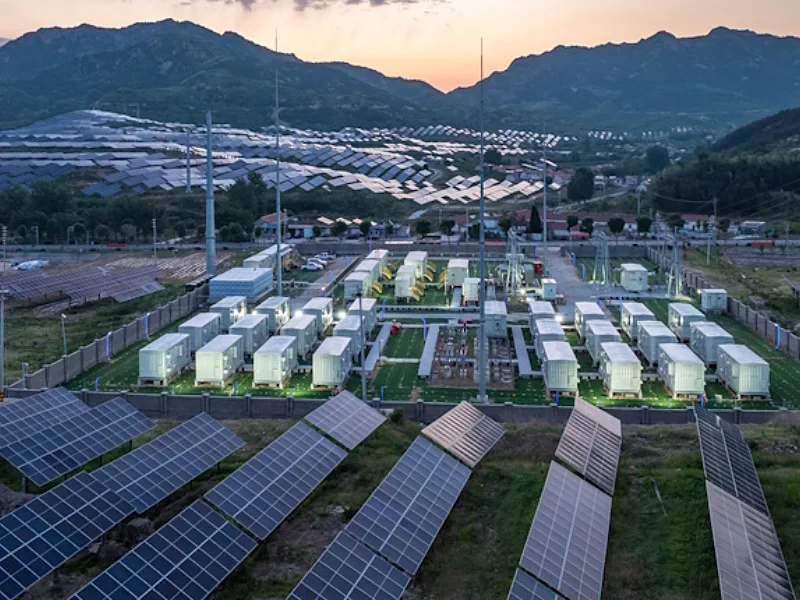
Across Africa, renewable energy capacity is growing, driven by falling costs of solar and wind technologies, alongside increasing investor interest in clean energy projects.
However, the pace of transition varies widely across countries, shaped by policy environments, infrastructure readiness, and access to capital.
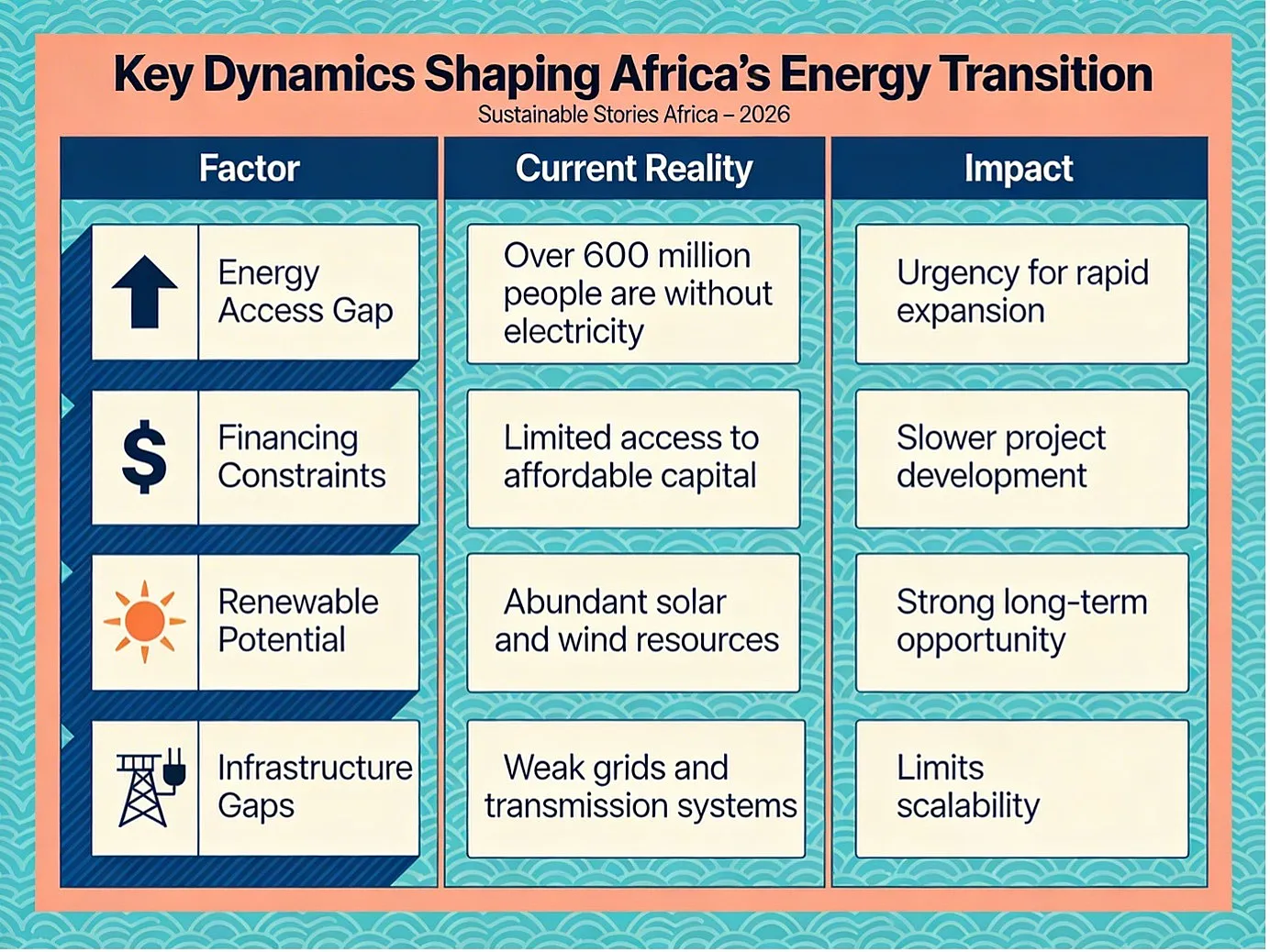
Key Dynamics Shaping Africa’s Energy Transition
Factor | Current Reality | Impact |
|---|---|---|
Energy Access Gap | Over 600 million people are without electricity | Urgency for rapid expansion |
Financing Constraints | Limited access to affordable capital | Slower project development |
Renewable Potential | Abundant solar and wind resources | Strong long-term opportunity |
Infrastructure Gaps | Weak grids and transmission systems | Limits scalability |
In countries such as Egypt, Morocco, and South Africa, large-scale renewable projects are driving progress.
Meanwhile, in other regions, decentralised solutions such as solar mini-grids are filling critical gaps in rural electrification.
The study underscores a central tension: Africa must build energy systems from the ground up, rather than simply replacing existing infrastructure.
A Pathway to Inclusive and Sustainable Growth
Despite the challenges, Africa’s energy transition offers one of the most compelling opportunities globally.
If effectively managed, the transition could deliver:
- Universal energy access – Expanding electricity to underserved populations
- Economic growth – Powering industries and enabling job creation
- Climate resilience – Reducing emissions while adapting to climate impacts
- Investment attraction – Positioning Africa as a hub for clean energy capital
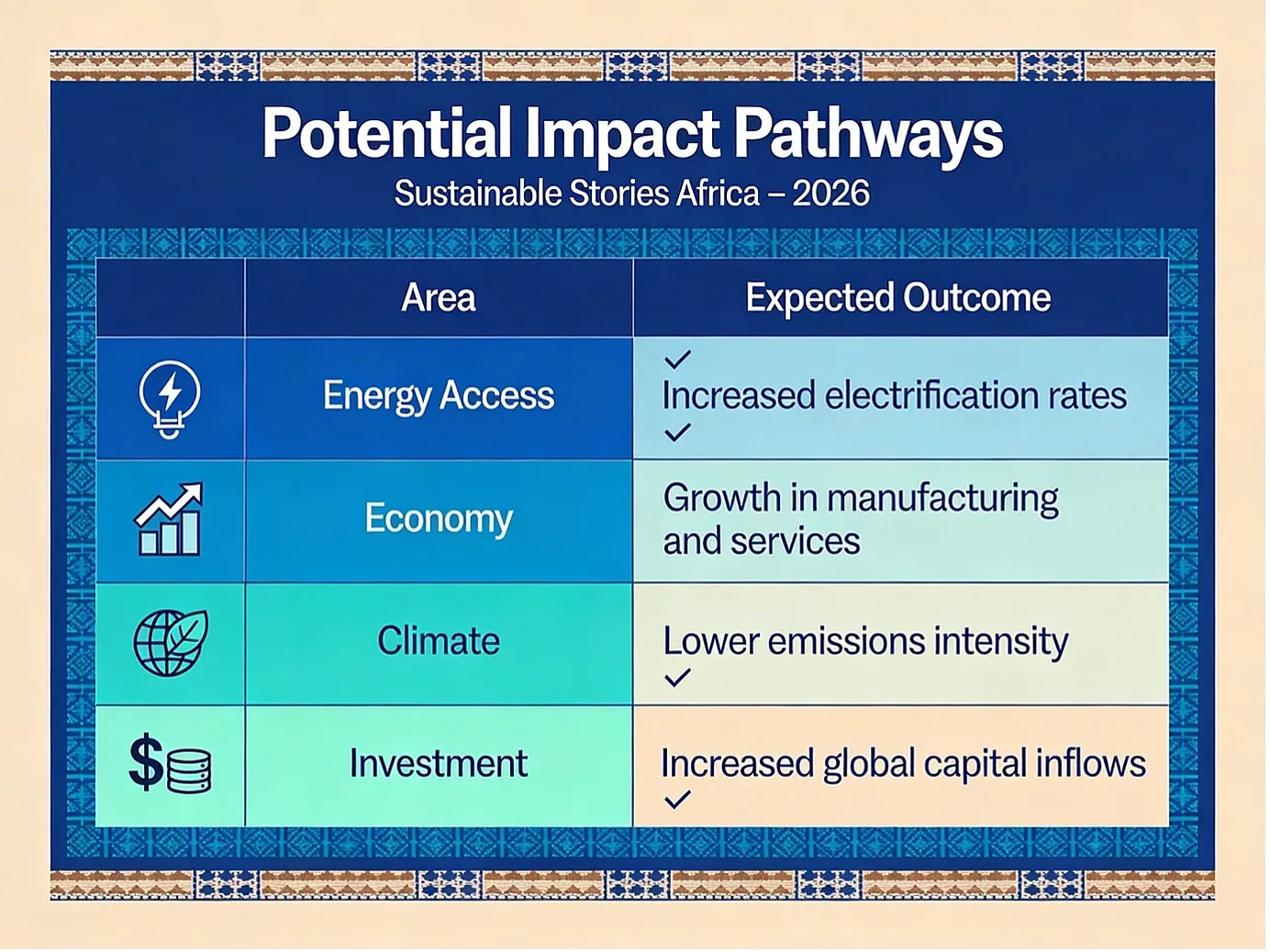
Potential Impact Pathways
Area | Expected Outcome |
|---|---|
Energy Access | Increased electrification rates |
Economy | Growth in manufacturing and services |
Climate | Lower emissions intensity |
Investment | Increased global capital inflows |
Crucially, Africa’s transition is not just about replacing fossil fuels; it is about building a new energy system that supports development goals.
This includes balancing grid expansion with decentralised solutions, ensuring affordability, and integrating energy planning with broader economic strategies.
Closing the Gap Between Ambition and Execution
To sustain momentum, Africa must address the structural barriers that continue to slow progress.
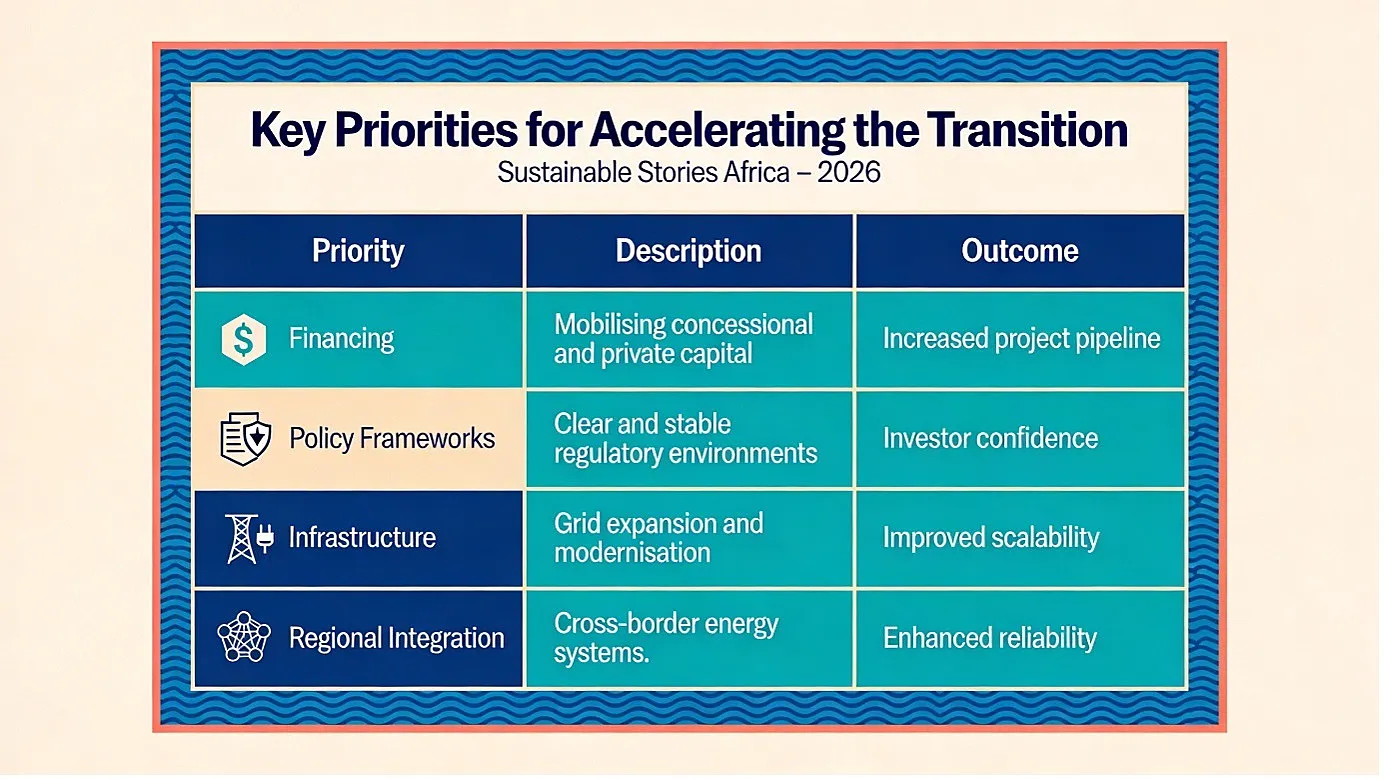
Key Priorities for Accelerating the Transition
Priority | Description | Outcome |
|---|---|---|
Financing | Mobilising concessional and private capital | Increased project pipeline |
Policy Frameworks | Clear and stable regulatory environments | Investor confidence |
Infrastructure | Grid expansion and modernisation | Improved scalability |
Regional Integration | Cross-border energy systems | Enhanced reliability |
International support will be critical, particularly in bridging financing gaps and de-risking investments.
At the same time, African governments must continue to align energy policies with development priorities, ensuring that transitions are both inclusive and economically viable.
For investors, the message is clear: Africa represents one of the largest untapped markets for clean energy, but requires innovative financing models and long-term commitment.
PATH FORWARD – Balancing Access, Affordability, and Sustainability Goals
Africa’s energy transition must balance three priorities: expanding access, ensuring affordability, and achieving sustainability. Aligning finance, infrastructure, and policy will be critical to success.
As momentum builds, the continent has an opportunity to leapfrog traditional energy models, creating resilient, low-carbon systems that support inclusive growth and long-term development.