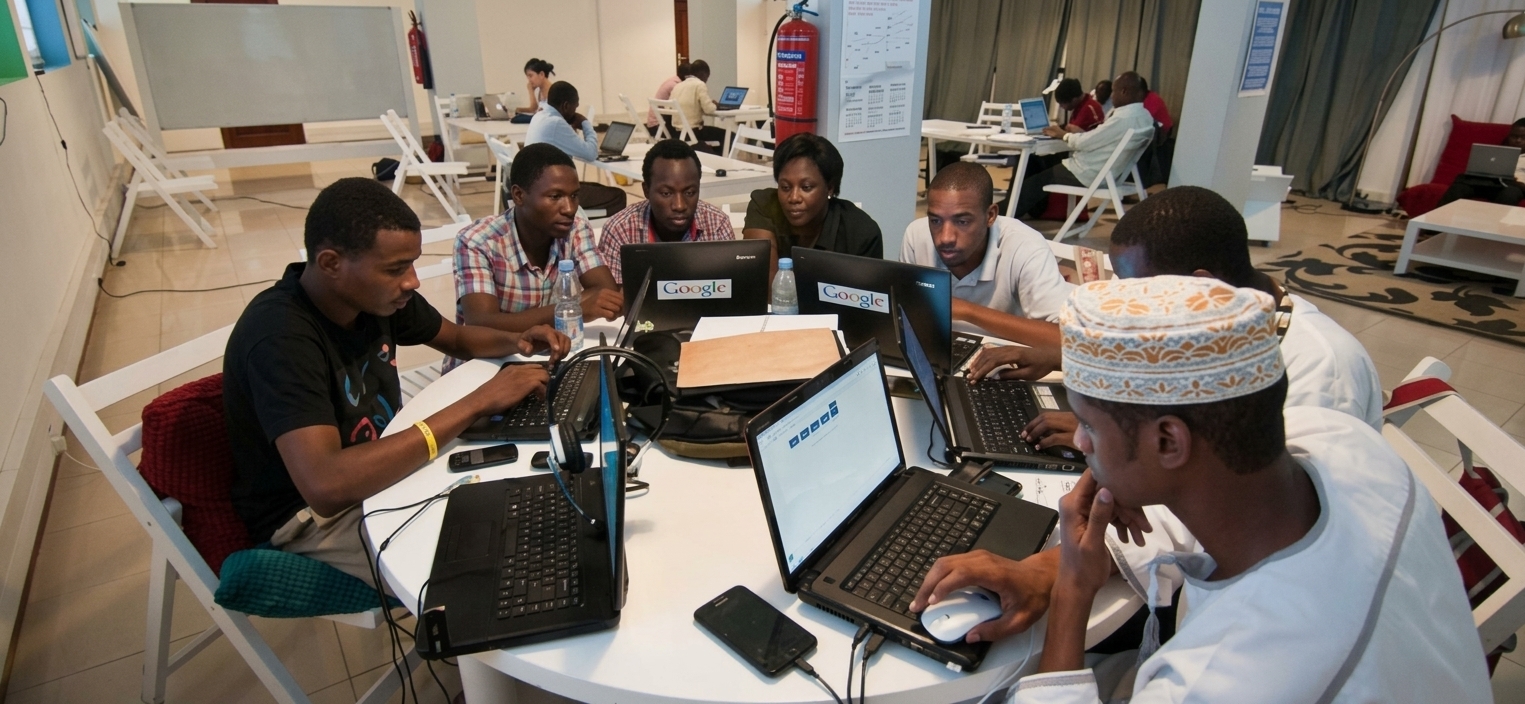
An article published by the World Economic Forum argues that young people’s familiarity with artificial intelligence is outpacing their access to economic opportunity.
The evidence comes from Goodwall users, rather than a representative survey of all young people.
For African training programmes, the challenge is to connect digital learning with practical experience, employer demand and measurable improvements in livelihoods.
Young people need opportunities beyond training
Young people need more than familiarity with artificial intelligence to link digital learning to livelihoods, Goodall chief executive Taha Bawa and HP Foundation executive director Michele Malejki argue in a World Economic Forum article published on September 23, 2026.
Their intervention shifts attention from course participation to the opportunities available after training.
For Africa, the relevant policy question is concrete:
- What happens when a learner completes an AI course but cannot obtain a paid assignment?
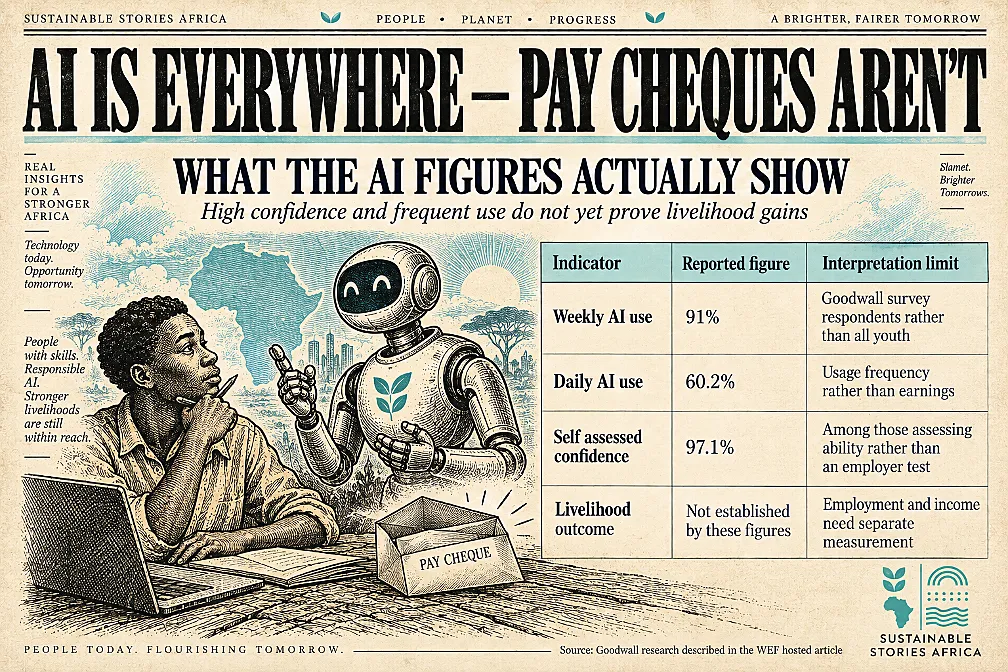
- The article does not establish a continent-wide employment outcome.
It does, however, provide a useful starting point for examining how skills programmes define success.
Survey highlights usage without proving employment
The authors report that 91% of surveyed young people used AI at least weekly and 60.2% used it daily.
- Among those assessing their ability, 97.1% expressed at least some confidence.
The research draws on young people using Goodwall’s app, so these percentages should not be presented as population-wide African or global estimates.
The distinction between confidence and demonstrated performance matters.
- Familiarity with a tool can support learning, but does not by itself establish that someone can deliver reliable work under a deadline, protect customer information or explain the limits of an automated answer.
Practical evidence can strengthen hiring pathways
A stronger training model would begin with a task an employer or customer needs completed.
- Learners could build evidence through supervised assignments, demonstrate how they check outputs, and receive feedback on both technical performance and professional judgement.
- That is a more useful bridge to work than accumulating certificates without opportunities to apply them.
Consider an illustrative small-business assignment: organising customer enquiries, preparing an accurate sales summary and identifying missing information.
- AI might assist with drafting or classification, but the learner would still need to check figures, respect privacy and communicate uncertainty.
- The economic value lies in solving the business problem responsibly.
Access costs also belong inside programme design.
- If participation depends on a personal device, reliable connectivity and unpaid time, a programme can exclude the people it hopes to serve.
- An inclusive approach should assess those constraints before setting attendance targets.
Measure progress through verified livelihood outcomes
Training providers should track what happens after completion: paid placements, repeat assignments, changes in earnings, and participant retention.
- They should publish the measurement period and distinguish self-reported outcomes from independently checked results.
- Otherwise, a large enrolment figure can conceal a weak transition into work.
Employers can contribute by defining realistic entry-level tasks and offering paid opportunities to demonstrate capability.
- Public agencies and funders can support those partnerships while requiring transparent selection criteria.
- Participants should know what a programme offers, what it costs and whether employment is guaranteed; promises should match actual arrangements.
Programme evaluation should also ask who benefits.
- Splitting outcomes by gender, location, and access to devices would reveal whether opportunities reach learners facing the greatest constraints.
- Those findings can guide support more effectively than a single headline participation count.
The practical case for AI education remains strong, but its credibility rests on what learners can do and the opportunities they can access.
- Economic inclusion requires institutions that connect skill acquisition to demand, rather than assuming that knowledge will automatically produce income.
Learner feedback should form part of that assessment.
- Participants can explain whether assignments reflect genuine employer needs, whether mentoring is accessible and whether the programme’s time demands are realistic.
- Collecting those responses at completion and again after several months would reveal obstacles that enrolment statistics miss.
Providers could then adjust support around the actual transition into work, while showing funders which parts of the programme require further attention.
Path Forward – Connect learning with measurable livelihood gains
AI programmes should link practical assignments, affordable access and employer participation, then measure paid outcomes after training.
For African policymakers and educators, the priority is evidence that learners can apply skills responsibly and improve their prospects, with transparent reporting on who benefits and who remains excluded.
Culled from: The next AI divide is the distance between learning and earning | World Economic Forum