
GRI is developing a sector standard for food and beverage companies through a faster standard-setting approach.
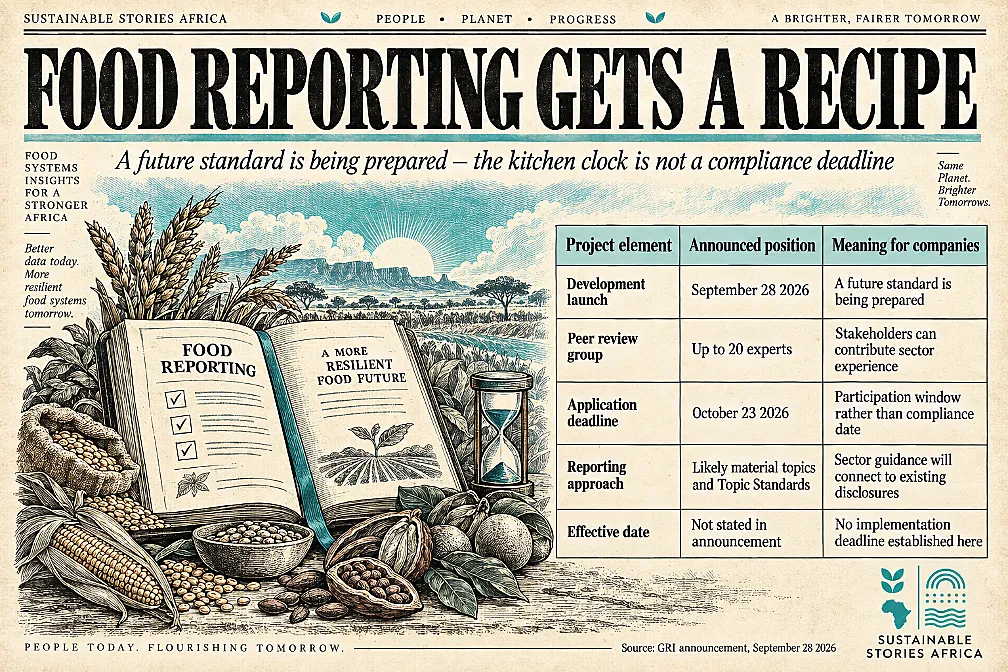
The project is at the development stage, with expert applications open until October 23.
African manufacturers can contribute practical experience and prepare stronger impact data without treating the proposal as an already effective reporting requirement.
Food reporting project enters development phase
The Global Reporting Initiative has begun developing a Food and Beverages Sector Standard to help companies identify and report significant sustainability impacts.
Announced on September 28, 2026, the project will pilot a streamlined approach to sector guidance. ESG Today reported the development on September 29.
The announcement concerns work on a future standard.
- It does not mean a completed standard has entered into force, or that companies must immediately comply with new sector disclosures.
That distinction is essential for boards, sustainability teams and advisers planning reporting budgets.
Expert review will shape sector guidance
GRI is seeking up to 20 experts for a multi-stakeholder Peer Review Group, with applications open until October 23, 2026.
- It says the faster process will retain multi-stakeholder due process, identify likely material topics and direct companies towards relevant existing Topic Standards.
The intended scope includes food and drink processing and manufacturing, including tobacco products, with attention to operations and value chains. GRI’s announcement cites research indicating that 43% of food and beverage companies report with GRI, representing 70% of the sector’s global market capitalisation.
These are global reporting indicators, rather than measures of African adoption.
Better records can improve operational decisions
For an African manufacturer, the value of sector guidance will depend on whether it supports decisions inside the business.
- A water record should help explain where supply is constrained; procurement information should clarify which suppliers need support; workforce data should reveal where safety measures are working or failing.
These records should not begin and end with an annual report.
- A company that regularly reconciles operational data can identify weaknesses earlier and explain performance more credibly to workers, communities, lenders and customers.
- Reporting becomes useful when it connects responsibilities, evidence and corrective action.
Supply chains require particular care.
- Manufacturers may have better information about their own facilities than about agricultural inputs or smaller suppliers.
- Missing data should be disclosed as a limitation, with an improvement plan, rather than filled with unsupported claims of complete oversight.
Prepare evidence while contributing local experience
Companies can begin with a readiness review of existing records without claiming compliance with an unpublished standard.
- They should identify data owners, reporting boundaries and the methods used to produce each indicator. Where estimates are necessary, assumptions and uncertainty should be documented.
African industry bodies, researchers and civil-society organisations can contribute expertise to the review process.
- Practical input should explain local production systems and constraints, including how disclosure requests affect smaller businesses.
- Guidance that overlooks those realities can create paperwork without improving understanding.
Boards should also distinguish reporting quality from actual performance.
- A complete disclosure may describe significant harm; a polished report may still contain weak evidence.
- Investors and other readers need both reliable information and a clear account of how management responds to the impacts it identifies.
The opportunity is to improve the connection between what companies measure and what they change.
- That requires disciplined preparation now and careful attention to the final scope, publication timetable and application requirements when GRI releases them.
Reporting teams should make room for review by colleagues who operate facilities and manage supplier relationships.
- They are well placed to identify indicators that are unclear, difficult to produce or disconnected from decisions.
- Their involvement can help prevent a future reporting exercise from becoming a separate administrative process.
The same scrutiny should extend to assurance: claims need traceable evidence, and readers should know the scope of any checks performed.
Path Forward – Build evidence before the standard arrives
Companies should strengthen data ownership, document reporting boundaries and participate in the development process where they have relevant expertise.
GRI’s next milestones should use the final guidance and its application timetable.
Until then, preparation should improve existing disclosures without presenting the proposed standard as an effective obligation.
Culled from: GRI to Launch New Sustainability Reporting Standard for Food and Beverage Companies - ESG Today