An ancient Middle Eastern faith centred on water is gaining global attention.
As World Water Day 2026 spotlights water scarcity, the Mandaeans’ rituals highlight deeper ecological fragility.
Their story underscores how culture, survival, and water security are now tightly linked across vulnerable regions.
A Faith Built on Flowing Water Faces a Drying World
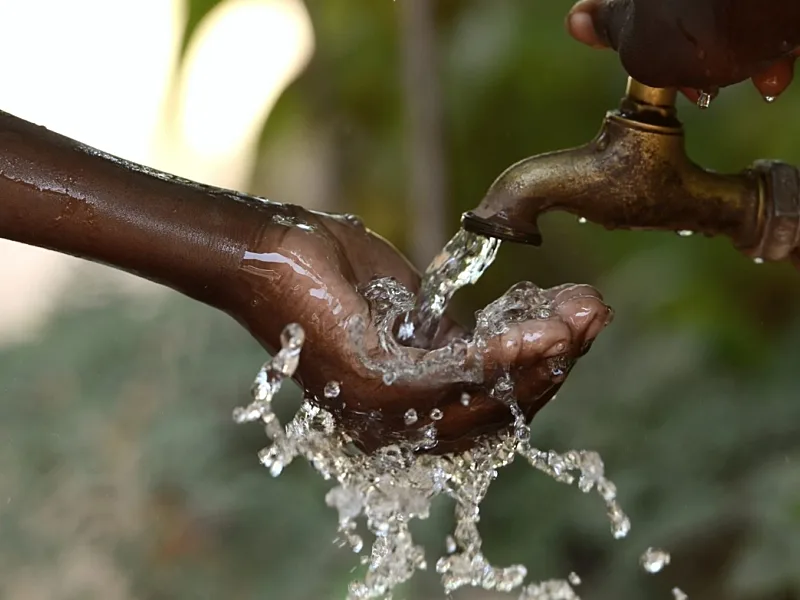
On World Water Day 2026, global attention has turned to the Mandaeans, a small, ancient religious community whose spiritual identity depends entirely on clean, flowing water.
Practising their rituals in rivers such as the Tigris and Euphrates Rivers, Mandaeans require natural water bodies for baptism, a central rite performed repeatedly throughout life.
However, shrinking rivers, pollution, and climate stress are now threatening both their faith and their survival, turning a spiritual tradition into a frontline indicator of a deepening global water crisis.
Where Culture, Climate, and Water Systems Collide
The Mandaeans’ predicament reflects a broader systemic challenge: water scarcity is no longer just an environmental issue; it is cultural, economic, and existential.
Across Iraq and Iran, river flows have declined sharply due to upstream damming, climate-induced drought, and decades of environmental mismanagement.
According to regional assessments, parts of Iraq have seen significant reductions in river discharge, while water quality has deteriorated due to salinity and pollution.
For the Mandaeans, this is not abstract. Their rituals demand flowing, living water, not stagnant or contaminated sources.
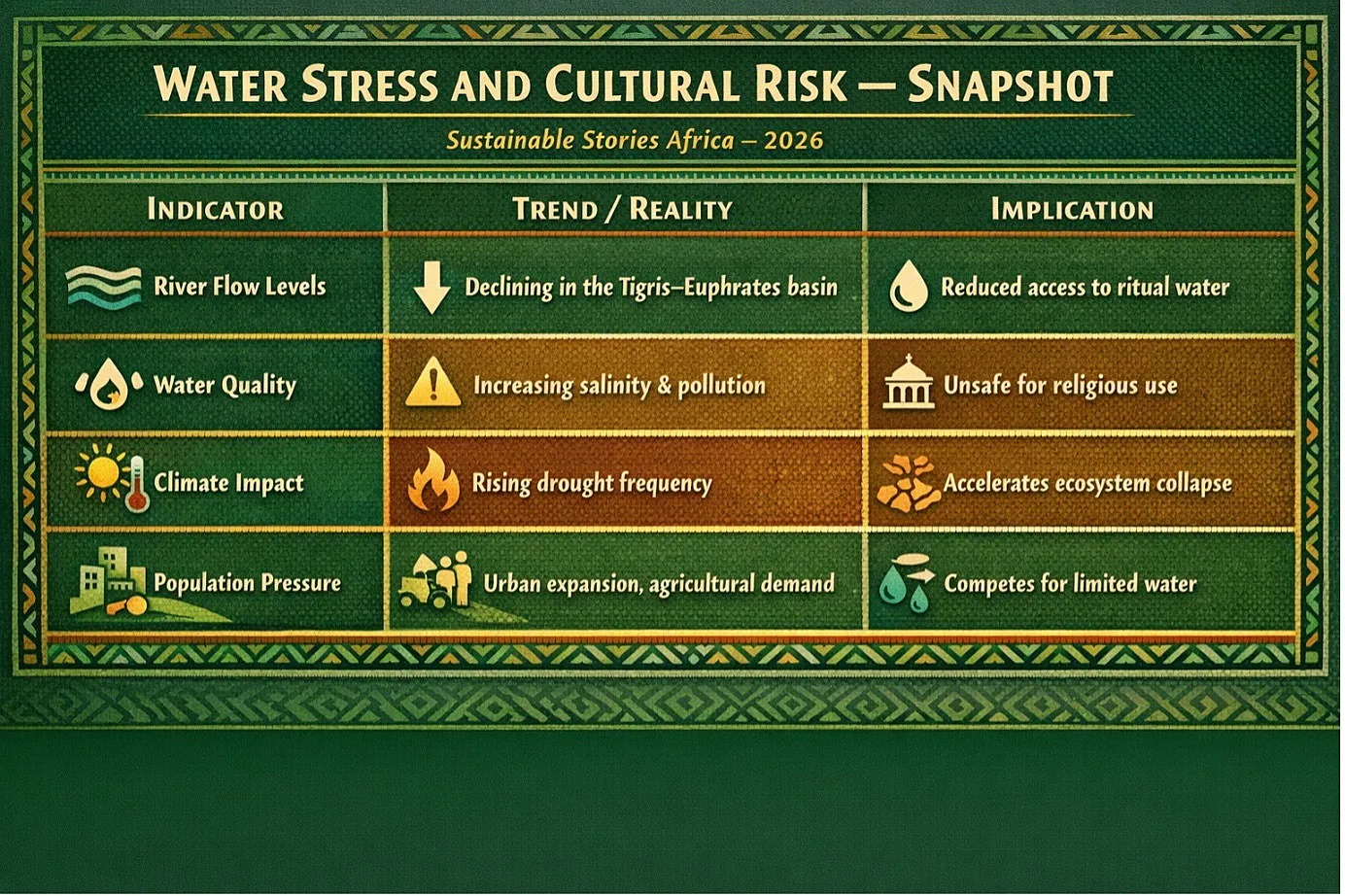
Water Stress and Cultural Risk – Snapshot
Indicator | Trend/Reality | Implication |
|---|---|---|
River flow levels | Declining in the Tigris–Euphrates basin | Reduced access to ritual water |
Water quality | Increasing salinity & pollution | Unsafe for religious use |
Climate impact | Rising drought frequency | Accelerates ecosystem collapse |
Population pressure | Urban expansion, agricultural demand | Competes for limited water |
Beyond religion, the crisis reveals challenges across the Global South, including parts of Africa, where water systems underpin livelihoods, agriculture, and community identity.
From the Niger Basin to the Nile, similar patterns are emerging: less water, poorer quality, higher competition.
What Protecting Water Systems Can Unlock
If water systems are restored and protected, the benefits extend far beyond religious preservation.
For communities such as the Mandaeans, it means safeguarding identity and continuity. For broader societies, it unlocks:
- Food security – Reliable irrigation supports agriculture and stabilises food systems
- Public health gains – Cleaner water reduces disease burden
- Economic resilience – Water availability supports industry and energy generation
- Cultural preservation – Protects heritage tied to natural ecosystems
The Mandaeans’ story highlights a powerful insight: water is not just a resource; it is infrastructure for civilisation.
Failing to protect it risks not only ecological collapse but also the erosion of cultural diversity and social stability.
Rethinking Water Governance in a Climate-Stressed World
The implications are clear: water governance must evolve urgently.
Policymakers, development institutions, and private capital need to prioritise:
- Integrated water resource management across borders and sectors
- Investment in water infrastructure, including treatment and conservation systems
- Protection of natural waterways from industrial and agricultural pollution
- Climate adaptation strategies that anticipate prolonged drought cycles
- Community-inclusive policies, recognising cultural and spiritual dependencies on water
For Africa, where water stress is rising across multiple basins, the lesson is immediate: water security must be central to ESG, climate finance, and development planning.
Path Forward – Protect Water, Preserve Civilisations
Safeguarding water systems requires coordinated policy, investment, and cultural awareness.
Governments and institutions must prioritise water resilience as both an environmental and socio-economic imperative.
In African markets, embedding water security into ESG frameworks can unlock sustainable growth while protecting vulnerable communities. The Mandaeans’ story is a warning, and a roadmap, for action.