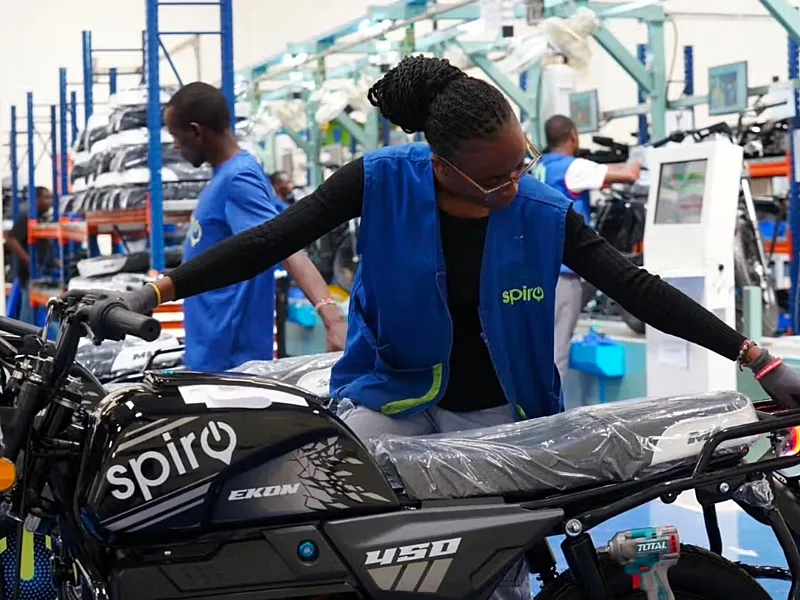
Renewables Rising reports that at least 35 companies entered African markets during 2026 through varied forms of local presence.
Recent examples include GoodWe and Exergy International opening offices in Nairobi.
The more important measure is whether new offices and partnerships deliver skills, maintenance and reliable equipment support.
From exporting to showing up
At least 35 renewable-energy companies have established a new African presence since the start of 2026, according to a 22 September Renewables Rising item citing Continent Rising.
It names Chinese inverter and battery-storage company GoodWe and Italian firm Exergy International as opening Nairobi offices in September.
The reported total is a source count, not a verified census of every investment or a measure of commissioned generating capacity.
A local address can nevertheless matter.
For a business that depends on solar power, the speed of a replacement component or repair visit may be as important as the equipment’s advertised performance.
Entry takes many forms
Renewables Rising says companies are entering through local offices, joint ventures, partnerships, acquisitions, first projects, manufacturing plants and financing.
- These routes have different implications: an office can improve technical support, while a plant or project may bring a deeper physical and employment footprint.
- The short source item does not give a complete list of the 35 firms, their investments or completed megawatts.
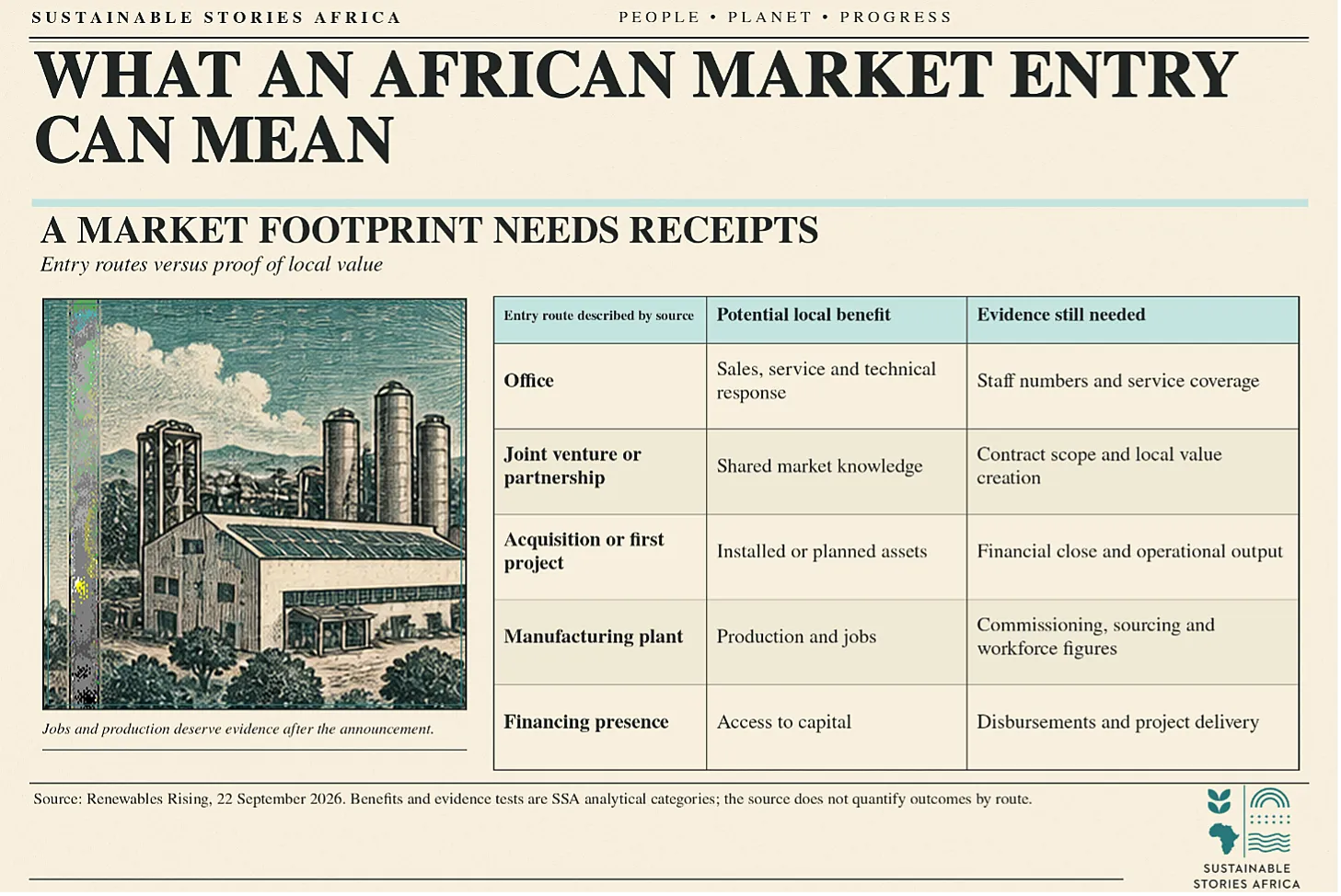
Kenya’s Nairobi openings show why geography matters:
- Suppliers may choose regional hubs from which to reach installers and commercial users.
However, one city’s new offices do not establish that customers in remote communities have gained affordable service.
The gap between an announcement and a functioning support network is a central test for the continent’s clean-energy transition.
Local service can build trust
A strong local footprint could shorten repair times, create technical jobs and help businesses keep systems working beyond the initial sale.
Partnerships with installers and training institutions could also retain more value in African markets.
- If entrants focus only on distribution without after-sales capacity, customers may bear operational risk while companies collect the early sales.
Investors should also distinguish market interest from energy access.
- Neither the count of entrants nor the opening of a branch proves that projects reached financial close or that households received new electricity connections.
Count outcomes, not logos
Industry trackers should publish their inclusion criteria and identify which entrants have operational sites, local teams and financed projects.
Companies can disclose warranties, parts availability, training and local procurement.
Governments seeking investment should pair welcoming entry rules with standards that protect buyers from unsupported equipment and inflated claims.
Path Forward – Turn Market Entry Into Service
The reported 35-plus entrants signal commercial interest in African renewables, but the short source item does not measure delivered power or jobs.
The next evidence should come from operating projects, local service capacity and verified benefits for customers.
Culled from: 35+ renewables firms enter Africa this year