A McKinsey pulse survey finds most LNG buyers expect to change procurement strategy after disruption to transit through the Strait of Hormuz.
Geographic diversification is the leading planned response.
For African gas exporters and importing utilities, the findings point to both opportunity and a tougher test of contract reliability.
Security moves up the agenda
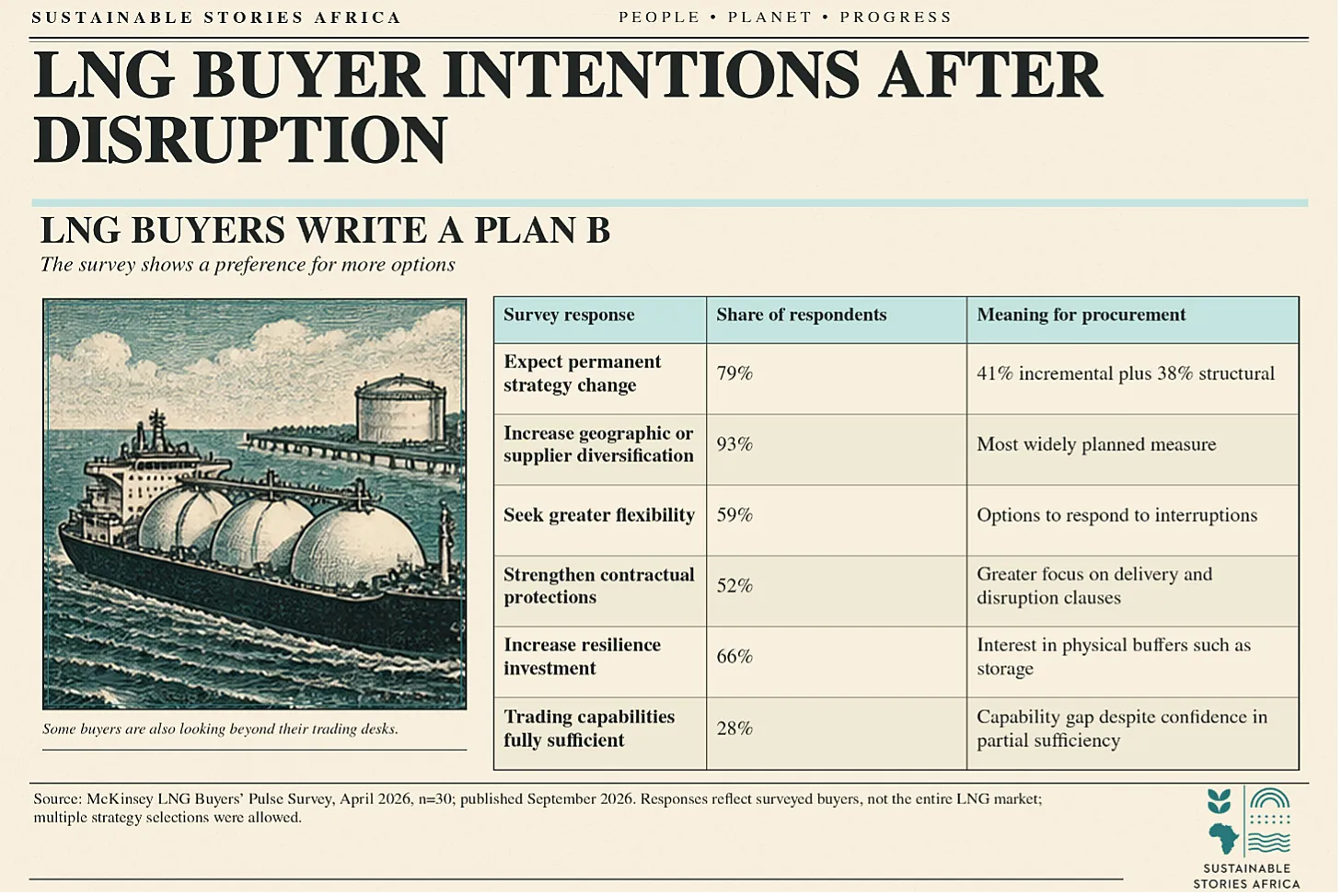
Nearly four in five respondents to a McKinsey LNG buyers’ pulse survey expected the disruption to transit through the Strait of Hormuz to change their procurement strategy.
In the 30-buyer survey conducted in April 2026, 41% foresaw an incremental shift and 38% a structural one; 21% expected no change.
The September report describes buyer intentions, not executed supply deals.
The finding matters because gas contracts are planned years ahead, while shipping and geopolitical risks can move much faster.
Buyers are asking how to reduce dependence on one corridor without surrendering all price discipline.
Diversification leads the response
Among respondents, 93% planned to increase supplier or geographic diversification over the next two to three years; 59% planned to seek greater flexibility.
- Portfolio optimisation or trading and stronger contractual protection were each cited by 52%.
- Respondents could choose several measures, so the percentages do not sum to 100.
McKinsey reports that force majeure ranked as the top contract element among buyers asked what to strengthen, followed by delivery terms and volume flexibility.
- It says 66% reported that companies like theirs were investing in resilience measures.
- Storage, shipping and upstream equity featured among the options.
However, only 28% globally called their trading capabilities fully sufficient for current volatility; the corresponding figure for risk management was 25%.
The sample spans 14 countries accounting for around 80% of the LNG market, and includes utilities, energy companies and trading houses.
It remains a small, selected survey; its percentages suggest participants’ views rather than a representative forecast of every buyer.
An opening, but no automatic windfall
For African LNG sellers, wider buyer interest in supplier diversification could create room to compete on reliable delivery and adaptable terms.
For gas-importing markets, a broader portfolio could reduce exposure to a single route.
- Neither outcome is guaranteed: infrastructure availability, price, shipping and contract credibility still decide whether supply moves.
The sustainability tension also remains.
- Procurement resilience for a fossil fuel is not the same thing as a long-term transition strategy.
Governments and utilities need to evaluate gas commitments alongside affordability, methane management and expanding cleaner energy options.
Build resilience without overcommitting
Buyers should stress-test route exposure, contract triggers and storage needs; sellers should demonstrate delivery reliability and transparent emissions management.
African policymakers can use the survey results to examine export readiness and import vulnerability, not as proof that new sales will materialise.
Trading and risk-management skills deserve attention alongside physical assets.
Path Forward – Diversify Supply While Managing Transition Risks
The survey points to a market seeking more supplier choice and contractual flexibility after a major transit disruption.
African energy strategies should respond with reliable infrastructure and disciplined risk management, while weighing any new gas commitments against long-term climate and affordability goals.