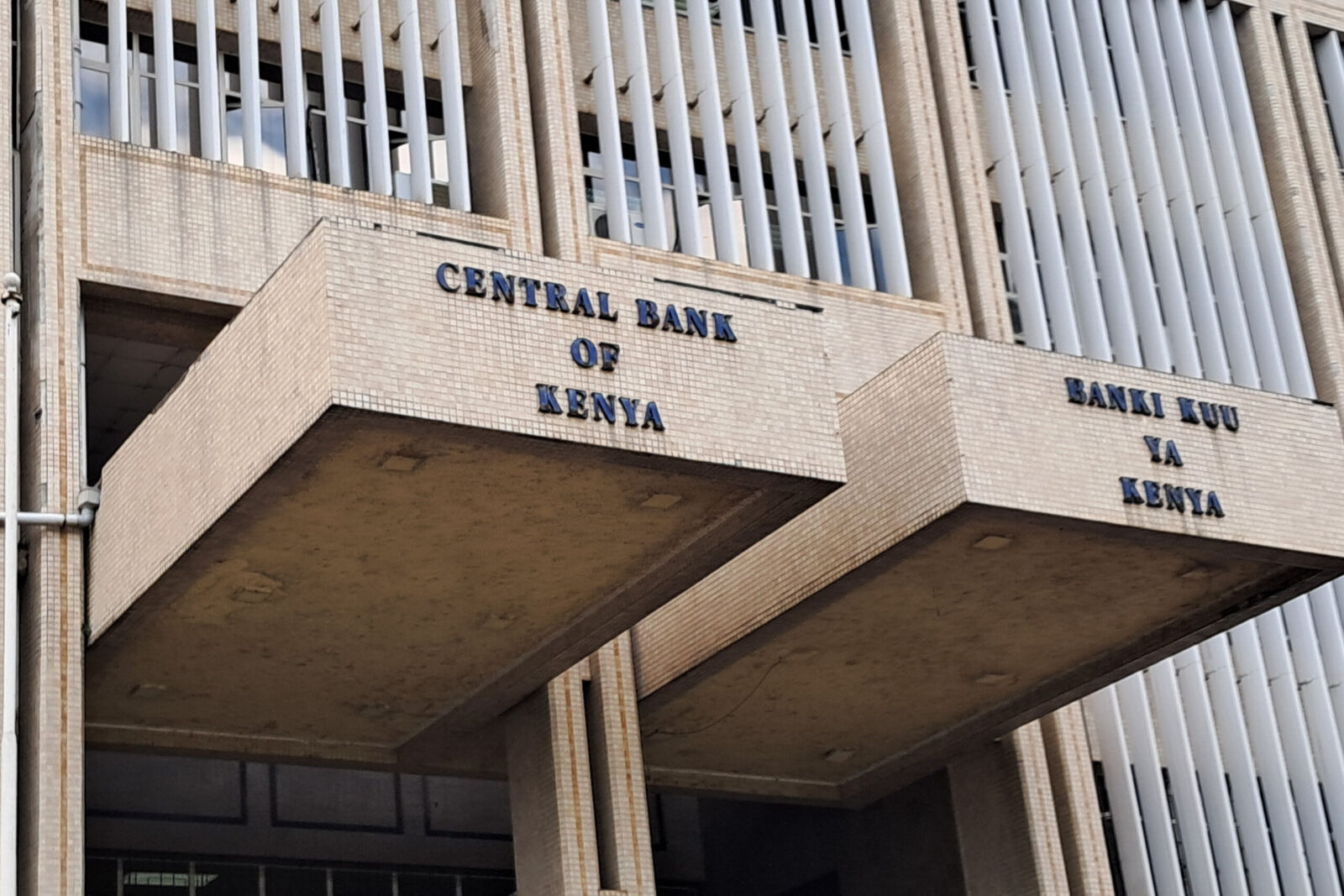
A Kenyan draft payments law would allow customer account data, with consent, to be shared with licensed third parties.
It would also give the central bank powers to require payment interoperability.
The promise is more choice; the test is whether customers can understand, control and revoke access safely.
A proposal, not yet a requirement
Kenya’s Treasury and Central Bank have prepared a National Payment System Bill, 2026, that would introduce open-finance data sharing and stronger interoperability across banks, mobile-money services and other payment providers.
Business Daily reported the proposal on 22 September.
- It remains a bill: banks and M-Pesa are not, on this evidence, already under a new enacted duty to hand customer records to every applicant.
The draft allows for data sharing with third parties after customer consent and would empower the central bank to require compatible payment systems.
Whether users benefit will depend on detailed rules still to come.
What sharing would mean
Today, a customer may use a bank account, a mobile wallet and a separate fintech application without a simple way to move authorised account information between them.
- Under the proposal, a licensed provider could gain permission to access relevant data and offer a service built on a fuller picture of a customer’s finances.
- The bill says systems should securely share information; Business Daily reports that later central-bank regulations would determine details such as what data is accessed, on what terms and at what cost.
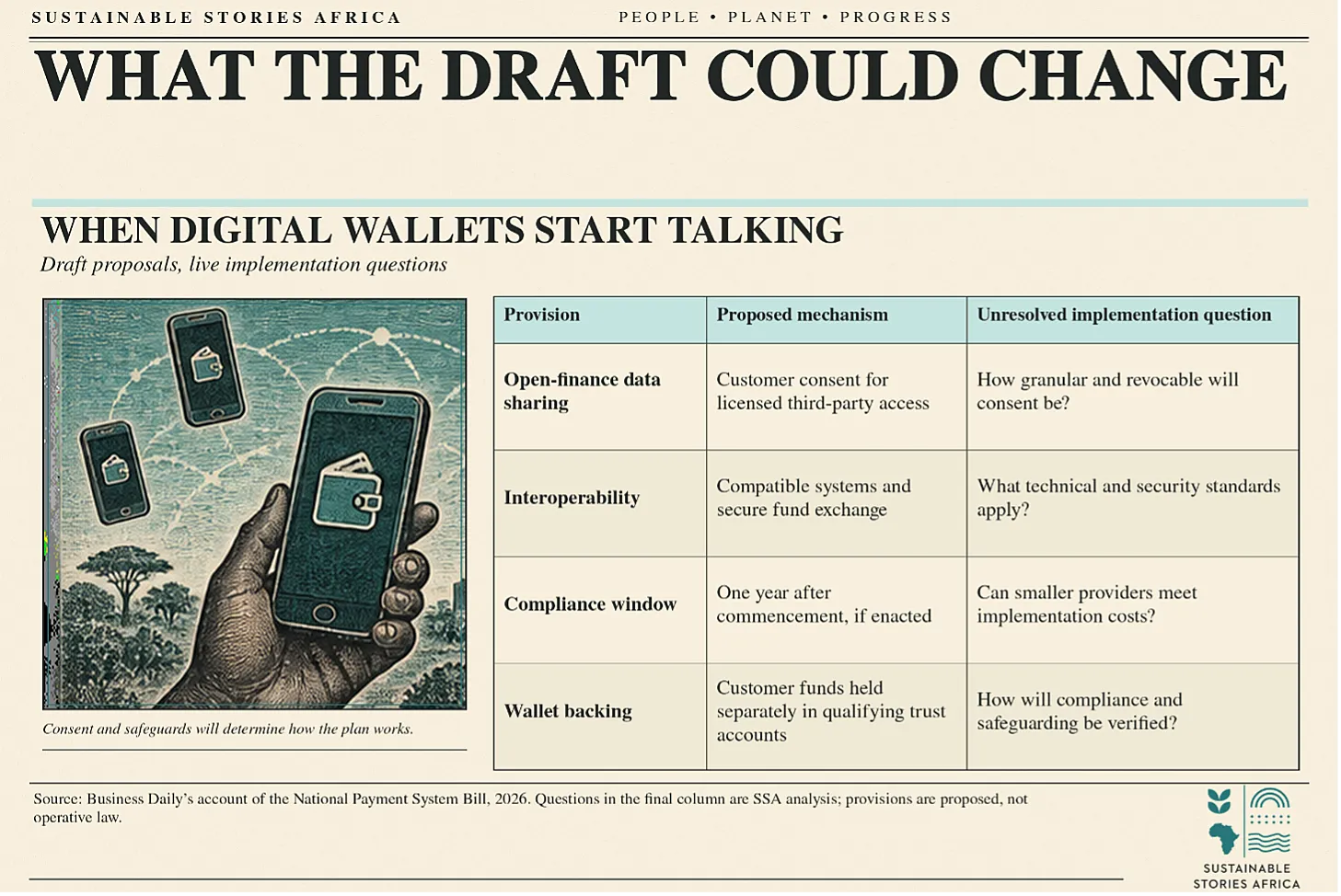
The draft would also require electronic-money issuers to keep money received from customers in qualifying trust accounts, with balances not below amounts owed to users.
If Parliament passes the law, providers would have a year from commencement to comply, Business Daily reports.
- Neither that transition window nor the proposed penalties should be treated as current enforcement.
Competition with customer control
Open finance could let a consumer compare services or authorise a fintech to use transaction records to assess a product.
- Interoperability could reduce friction when money moves between platforms.
Those are potential gains, not guaranteed price cuts.
- A consent box that users do not understand, weak security, or data access priced beyond smaller innovators could reproduce today’s market barriers in a new form.
For a small business juggling payments across a bank and mobile wallet, the stakes are practical:
- A service that shows cash flows accurately could improve decisions, but a breach or misleading permission request could expose sensitive commercial information.
Write rights into the rules
Lawmakers and regulators should specify consent scope, withdrawal, data minimisation, licensing, liability and complaint redress before rollout.
Providers should test customer-facing explanations in plain language and disclose all third-party data uses.
Consultation with consumer groups and smaller fintechs would help make interoperability both safe and genuinely competitive.
Path Forward – Make Consent Meaningful Across Payment Systems
If it passes, the bill could expand customer choice and system compatibility; however, safeguards will largely depend on effective and efficient implementation.
Kenya’s priority should be data access that customers can control, providers can secure, and regulators can enforce.
Culled from: New Bill forces banks, M-Pesa to share customer data - Business Daily