Nigeria is preparing a device registry that would link mobile handsets’ IMEI identifiers with approval and import records.
Regulators see a route to safer, more traceable phones; smaller traders fear extra cost and compliance barriers.
How existing, used and repaired handsets are treated may determine whether the policy widens trust without narrowing access.
A registry reaches the checkout
Nigeria’s proposed Device Management System would require SIM-enabled phones to be recorded by their International Mobile Equipment Identity, or IMEI, before sale or network use, according to TechCabal’s 21 September report.
The Nigerian Communications Commission (NCC) wants to limit unapproved, stolen or cloned devices.
However, a system intended to formalise imports could also affect the price and availability of the phones people use to bank, study and work.
The immediate question is not whether a registration fee alone has already raised prices:
- TechCabal says enforcement has not begun and attributes existing handset inflation to wider pressures.
It is whether the eventual rules and commercial mark-ups will make legal access harder for low-income buyers.
What importers and users face
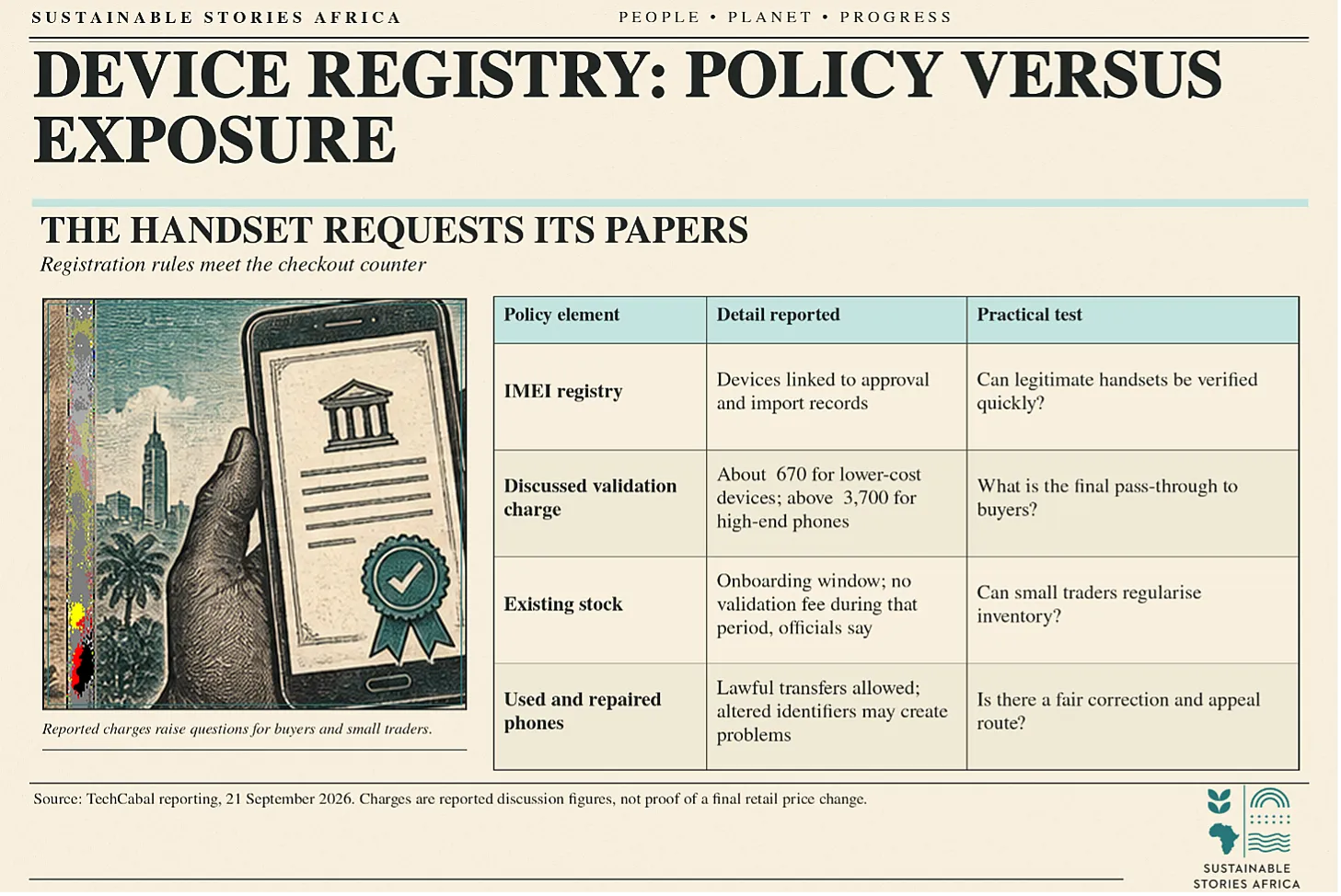
Under the framework described by TechCabal, licensed importers would obtain type approval, upload IMEI and invoice information, pay a validation charge and secure a QR-coded pre-authorisation for Customs verification before network whitelisting.
- The NCC says the registry would hold device identifiers, not phone contents or private communications.
- Existing stock is being onboarded, and officials say it will not face the device-validation fee during that window.
TechCabal cites GSMA research that more than 140 million Nigerians lived within 3G, 4G or 5G coverage but did not use mobile internet in 2025.
- The outlet links this gap largely to smartphone affordability and digital skills.
- That is not an estimate of people the registry will disconnect; it describes an existing access challenge the policy must not worsen.
A small refurbisher faces a different compliance burden from a major distributor.
- Records for an older handset may be incomplete, and a legitimate repair could complicate identification.
- At the same time, buyers have a real interest in knowing whether a device is authentic and approved.
These interests should be addressed together, not treated as mutually exclusive.
Trust without exclusion
A workable registry could help customers avoid counterfeit equipment and allow authorities to check import declarations more consistently.
Those benefits depend on reliable data, predictable turnaround times and clear responsibility when a legitimate handset is incorrectly flagged.
- A slow or opaque process would shift costs and uncertainty to precisely the shops and customers least able to absorb them.
Publish the safeguards
Before full enforcement, the NCC and Customs should explain final fees, how used phones will be treated, identifier challenges due to repairs, and the appeal process.
Traders need practical onboarding support; consumers need a way to verify a phone before purchase and challenge errors after it.
Market oversight should also track actual retail prices rather than assume that a modest administrative fee remains modest at checkout.
Path Forward – Protect Access While Improving Device Oversight
The registry’s success should be measured in safer devices and lawful trade without avoidable losses in connectivity.
Transparent fees, workable small-trader rules and prompt correction of false flags would make that balance more credible.
Culled from: Nigeria’s new phone tracking policy could price millions offline