The Securities and Exchange Commission (SEC) has told public companies and significant public-interest capital market operators to submit plans for implementing IFRS sustainability standards by 15 October 2026.
Mandatory reporting for public-interest entities begins with accounting periods starting January 1, 2028.
The immediate test is whether boards can turn climate and sustainability information into controlled, credible financial disclosures.
An October test for boards
Public companies and significant public-interest capital market operators in Nigeria have until 15 October 2026 to tell the Securities and Exchange Commission (SEC) how they will implement IFRS sustainability disclosure standards.
The circular, published on 23 September, asks for an implementation plan and anticipated challenges.
- It does not bring the mandatory reporting date forward: public-interest entities must report under IFRS S1 and S2 for accounting periods beginning on or after 1 January 2028.
That distinction matters.
- A company with a calendar financial year has time before its first mandatory period, but much less time to show how it will build the systems, skills and board oversight needed to get there.
The request moves the conversation from whether to disclose to how disclosures will be produced.
What companies must submit
The SEC says plans must address board oversight, gaps against IFRS S1 and S2, implementation milestones, data systems, internal controls and assurance, training, the expected first reporting year and likely obstacles
- Its category of significant public-interest capital market operators includes exchanges, central securities depositories, clearing houses and trade repositories.
These organisations' disclosures can influence how investors assess risks across the wider market.
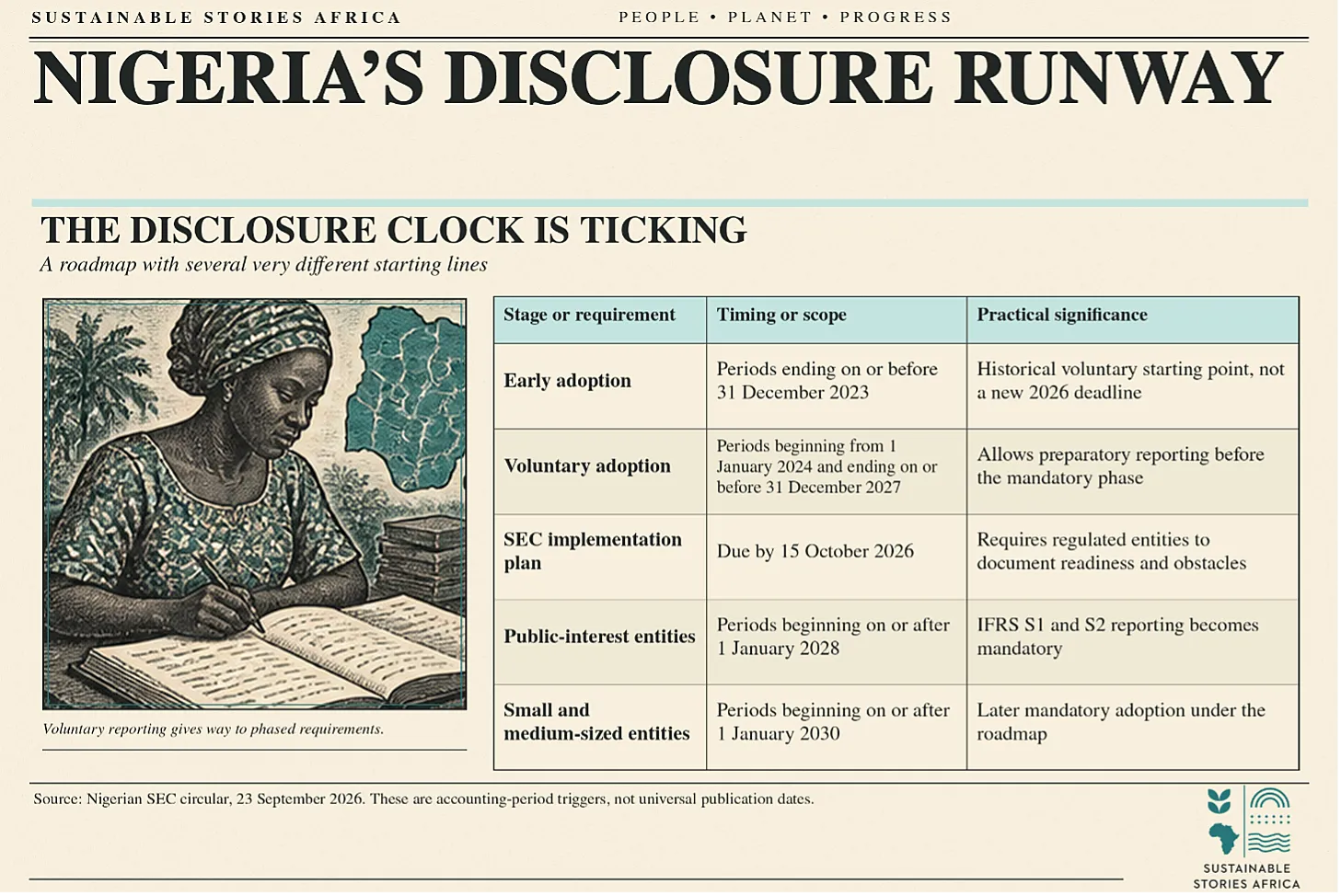
IFRS S1 addresses sustainability-related financial information, and IFRS S2 addresses climate-related disclosures.
A material difference for investors is whether a company can explain a risk with defensible data rather than a broad pledge.
- For example, a manufacturer assessing heat or energy disruption needs inputs from facilities, finance and procurement, not simply a polished sustainability statement.
More useful information, less guesswork
Consistent disclosures could make it easier to compare businesses and examine whether climate exposure, governance and investment plans align.
- That potential benefit depends on measurement quality and candid reporting of gaps.
- It should not be confused with a regulator certifying that a company is sustainable.
Smaller suppliers may also feel indirect pressure if listed customers need reliable value-chain information.
- A workable transition would avoid passing complex requests down the supply chain without training or proportionate support.
- The regulator’s requirement to identify obstacles creates an opportunity for companies to make those practical constraints visible now.
Turn the plan into controls
- Boards should assign an accountable executive, map existing information against S1 and S2, name each data owner and test how figures move into financial reporting.
- Management should distinguish estimates from measured values, document missing data and set a timetable for internal review and assurance readiness.
Submitting a plan is only the first control point; investors will eventually judge the disclosures it produces.
Path Forward – Build Credible Disclosure Systems Before Deadlines
Nigeria’s next milestone is the 15 October plan submission.
The SEC says it will monitor preparedness and compliance, while companies must use the runway to improve governance, data and training.
For African capital markets, the wider opportunity is comparable: decision-useful information without obscuring implementation costs.