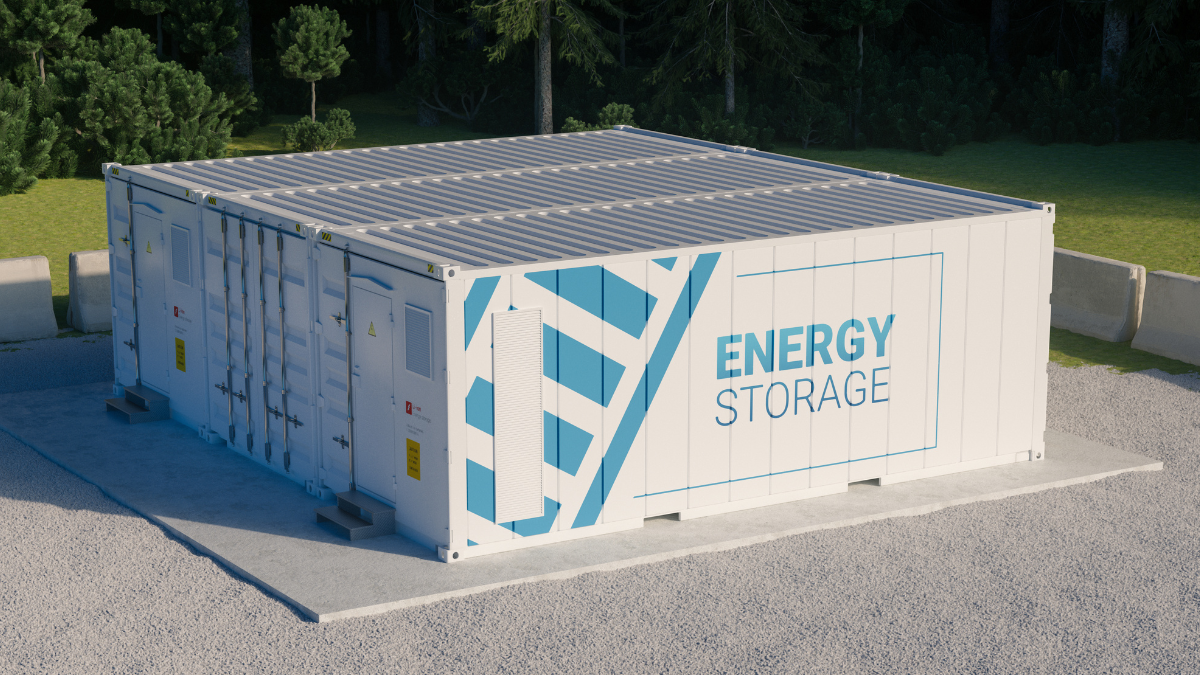
Battery storage is rapidly replacing diesel generators across African energy systems.
Rising fuel costs, climate pressures, and falling battery prices brought about the shift.
For businesses and households, it signals a cleaner, more reliable, and cost-efficient power future.
The End of Diesel’s Dominance Begins
Across Africa’s commercial hubs and industrial clusters, a quiet but consequential transition is underway: battery storage systems are replacing diesel generators as the backbone of backup and off-grid power.
From Lagos to Nairobi, businesses that once relied on diesel for reliability are now pairing solar power with battery storage to ensure uninterrupted electricity.
The shift reflects a convergence of economics and policy, rising diesel costs, volatile supply chains, and increasing pressure to decarbonise operations.
In Nigeria, where millions rely on generators due to grid instability, battery-backed solar systems are gaining traction among SMEs and large corporates alike. Across
In Kenya and South Africa, similar trends are emerging, driven by load-shedding challenges and the expansion of renewable energy.
The core shift is clear: diesel is no longer the default fallback; it is becoming the system of last resort.
Economics, Technology, and Policy Align
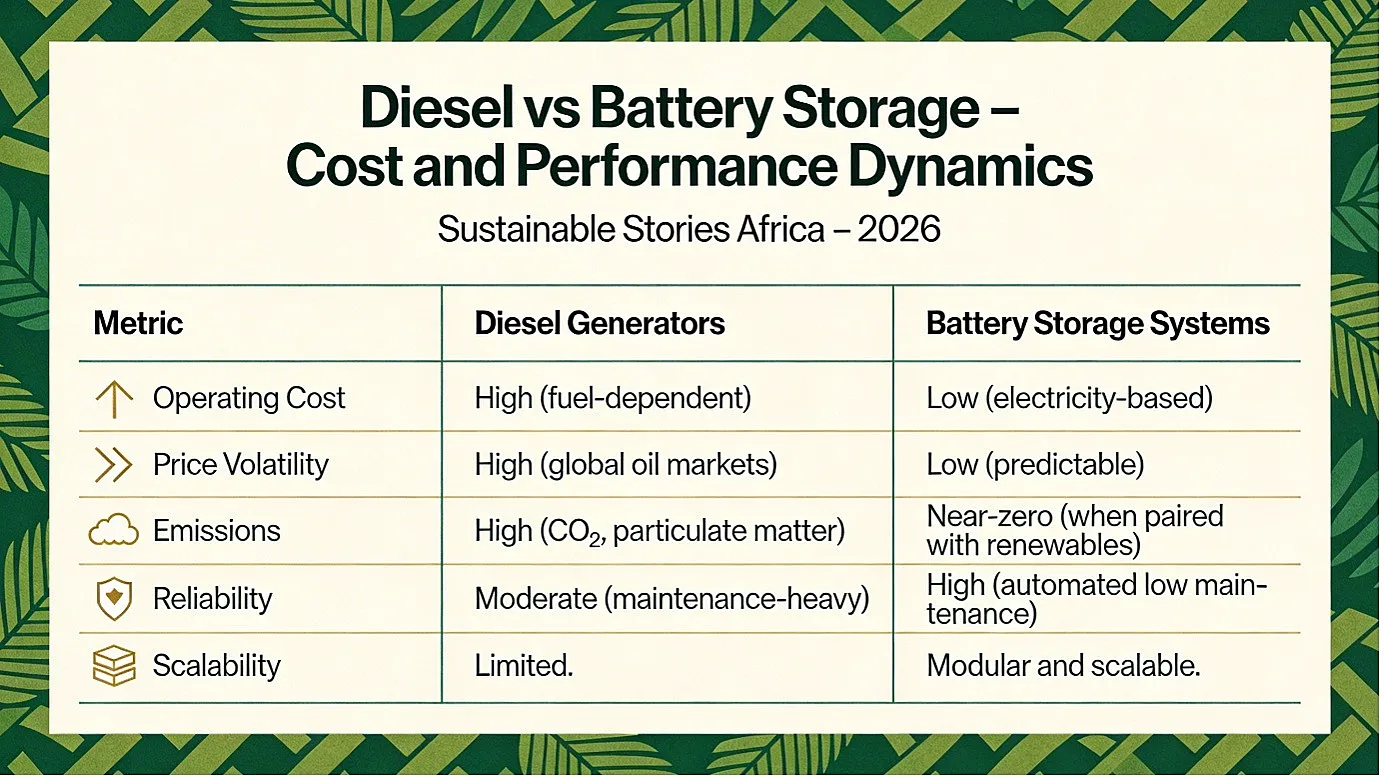
Diesel generators have long been part of Africa’s electricity gap, but they come with high operating costs, exposure to fuel price volatility, and significant carbon emissions.
Battery storage, once prohibitively expensive, is now benefiting from global cost declines and technological improvements.
Diesel vs Battery Storage – Cost and Performance Dynamics
Metric | Diesel Generators | Battery Storage Systems |
|---|---|---|
Operating Cost | High (fuel-dependent) | Low (electricity-based) |
Price Volatility | High (global oil markets) | Low (predictable) |
Emissions | High (CO₂, particulate matter) | Near-zero (when paired with renewables) |
Reliability | Moderate (maintenance-heavy) | High (automated, low maintenance) |
Scalability | Limited | Modular and scalable |
Battery costs have fallen by more than 80% globally over the past decade, enabling new deployment models across African markets.
At the same time, solar generation, now one of the cheapest sources of electricity, pairs naturally with storage to provide round-the-clock power.
For a manufacturing firm in Lagos, the shift is not abstract. One operations manager described the transition succinctly: “We used to spend heavily on diesel just to stay operational. Now, with solar and batteries, our costs are predictable and lower.”
Governments and development finance institutions are also accelerating adoption through incentives, blended finance, and pilot programmes targeting mini-grids and commercial installations.
A Cleaner, More Resilient Energy Future
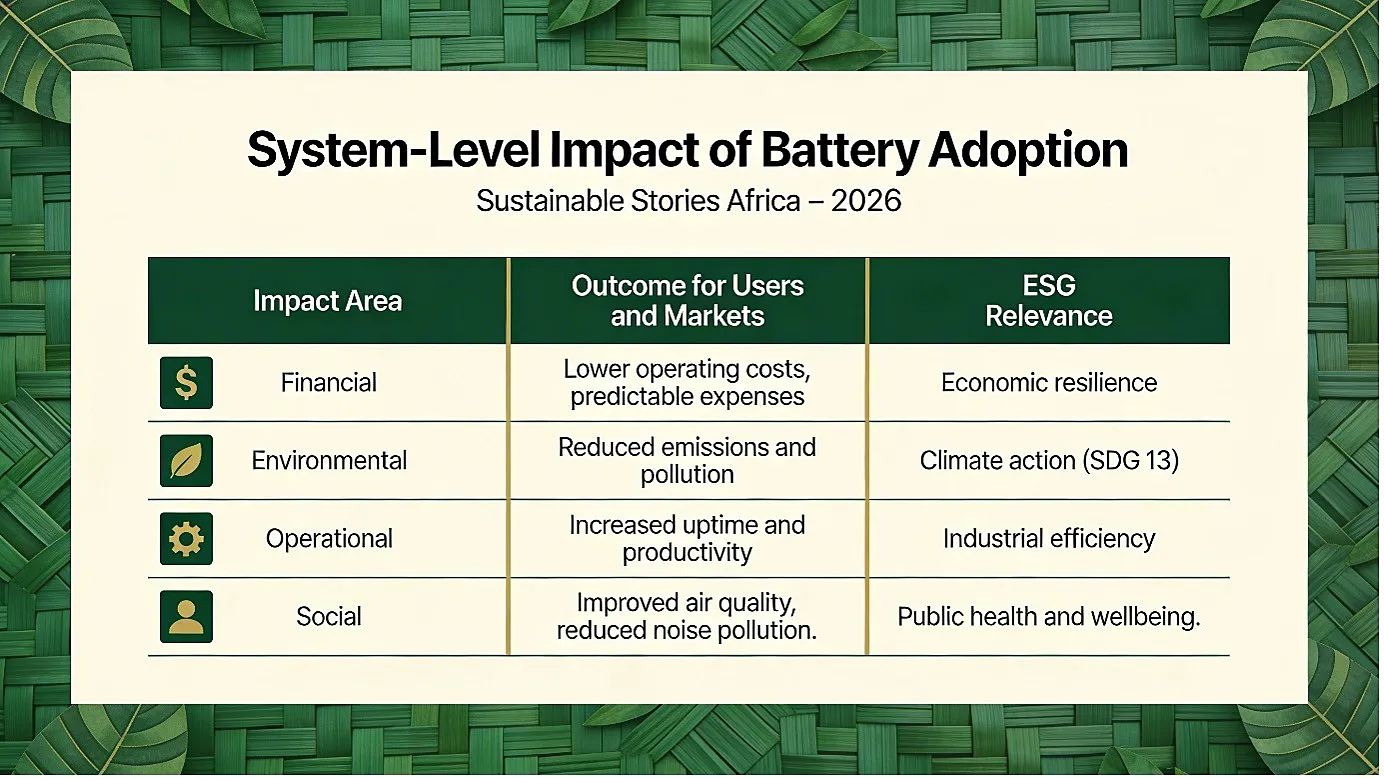
The replacement of diesel with battery storage unlocks multiple system-wide benefits:
- Cost Stability – Businesses reduce exposure to fuel price shocks, improving planning and profitability
- Energy Reliability – Storage systems provide uninterrupted power without the downtime associated with diesel maintenance
- Climate Gains – Significant reductions in emissions align with national and corporate ESG targets
- Health Benefits – Reduced air pollution improves urban and industrial environments
System-Level Impact of Battery Adoption
Impact Area | Outcome for Users and Markets | ESG Relevance |
|---|---|---|
Financial | Lower operating costs, predictable expenses | Economic resilience |
Environmental | Reduced emissions and pollution | Climate action (SDG 13) |
Operational | Increased uptime and productivity | Industrial efficiency |
Social | Improved air quality, reduced noise pollution | Public health and wellbeing |
However, the transition is uneven. Upfront capital costs remain a barrier for smaller businesses, and grid integration challenges persist in areas of weak infrastructure.
Scaling the Transition Beyond Early Adopters
To move from isolated adoption to systemic transformation, three levers are critical:
- Financing Innovation – Pay-as-you-go models, leasing structures, and blended finance can lower entry barriers for SMEs and households.
- Policy Alignment – Governments must phase out diesel subsidies while introducing incentives for clean storage solutions.
- Infrastructure Investment – Upgrading grids to accommodate distributed storage and renewable inputs will be essential for long-term stability.
Utilities, too, face a strategic pivot. As decentralised systems expand, their role is shifting from sole providers of electricity to orchestrators of more complex, distributed networks.
For investors, the opportunity is substantial: battery storage is emerging as a core infrastructure asset, sitting at the intersection of energy, technology, and climate finance.
Path Forward – Storage-Led Energy Transition Accelerates
Battery storage is no longer a peripheral technology; it is becoming central to Africa’s energy transition strategy. Scaling adoption will require coordinated action across finance, policy, and infrastructure.
If momentum continues, the decline of diesel could accelerate rapidly, unlocking cleaner, more resilient, and economically viable power systems across the continent, turning energy reliability from a constraint into a competitive advantage.
Culled From: Battery storage replaces diesel in the power mix