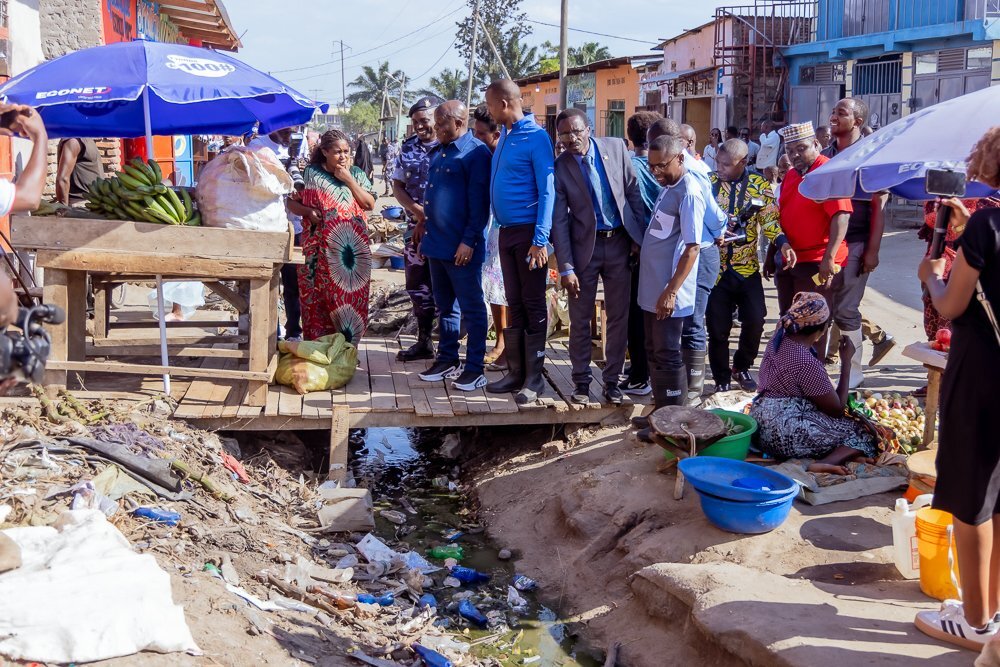
Burundi is tightening oversight of hygiene and sanitation rules, requiring weekly inspections and stronger follow-up by local administrators.
This shift moves the country from periodic clean-up campaigns toward measurable enforcement as waste collection and urban growth strain services.
For residents, the test is whether tougher rules translate into cleaner neighbourhoods, safer drainage and lower public-health risks.
Weekly checks shift sanitation accountability locally
Burundi has raised the stakes in its national cleanliness drive, putting local administrators and waste operators under closer scrutiny after the Council of Ministers reviewed implementation of hygiene and sanitation rules on July 17, 2026.
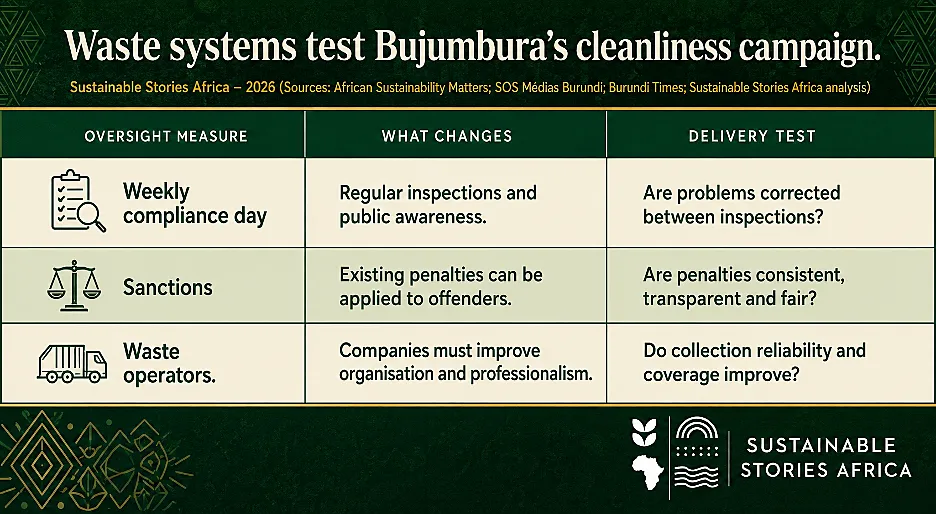
The government says one day each week will be dedicated to monitoring compliance, with sanctions available under existing rules for offenders.
Government spokesperson Jérôme Niyonzima said ministries had generally carried out their campaign responsibilities, but follow-up was weaker among district administrators, zone chiefs, neighbourhood chiefs and village-level officials.
Waste collection companies were also told to improve their organisation and performance, including addressing conflicts of interest that could weaken service quality.
Waste systems test Bujumbura’s cleanliness campaign
The enforcement push comes as Bujumbura's rapid urban growth pressures collection, disposal and drainage systems.
- Community clean-ups remain common, but litter returns quickly where collection routes are unreliable.
- In Mukaza Commune, authorities recently combined a clean-up exercise with fines of 500,000 Burundian francs for several establishments judged operating in unhygienic conditions.
The government has framed the campaign within the African Union's 2026 focus on sustainable water and sanitation systems under Agenda 2063, giving the initiative a greater development lens; poor waste management increases exposure to flooding, mosquitoes and waterborne diseases, rather than merely a streetscape problem.
That distinction matters for accountability.
- A clean-up day produces immediate, visible results, while a sanitation system must work every day.
- Residents need predictable collection schedules, businesses need clear disposal requirements, and officials need escalation pathways when contractors underperform.
- Weekly inspections can expose breakdowns; however, only if reports distinguish citizen non-compliance from public-service gaps, otherwise enforcement risks measuring street cleanliness on any given day rather than whether the waste chain functions end-to-end.
Cleaner cities need services beyond sanctions
Stronger accountability can help make sanitation rules visible, but enforcement alone cannot substitute for functioning services.
- Residents can be asked to keep surroundings clean only if waste can be collected regularly and disposed of safely.
- Local authorities likewise need clear responsibilities, staff, equipment, drainage maintenance and budgets that match the obligations being enforced.
Burundi already has a broader sanitation investment pipeline.
A World Bank-backed water and sanitation project approved in December 2025 is intended to expand access to clean water and provide basic sanitation services to tens of thousands of rural residents.
The new urban oversight push can complement such investment if government treats inspections as a way to identify service gaps, not simply to issue penalties.
Oversight must connect enforcement with investment
The next step is to make weekly inspections useful management data.
- Municipalities could publish what was inspected, recurring problem areas, collection failures, complaints and corrective actions.
- Waste operators should face transparent service standards, while sanctions should be consistently applied and open to review so that poorer households and informal businesses are not carrying a disproportionate burden.
For citizens, sanitation remains a shared responsibility; for government, the harder obligation is to make the system dependable.
Clean streets will become durable public health infrastructure only when civic participation, professional waste collection, drainage, enforcement and municipal investment work together.
That is the practical threshold between a cleanliness campaign and a dependable urban service that residents can trust.
Path Forward – Making sanitation accountability work beyond Thursdays
Burundi’s weekly checks can create a clear accountability rhythm, but lasting gains will depend on what happens between inspections: reliable collection, maintained drainage, transparent penalties and responsive local government.
The path forward is to turn compliance data into investment decisions and public reporting.
That would connect cleaner cities with public health, stronger institutions and the greater sustainability goals behind the African Union’s 2026 sanitation agenda.