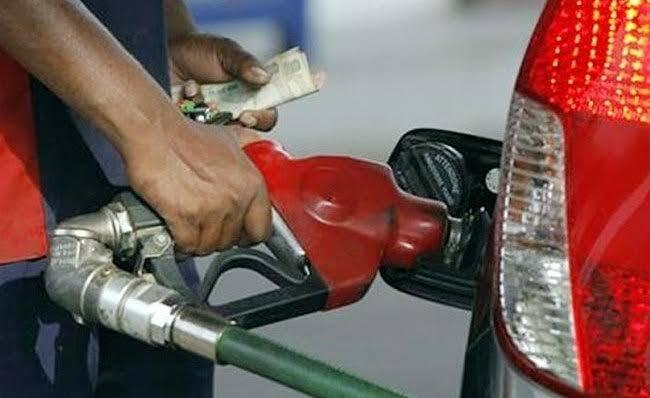
Petrol averaged about N1,395 per litre after Dangote Petroleum Refinery raised its gantry price while Brent crude traded above $100 a barrel.
The increase exposes Nigeria's continued vulnerability to global oil prices, exchange rates and domestic distribution costs despite local refining capacity.
Households and businesses now face another transport and operating-cost shock with wider inflation risks.
Petrol Increase Reaches Every Household
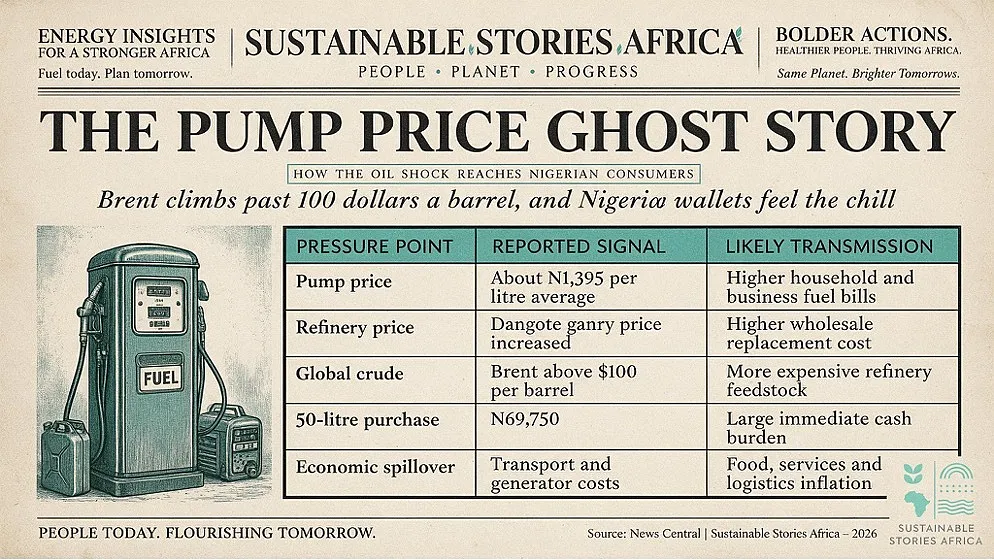
Nigeria's petrol price has climbed to an average of N1,395 per litre after Dangote Petroleum Refinery increased its gantry price, as Brent crude moved above $100 a barrel.
SBM Intelligence's Cheta Nwanze discussed the shock on News Central, placing the latest rise in a market where global crude costs, the naira exchange rate and local distribution expenses all affect the pump price.
The change matters beyond motorists.
- Petrol powers small generators, delivery vehicles, commercial transport and informal businesses that cannot easily absorb sudden increases.
- Higher fuel costs can pass quickly into food prices, school transport, logistics charges and the cost of basic services, deepening pressure on incomes that have not risen at the same pace.
Local Refining Does Not Remove Exposure
Domestic refining can reduce shipping delays, imported-product financing and some foreign-exchange demand, but it does not make crude oil free.
- A refinery buying feedstock at market-linked prices still faces the global oil cycle, while imported equipment, finance and operating inputs can carry exchange-rate exposure.
- Distribution from the gantry to filling stations adds trucking, storage and retailer costs.
That distinction is important for public expectations.
- Nigeria can gain energy-security benefits from local production while consumers remain exposed to crude-price spikes.
The relevant policy question is how much domestic refining reduces the total cost and volatility compared with importing finished petrol, not whether it can permanently separate pump prices from world markets.
Price Shock Risks Wider Inflation
At N1,395 per litre, a 50-litre purchase costs ₦69,750.
- That is a substantial cash demand for a household or small enterprise, even before maintenance, electricity and other expenses.
- Transport operators may respond by raising fares or reducing routes, while businesses may adjust product prices, delivery schedules or staffing to protect margins.
The burden is uneven.
- Higher-income consumers may reduce discretionary travel, but workers with fixed commutes and communities with limited public transport have fewer choices.
- Firms dependent on road freight also face limited alternatives because rail and mass-transit coverage remains inadequate in many corridors.
A fuel shock can therefore widen both inflation and access gaps.
Policy Must Reduce Cost Transmission
Government should publish clear price components, including crude assumptions, exchange rates, taxes, logistics and retail margins.
- Transparency would help consumers understand why prices change and allow regulators to identify avoidable costs or anti-competitive behaviour without imposing controls that create shortages.
The durable response is to reduce dependence on petrol.
- Reliable electricity can cut generator use; safe public transport can lower household fuel demand; rail and coastal freight can reduce trucking exposure.
- Targeted support should protect the most vulnerable through transparent channels rather than broad subsidies that are difficult to finance and often benefit larger consumers.
Market Stability Requires Credible Rules
Stable rules are as important as emergency relief.
- Refiners, importers, distributors and retailers need predictable access to foreign exchange, crude supply and logistics.
- Consumers need protection from collusion, artificial scarcity and misleading price claims.
- Sudden policy reversals can increase risk premiums that ultimately return to the pump price.
Authorities should also track the distributional impact of every increase.
- Transport fares, food logistics and generator use can be monitored in major cities and rural markets, helping social-protection agencies target support.
- Better data would show where a fuel-price change becomes a wider welfare emergency.
Path Forward – Reduce Exposure While Protecting Vulnerable Consumers
Nigeria needs transparent fuel-price data and credible monitoring of supply, margins and competition.
Short-term relief should target essential transport and vulnerable households.
Longer-term investment in electricity, mass transit and alternative freight can reduce how quickly an oil-market shock reaches every meal, journey and small business.