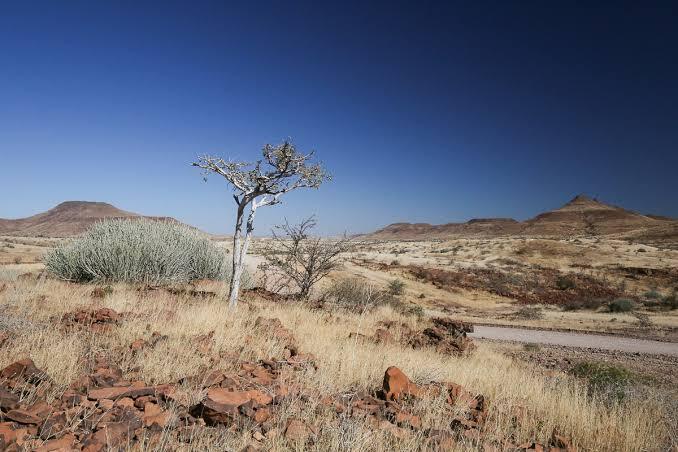
Researchers say Windhoek can manage worsening heat, drought and flash floods by treating its dry landscape as infrastructure rather than copying water-intensive urban greening.
Nature-based measures already exist in communities, but weak coordination and limited planning guidance prevent citywide scale.
The lesson for other dry African cities is to design adaptation around local ecology, informal settlements and scarce water.
Dryland City Faces Compound Climate Risks
Windhoek is getting hotter and more exposed to drought and sudden flooding, while rainfall remains low and unpredictable.
- Temperatures can reach 40 degrees Celsius, and heat-absorbing roads and buildings intensify conditions in parts of Namibia's fast-growing capital.
- Researchers argue that its response should work with the dry landscape rather than copy greener, wetter cities.
The idea is described as Brown is Beautiful:
- An approach that values arid landscapes, indigenous species and local knowledge as climate assets.
- Windhoek has climate and disaster policies, but researchers found limited practical guidance for using nature-based measures to cool neighbourhoods, slow runoff and absorb floodwater.
Grey drains and concrete barriers still dominate the response.
Informal Growth Raises The Stakes
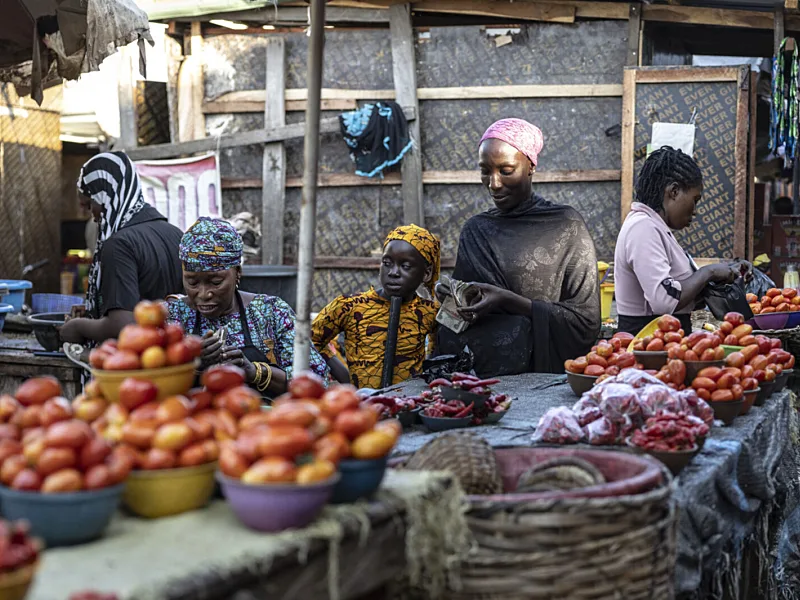
Windhoek's informal settlements are growing by an estimated 6.5% to 7% a year, compared with 4% in the formal city.
- Basic infrastructure is not keeping pace.
When intense rainfall overwhelms drainage, communities can be exposed to floodwater mixed with sewage, while sparse shade and fragile housing deepen heat risks.
The challenge resembles conditions in other dry African cities, including Gaborone, where heat, water scarcity, drought and flash flooding overlap.
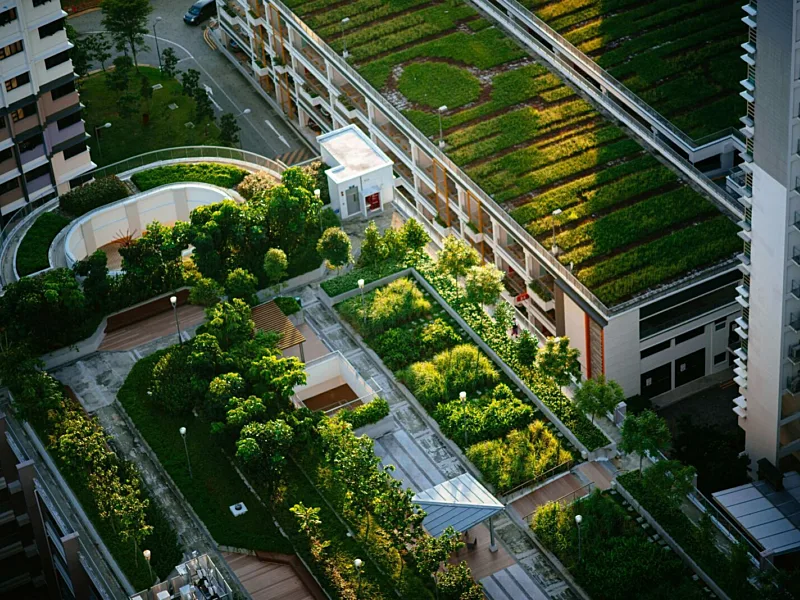
- Conventional urban forests and lawns can demand water that is not available.
Dryland adaptation therefore needs a different palette of plants, materials and water systems.
Local Solutions Already Provide A Base
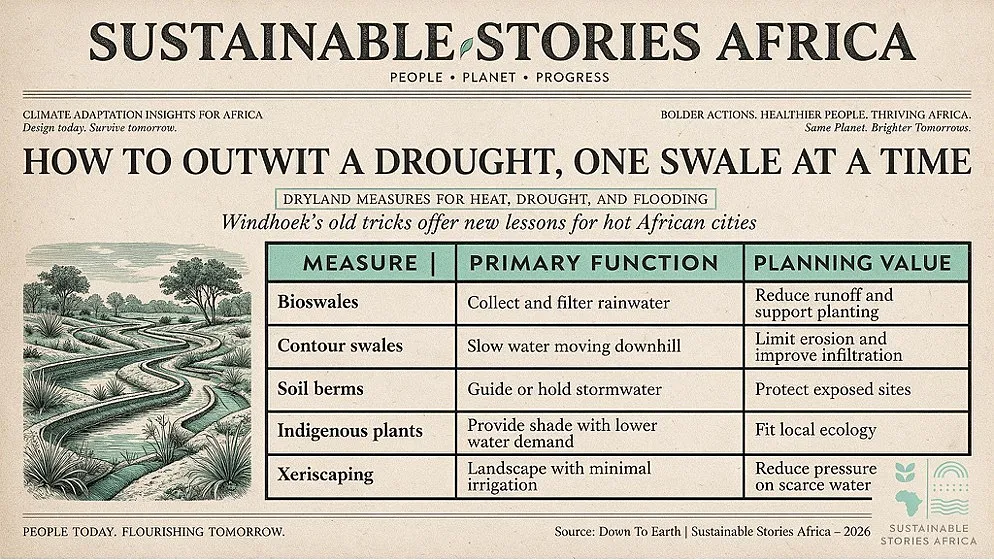
Researchers recommend bioswales that collect and filter rainwater, contour swales that slow water moving downhill, soil berms that guide or retain flows, indigenous drought-tolerant plants and xeriscaping.
- These measures can reduce heat and flooding without imposing the water requirements of conventional landscaping.
Community initiatives already include permaculture gardens, local water harvesting and citizen-led environmental monitoring.
- They support food security, conserve water and build practical knowledge.
- Municipal staff who advocate for nature-based solutions also show that institutional change is possible, but projects remain disconnected and the city lacks common landscaping guidance.
Planning Must Connect Community Knowledge
Windhoek should embed dryland nature-based standards in zoning, roads, housing upgrades and public-space investment.
- Landscape architects, engineers, health officials and settlement residents need a shared process so that drainage, cooling, biodiversity and safety are considered together rather than in separate projects.
Funding should prioritise neighbourhoods with the greatest heat and flood exposure, then measure results such as surface temperature, retained stormwater, reduced flood damage and improved access to safe public space.
Formal recognition of community practices can help the city scale solutions without erasing the knowledge that made them work.
Implementation Can Start With Demonstration Corridors
The city could begin with demonstration corridors in highly exposed settlements, combining drainage, shade, pedestrian routes and water harvesting.
- Co-design with residents would help identify where floodwater moves, which public spaces are used and how maintenance can be organised.
- Results could then inform standards for roads, schools, clinics and housing projects.
Maintenance is essential.
- A bioswale blocked by waste or an indigenous planting scheme without early care will not deliver its intended benefit.
City budgets should therefore cover long-term upkeep, community stewardship and monitoring, while procurement rewards designs that survive arid conditions rather than installations that look green only at launch.
Path Forward – Make Dryland Nature Part Of Planning
Windhoek should adopt citywide guidance for bioswales, water harvesting, indigenous planting and climate-sensitive settlement upgrading, supported by dedicated landscape expertise.
Other African dryland cities can adapt the model to their own ecology.
The goal is not to make every city greener, but to make local landscapes safer, cooler and more resilient with the water available.